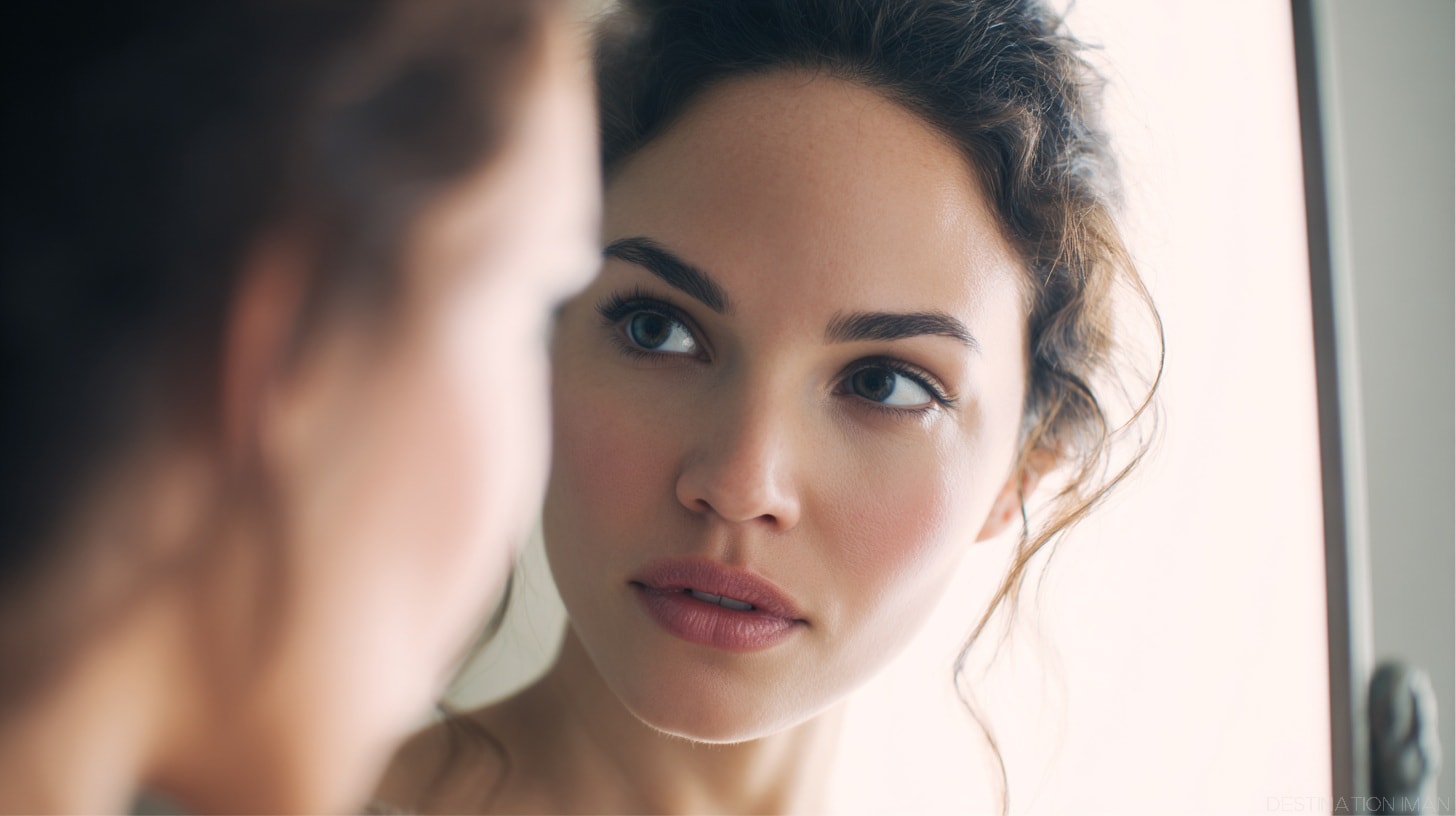
Almost everyone has experienced it: you like your reflection in the mirror, but dislike how you look in photos. This isn't vanity or imagination. The reason lies in a combination of psychology, visual perception, and camera optics.
In this article, we'll explain why photos often feel unfamiliar and what psychological and technical factors cause this effect.
Key Takeaways
- Mirror images are reversed — photos show you as others see you, creating unfamiliarity through the mere-exposure effect
- Facial asymmetry is natural and universal, but cameras reveal it in ways mirrors hide by reversing features
- Camera lenses distort reality differently than human vision — wide lenses exaggerate features, while longer lenses (50-85mm) more accurately represent how others see you
- Lighting quality dramatically affects perception — harsh overhead lights create unflattering shadows that suggest fatigue or stress
- Photos freeze single moments while you're used to seeing yourself in fluid motion, creating static images that feel unnatural
- Camera awareness creates subtle emotional tension that manifests in posture, expression, and facial muscle tension
- We judge ourselves far more harshly than others judge us — the spotlight effect makes us overestimate how much others notice our perceived flaws
- Social media creates unrealistic expectations by showing highly curated, filtered images rather than authentic reality
- Being "photogenic" is a learned skill involving relaxation, natural expression, and comfort with cameras — not genetic luck
- Understanding these psychological and technical factors removes unnecessary self-criticism and helps you approach photography with confidence
Mirror vs Camera: Why the Difference Feels So Strong
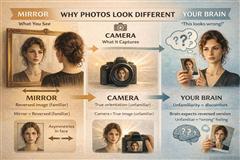
When you look in the mirror, you see a flipped version of yourself. Your brain has spent years getting used to this reflection. Photos, however, show your face as others see it — without reversal.
This unfamiliarity alone can make a perfectly normal photo feel "wrong". The version you see in photos is actually how everyone else sees you every day, but to you it looks like a stranger because you've never seen yourself this way before.
The Mere-Exposure Effect
The mere-exposure effect is a psychological phenomenon where people prefer things they see more often. First documented by psychologist Robert Zajonc in 1968, this effect explains why familiarity breeds preference.
Because you see your mirrored face daily — every morning while brushing your teeth, styling your hair, or applying makeup — your brain registers it as more attractive. When confronted with a photo version, your brain reacts negatively simply due to unfamiliarity, even though the photo may be objectively flattering.
Interestingly, studies show that other people often prefer your photos over your mirror image because they're used to seeing you the "photo way" in real life.
Facial Asymmetry and Human Perception
Human faces are naturally asymmetrical. One eye might be slightly larger, one eyebrow higher, or one side of the smile broader. The mirror hides this asymmetry by reversing it, creating a version where imperfections appear on the opposite side.
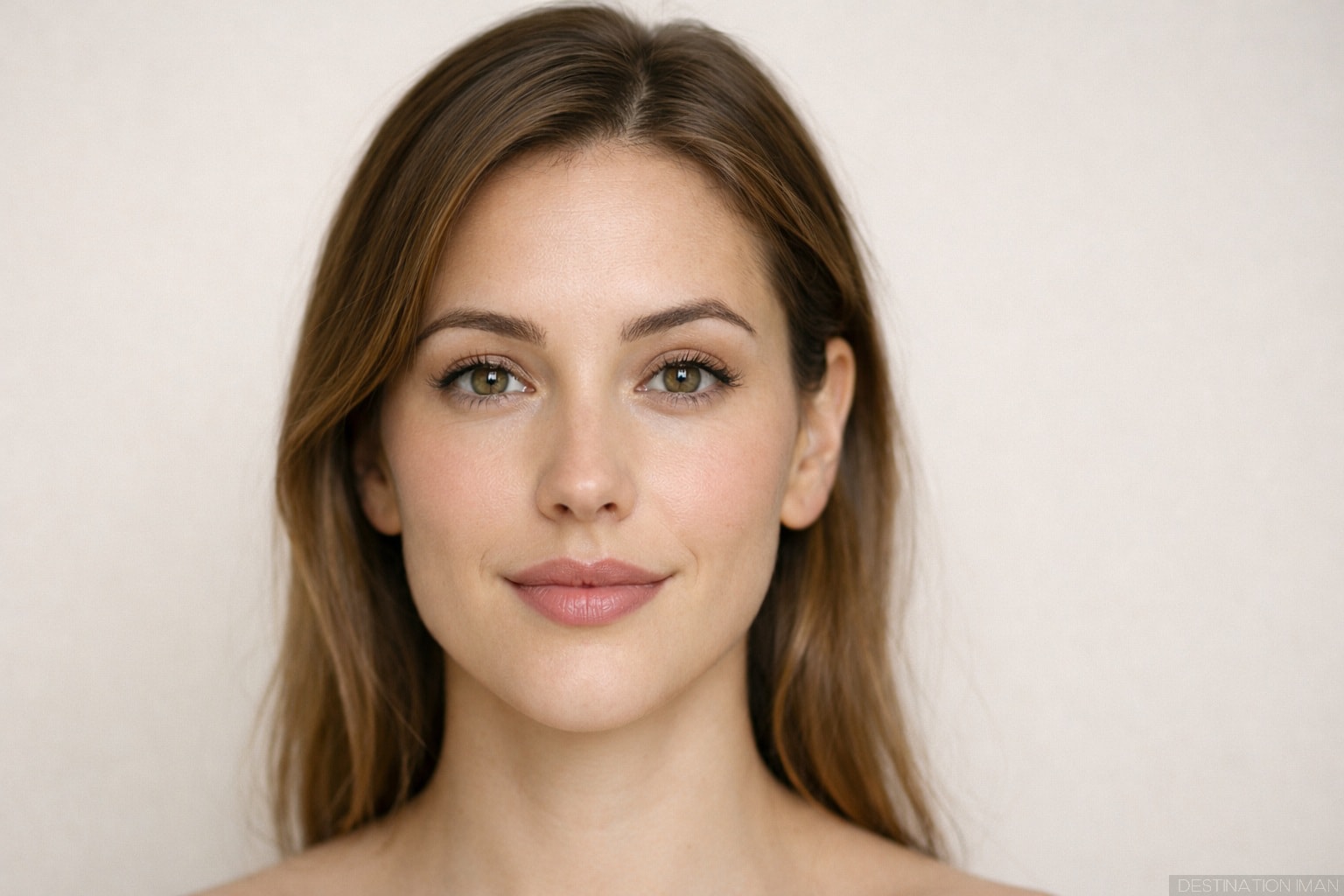
A camera reveals asymmetry exactly as it appears to others. Your brain subconsciously exaggerates these differences, even when they are minimal. What looks like a major flaw to you is often completely invisible to others viewing the same photo.
Research in facial perception shows that humans are remarkably sensitive to their own asymmetries but barely notice them in others. This creates a double standard where we critique ourselves far more harshly than anyone else would.
How Cameras Distort Reality
Cameras do not see like the human eye. Unlike your eyes, which work together to create depth perception and process images dynamically, cameras capture a single flat representation of a three-dimensional world.
Common camera distortions include:
- Lenses flatten depth — reducing the natural dimensionality of your face
- Wide lenses distort facial proportions — especially at the edges of the frame
- Close distances exaggerate features — making noses and foreheads appear larger
- Perspective compression — changing the relationship between facial features
These distortions are technical — not personal flaws. Understanding this helps separate your actual appearance from technical artifacts.
Focal Length and Facial Proportions
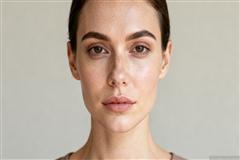
Focal length is one of the most important technical factors in how you appear in photos. Short focal lengths (wide-angle lenses, 24-35mm) make noses appear larger and faces wider due to perspective distortion. Features closest to the camera are magnified.
Longer focal lengths (50-135mm) compress features, creating a more flattering appearance that closely resembles how others see you in person. This is why professional portraits use lenses between 50–85mm, and why that unflattering selfie taken at arm's length looks so different from a professional headshot.
The ideal portrait focal length (85mm) approximates the perspective of someone standing a comfortable conversational distance away — roughly how people actually see you in daily life.
Lighting and Shadow Psychology
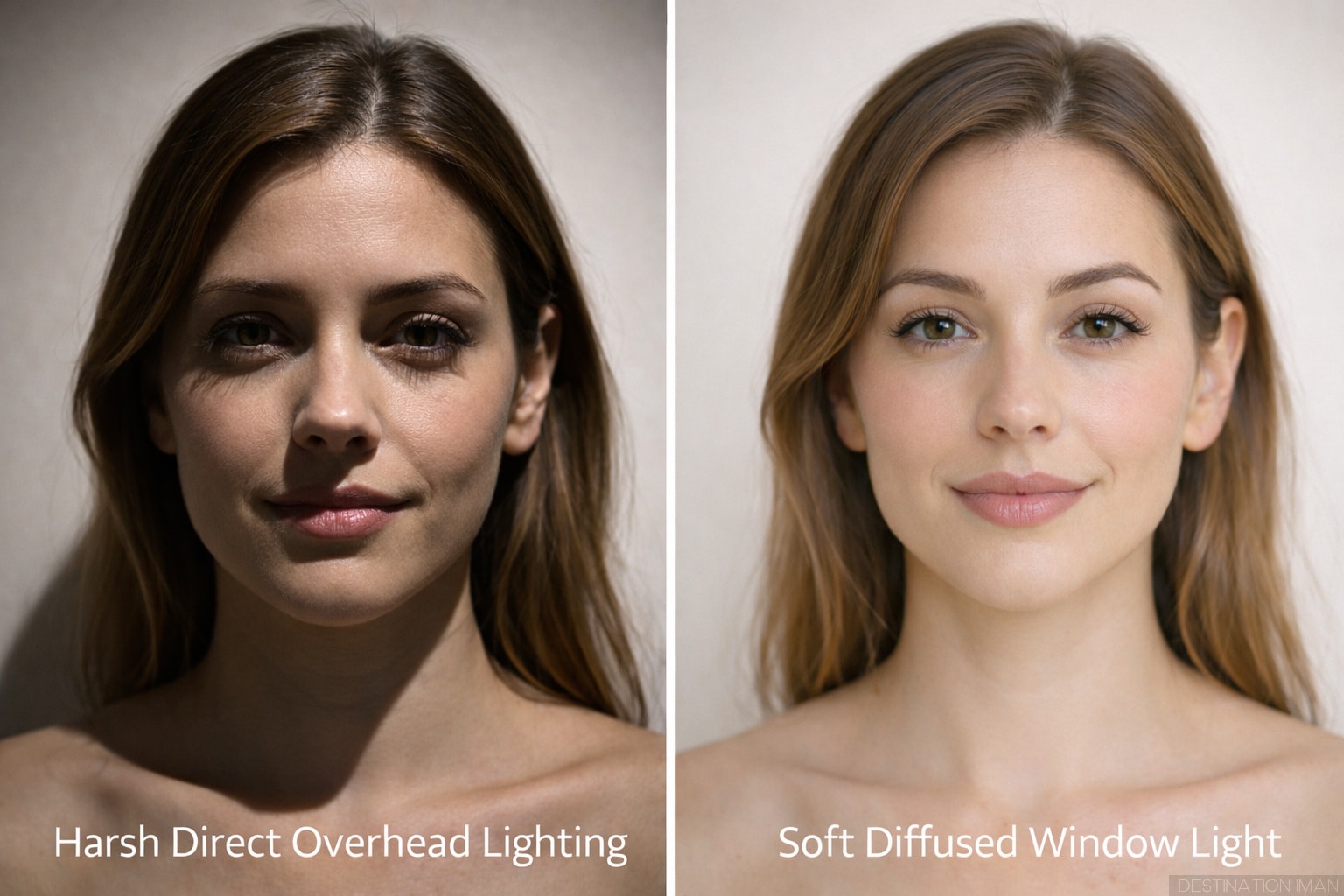
The human brain interprets shadows emotionally. Harsh overhead lighting creates deep shadows under the eyes, nose, and chin, producing impressions of fatigue, stress, or age — even when none exist.
Soft, directional lighting produces a sense of calm and balance. The quality, direction, and color temperature of light dramatically affect how features are perceived:
- Soft diffused light minimizes texture and creates even, flattering illumination
- Hard direct light emphasizes every imperfection and creates harsh contrasts
- Front lighting flattens features but hides texture
- Side lighting adds dimension but can create unflattering shadows
Indoor lighting is often harsh and unflattering compared to natural daylight. This explains why bathroom mirror selfies rarely match the quality of outdoor photos taken in natural light.
Static Moments vs Moving Reality
We are used to seeing ourselves in motion — adjusting our expression, tilting our head, and moving fluidly. Photos freeze moments that may not represent how we normally look while speaking or expressing emotion.
A single frozen frame can feel unnatural compared to dynamic reality. The micro-expressions caught mid-transition, the blink captured at the wrong moment, or the awkward mouth position between words — these all create images that don't match our mental self-image.
This is why video, despite also being captured by a camera, often feels more accurate than still photos. Movement provides context and averages out awkward frozen moments.
Emotional Tension and Self-Awareness
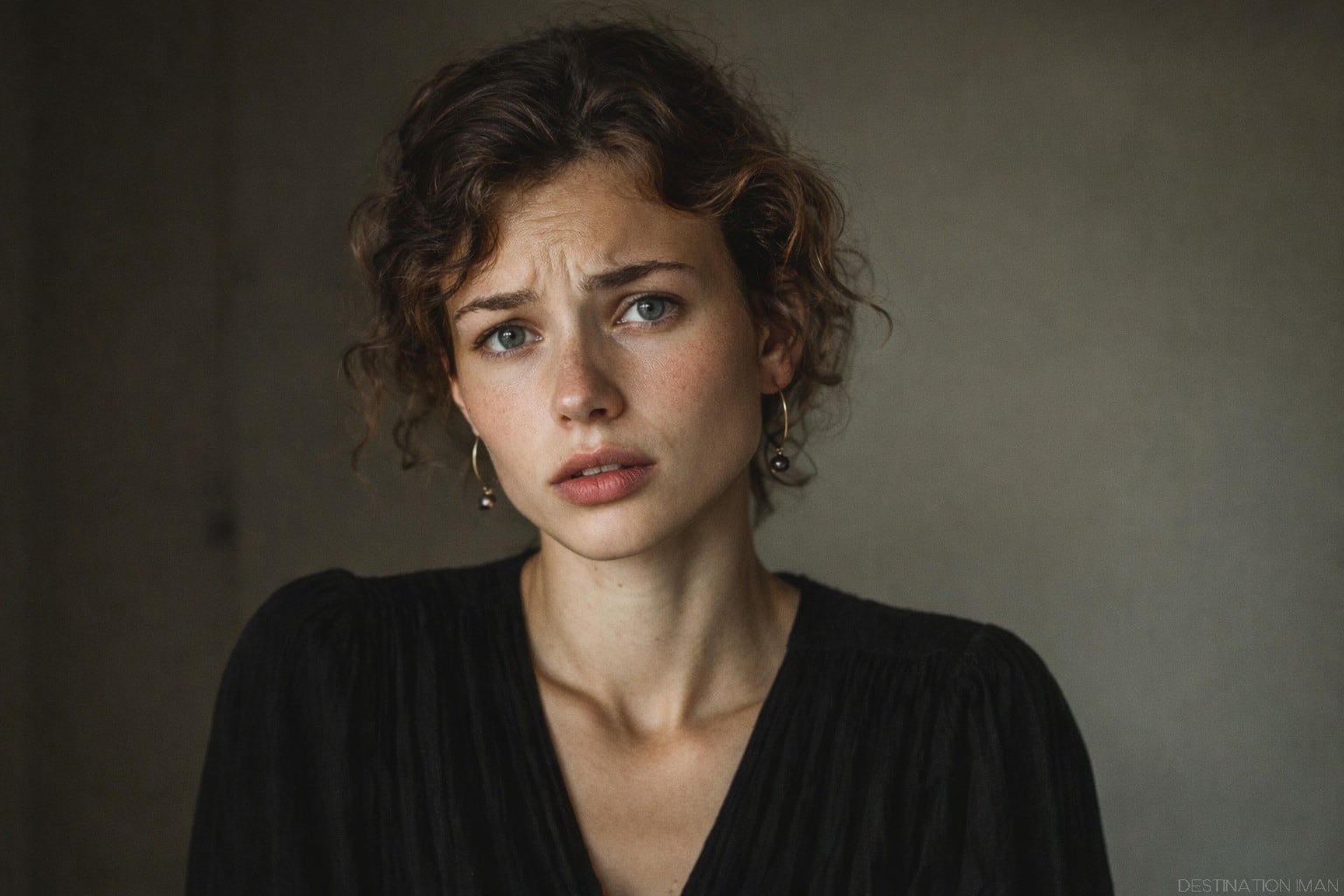
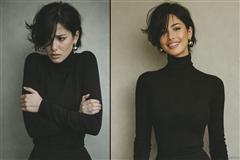
Being photographed increases self-awareness. The moment someone points a camera at you, your brain shifts into a different mode. This tension subtly affects posture, facial muscles, and expression — often without us noticing.
Common unconscious reactions to cameras include:
- Tensing jaw and neck muscles
- Holding breath or breathing shallowly
- Forcing smiles rather than allowing natural expressions
- Stiffening shoulders and posture
- Focusing on "looking good" rather than being present
Cameras capture these micro-expressions with precision. The very act of being aware of the camera changes how you look, creating a feedback loop of self-consciousness.
Why We Judge Ourselves More Harshly
We know our own faces intimately. Every asymmetry, every imperfection, every feature we wish were different — we've studied them for years. This familiarity leads to stronger self-criticism when something looks "off" in a photo.
Others, however, rarely notice the details we fixate on. Research in social perception shows that people spend far less time analyzing others' appearances than we imagine. What feels like a glaring flaw to you is usually completely invisible to viewers.
This cognitive bias — where we overestimate how much others notice our flaws — is called the spotlight effect. We assume we're under a spotlight of scrutiny when in reality, most people barely register the details we obsess over.
The Role of Expectations
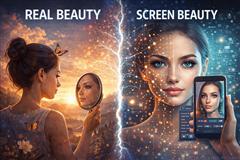
We approach photos with expectations shaped by mirrors, carefully curated selfies, and filtered images online. Social media has created unrealistic standards where every photo is supposed to be perfectly lit, perfectly angled, and perfectly edited.
When reality doesn't match those expectations, disappointment follows. This is a psychological reaction — not an objective evaluation of how you actually look.
The comparison between your unfiltered reality and the polished images you see online creates an unfair standard. Remember that most photos you see of others are the result of dozens of attempts, careful lighting, and often digital editing.
Why Some People Always Look Better in Photos
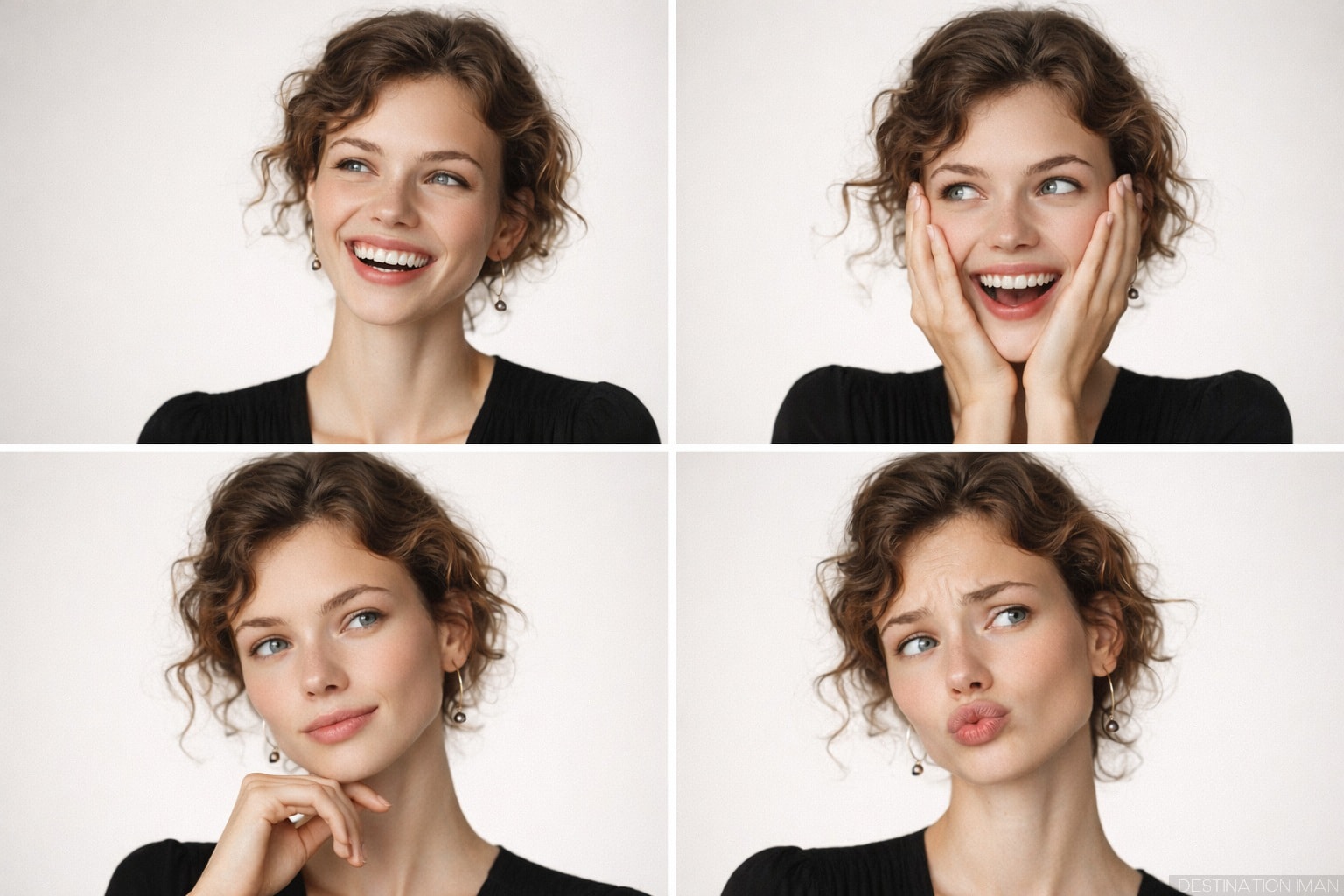
People who look "photogenic" often share certain traits, but these are learned skills rather than genetic gifts:
- They are relaxed around cameras — no tension means natural expressions
- They understand angles subconsciously — through practice and observation
- They express emotion naturally — rather than forcing smiles
- They move between shots — creating dynamic, candid moments
- They don't overthink — staying present rather than worrying about appearance
These skills are learned, not innate. With practice, anyone can become more comfortable and natural in front of cameras.
How to Look More Like Yourself in Photos
Technical Adjustments
- Use longer focal lengths when possible — 50mm or longer for portraits
- Position yourself at a comfortable distance — not too close to the camera
- Find soft, natural lighting — near windows or in open shade outdoors
- Avoid harsh overhead lights — they create unflattering shadows
Posing and Expression
- Relax shoulders and jaw — tension shows immediately in photos
- Focus on emotion, not perfection — think about something pleasant
- Move between shots — slight movements prevent stiffness
- Think "long neck" — gently extend your neck to avoid double chin
- Breathe naturally — holding breath creates tension
Mental Approach
Most importantly, allow yourself to be seen naturally. Stop trying to control every aspect and trust that your natural expression is more appealing than a forced pose. The camera captures authenticity — the more you try to manufacture perfection, the less natural you'll look.
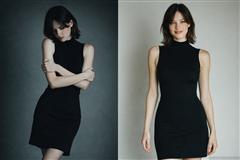
Quick Photo Preparation Checklist
- Take a deep breath and drop your shoulders
- Think of something that makes you genuinely happy
- Slightly extend your neck (imagine a string pulling you up)
- Position yourself in soft, flattering light
- Keep your body at a slight angle, not straight-on
- Remember: movement between shots creates natural expressions
Frequently Asked Questions
Why do selfies look different from photos taken by others?
Selfies are typically taken with wide-angle lenses at close distances (arm's length), which exaggerates facial features due to perspective distortion. Additionally, selfies show your familiar mirrored image if taken with a front-facing camera, while photos by others show the unfamiliar "true" version.
Is the mirror or the photo more accurate?
Neither is fully accurate. The mirror shows a reversed image, while photos introduce lens distortion, lighting variables, and frozen moments. The "real you" is actually somewhere between these representations — a three-dimensional, moving person that neither medium can perfectly capture.
Can psychology really change how photos look?
Yes. Emotional state and self-perception significantly affect appearance on camera. Tension, anxiety, and self-consciousness all manifest physically in your expression, posture, and micro-expressions. Relaxed, confident people genuinely photograph better because their positive mental state shows in their body language.
Why do I look good in some photos but terrible in others?
Multiple factors converge: lighting quality, focal length, distance from camera, the exact micro-moment captured, your emotional state, and even the photographer's skill. Small changes in any of these variables can dramatically affect the result.
How can I get used to seeing myself in photos?
Exposure therapy works. The more you see photos of yourself, the more familiar (and therefore acceptable) they become. Consider that others already see you this way every day and find you perfectly normal-looking. Your discomfort is purely from unfamiliarity, not actual unattractiveness.
Do professional photographers really make a difference?
Absolutely. Professional photographers understand focal length, lighting, angles, and how to make subjects comfortable. They know which lens to use, where to position you, how to direct your expression, and can capture you at your most natural. The difference between a casual snapshot and a professional portrait is dramatic.
Final Thoughts
Looking different in photos is not a flaw — it's a result of perception, psychology, and optics. Understanding these factors removes unnecessary self-criticism and helps you approach photography with confidence.
The version of you in photos is the version everyone else sees and knows. Your discomfort comes from unfamiliarity, not from any actual problem with your appearance. When you stop fighting the camera and start understanding it, photos become far more natural and expressive.
Remember that every person struggles with this to some degree. The difference between people who photograph well and those who don't is usually just comfort, practice, and understanding — all of which can be learned.