Introduction
A woman gets ready for a date. She looks in the mirror—satisfied. She takes a selfie—even better. She arrives at the restaurant. Her date pauses, momentarily disoriented. Something doesn't match.
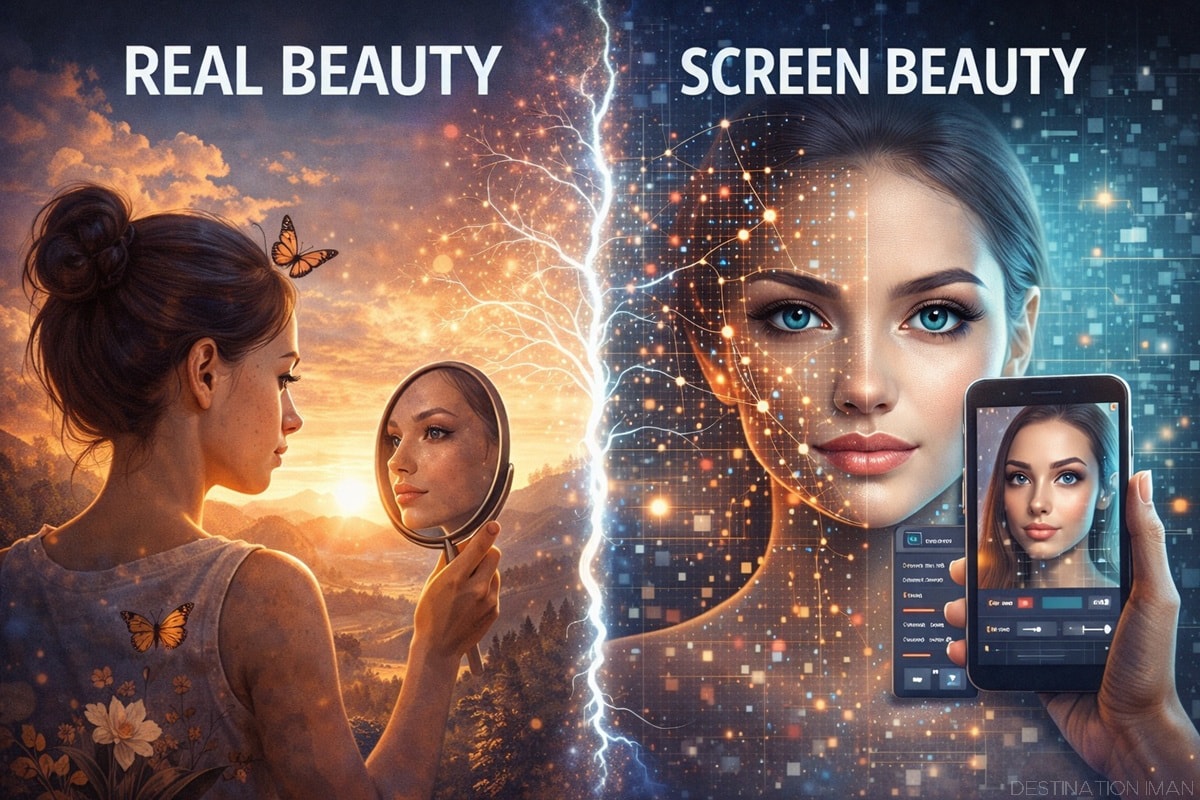
This moment, now common enough to be cliché, reveals a fundamental truth: screen beauty and real beauty are not the same thing. They are not even variations of the same thing. They are two distinct formats, each operating under different constraints, optimized for different conditions, and perceived through different mechanisms.
This article examines the technical, perceptual, and experiential differences between beauty as it appears on screens and beauty as it exists in physical space—and why confusing the two creates psychological friction.
Two Different Formats
The core distinction is simple but profound:
Optimized for display
Two dimensions
Controlled lighting
Frozen moments
Algorithmic processing
Optimized for presence
Three dimensions
Variable lighting
Continuous movement
Unmediated perception
Screen beauty is optimized for display. It exists in two dimensions, controlled lighting, frozen moments, and algorithmic processing. Its purpose is visual performance—to capture attention, generate engagement, and communicate status within digital systems.
Real beauty is optimized for presence. It exists in three dimensions, variable lighting, continuous movement, and unmediated perception. Its purpose is relational—to facilitate connection, communication, and recognition within physical interaction.
What Screen Beauty Actually Is
Screen beauty is not "fake beauty." It is beauty engineered for a specific medium.
The Technical Reality
Every face you see on a screen has been technically transformed:
Four Layers of Technical Transformation
- Computational photography: Modern cameras don't capture—they compute. Multiple exposures are merged, colors are corrected, faces are automatically enhanced before the image is even saved
- Compression algorithms: When uploaded to platforms, images are compressed in ways that selectively preserve skin smoothness while reducing texture detail
- Display optimization: OLED and LED screens emit light directly, creating color saturation and contrast impossible in reflected light
- Framing control: Every screen image represents a chosen moment, angle, and expression from potentially dozens or hundreds of attempts
What This Produces
Screen beauty has specific characteristics:
- Flattened depth (2D representation of 3D reality)
- Frozen moment (no temporal variation)
- Controlled composition (optimized framing and cropping)
- Enhanced color (beyond what physical pigments can produce)
- Perfect stillness (no micro-movements or asymmetries)
What Real Beauty Actually Is
Real beauty operates under entirely different constraints.
The Physical Reality
Physical appearance exists in conditions that screens cannot replicate:
Four Constraints of Physical Presence
- Three dimensions: Real faces have depth, contour, and spatial presence that change based on viewing angle
- Continuous movement: Expressions shift, eyes move, micro-expressions flicker across the face constantly
- Variable lighting: Appearance changes throughout the day as lighting conditions shift—and skin cannot emit light, only reflect it
- Temporal existence: Real beauty unfolds over time rather than existing in a single frozen optimal moment
What This Produces
Real beauty has characteristics that screens cannot capture:
- Dimensional complexity (different from every angle)
- Dynamic variation (constantly shifting expression)
- Contextual responsiveness (changes with environment and interaction)
- Imperfect symmetry (natural asymmetries visible in motion)
- Relational qualities (charisma, presence, warmth that emerge through interaction)
The Technical Translation Problem
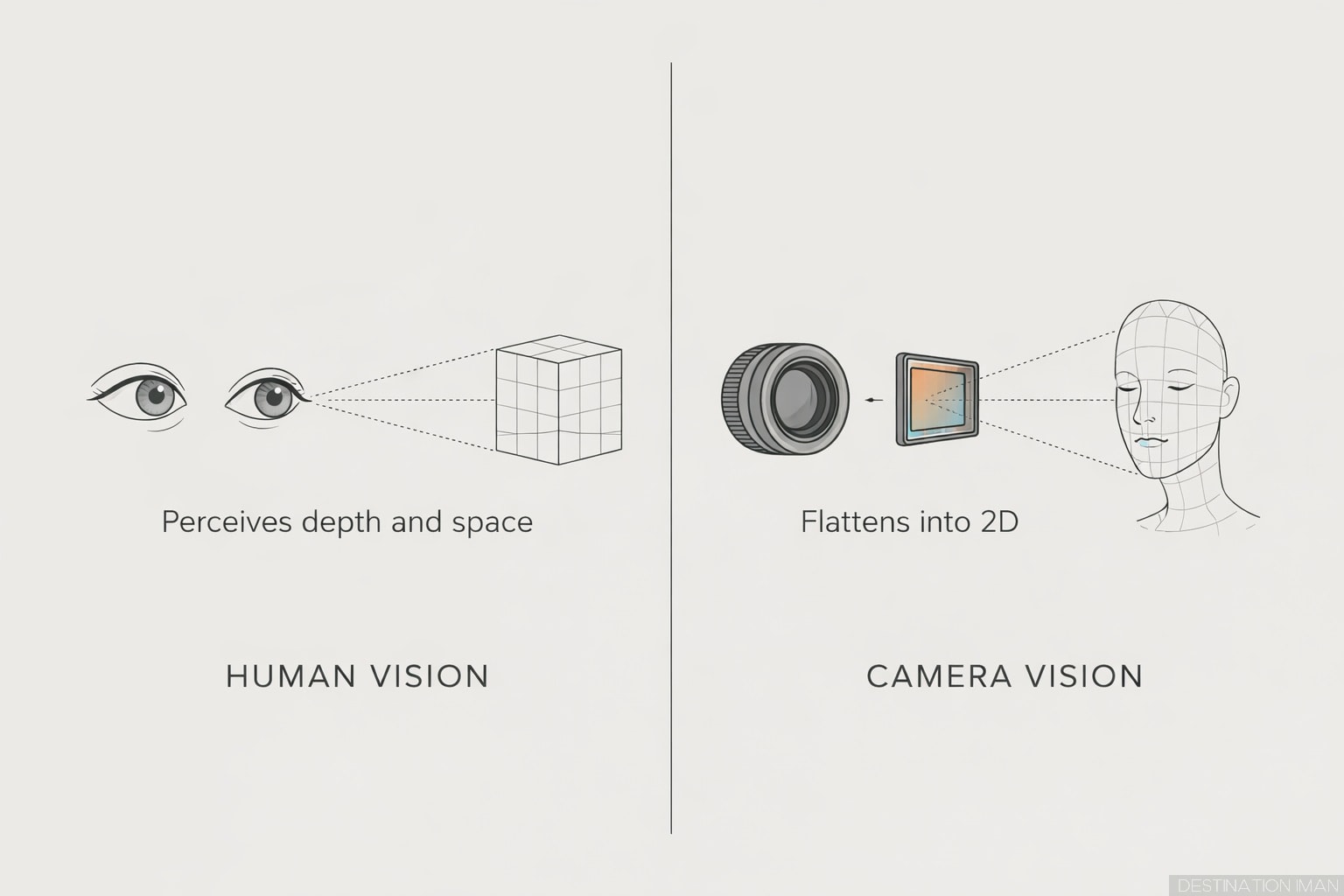
The gap between screen and reality is not just aesthetic—it's technical. Cameras cannot capture what human perception experiences.
How Cameras Differ from Human Vision
Four Critical Technical Differences
- Depth perception: Human eyes create true depth through binocular vision; cameras flatten 3D space onto a 2D plane, compressing features and distorting spatial relationships
- Dynamic range: Human eyes perceive detail in both highlights and shadows simultaneously; cameras must choose exposure, sacrificing detail in one or the other
- Color processing: Human vision automatically adjusts white balance; cameras apply algorithmic processing that often oversaturates or shifts skin tones
- Focal length effects: Human vision ≈ 50mm; phone cameras ≈ 28-35mm (wide angle), causing facial distortion—nose appears larger, face appears wider
The Accumulation Effect
Each technical limitation compounds. By the time an image reaches a screen, it has passed through:
- Lens distortion
- Sensor interpretation
- Computational processing
- Compression algorithms
- Display rendering
The Lighting That Cannot Exist
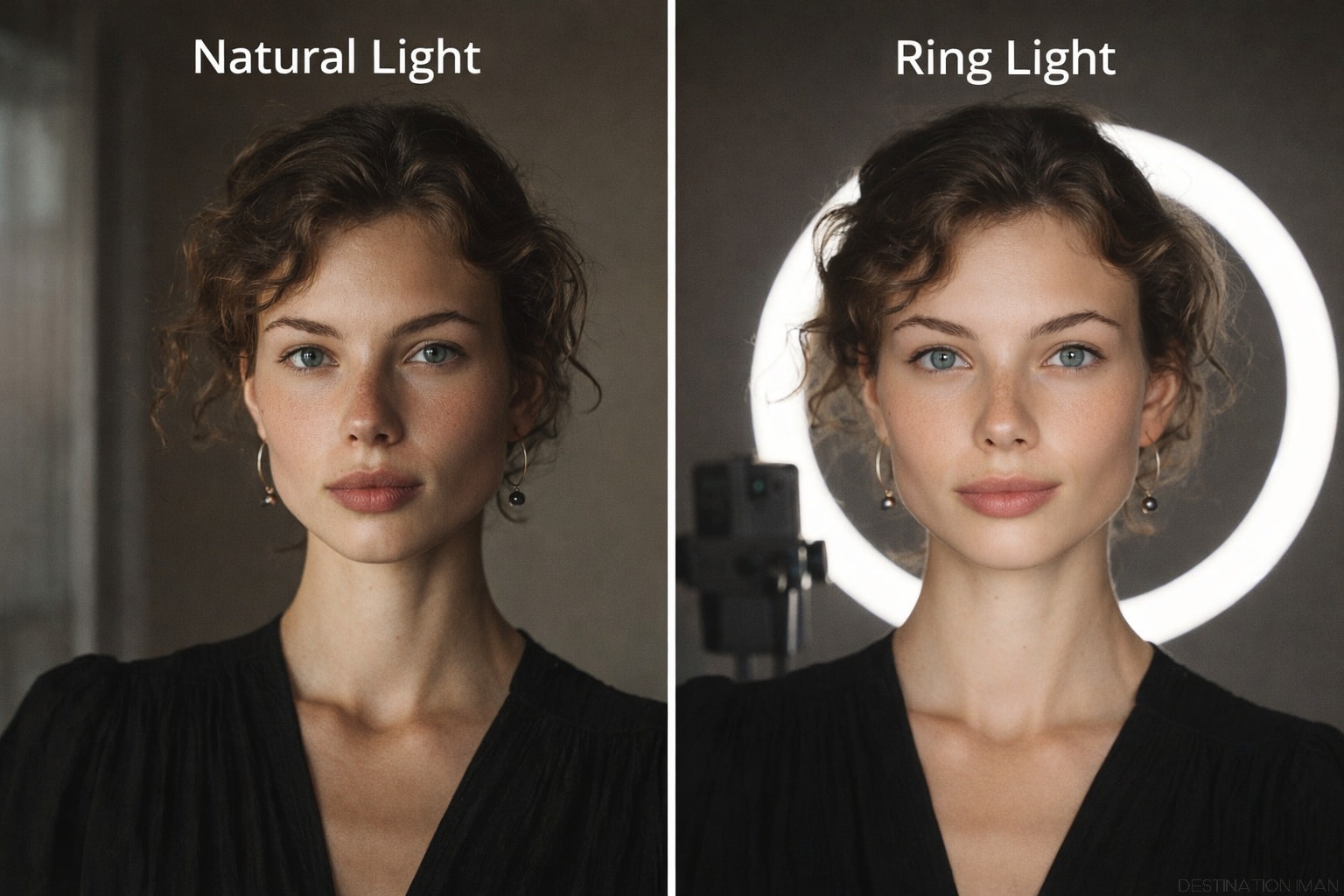
One of the most significant but least discussed differences: screen faces exist in impossible lighting.
Ring Light Reality
The ubiquitous ring light creates lighting conditions that do not occur in nature:
- Perfectly even illumination from all angles simultaneously
- Elimination of shadows under eyes, nose, and chin
- Catchlights that make eyes appear larger and brighter
- Flattening of facial depth while maintaining definition
Screen Glow vs Reflected Light
Screens emit light. Physical faces reflect it. This creates a fundamental perceptual difference:
Glows with internal illumination
Impossible color saturation
Creates luminosity impression
Vibrant even in darkness
Depends on ambient light
Appears muted by comparison
Changes with light source
Cannot achieve screen saturation
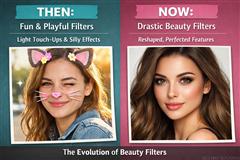
Stillness vs Motion
Perhaps the most significant difference: screen beauty is frozen. Real beauty moves.
The Frozen Optimal Moment
Every image represents:
- One expression selected from many
- One angle chosen from multiple attempts
- One moment when everything aligned
- One configuration that happened to look optimal
Micro-Expressions and Asymmetry
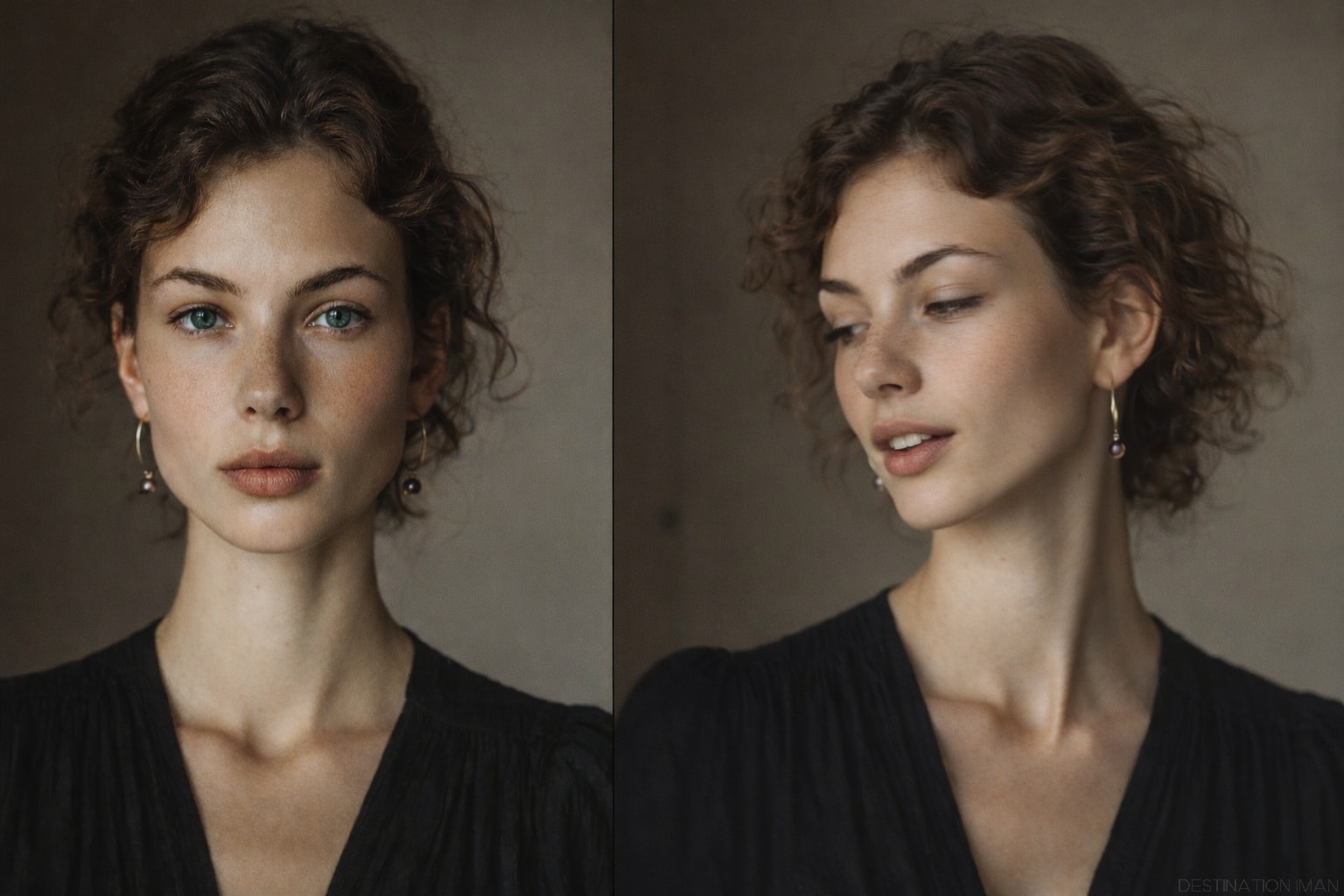
In motion, real faces reveal:
- Natural asymmetries (one eye slightly different from the other)
- Micro-expressions (fleeting emotional signals)
- Imperfect smiles (genuine expressions rarely perfectly symmetrical)
- Variation in muscle tension (constant subtle shifting)
The Charisma Problem
Some qualities that make someone attractive in person do not translate to still images:
- Animated expressions
- The way they move through space
- Voice and manner of speaking
- Energy and presence
Conversely, some people are exceptionally photogenic but less striking in person because their features optimize for stillness rather than motion.
The Flattening Effect
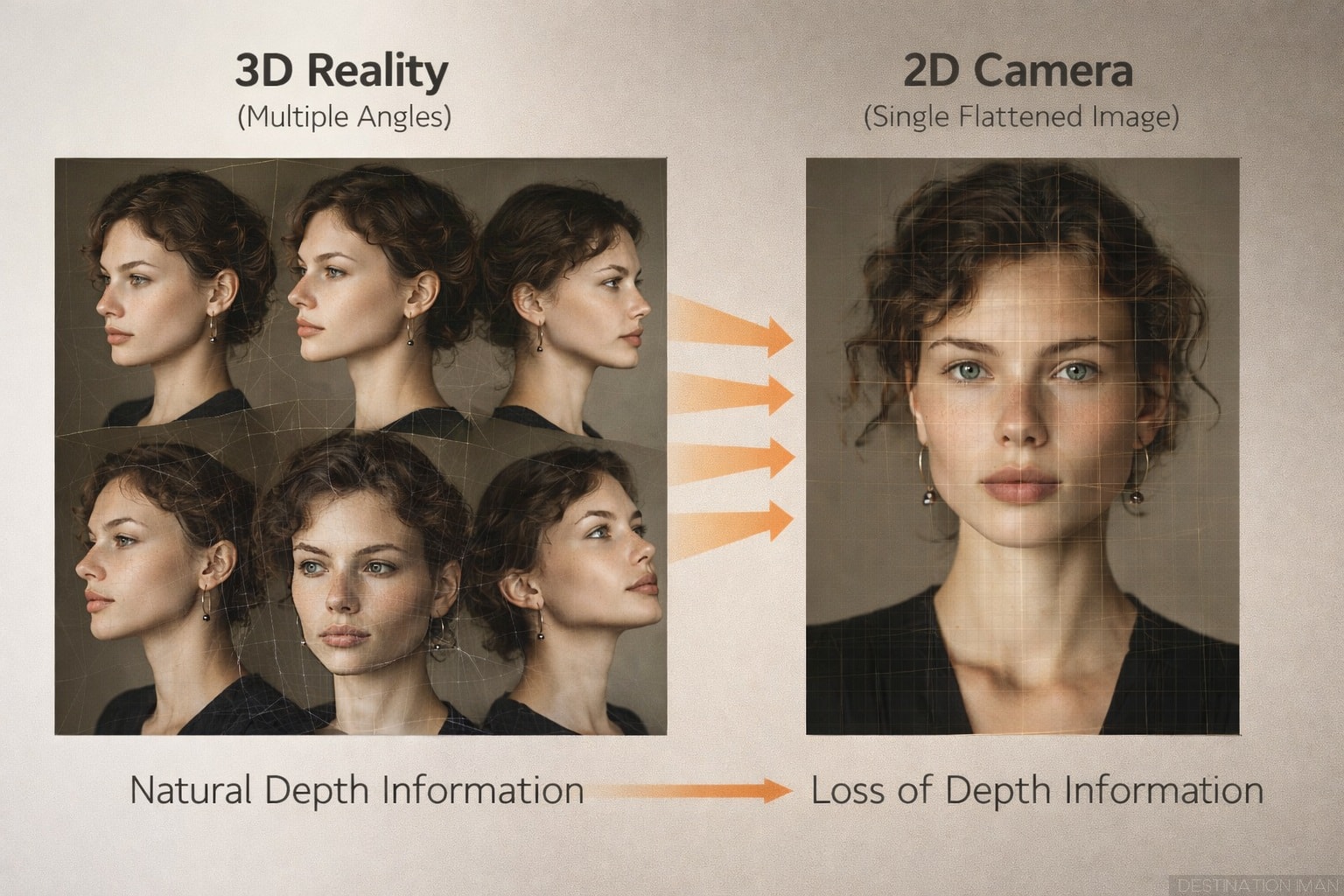
How 2D Distorts 3D
When three-dimensional faces are flattened onto two-dimensional screens:
Three Critical Distortions
- Depth cues disappear: The subtle contours that create facial character become invisible
- Proportions shift: Features closer to the camera appear disproportionately large
- Spatial relationships compress: The distance between features appears different than in 3D space
Why This Matters
The flattening effect explains common experiences:
Three Common Distortion Experiences
- The phone camera distortion: Holding a phone at arm's length creates wide-angle distortion that makes faces appear wider and noses larger than human binocular vision perceives
- The professional photo surprise: Professional photographers use longer focal lengths (85mm+) that compress features differently—which is why professional portraits often look "more accurate" despite being just as technically mediated
- The mirror vs camera gap: Mirrors show you your face in 3D with binocular vision. Cameras flatten it. This is why your camera image often feels "wrong" even though others say it looks like you
When the Gap Becomes Visible
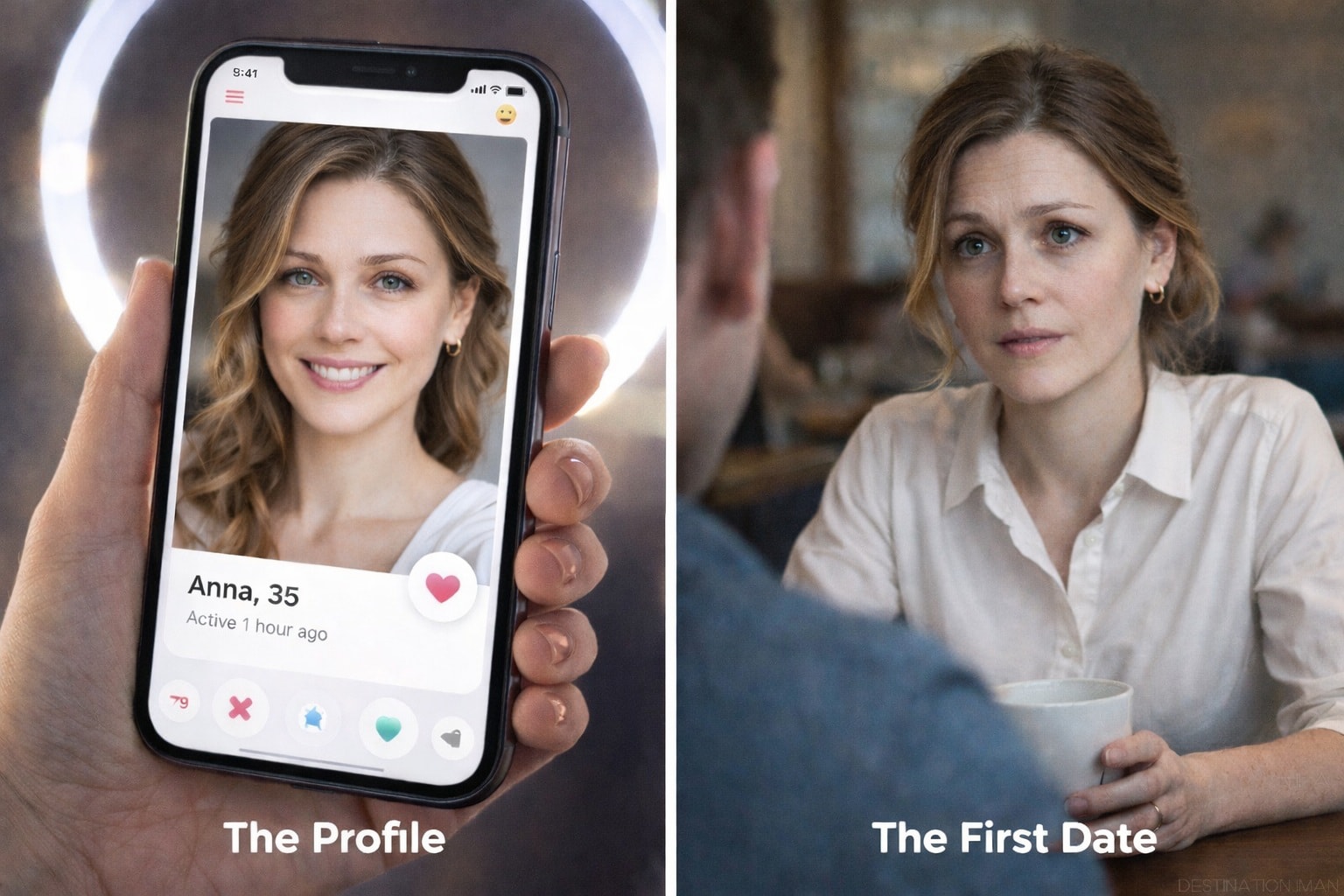
Specific scenarios where the screen-reality gap creates dissonance:
Dating Apps to First Dates
The most common contemporary example:
- Profile photos: Optimal angle, lighting, expression, selected from many attempts
- First date: Natural indoor lighting, continuous motion, authentic expressions, three-dimensional presence
The gap is so predictable it has become culturally expected. Yet both parties often feel mildly deceived, even when neither deliberately misrepresented themselves—the medium itself creates the gap.
Video Calls
Remote work introduced mass exposure to another format: live video.
Video calls occupy an uncomfortable middle ground:
- More "real" than photos (movement, voice, real-time interaction)
- More "screen" than in-person (2D, compressed, specific angle, unnatural eye contact)
This hybrid format creates its own dissonance. Your video call appearance doesn't match your selfie, your mirror, or how others see you in person. It's simply another format.
Professional Photography Sessions
Many people report discomfort when receiving professional photos. Even high-quality, well-executed portraits often feel "off" compared to their filtered selfies.
Why? Professional photos capture real texture, dimension, and imperfection—rendered in high fidelity. Selfies, processed through beauty mode and filters, show an optimized version. When you're accustomed to the optimized version, accuracy feels like criticism.
The Group Photo Problem
In group photos, people immediately assess how they look compared to others in the frame. But everyone in that photo has been processed by the same camera under the same conditions—flattened, compressed, color-shifted together.
Yet brains interpret the comparison as "how I look vs how they look" rather than "how the camera rendered me vs how it rendered them."
How This Reshapes Perception
The Reference Point Shift
Extended exposure to screen beauty recalibrates internal references:
Four Stages of Perceptual Drift
- Initial state: Your reference for "what faces look like" comes from in-person interaction
- Transition period: You begin seeing more faces on screens than in person
- Recalibration: Screen-optimized faces become your reference for "normal"
- Perceptual drift: Real faces, including your own, begin to feel inadequate by comparison
The Texture Problem
One specific effect: texture aversion.
Screens, especially with beauty filters active, show impossibly smooth skin. Over time, visible skin texture—pores, fine lines, natural variation—can begin to register as undesirable rather than normal.
Why In-Person Meetings Feel Jarring
When you've primarily seen someone through screens, meeting them in person can feel disorienting—even when they're objectively attractive.
Flattened, optimized screen version
Perfect stillness and symmetry
Consistent lighting and color
3D, moving person
Natural asymmetries
Variable appearance
The dissonance isn't that they look worse—it's that they look different in format, and your perceptual system struggles to reconcile the two versions.
Understanding Format, Not Failure
The key to reconciling screen beauty and real beauty is recognizing them as distinct formats, not competing versions of the same thing.
Helpful Analogies
• Live concert (real beauty): Dynamic, interactive, spatially present, unrepeatable
• Studio recording (screen beauty): Controlled, optimized, reproducible, polished
Both are "the song." Neither is fake. They're different formats with different strengths.
• Food photography (screen beauty): Optimized for visual appeal, often inedible by the time it's photographed
• Actual meal (real beauty): Optimized for taste, aroma, and eating experience
Food photos don't taste like anything. Real food doesn't need to look like the photo.
What This Means Practically
Three Critical Realizations
- Your mirror and your camera show different things. Neither is "the truth." Your mirror shows you in 3D with binocular vision. Your camera shows you flattened through a lens. Other people see you in 3D, in motion, in variable lighting—closer to mirror than camera
- Screen-optimized beauty doesn't transfer to real life. Features that photograph well (strong symmetry, high contrast, bold features) may look harsh in person. Features that look striking in person (subtle expressions, warmth, dynamic range) may appear unremarkable in photos
- Filters are not previews of surgery results. Filters optimize for 2D screen display. Surgery alters 3D physical structure. The filtered version will not be what you see in the mirror post-surgery because filters aren't simulating surgery—they're simulating different camera processing
A More Useful Framework
Instead of asking "Am I attractive?" (which collapses format), ask:
- "Do I photograph well?" (screen beauty)
- "Do I have presence in person?" (real beauty)
- "Am I optimizing for the right format for my goals?"
Conclusion
Screen beauty and real beauty are not the same thing rendered differently. They are fundamentally different categories of visual experience, optimized for different media and perceived through different mechanisms.
Core Understanding
- Screen beauty: Engineered for display—flattened, frozen, processed, and optimized for visual performance in two-dimensional digital space
- Real beauty: Experienced through presence—dimensional, dynamic, variable, and perceived through multi-sensory human interaction in physical space
The contemporary crisis is not that people are becoming less attractive. It is that screen beauty has become so dominant that it is mistaken for a standard that real beauty should approximate.
Understanding this distinction doesn't require rejecting screens or idealizing physical presence. It requires recognizing that each format has different constraints, different strengths, and different purposes.
Your face on screen is one version. Your face in the mirror is another version. Your face in motion, in variable lighting, in authentic interaction—that's a third version. None is more "real" than the others. They're just different formats.
And you don't have to optimize for all of them.
Sources & Further Reading
- Body Image Journal – Research on Appearance, Media, and Self-Perception
- New Media & Society – Digital Culture Studies
- Pew Research Center – Social Media & Technology
- Royal Society Publishing – Human Perception & Technology
- Nature – Perception Research
- Journal of Consulting and Clinical Psychology – Body Image Research