Understanding how beauty filters reshape identity, perception, and the relationship between digital and physical self
Introduction
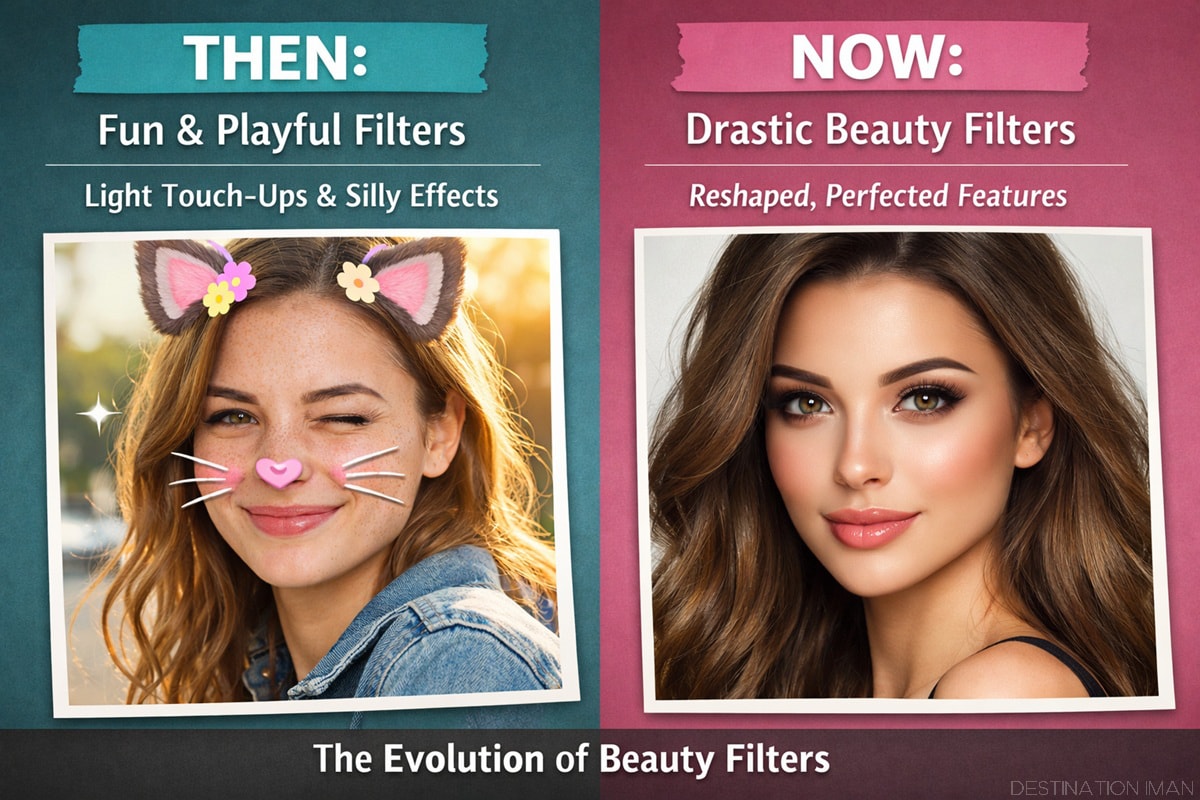
Beauty filters were initially introduced as playful tools—a way to adjust lighting, smooth skin, or add visual effects. Over time, however, filters have evolved into powerful instruments that subtly reshape facial features and redefine what users consider normal.
What started as entertainment has become infrastructure. For millions of users, filters are no longer optional enhancements—they are the default interface between self and screen.
The Evolution of Beauty Filters
- 2010-2015: Playful effects and obvious transformations (animal ears, rainbow overlays)
- 2016-2020: Subtle "beautification" became standard (skin smoothing, eye enlargement)
- 2021-2026: AI-powered real-time facial reconstruction became default on major platforms
This article explores how filters affect self-image, why their impact extends beyond screens, and how filtered beauty can alter identity and perception in ways that persist long after the camera is turned off.
What Beauty Filters Actually Do
Modern beauty filters rarely announce themselves. Instead of dramatic changes, they apply small adjustments that collectively create a different face.
The Technical Operations
Four Primary Filter Functions
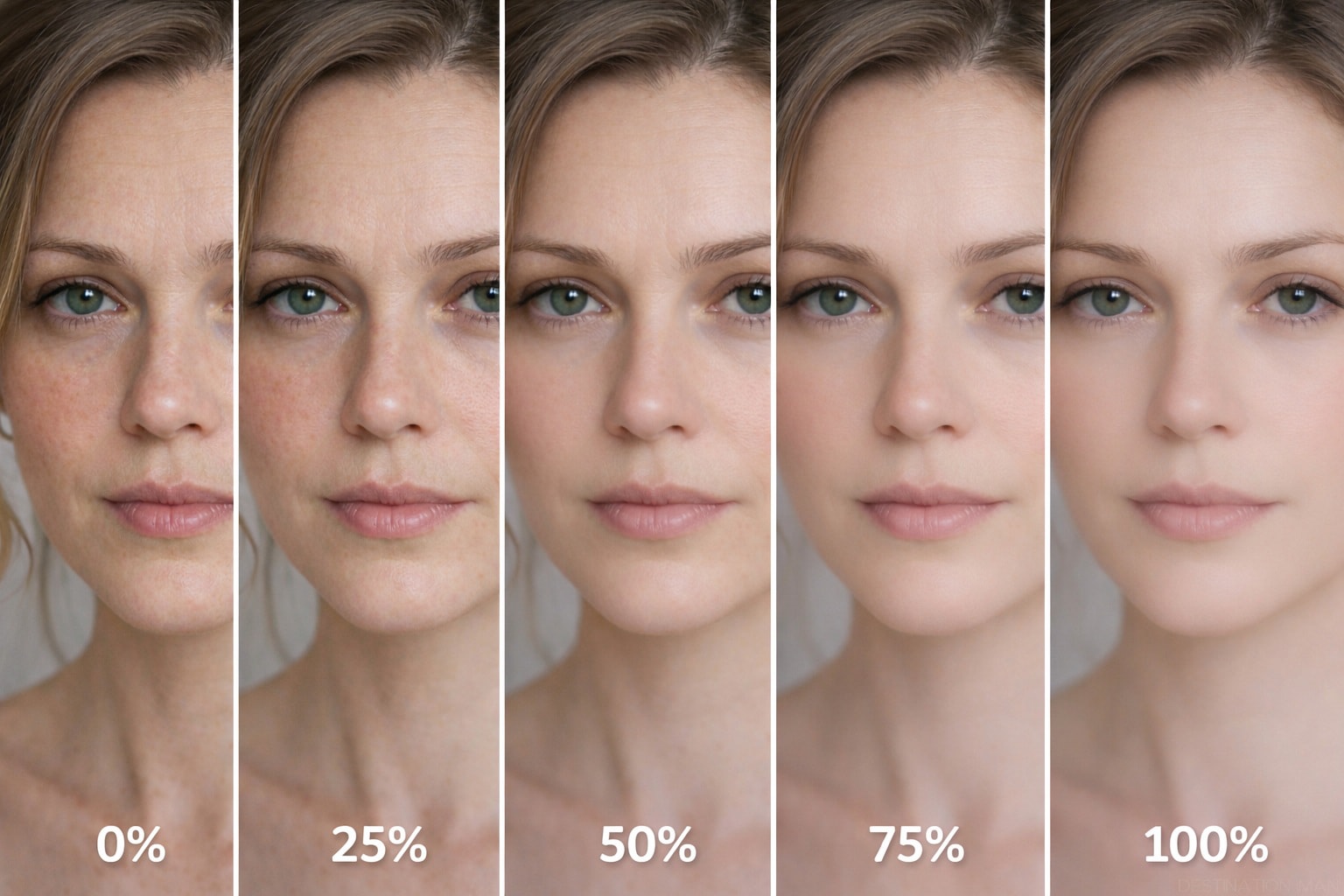
- Smoothing skin texture: Eliminates pores, fine lines, and natural variation in skin surface
- Adjusting facial symmetry: Subtly reshapes features to match mathematical "ideal" proportions
- Enhancing eyes and lips: Enlarges eyes, brightens whites, increases lip volume and definition
- Altering lighting and contrast: Applies impossible lighting conditions optimized for 2D display
Because these changes appear subtle, filtered images often feel realistic—even when they represent an impossible version of the face.
What Makes Modern Filters Different
Unlike earlier photo editing that happened after capture, modern filters operate in real-time:
- Active during capture: The filtered version is what you see while taking the photo, not applied afterward
- Default activation: Many camera apps have beautification active by default, requiring conscious effort to disable
- Instant feedback: You see the "improved" version immediately, creating instant preference
- Seamless integration: No separate editing step—the altered version feels like the natural output
The Normalization of Filtered Faces
Repeated exposure to filtered faces normalizes artificial features.
When most images in a feed are subtly enhanced, unfiltered faces begin to stand out—not as authentic, but as flawed.
The Perceptual Baseline Shift
Your brain builds its understanding of "normal" faces from the faces it sees most frequently. When that input is predominantly filtered:
Four Stages of Normalization
- Exposure: Filtered faces dominate your visual feed (social media, selfies, video calls)
- Adaptation: Your brain recalibrates "normal" based on this filtered majority
- Comparison: Unfiltered faces now appear as deviations from the new baseline
- Expectation: Filtered features become the expected standard, unfiltered features become "flaws"
The Social Feedback Loop
Normalization is reinforced through social validation:
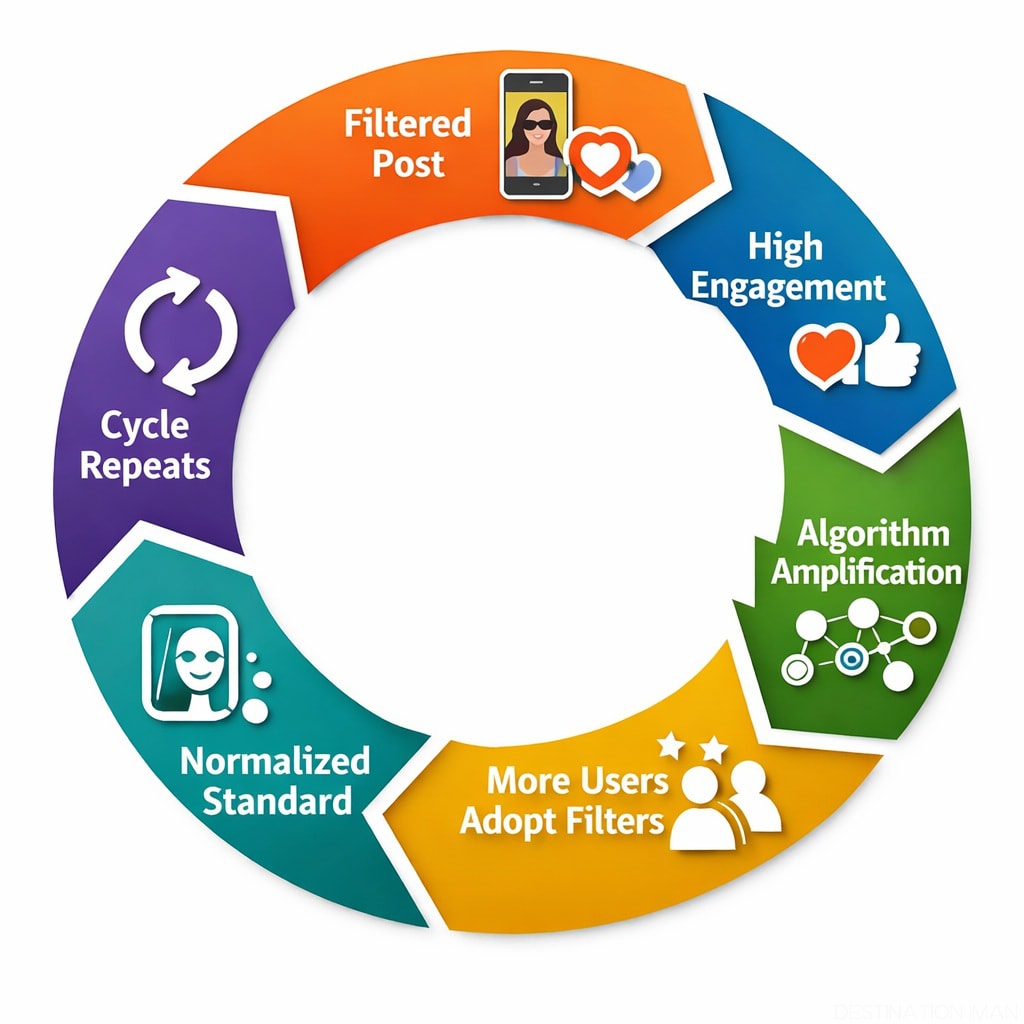
- Filtered images consistently receive more engagement (likes, comments, shares)
- Algorithms amplify high-engagement content, creating more filtered visibility
- Other users adopt filters to match the apparent standard
- The cycle accelerates as the filtered majority grows
Filters and Constant Self-Comparison
Filters intensify appearance-based comparison by placing the filtered self next to the unfiltered self.
The Unique Nature of Filter-Based Comparison
Unlike comparing yourself to others (which has always existed), filters create a new category: comparison to an algorithmically optimized version of yourself.
Three Types of Filter-Induced Comparison
- Mirror vs. Filtered Image: Your physical reflection compared to your screen-optimized version
- Unedited vs. Filtered Posts: The photos you don't post compared to the ones you do
- Your Real Face vs. Algorithmically Rewarded Faces: Your unmediated appearance compared to high-engagement filtered content
This form of comparison is uniquely personal and persistent, making dissatisfaction more likely.
Why Filter Comparison Feels Different
When comparing yourself to a celebrity or model, psychological distance provides some protection: "Of course they look better—they have professional styling, lighting, genetics."
When comparing yourself to your filtered self, that distance collapses:
- It's still recognizably you (same face structure, same environment)
- The difference feels achievable (it's "just" smoother skin, slightly bigger eyes)
- The filtered version receives more positive feedback, validating it as "better"
- The comparison is constant and immediate (every time you open the camera app)
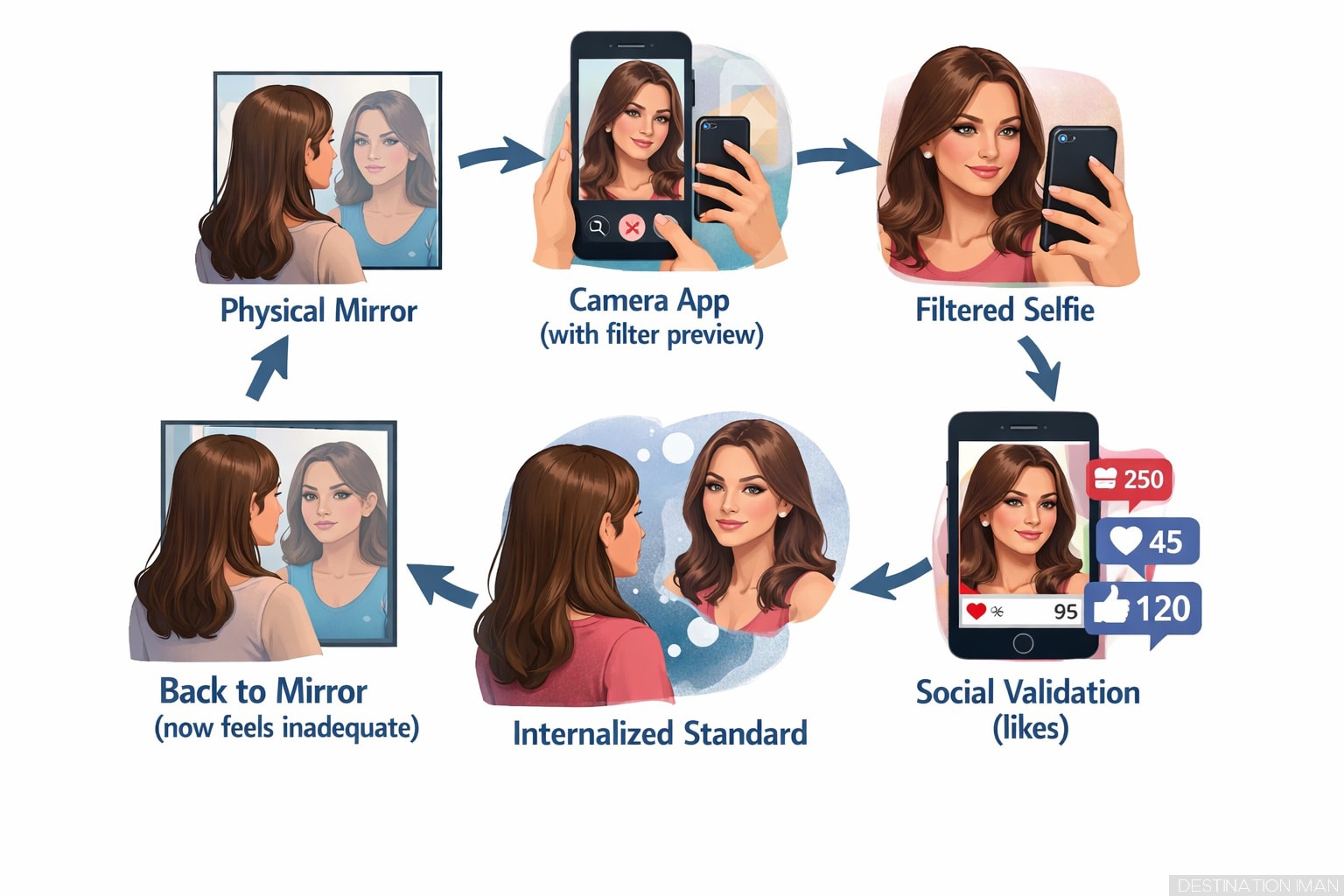
When the Filtered Self Feels More Real
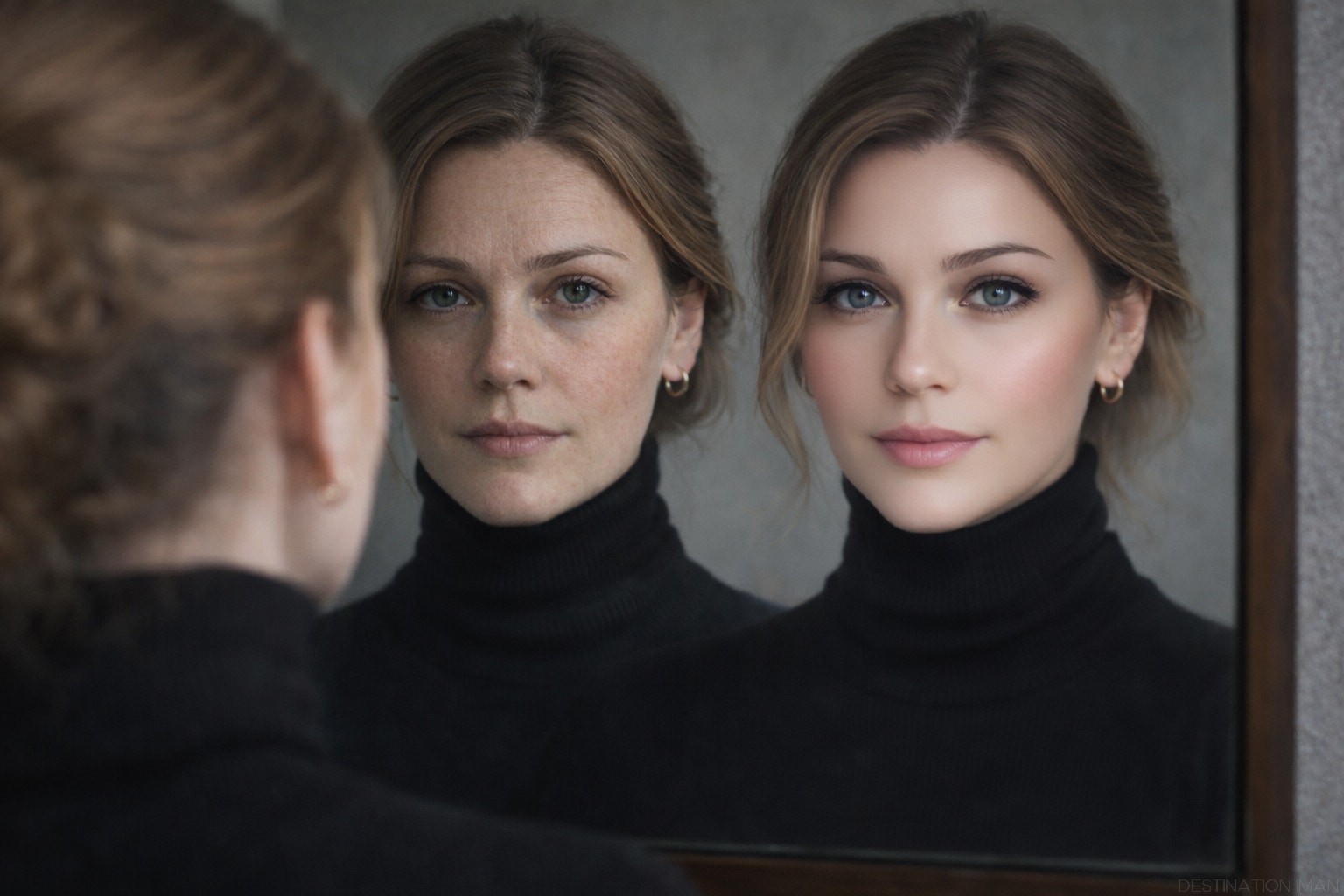
Over time, some users report feeling more comfortable with their filtered appearance than their physical one.
The filtered self becomes familiar, predictable, and socially validated. The real self, by contrast, can feel inconsistent or inadequate.
The Identity Split
This creates a subtle but profound identity fragmentation:
Consistent appearance
Social validation
Algorithmic reward
Feels "presentable"
Optimized for screens
Variable appearance
Lacks validation metrics
Changes with conditions
Feels "inadequate"
Exists in 3D space
When the Filtered Version Becomes "You"
Several factors contribute to this shift in primary identity:
- Frequency of exposure: You may see your filtered face more often than your unfiltered reflection
- Social context: The filtered version is what others see online, making it your "public face"
- Positive reinforcement: Consistent engagement rewards validate the filtered version as "better"
- Cognitive comfort: The filtered version is predictable; the unfiltered version varies with lighting, angle, fatigue
Psychological Effects on Self-Image
Research links frequent filter use with several psychological effects:
Measured Psychological Impacts
Who Is Most Affected?
These effects are strongest among:
- Adolescents: Identity formation coinciding with peak filter exposure
- Young adults (18-29): Social and dating pressure combined with high platform usage
- Individuals with pre-existing body image concerns: Filters amplify existing vulnerabilities
- High-frequency users: Daily filter use shows stronger effects than occasional use
The Role of Validation Systems
Importantly, the harm does not come from filters alone, but from their integration into validation systems driven by likes and visibility.
The Validation Feedback Loop
- Post filtered image → receive high engagement
- Post unfiltered image → receive lower engagement
- Learn that filtered = validated, unfiltered = less valued
- Increase filter use to maintain validation
- Self-image becomes dependent on digital optimization
Without metrics quantifying appearance-based success, filters would likely have less psychological impact.
Long-Term Consequences
As filters become embedded in daily self-presentation, they influence long-term perception and behavior.
Behavioral Changes
Common Long-Term Filter Effects
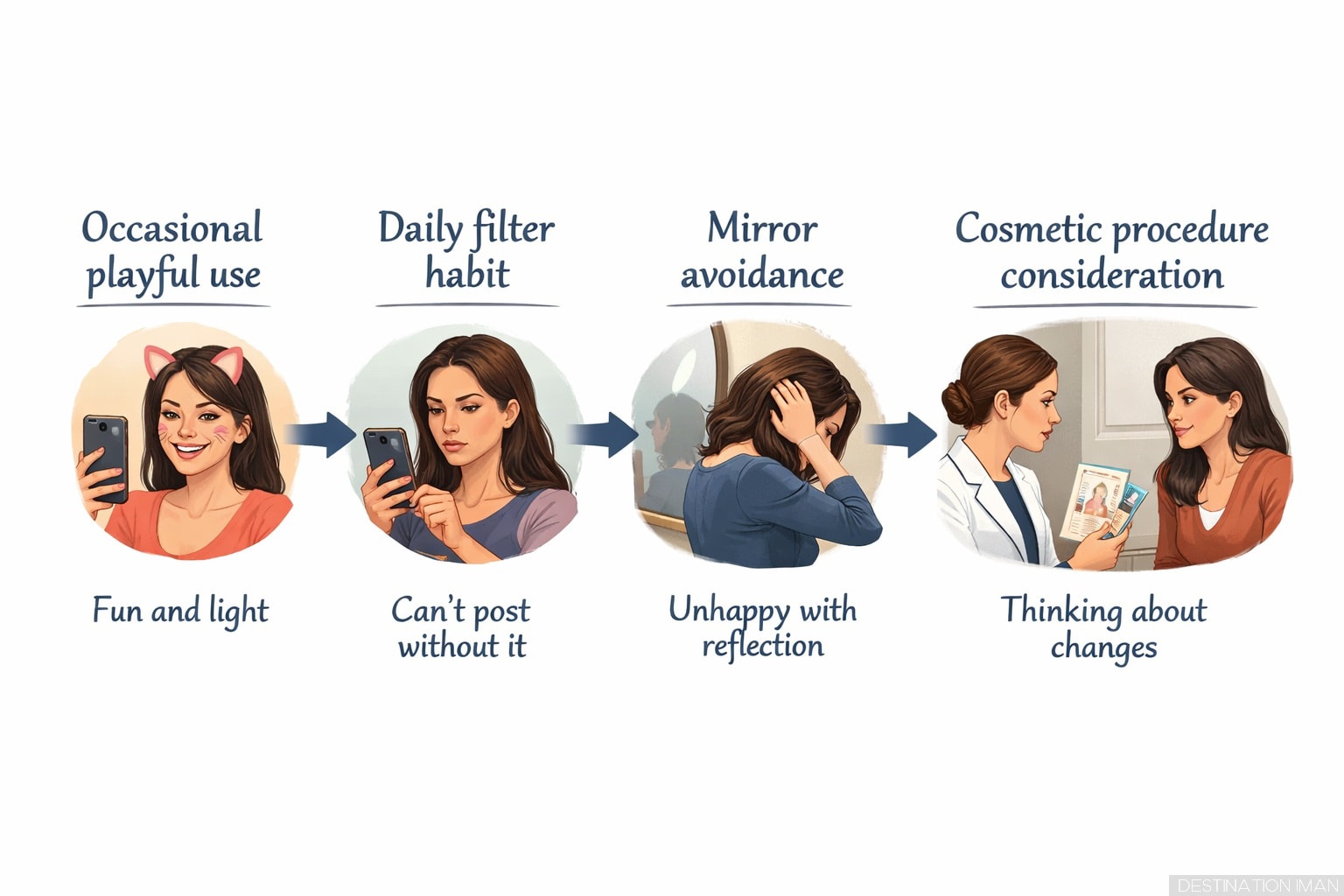
- Mirror avoidance: Preferring phone camera to mirror because the filtered version feels more familiar
- Photo selectivity: Only posting images that meet filtered standards, avoiding candid or unedited photos
- Social anxiety: Increased discomfort in situations where appearance cannot be filtered (in-person meetings, video calls)
- Cosmetic interest: Seeking procedures or products to make physical appearance match filtered version
Filter Dysmorphia
Some users begin to avoid unfiltered images altogether, while others seek cosmetic procedures to resemble their filtered appearance—a phenomenon sometimes referred to as filter dysmorphia or Snapchat dysmorphia.
This trend highlights how digital tools can reshape not only perception, but desire.

The Intergenerational Question
A critical unknown: what happens to individuals who grow up with filters as default?
Current research focuses on users who remember pre-filter life. The generation that never experiences unfiltered digital self-presentation may develop entirely different relationships with identity and appearance.
Rebalancing Digital Self-Perception
Rebalancing does not require rejecting filters entirely.
Instead, it involves restoring awareness and proportion:
Individual Strategies
Practical Steps for Rebalancing
- Recognize filters as visual tools, not standards: Filters optimize for 2D screens, not 3D physical presence
- Reduce reliance on filtered self-presentation: Experiment with posting unfiltered content, starting with low-stakes contexts
- Diversify visual inputs: Actively seek out unfiltered faces in media, art, and real life
- Practice mirror time: Spend time looking at your reflection without immediately reaching for your phone
- Disable default filters: Turn off automatic beautification in camera settings
- Curate your feed: Follow accounts that showcase unfiltered, diverse beauty
The Role of Media Literacy
Understanding how filters work—technically and psychologically—provides protective distance:
- Recognizing that most images you see have been processed
- Understanding that engagement metrics reward optimization, not authenticity
- Knowing that filtered faces represent a separate category from physical faces
Platform Design Changes
Meaningful change also requires platform-level intervention:
- Default-off filters: Requiring active choice to apply filters rather than active effort to remove them
- Filter disclosure: Clear labeling when beauty filters are active
- Algorithmic adjustment: Reducing systematic advantage for filtered content
- Age restrictions: Limiting access to intense beauty filters for younger users

Conclusion
Filters affect self-image by quietly shifting reference points.
What begins as enhancement can become expectation, and what feels normal on screen can distort how reality is perceived.
Understanding this process helps reclaim agency over digital self-image and restores the distinction between representation and identity.
Core Understanding
- Filters create a split between digital and physical self-image
- Frequent filter use correlates with lower appearance satisfaction
- The harm is amplified by integration with validation systems
- Rebalancing requires individual awareness and platform responsibility
- The filtered version is not a preview of potential—it is a separate format
Your filtered face is not a better version of you. It is a different format of you—one optimized for screens, algorithms, and engagement metrics.
Your unfiltered face is not a "before" photo. It is the version that exists in physical space, in motion, in connection with other humans.
Both can coexist. But neither should be mistaken for the other.
Sources & Further Reading
- New Media & Society – Filters and Self-Image
- Body Image Journal – Appearance and Media Research
- American Psychological Association – Selfies and Self-Perception
- BBC Future – How Filters Change Self-Perception
- Nature Human Behaviour – Digital Face Perception
- JAMA Facial Plastic Surgery – Selfies and Dysmorphia