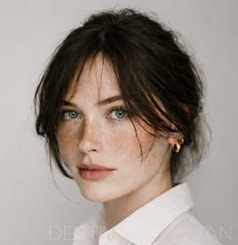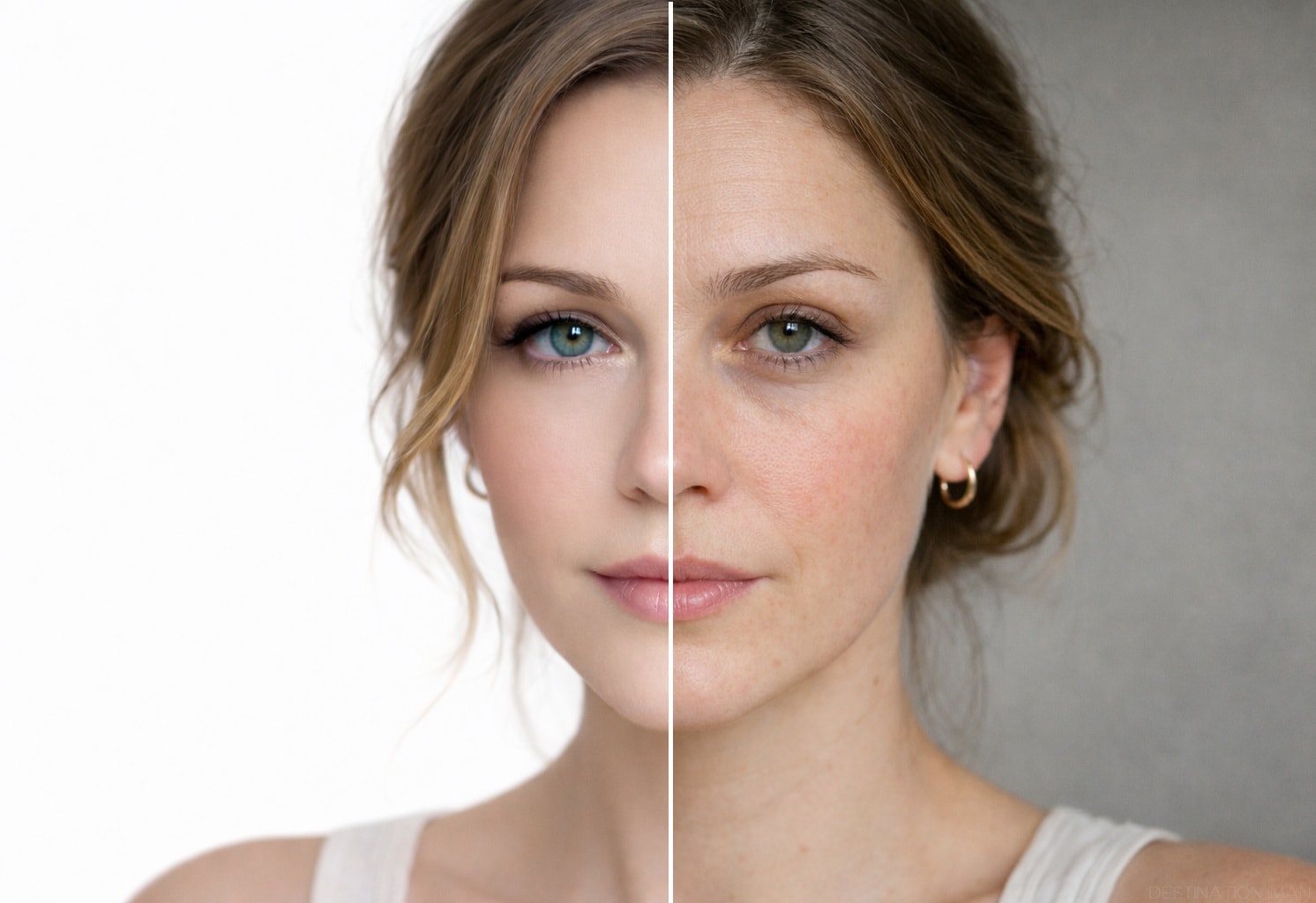
A comprehensive analysis of the transformation of beauty standards in the digital age
Introduction: The Visual Revolution
Between 2010 and 2026, something fundamental shifted in how humans perceive beauty. For the first time in history, the majority of faces people see daily are not physically present. They exist on screens, shaped by cameras, algorithms, filters, and increasingly, artificial intelligence.
This is not simply a continuation of magazine culture or television influence. Digital media introduced three unprecedented changes:
Three Unprecedented Changes
- Volume: Exposure increased from dozens of curated images per week to hundreds of algorithmically selected images per day
- Personalization: Instead of collective standards, each user receives a customized stream of beauty ideals
- Participation: Viewers became creators, placing their own faces into the comparison ecosystem
The result is a transformation so complete that many people under 25 have never experienced beauty standards outside of digital mediation.
This article serves as a comprehensive guide to understanding how digital media reshaped beauty perception, why these changes feel so powerful, and what evidence reveals about their impact on identity, mental health, and culture.
The Scale and Speed of Change
By The Numbers
Research from the Pew Research Center shows that as of 2024:
Traditional media operated at a fundamentally different scale. A fashion magazine reader in 1995 might see 50-100 curated images per month. A social media user in 2026 sees that many before breakfast.
The Compression of Beauty Evolution
Historically, beauty standards evolved gradually—over decades or generations. Regional differences persisted because exposure was limited.
Digital platforms compressed this timeline. Trends that once took years to spread now propagate globally in weeks. The "Instagram face" aesthetic emerged and became dominant across continents in less than five years—a speed impossible in pre-digital eras.
Four Mechanisms That Reshaped Beauty
Digital media didn't simply amplify existing beauty standards. It created new ones through four distinct mechanisms:
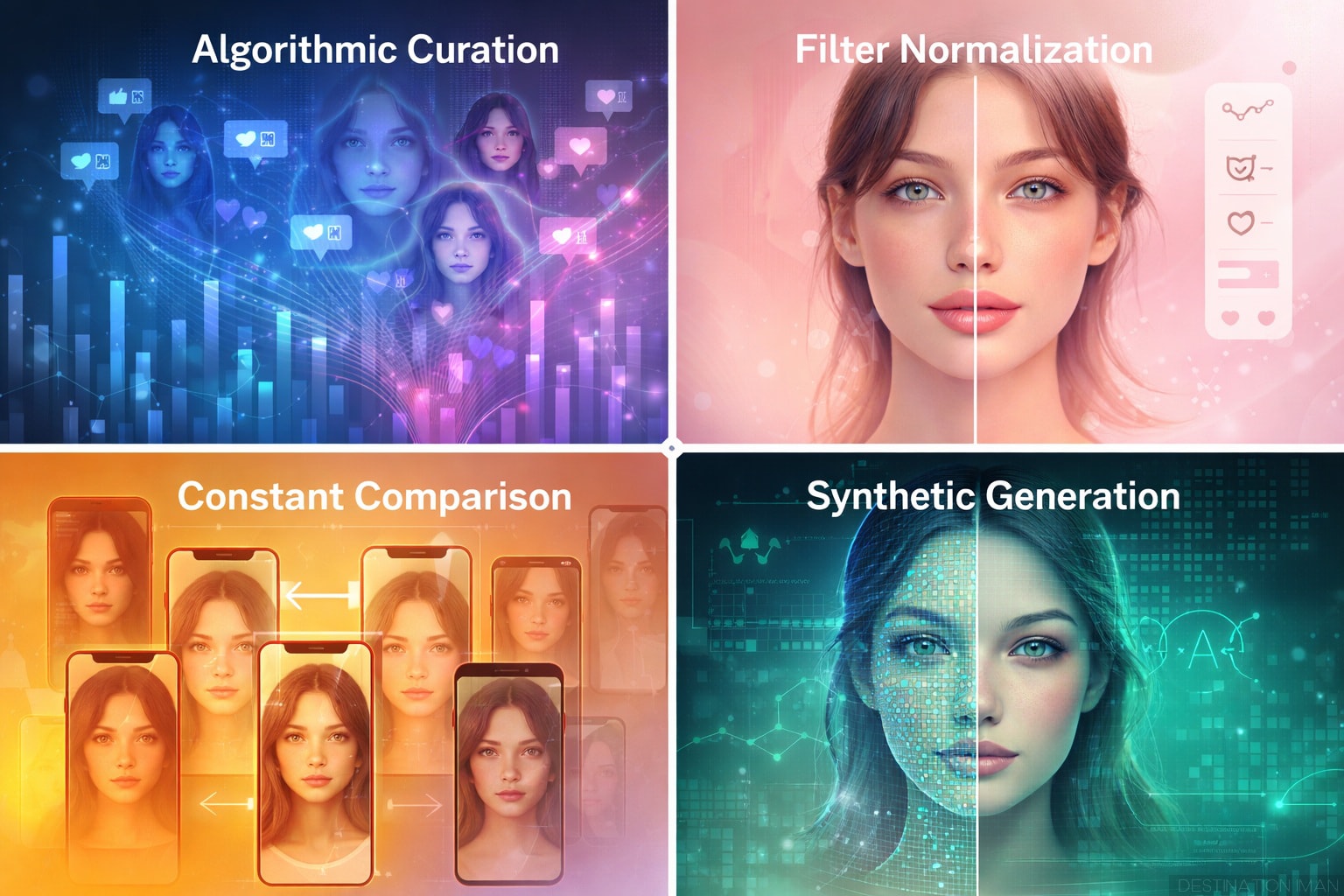
1. Algorithmic Curation
Algorithms don't show random content. They optimize for engagement—clicks, likes, shares, watch time. Content that triggers strong visual response gets amplified.
This creates an evolutionary pressure on beauty content. Features that photograph well, capture attention, and generate engagement become overrepresented. Subtle, understated, or unconventional beauty receives less algorithmic support.
Over time, users internalize these algorithmically favored aesthetics as "normal" or "popular," even though they represent a statistically biased sample.
2. Filter Normalization
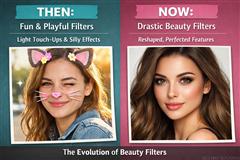
Beauty filters started as playful tools. They evolved into standard infrastructure.
Modern filters don't announce themselves. They make subtle adjustments—smoothing texture, enhancing symmetry, adjusting proportions—that collectively create a face that cannot exist in unmediated reality.
The psychological impact is profound. When filtered faces dominate visual feeds, unfiltered faces begin to appear as "before" photos rather than neutral baselines.
3. Constant Comparison
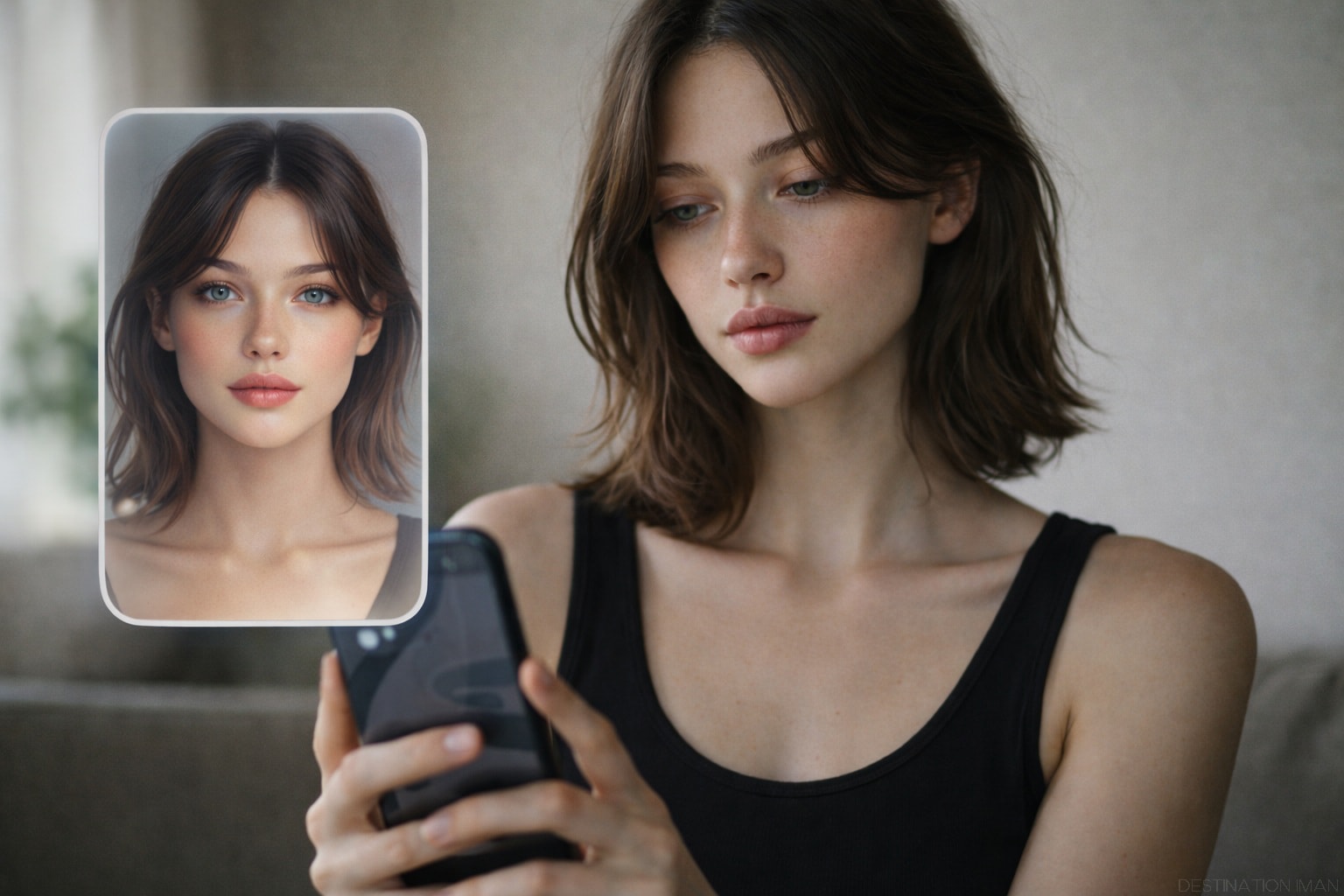
Social comparison is not new. What changed is its frequency and intimacy.
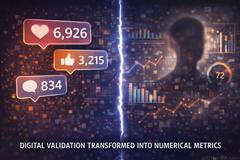
Digital platforms transform comparison from occasional to continuous. Your face appears next to others multiple times per day, in contexts designed to emphasize visual performance.
4. Synthetic Generation
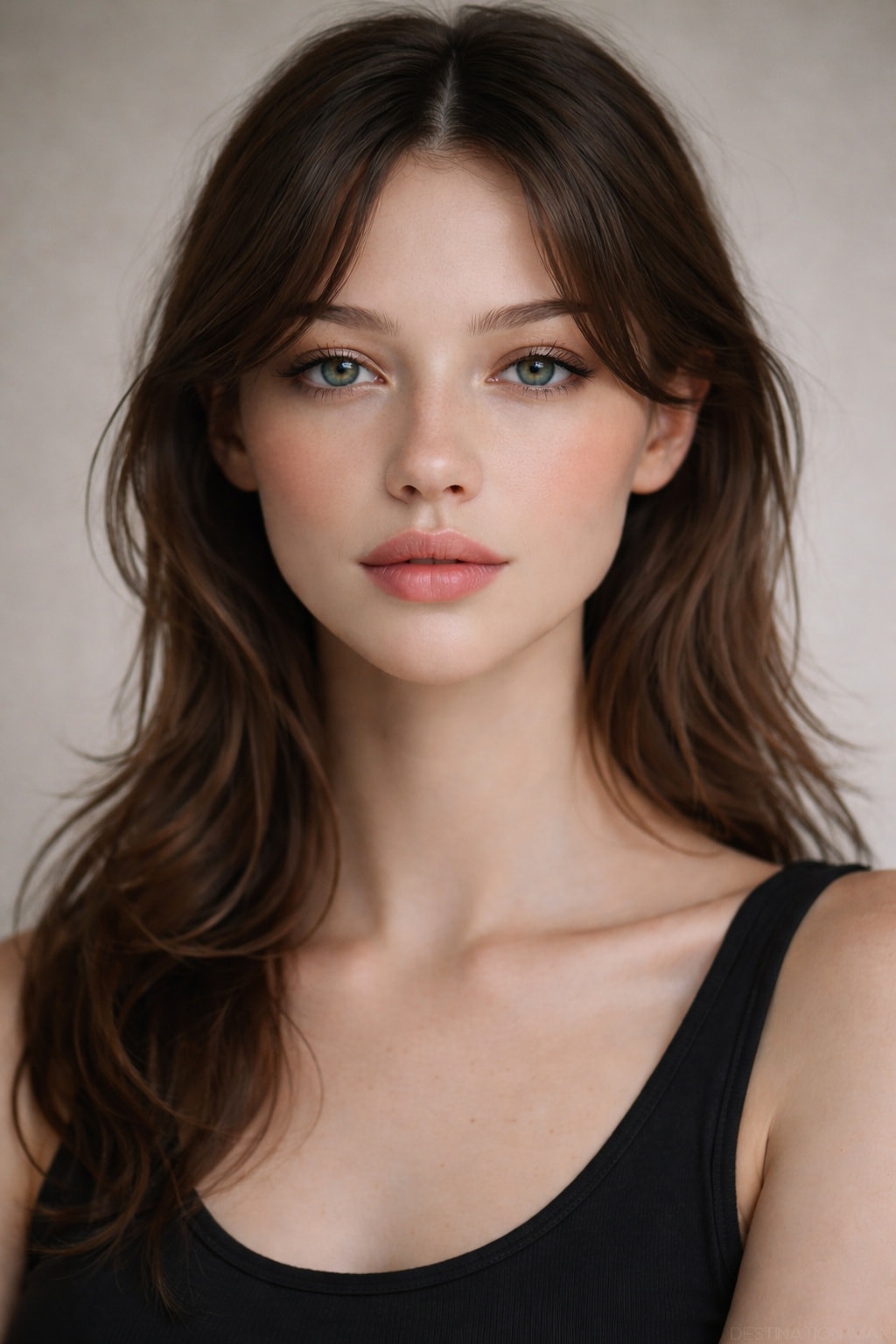
The most recent shift: beauty ideals no longer require human models.
AI-generated faces, virtual influencers, and synthetic imagery create beauty standards optimized by machine learning rather than biology. These faces are statistically engineered to trigger attraction and attention.
Because they're not constrained by physical possibility, synthetic faces can embody features that no real human can replicate.
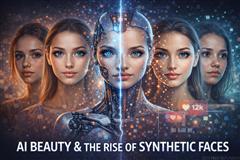
Key Takeaways: Four Mechanisms
- Algorithmic curation creates evolutionary pressure favoring engagement-optimized beauty
- Filter normalization shifts baseline expectations toward impossible features
- Constant comparison becomes automated, frequent, and deeply personal
- Synthetic generation introduces beauty standards unconstrained by biology
The Technical Infrastructure of Digital Beauty
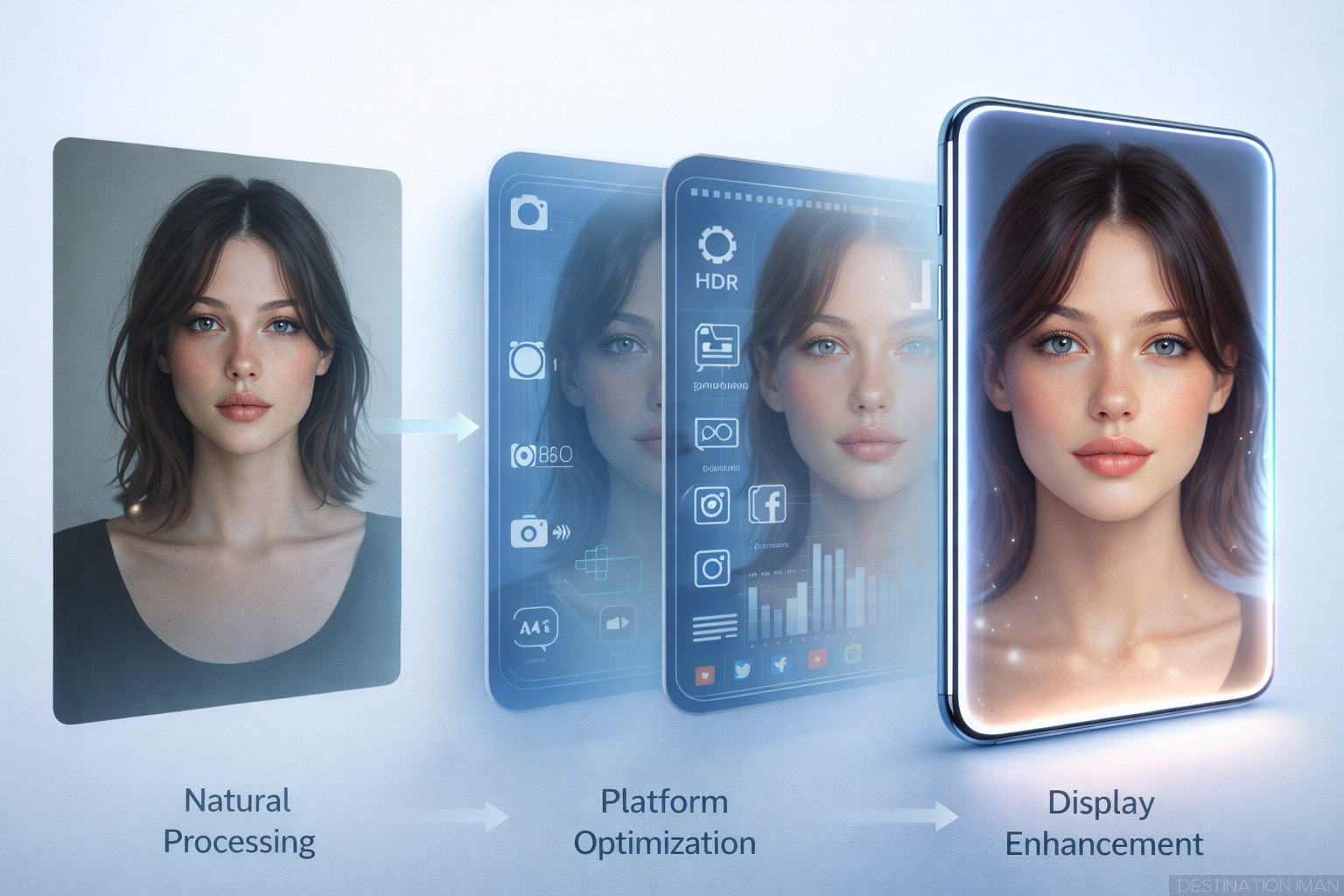
Understanding why digital beauty feels so powerful requires understanding the technology stack that produces it:
The Camera Layer
Modern smartphone cameras don't simply capture—they compute. Computational photography applies:
- HDR processing (combining multiple exposures)
- Portrait mode (artificial depth of field)
- "Beauty mode" (real-time skin smoothing)
- Face detection and auto-enhancement
The Platform Layer
Social platforms apply additional processing:
- Automatic color correction
- Compression that selectively preserves skin smoothness
- Thumbnail optimization that favors certain compositions
The Display Layer
High-resolution OLED screens display color and contrast ranges that don't exist in natural environments. Faces on screens literally glow in ways physical faces cannot.
The Result
The face you see on a screen has passed through 4-6 layers of algorithmic optimization before reaching your eyes. It's not a photograph in the traditional sense—it's a rendered output.
Psychological Consequences Across Populations
The impact of digital beauty standards is not uniform. Research reveals distinct patterns across demographics:
Adolescents (13-17)
Most vulnerable population. Key findings:
- Higher baseline comparison frequency
- Less developed media literacy
- Identity formation coinciding with peak platform use
Young Adults (18-29)
- Peak platform usage combined with dating/social pressure
- Higher rates of cosmetic procedure interest linked to digital appearance
- "Snapchat dysmorphia" / "Instagram dysmorphia" emergence
Adults (30+)
- Different stressors: aging in a youth-dominated visual culture
- Comparison not to peers but to digitally preserved younger selves
- Less frequent use but still significant exposure
Gender Differences
While research historically focused on women, recent studies show:
- Men increasingly affected, particularly regarding fitness/muscle imagery
- Non-binary individuals face unique pressures around appearance legibility
- Beauty standards increasingly fragmented rather than monolithic
Cultural Variations
Digital beauty isn't culturally neutral. Western beauty ideals receive disproportionate algorithmic amplification, creating tensions in non-Western markets.
The Economic and Cultural Feedback Loop
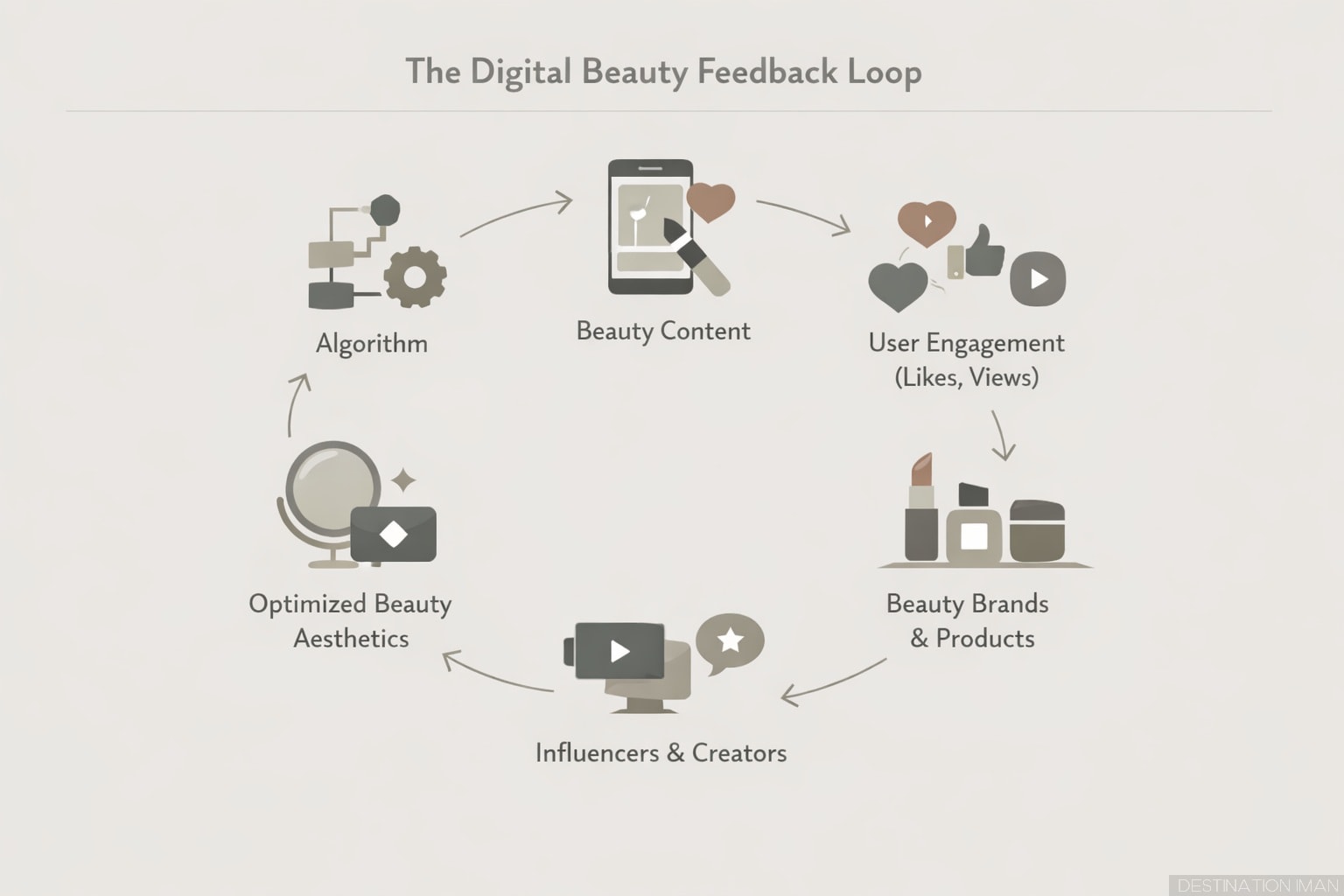
Digital beauty exists within an economic system that reinforces it:
The Beauty Industry Feedback
The Cycle of Digital Beauty Standards
- Social platforms reveal which aesthetics generate engagement
- Beauty brands develop products to achieve those aesthetics
- Influencers demonstrate these products
- Algorithms amplify successful content
- New aesthetic becomes normalized
- Cycle repeats with new products
The Creator Economy
Beauty content creators face unique pressures:
- Income dependent on engagement metrics
- Algorithmic punishment for inconsistent aesthetics
- Financial incentive to maintain digitally optimized appearance
- "Always on" visibility creates 24/7 appearance labor
The Medical/Cosmetic Industry
Cosmetic procedures increasingly aim to replicate digital aesthetics:
- Requests for features matching filtered selfies
- "Instagram face" as explicit aesthetic goal
- Procedures designed for 2D camera performance rather than 3D presence
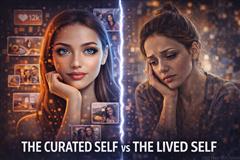
Case Studies: How Specific Platforms Changed Specific Standards
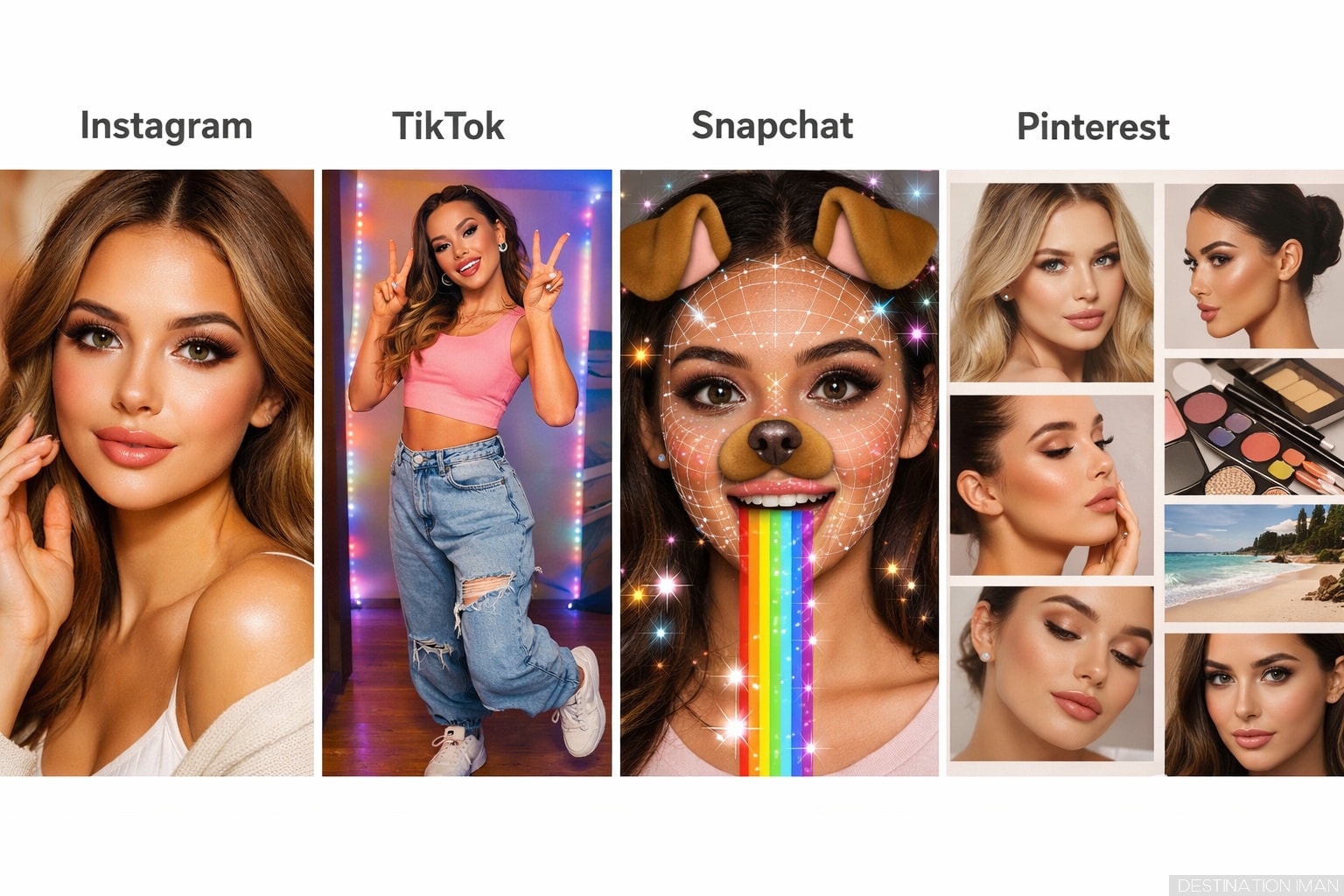
2010-present
Key Changes Introduced:
- Square format favored facial close-ups
- Filters normalized skin smoothing
- Explore page amplified specific aesthetics
- Reels introduced motion beauty standards
Documented Impact:
- Homogenization of influencer aesthetics
- "Instagram face" emergence (enlarged eyes, lifted cheeks, small nose, full lips)
- Wall Street Journal's "Facebook Files" revealed internal awareness of harm
2018-present
Key Changes Introduced:
- Vertical video favored full-body visibility
- Beauty filters active by default
- Algorithm amplified youthful creators
- Trend cycles accelerated
Documented Impact:
- Extreme acceleration of beauty trend cycles
- "TikTok face" aesthetic (variant of Instagram face)
- Younger age of beauty content creators and viewers
2011-present
Key Changes Introduced:
- Face mapping technology (AR lenses)
- Filters as primary interface
- Disappearing content reduced documentation
Documented Impact:
- "Snapchat dysmorphia" term coined by plastic surgeons
- Normalized real-time face alteration
- Foundation for AR beauty applications
2010-present
Different Impact:
- Aspirational rather than personal
- Enabled aesthetic curation and planning
- Less direct self-comparison but more ideal aggregation
The Growing Divide: Screen vs. Reality
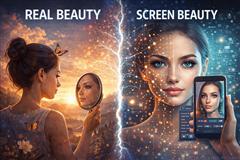
One of the most significant psychological effects of digital beauty is the widening gap between screen appearance and physical presence.
The Perceptual Split
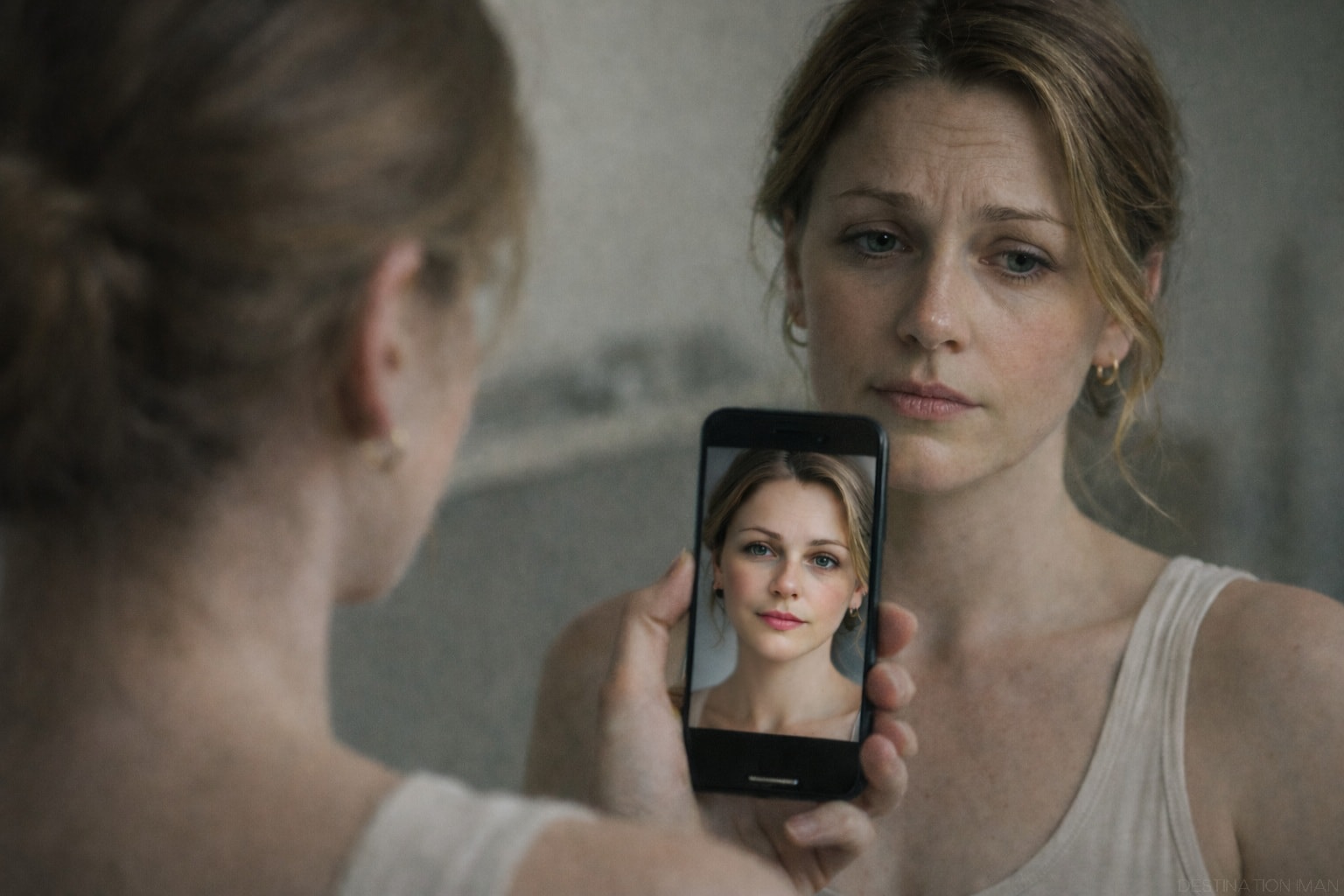
Many users report experiencing their reflection differently after extended social media use:
- Physical appearance feels "wrong" compared to screen version
- Mirror becomes source of disappointment rather than neutral feedback
- Some avoid mirrors, preferring screen-based self-view
"Zoom Face" and Remote Work
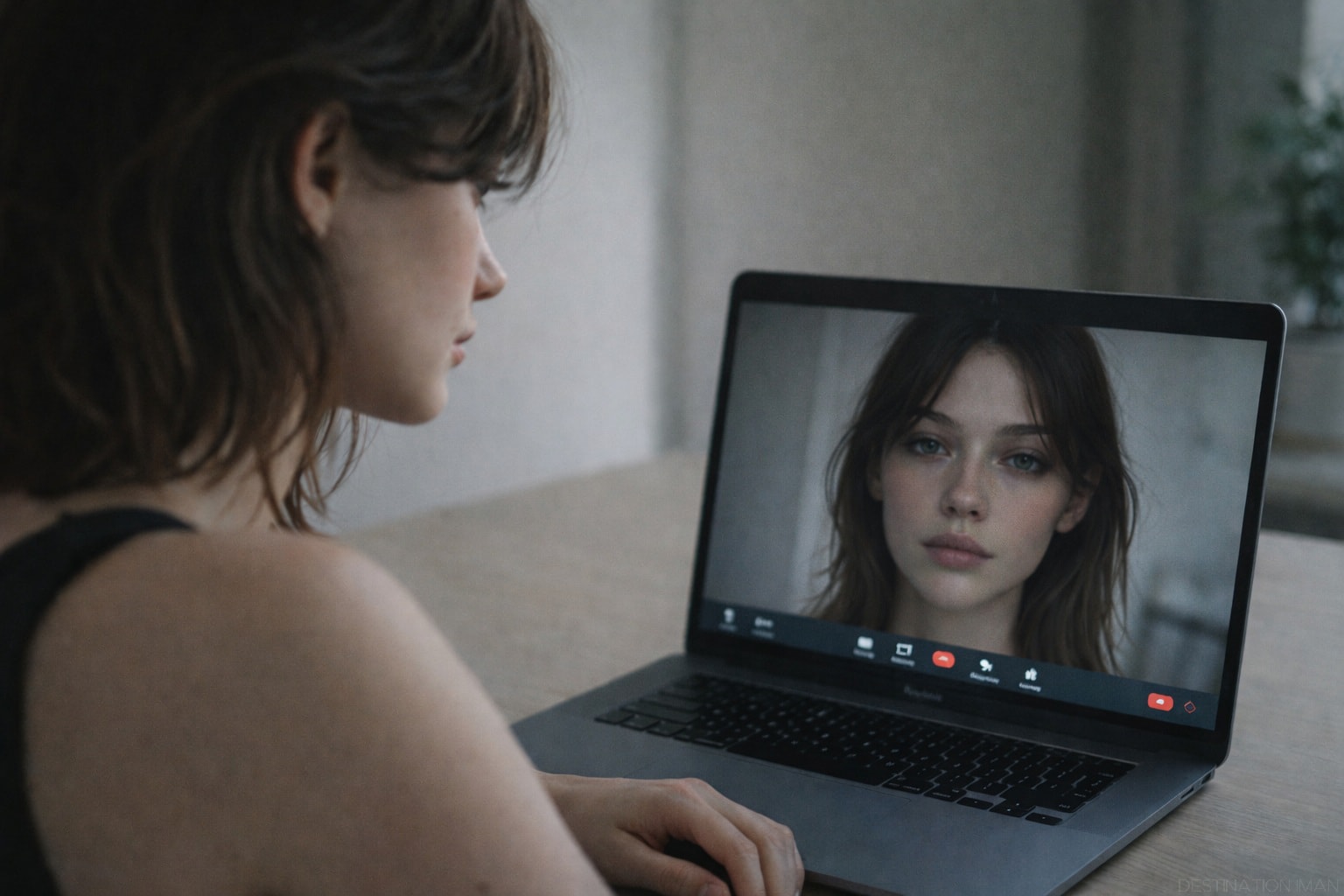
The pandemic introduced sustained exposure to one's own face during video calls:
- Increased cosmetic procedure requests
- "Zoom dysmorphia" emergence
- New category of appearance anxiety tied to specific camera angles
Dating and First Impressions
The screen-to-reality gap creates specific challenges:
- Heavily edited dating profiles create impossible expectations
- First in-person meetings marked by appearance shock
- Trust erosion when digital presentation significantly differs from reality
Counter-Movements and Signs of Change

Not all movement is toward increased digital perfection. Several counter-trends have emerged:
The "Instagram vs. Reality" Movement
Creators posting side-by-side comparisons of edited vs. unedited photos to reveal manipulation.
Impact: Increased media literacy, but sometimes backfires by teaching editing techniques.
Platform Responses
- Instagram testing removal of public like counts (mixed results)
- TikTok adding screen time controls
- Snapchat adding warnings to extreme beauty filters
"No-Filter" and "Raw Beauty" Trends
Creators intentionally posting unedited content as brand differentiation.
Complication: "Authentic" imperfection often still curated and optimized.
Regulatory Attention
- Norway requiring influencers to label edited bodies
- France requiring "photographie retouchée" disclaimers
- UK considering similar legislation

What Research Actually Shows
Beyond anecdotal evidence, what does peer-reviewed research reveal?
Established Findings
Emerging Research
AI & Synthetic Faces:
- Humans increasingly unable to distinguish AI-generated faces from real photos
- Exposure to synthetic faces may be recalibrating attractiveness perception
- Long-term effects still unknown (too recent)
Generational Differences:
- Gen Z shows higher baseline dissatisfaction but also higher media literacy
- Some evidence of adaptation or desensitization in long-term users
- Cross-cultural variation larger than expected
Research Limitations
Practical Implications for Different Audiences
For Individuals
If you're experiencing appearance anxiety:
- Curate your feed intentionally (unfollow comparison triggers)
- Use screen time limits on image-heavy apps
- Practice mirror exposure without phone present
- Seek diverse beauty representation actively
If you're a parent:
- Delay smartphone/social media access where possible
- Co-view and discuss content with teens
- Model healthy relationship with own appearance
- Watch for warning signs (excessive filtering, mirror avoidance, procedure requests)
If you're a content creator:
- Consider impact of editing/filtering on audience
- Experiment with unedited content
- Disclose when using filters or editing
- Balance aesthetic goals with responsibility
For Platforms
Design changes that could help:
- Default-off beauty filters rather than default-on
- Diversify algorithmic recommendations beyond engagement optimization
- Require labeling of synthetic/heavily edited content
- Provide users with exposure analytics (similar to screen time)
For Researchers
High-priority questions:
- Long-term developmental effects of growing up with filters
- Effectiveness of media literacy interventions
- Cross-cultural beauty standard convergence rates
- Impact of synthetic faces on attraction and relationships
For Policymakers
Potential interventions:
- Mandatory disclosure labels for commercial edited imagery
- Age restrictions on beauty filter access
- Platform transparency requirements around recommendation algorithms
- Funding for independent research on psychological impacts
The Path Forward
Digital media will not disappear, and visual platforms will remain central to social life. The question is not whether to engage, but how to rebalance the system.
Individual Agency
While platforms and algorithms shape options, individual choices still matter:
- Conscious curation of inputs
- Intentional breaks from visual platforms
- Cultivation of offline beauty references
- Development of media literacy skills
Collective Cultural Shift
Meaningful change requires collective action:
- Reduced social reward for extreme digital perfection
- Increased value placed on presence over presentation
- Support for creators who resist optimization pressure
- Normalization of unedited appearance
Technological Responsibility
Platforms and tools could be designed differently:
- Algorithms optimized for well-being rather than engagement
- Default settings that protect rather than exploit
- Transparency about image processing
- User control over algorithmic inputs
Regulatory Framework
Some changes may require regulation:
- Disclosure requirements for edited commercial content
- Age-appropriate design standards
- Algorithmic accountability mechanisms
- Independent research access to platform data
Conclusion
Digital media changed beauty perception by introducing unprecedented volume, personalization, and participation in visual culture. The mechanisms—algorithmic curation, filter normalization, constant comparison, and synthetic generation—operate continuously and often invisibly.
The consequences are real and measurable: increased body dissatisfaction, altered self-perception, widening gaps between digital and physical identity, and new forms of appearance-based anxiety.
But the outcome is not predetermined. Digital beauty is a design choice, not an inevitability. Platforms could amplify different aesthetics. Algorithms could optimize for different outcomes. Cultural values could shift toward different priorities.
Understanding how we arrived at this moment is the first step toward shaping what comes next.
Series Navigation
The remaining articles in this series explore specific dimensions of digital beauty in depth:
Together, they form a comprehensive map of beauty in the digital age.
Complete Resource Guide
Academic Journals
- Body Image Journal - Leading research on appearance and media
- New Media & Society - Digital culture studies
- Cyberpsychology, Behavior, and Social Networking - Online behavior research
Major Research Institutions
- Pew Research Center - Social Media & Technology
- Oxford Internet Institute
- Center for Humane Technology
Key Studies & Reports
- The Facebook Files - WSJ investigation into Instagram's internal research
- Royal Society - The Uncanny Valley
- Nature Human Behaviour - Perception of Artificial Faces
Books
- "Selfie: How We Became So Self-Obsessed" by Will Storr
- "The Age of Surveillance Capitalism" by Shoshana Zuboff (context on algorithmic systems)
- "Trick Mirror" by Jia Tolentino (includes analysis of digital self-presentation)
Documentaries & Media
- The Social Dilemma (Netflix) - Covers broader platform impacts
- BBC Future series on filters and self-perception
- The Guardian's "Technology and the Self" series
Clinical & Professional Resources
- American Psychological Association monitoring reports on social media and mental health
- International Society of Aesthetic Plastic Surgery data on procedure trends
- Common Sense Media reports on youth and technology