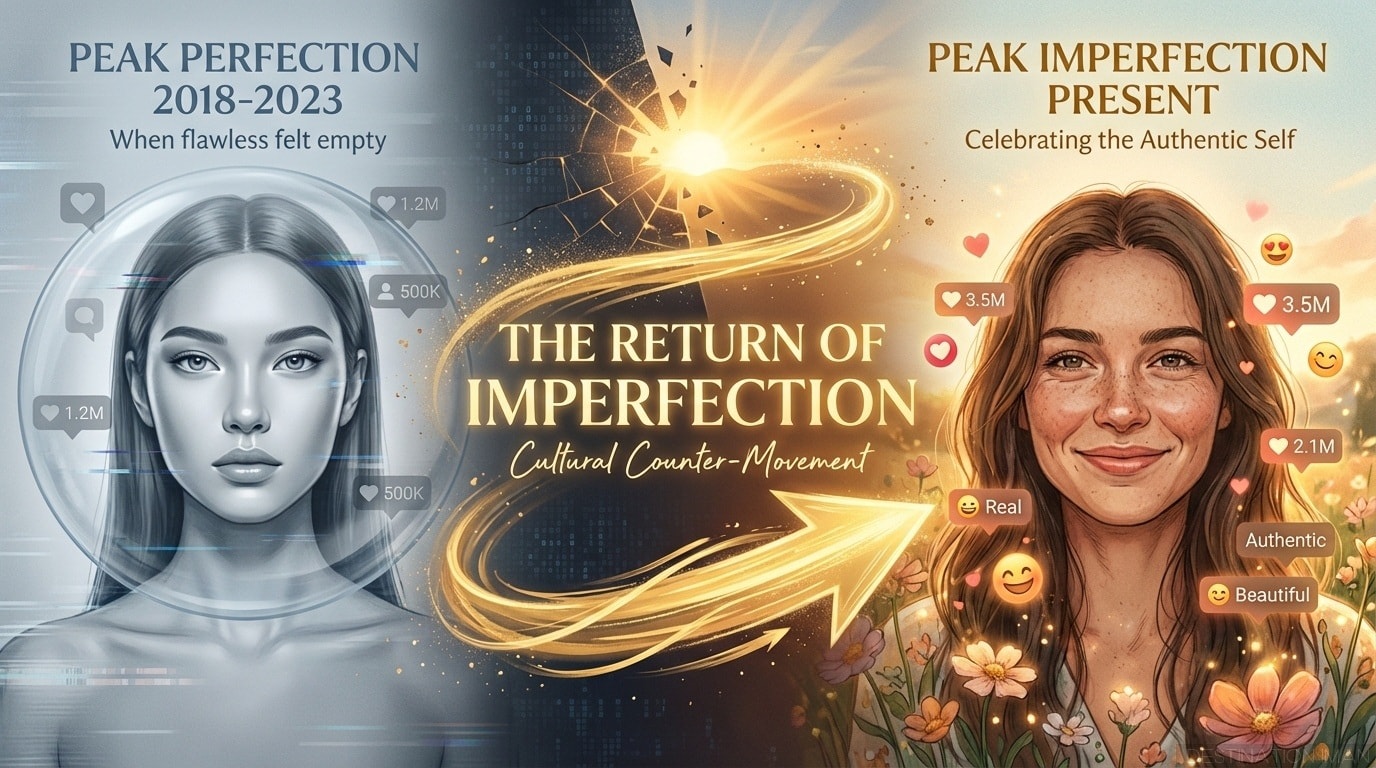
Why imperfection is returning as a counter-movement to digital beauty—an analysis of authenticity, realism, and shifting aesthetic values
Introduction
After years of digitally enhanced faces, smooth skin, and algorithmically optimized beauty, a subtle shift is taking place. Imperfection—once edited out—is slowly reappearing in visual culture.
This is not nostalgia. It is not anti-technology. It is a recalibration—a cultural correction after digital perfection reached a saturation point where it stopped feeling aspirational and started feeling alienating.
Signs of the Shift
- Influencers posting unfiltered "raw" content and receiving higher engagement
- Fashion campaigns featuring visible skin texture, wrinkles, and natural bodies
- Platform experiments with "authenticity badges" and filter disclosure
- Growing discourse around "Instagram vs. Reality" comparisons
- Regulatory attention requiring disclosure of digital enhancement
This return is not accidental. It reflects fatigue with artificial perfection and a growing desire for realism, presence, and human recognizability.
The Fatigue of Perfect Beauty
Perfect beauty demands constant maintenance. It leaves no room for aging, fluctuation, or error.
The Psychological Cost of Perfection
As digital platforms normalized flawless appearances, many users experienced a form of aesthetic exhaustion:
Four Dimensions of Perfection Fatigue
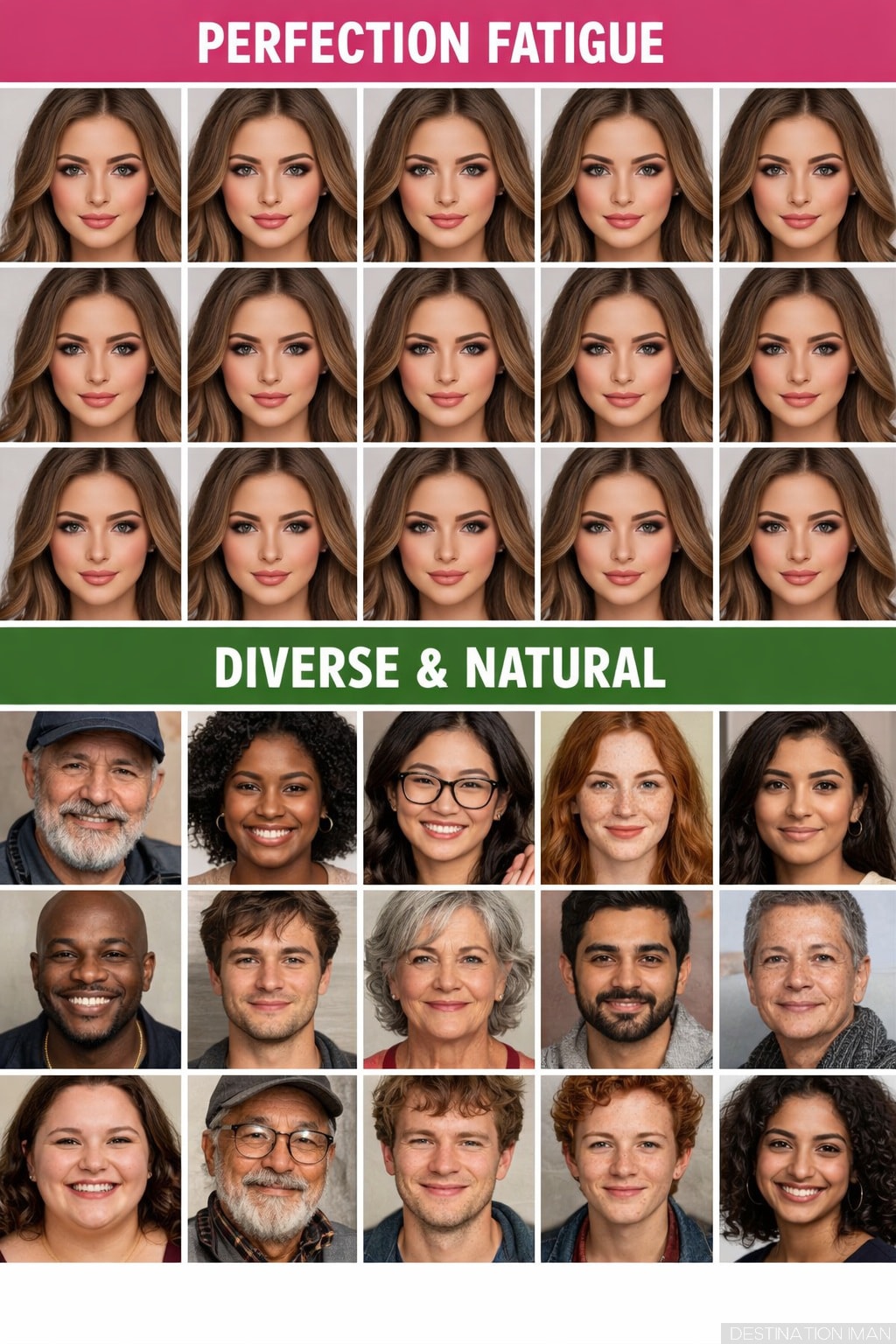
- Visual monotony: When every image looks polished, nothing feels special—perfection loses emotional impact
- Comparison exhaustion: Constantly measuring yourself against impossible standards creates chronic stress
- Authenticity hunger: Desire for something genuine, unoptimized, recognizably human
- Performance burden: The labor of maintaining perfect digital presence becomes unsustainable
When Perfection Becomes Alienating
Research in aesthetic psychology shows that perfect symmetry and flawlessness can trigger emotional distance rather than attraction. Viewers struggle to connect with faces that show no variation, no history, no lived experience.
Imperfection in Historical Context
Historically, imperfection has always played a role in how beauty is perceived.
Pre-Digital Beauty Standards
Classical Art & Sculpture
Even idealized Greek and Roman sculptures included individual variation—distinct noses, unique expressions, signs of age and experience. The goal was elevated humanity, not erasure of human characteristics.
Renaissance Portraiture
Portraits celebrated distinctive features rather than standardizing them. A prominent nose, asymmetrical smile, or unusual bone structure was considered character, not flaw.
20th Century Photography
Even fashion photography retained visible texture, expression lines, and natural variation. Retouching existed but was limited by technology—imperfection was inevitable.
Digital Era (2000s-2020s)
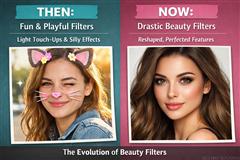
First time in history that imperfection became optional. Every texture, asymmetry, and variation could be erased. This technical capability created a new category: endlessly correctable beauty.
What Changed
In art, slight asymmetry, texture, and irregularity signaled life and authenticity. Even classical ideals allowed for variation, movement, and expression.
Only in the digital era did beauty become endlessly correctable—and therefore endlessly unreal.
When Digital Perfection Reached Its Peak
At the height of digital beauty culture, filters, retouching, and AI enhancement converged.
The Peak Perfection Period (2018-2023)
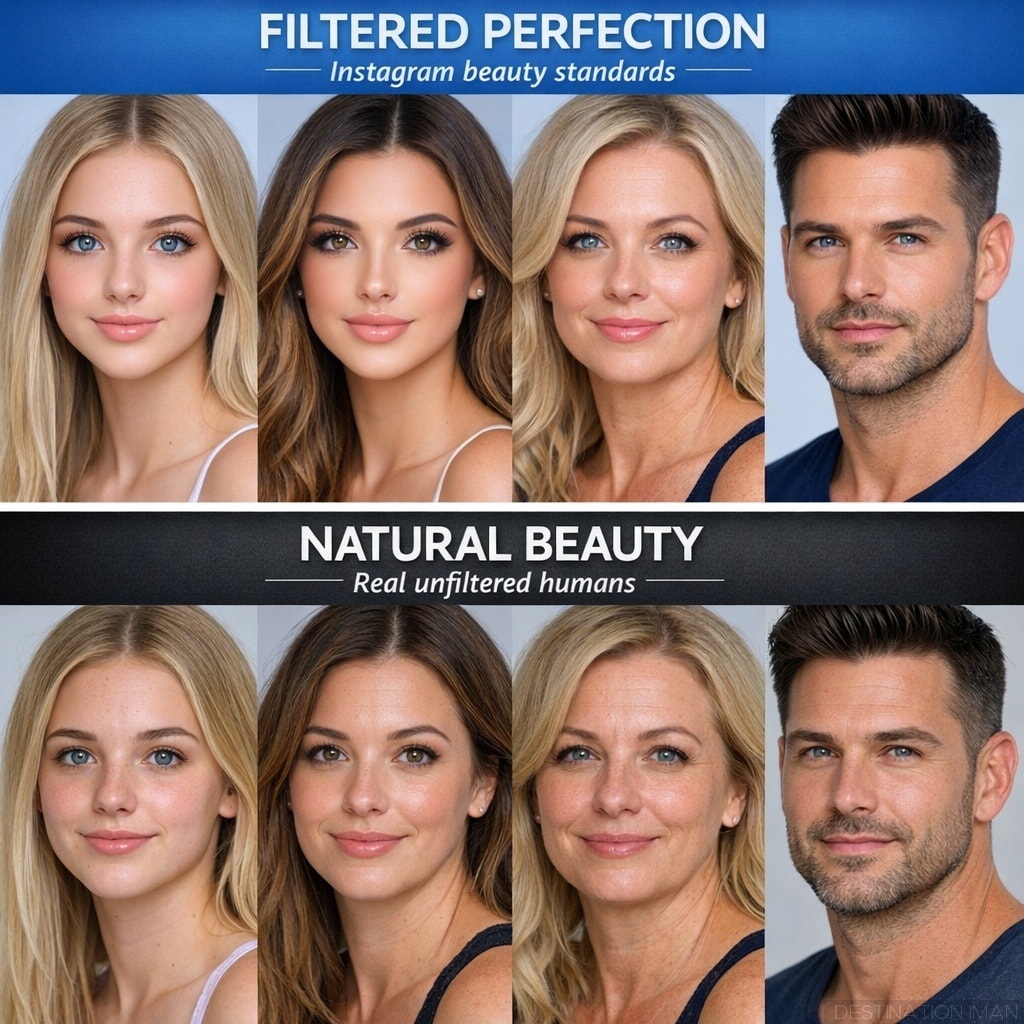
Faces became smoother, proportions more standardized, and expressions more controlled. The result was a visual environment dominated by sameness.
The Homogenization Effect
Characteristics of Peak Perfection
- Influencer aesthetics converging on nearly identical features ("Instagram face")
- Beauty standards compressing toward single ideal across cultures
- Natural human variation registering as "unprofessional" or "unpolished"
- Cosmetic procedures increasingly targeting digital-optimized features
- Entire generation growing up never seeing unfiltered self-presentation
Why Imperfection Is Returning
The return of imperfection is driven by several converging forces:
Psychological Drivers
Five Forces Driving the Shift
- Overexposure to filtered and synthetic faces: Saturation creates immunity—perfect faces stop triggering engagement
- Increased awareness of digital manipulation: Media literacy makes viewers skeptical of flawless imagery
- Desire for trust and authenticity: In era of deepfakes and AI, unedited becomes premium signal
- Emotional connection over visual optimization: Audiences value relatability more than aspiration
- Performance exhaustion: Creators and users alike fatigued by labor of constant optimization
The Authenticity Economy
Paradoxically, as digital manipulation becomes easier, authenticity becomes more valuable. Brands, influencers, and platforms that can credibly signal "unedited" gain competitive advantage.
The Trust Crisis
Widespread awareness of filters, AI faces, and deepfakes created credibility crisis. When everything can be fake, verified reality becomes valuable.
A New Aesthetic Language
The reappearance of imperfection does not reject beauty. It reframes it.
What "Imperfection" Now Means
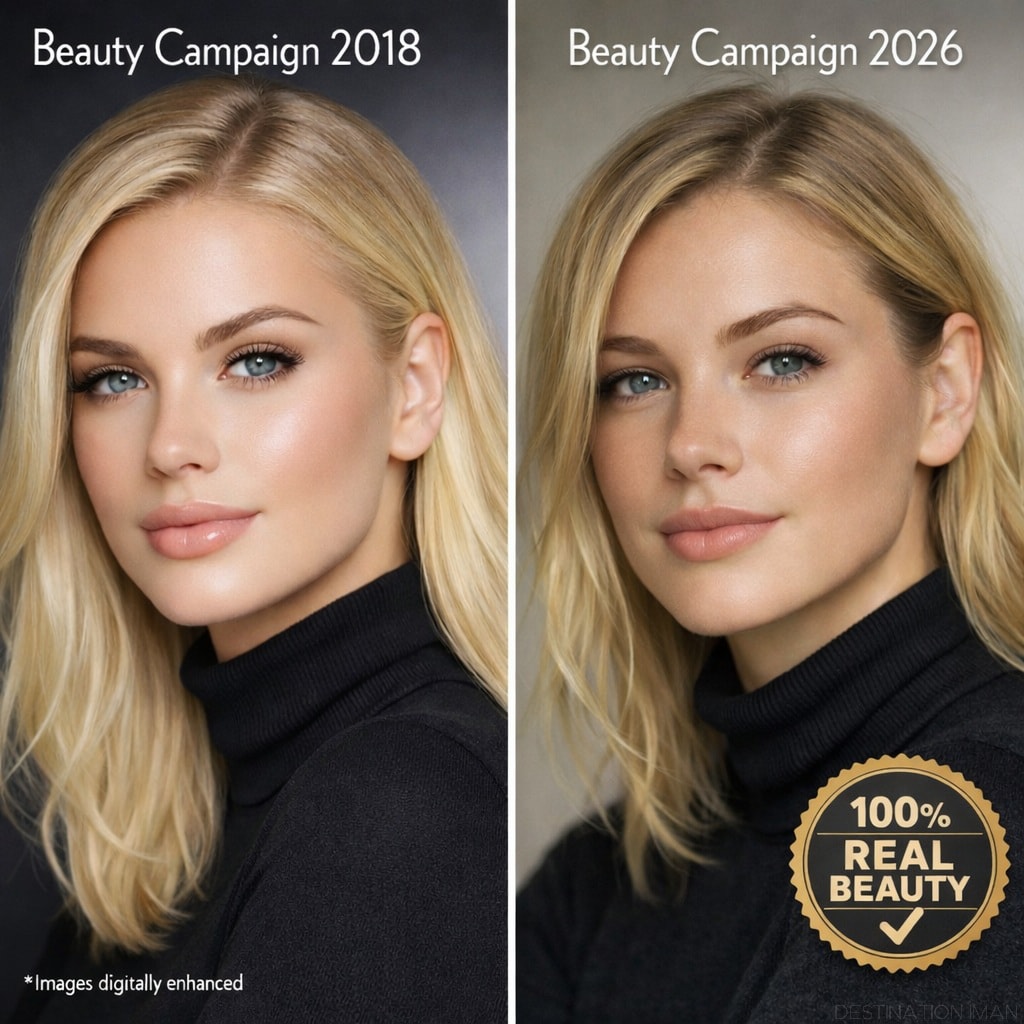
Visible skin texture, natural expressions, uneven features, and signs of age are increasingly presented as markers of individuality rather than flaws.
The New Aesthetic Values
- Character over symmetry: Distinctive features valued more than mathematical proportion
- Presence over polish: Emotional authenticity prioritized over visual optimization
- Variation over consistency: Natural fluctuation accepted rather than eliminated
- Process over product: Evidence of living (aging, expression lines) celebrated
- Individuality over idealization: Unique features embraced rather than standardized
Visual Markers of the Shift
Observable changes in how beauty is presented:
- Editorial photography: Fashion spreads featuring visible pores, freckles, texture
- Celebrity content: A-list figures posting unedited, low-production selfies
- Brand campaigns: Beauty companies using models with visible aging, scars, unique features
- Platform features: "BeReal" app success based entirely on unfiltered, uneditable photos
Psychological Relief and Human Recognition
Psychologically, imperfection offers relief.
Reducing Comparison Pressure
When visible standards become achievable, comparison becomes less toxic:
- Imperfect faces offer "permission" to be imperfect yourself
- Natural variation normalizes your own variation
- Visible aging makes aging acceptable
- Texture visibility eliminates texture shame
The Recognition Effect
It reduces comparison pressure and restores a sense of relatability. When faces look human again, viewers recognize themselves more easily.
Supporting Healthier Self-Image
This recognition supports healthier self-image by anchoring beauty in reality rather than digital idealization.
Psychological Benefits of Imperfection
- Reduced appearance anxiety and self-monitoring
- Increased self-acceptance of natural variation
- Lower rates of appearance-based dissatisfaction
- Improved body image among adolescents exposed to diverse imagery
- Decreased interest in extreme cosmetic modification
Cultural Signals of Change
Signs of this shift appear across culture:
Platform-Level Changes
Instagram (2022-2024)
- Testing removal of beauty filters in some markets
- Experimenting with "authenticity scores" for content
- Reduced algorithmic boost for heavily edited imagery
TikTok (2023-2025)
- "No-filter" trend videos receiving record engagement
- Creators building followings specifically on unedited content
- Platform adding "unfiltered" content category
BeReal (2022-present)
- App designed around impossibility of filtering/editing
- Rapid adoption among Gen Z specifically for authenticity
- Success demonstrates market demand for unoptimized content
Regulatory Movement
Policy Developments (2023-2026)
- Norway: Law requiring disclosure labels on edited advertising imagery
- France: "Photographie retouchée" mandatory disclosure for commercial images
- UK: Proposed legislation for filter disclosure on influencer content
- EU: Digital Services Act provisions around synthetic media labeling
Cultural Discourse
Editorial imagery embracing natural variation and public discussion around authenticity and realism:
- Major fashion magazines running unretouched cover stories
- Celebrities publicly discussing filter use and posting comparisons
- Documentary features on digital beauty manipulation
- Academic research on psychological impacts gaining mainstream attention
What the Return of Imperfection Means
The return of imperfection does not imply a rejection of technology.
Renegotiation, Not Rejection
Instead, it suggests a renegotiation of values—where digital tools serve expression rather than erase humanity.
Possible Futures
- Dual aesthetic systems: Perfect-optimized content coexisting with deliberately unedited content, each serving different purposes
- Context-dependent standards: Professional contexts maintaining polish, personal contexts embracing authenticity
- Transparent mediation: Clear disclosure allowing users to choose their preferred aesthetic
- Platform diversification: Different platforms cultivating distinct aesthetic values
What Success Looks Like
If sustained, this shift could rebalance beauty standards toward:
- Inclusivity: Wider range of faces, bodies, and features considered beautiful
- Diversity: Regional, cultural, and individual variation celebrated rather than homogenized
- Emotional resonance: Beauty valued for connection and presence rather than visual metrics
- Temporal acceptance: Aging, change, and variation normalized rather than resisted
Challenges Ahead
Conclusion
The return of imperfection reflects a deeper cultural need.
In a world saturated with optimized images, imperfection restores meaning. It signals life, presence, and individuality—qualities that algorithmic optimization systematically eliminates.
Core Understanding
- Perfection fatigue is real and measurable across demographics
- Imperfection historically signaled authenticity and life
- Digital perfection peaked 2018-2023, triggering counter-movement
- Psychological relief comes from recognizable, relatable imagery
- Cultural signals suggest values shift is underway but not yet dominant
- Future depends on whether economic/algorithmic systems adapt
As digital beauty continues to evolve, imperfection may prove not to be a flaw—but a foundation.
The faces that endure, that resonate, that create genuine connection—they will be the ones that show evidence of being lived in. Not perfect. Not optimized. Not algorithmic.
Just human.
Sources & Further Reading
- Body Image Journal – Media, Appearance, and Self-Perception
- Nature Human Behaviour – Human Perception and Artificial Faces
- BBC Future – Why Imperfection Is Appealing
- The Guardian – Fashion, Identity, and Authenticity
- Pew Research Center – Social Media Trends
- New Media & Society – Digital Culture Studies