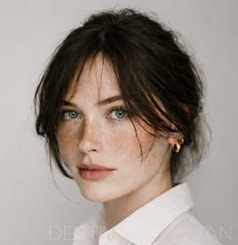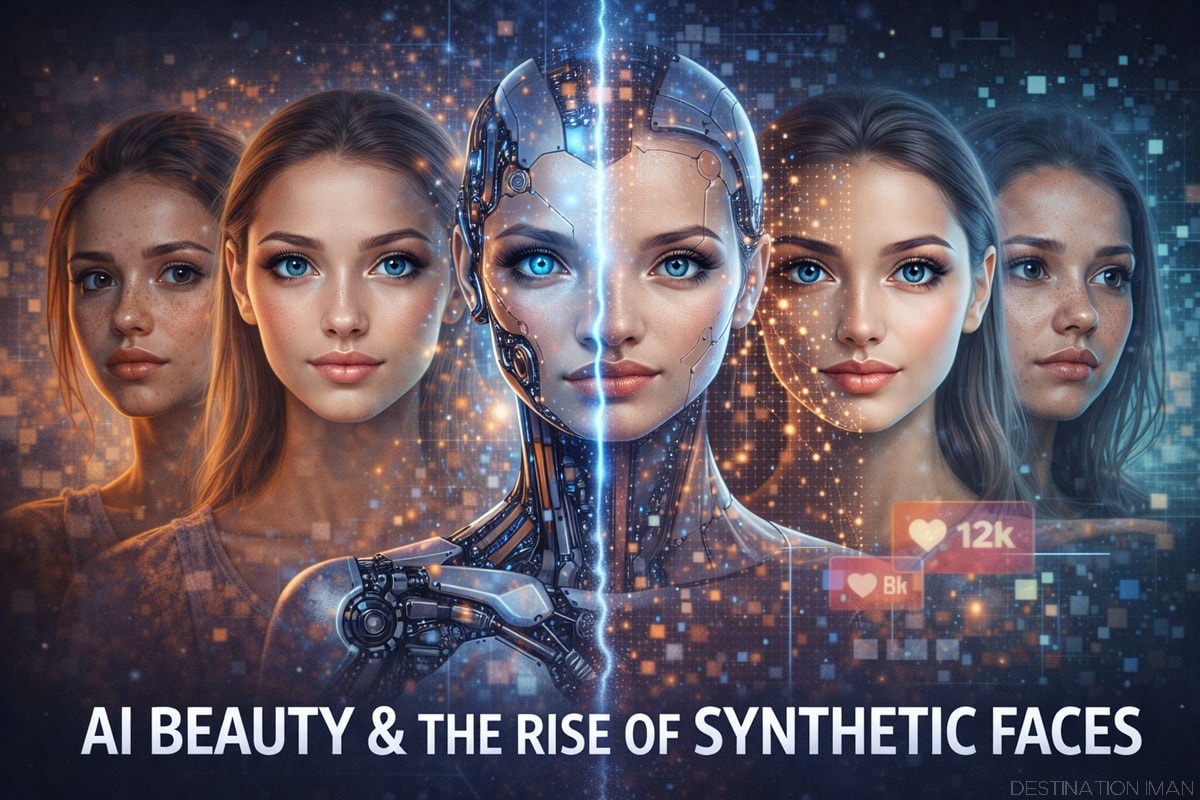
How artificial intelligence is creating faces that never existed—and reshaping what humans consider beautiful
Introduction
Artificial intelligence is no longer just enhancing images—it is creating faces that never existed. These synthetic faces appear realistic, emotionally expressive, and increasingly indistinguishable from real people.
In 2024, a virtual influencer accumulated over 3 million followers before anyone realized she wasn't human. Stock photo sites now offer AI-generated models that can be customized by ethnicity, age, and expression. Dating apps report users unknowingly swiping on synthetic profiles.
This article explores AI beauty and the rise of synthetic faces, examining how artificial images influence beauty standards, perception, and the meaning of human appearance in an increasingly synthetic visual world.
What Is AI Beauty?
AI beauty refers to aesthetics generated or optimized by artificial intelligence systems rather than human biology.
The Fundamental Difference
Based on real humans
Constrained by biology
Evolved over generations
Culturally specific
Generated by algorithms
Unconstrained by biology
Optimized in milliseconds
Statistically universal
Unlike filters that modify existing faces, AI systems can generate entirely new ones—combining features, proportions, and textures learned from massive image datasets.
The result is not an idealized version of a real person, but a statistically optimized face designed to appear universally appealing.
How AI Creates Beauty
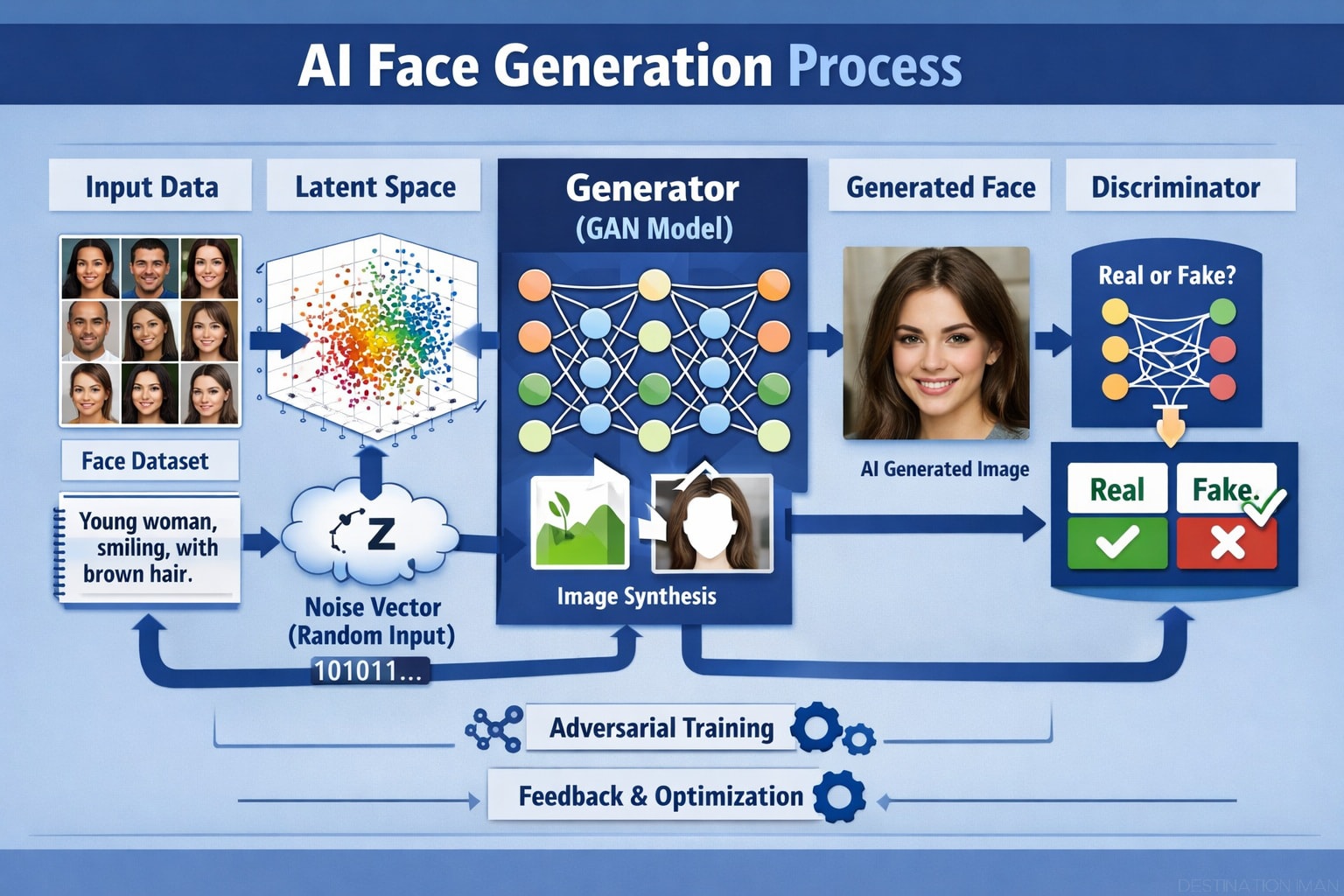
Three Stages of AI Beauty Generation
- Training: Machine learning models analyze millions of images labeled (explicitly or implicitly) as "attractive" through engagement metrics, selection patterns, and human ratings
- Pattern extraction: Algorithms identify common features across high-performing images—symmetry ratios, color distributions, spatial relationships, texture patterns
- Synthesis: New faces are generated by combining these extracted patterns into configurations that maximize predicted appeal
The Emergence of Synthetic Faces
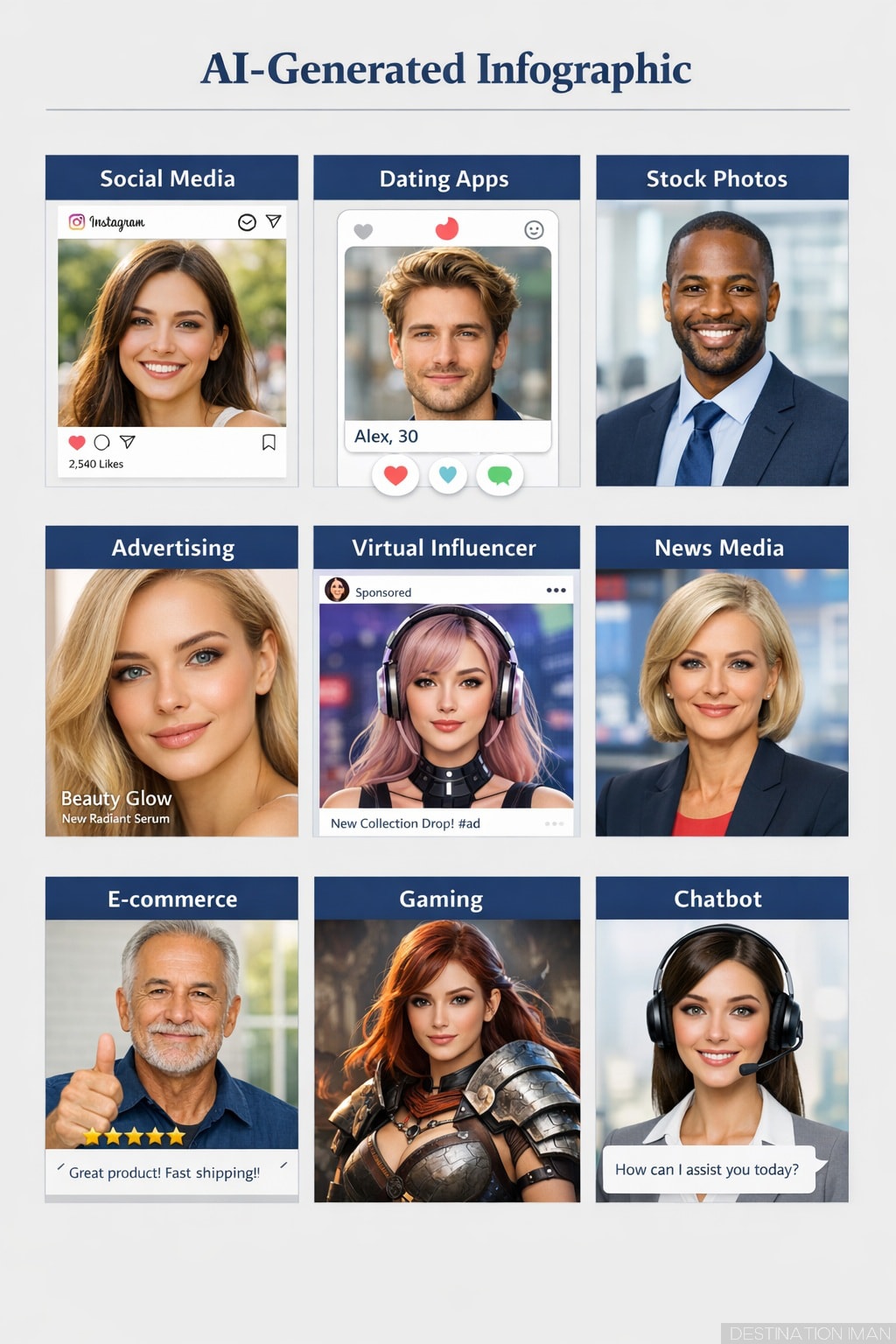
Synthetic faces now appear across social media, advertising, virtual influencers, and stock imagery—often without disclosure.
Where Synthetic Faces Appear
Social Media & Influencers
- Virtual influencers with millions of followers
- AI-generated profile pictures on dating apps
- Synthetic faces in sponsored content and advertisements
Commercial Use
- Stock photography sites offering customizable AI models
- Brand ambassadors that never age or require payment
- Video game characters and digital avatars
Entertainment & Media
- CGI actors in films and commercials
- Deepfake technology in music videos
- AI-generated news anchors in some international markets
Characteristics of Synthetic Faces
These faces share distinctive qualities:
- Perfect symmetry: Mathematical precision impossible in biological development
- Flawless skin: Free of visible aging, texture variation, or irregularities
- Consistency: Appearance remains stable across lighting conditions and angles
- Optimized proportions: Features aligned to statistically derived "ideal" ratios
- Immunity to physical limitations: Can be endlessly reused, reshaped, and optimized
Why Synthetic Faces Feel Convincing
AI-generated faces feel convincing because they are built from patterns that humans already associate with attractiveness.
The Statistical Advantage
Machine learning models are trained on millions of images labeled implicitly by engagement, attention, and selection. Over time, they converge on facial structures that statistically perform well.
Why AI Faces Trigger Recognition
- Averaged features: AI faces often represent statistical averages across many real faces, which humans perceive as familiar and approachable
- Optimized symmetry: Perfect bilateral symmetry triggers innate preference mechanisms evolved for mate selection
- Texture smoothness: Absence of skin irregularities mimics youth markers that biology rewards
- Ideal proportions: Features align with ratios (golden ratio, facial thirds) associated with attractiveness across cultures
This creates faces that feel familiar, even when viewers cannot identify why.
The Hyperreal Effect
Paradoxically, some synthetic faces appear "more real than real"—triggering stronger aesthetic response than actual human faces because they lack the imperfections and variations that characterize biological reality.

The Uncanny Boundary
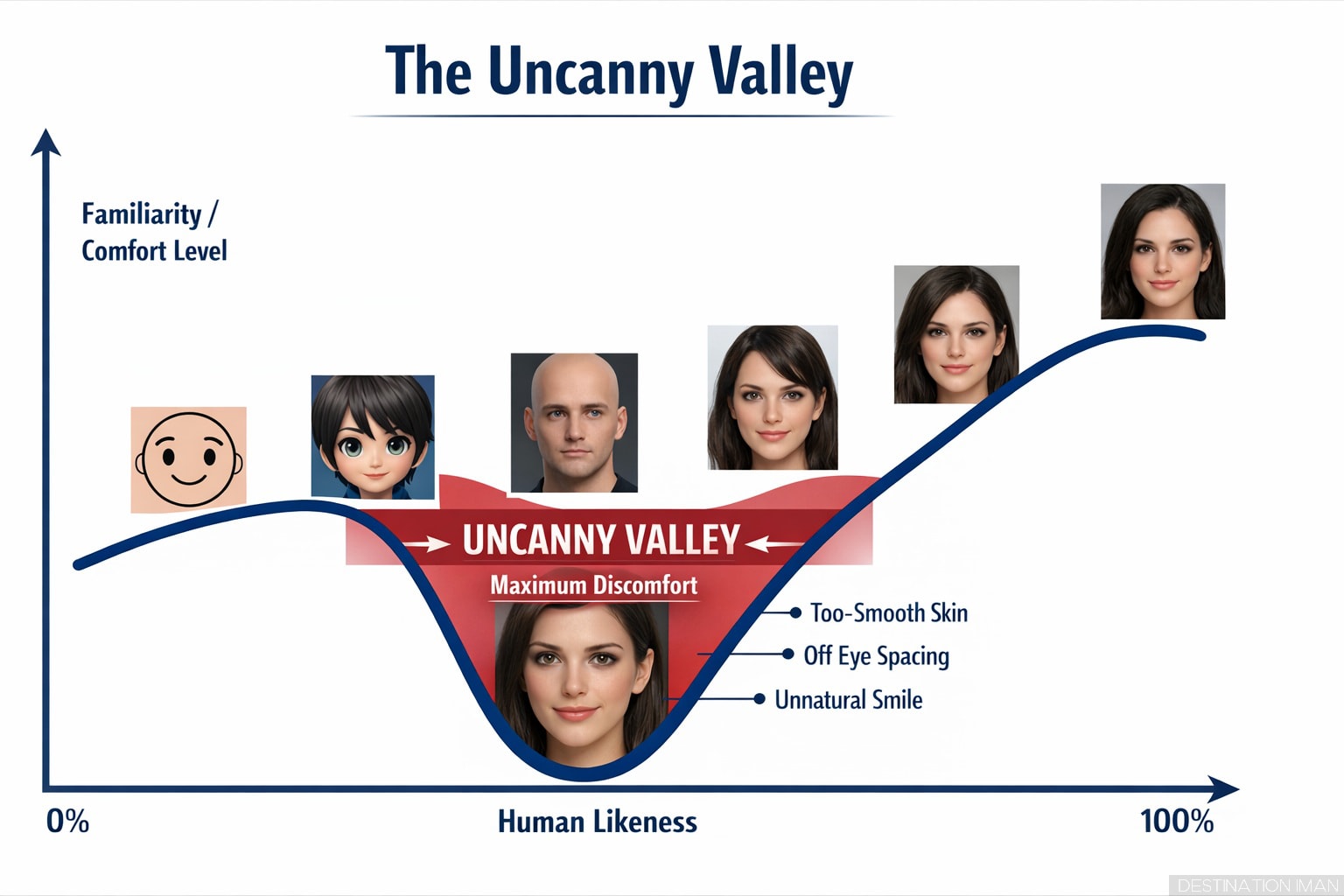
Despite their realism, synthetic faces often exist near what researchers call the uncanny valley—a zone where almost-human stimuli trigger discomfort.
What Triggers Uncanny Response
Common Uncanny Valley Signals
- Overly smooth skin: Texture so perfect it appears artificial, triggering "something's wrong" response
- Perfect symmetry: Mathematical precision that biological faces never achieve
- Static micro-expressions: Lack of subtle muscle movements that characterize living faces
- Lighting inconsistencies: Shadows or reflections that don't match spatial geometry
- Eye behavior: Gaze direction, pupil dilation, and blink patterns that feel "off"
The Shrinking Valley
The uncanny valley is not static—it narrows as technology improves. What felt artificial in 2020 appears natural in 2026.
This reaction reveals an important truth: beauty optimized by machines does not always align with beauty experienced as human.
Algorithms and Artificial Preference
Once synthetic faces enter digital platforms, algorithms amplify them.
The Amplification Cycle
How Synthetic Faces Dominate Feeds
- Visual optimization: AI-generated faces are engineered specifically for high engagement, giving them algorithmic advantage
- Consistent performance: Synthetic faces perform reliably across contexts, while real faces vary
- Algorithmic reinforcement: Platforms amplify high-engagement content, creating visibility bias toward synthetic imagery
- Feedback loop acceleration: Success of synthetic faces trains algorithms to favor similar aesthetics, further marginalizing natural variation
Because these faces are engineered to perform well visually, they often receive disproportionate visibility.
The Taste Calibration Problem
This creates a feedback loop where artificial faces influence taste, and taste further trains algorithms to favor artificial aesthetics.
Synthetic Faces and Human Identity
The rise of AI beauty raises profound questions about identity.
The Reference Point Crisis
If the most visible faces are not real, what happens to human reference points?
Three Identity Impacts
- Aspirational confusion: Users aspire to look like faces that do not—and cannot—exist in physical reality
- Representation erasure: Synthetic faces often homogenize features, reducing visible diversity in what constitutes beauty
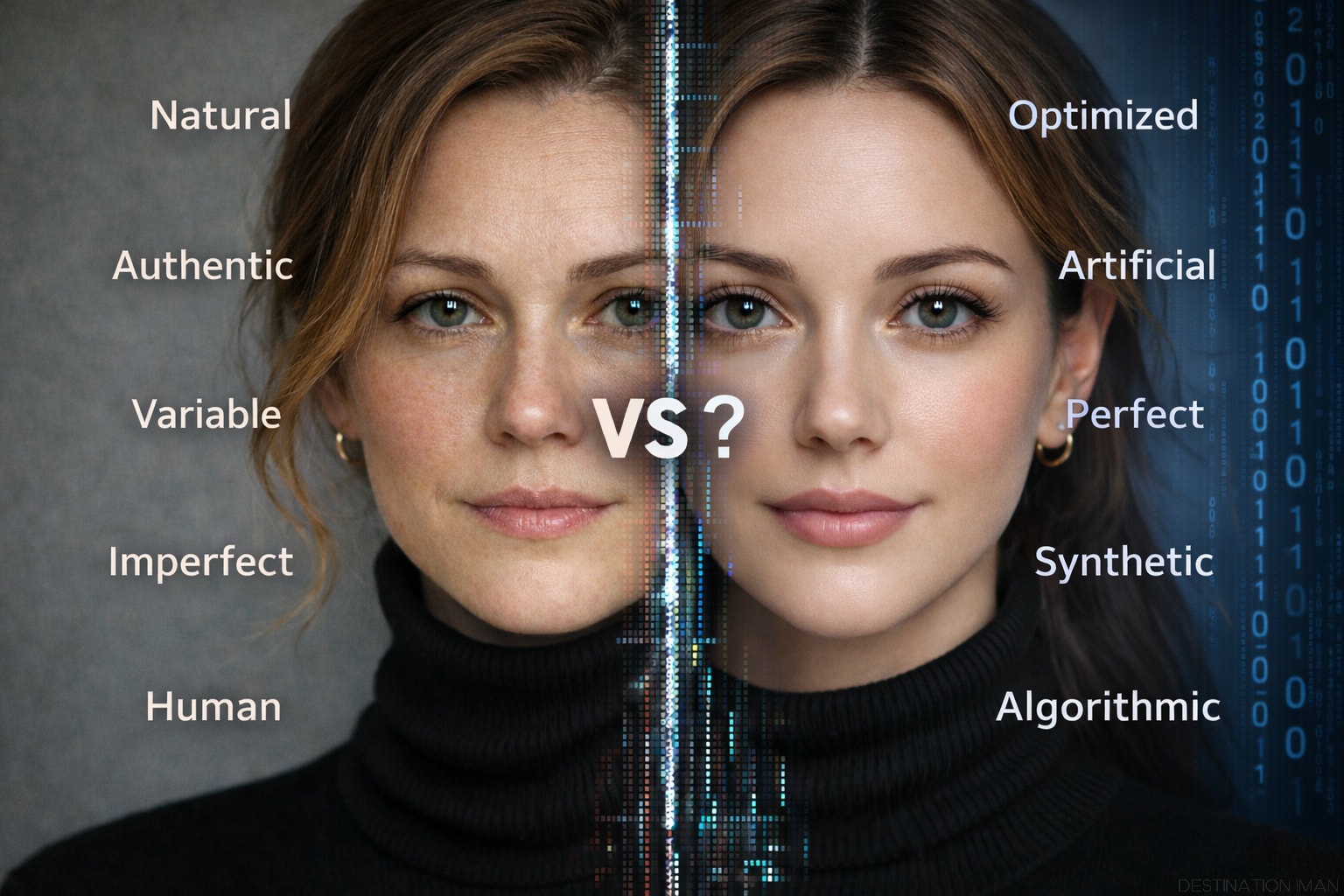
- Authenticity crisis: When synthetic becomes standard, authentic human appearance registers as inadequate
When Beauty Detaches from Biology
For some users, synthetic faces become aspirational standards. For others, they blur the line between representation and replacement.
When beauty detaches from biology, identity risks becoming abstract—something to be engineered rather than inhabited.

Cultural and Ethical Implications
The widespread use of synthetic faces has cultural consequences that extend beyond individual psychology.
Cultural Homogenization
Three Major Cultural Shifts
- Homogenization of beauty standards: AI models trained on global datasets converge on features that maximize cross-cultural appeal, eroding regional and cultural beauty diversity
- Erosion of diversity in visible representation: Synthetic faces tend toward "safe" averaged features, reducing representation of distinctive or uncommon appearances
- Reduced tolerance for natural variation: As synthetic perfection becomes normalized, tolerance for human imperfection, aging, and individuality decreases
Ethical Questions
The use of synthetic faces raises unresolved ethical issues:
Five Critical Ethical Concerns
- Transparency: Should platforms be required to disclose when images are AI-generated?
- Consent: When AI faces are trained on real people's images, who owns the resulting synthetic face?
- Representation: Who decides what features AI beauty systems prioritize or exclude?
- Impact: What responsibility do platforms have for psychological effects of synthetic beauty?
- Authenticity: How do we preserve value for human authenticity in synthetic-dominated spaces?
Viewers often cannot distinguish synthetic faces from real ones—and are rarely informed when they are interacting with artificial imagery.
Where This Is Heading
AI beauty is unlikely to disappear. Instead, it will become more refined, personalized, and integrated into daily digital life.
Technological Trajectory
Near-Term (2026-2028)
- Real-time synthetic face generation in video calls
- Personalized AI avatars replacing profile photos
- Widespread adoption in marketing and entertainment
Medium-Term (2028-2032)
- Synthetic faces indistinguishable from real at all quality levels
- AI beauty consultants offering "optimized" versions of your face
- Virtual influencer economy rivaling human creator economy
Long-Term (2032+)
- Majority of visible faces in digital spaces may be synthetic
- Biological appearance becomes "unoptimized" by default
- Question of human vs. synthetic beauty may become culturally obsolete
The Path Forward
The challenge is not stopping synthetic faces, but contextualizing them.
What Could Help
- Clear labeling: Mandatory disclosure when faces are AI-generated
- Algorithmic responsibility: Platforms diversifying what beauty gets amplified
- Cultural literacy: Education about how AI beauty works and why it differs from biological beauty
- Preservation of human representation: Intentional spaces for unedited, authentic human imagery
These interventions will determine whether AI beauty enriches or erodes human self-perception.
Conclusion
AI beauty and the rise of synthetic faces represent a turning point in visual culture.
For the first time, beauty ideals are no longer anchored to human bodies. They are generated, optimized, and distributed by machines.
Core Understanding
- AI beauty is algorithmically engineered, not biologically evolved
- Synthetic faces now dominate digital visibility through algorithmic amplification
- Human perception is gradually recalibrating to prefer artificial over authentic
- The ability to distinguish real from synthetic is rapidly disappearing
- Without intervention, biological appearance may become "unoptimized" by default
Understanding this shift is essential to preserving the human dimension of beauty in an increasingly artificial visual world.
The question is no longer whether synthetic faces will become normal. They already are. The question is whether we will recognize them—and what we will lose if we don't.
Sources & Further Reading
- Royal Society – The Uncanny Valley
- Nature Human Behaviour – Perception of Artificial Faces
- MIT Technology Review – AI-Generated Faces
- Body Image Journal – Media, Appearance, and Identity
- PNAS – AI-Generated Faces Are Indistinguishable from Real Faces
- arXiv – Detecting Deepfakes and AI-Generated Faces