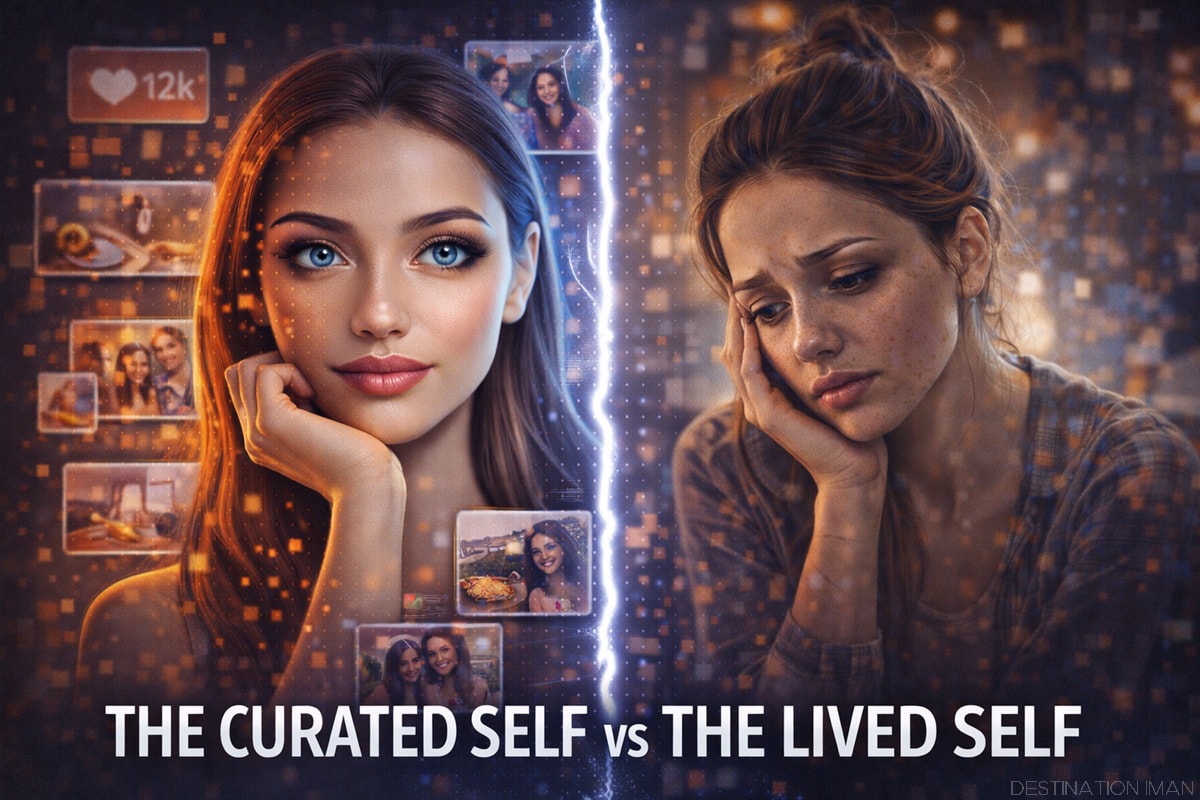
How selective presentation shapes identity, why curation feels necessary, and what is lost when performance replaces presence
Introduction
In the digital age, appearance is no longer simply presented—it is curated. Faces are adjusted, moments are selected, and lives are edited into narratives designed for visibility and approval.
The word "curated" once belonged to museums and galleries—spaces where experts selected and arranged objects for public viewing. Now it describes how millions of people manage their daily self-presentation online.
The Shift from Spontaneous to Strategic
- Pre-digital era: Self-presentation was largely spontaneous, context-dependent, and unrecorded
- Early social media (2005-2015): Sharing was casual, documentation was selective
- Peak curation era (2015-2025): Every post becomes strategic, optimized for engagement
- Present (2026): Curation is so normalized that "uncurated" requires conscious effort
This article explores how curated faces and curated lives shape modern identity, why curation feels necessary, and what is lost when presentation replaces presence.
What Does "Curated" Really Mean?
Curation implies choice, refinement, and exclusion. In digital contexts, it refers to the selective presentation of reality.
The Three Elements of Digital Curation
Components of Curation
- Selection: Choosing which moments, angles, and expressions to share
- Optimization: Enhancing chosen content through filters, editing, and framing
- Exclusion: Actively removing anything that disrupts the desired narrative
Platforms reward clarity, consistency, and visual coherence. As a result, users learn to remove ambiguity, struggle, and contradiction from what they share.
Why Curation Feels Necessary
Several forces make curation feel not optional but required:
Pressures Driving Curation
- Algorithmic reward: Consistent, high-quality content receives more visibility
- Social comparison: Everyone else appears curated, creating competitive pressure
- Permanent record: Posts remain visible indefinitely, increasing stakes of each share
- Professional consequences: Employers, institutions, and opportunities review online presence
- Identity management: Digital profiles function as public-facing CVs of the self
Curated Faces: Managing Appearance Online
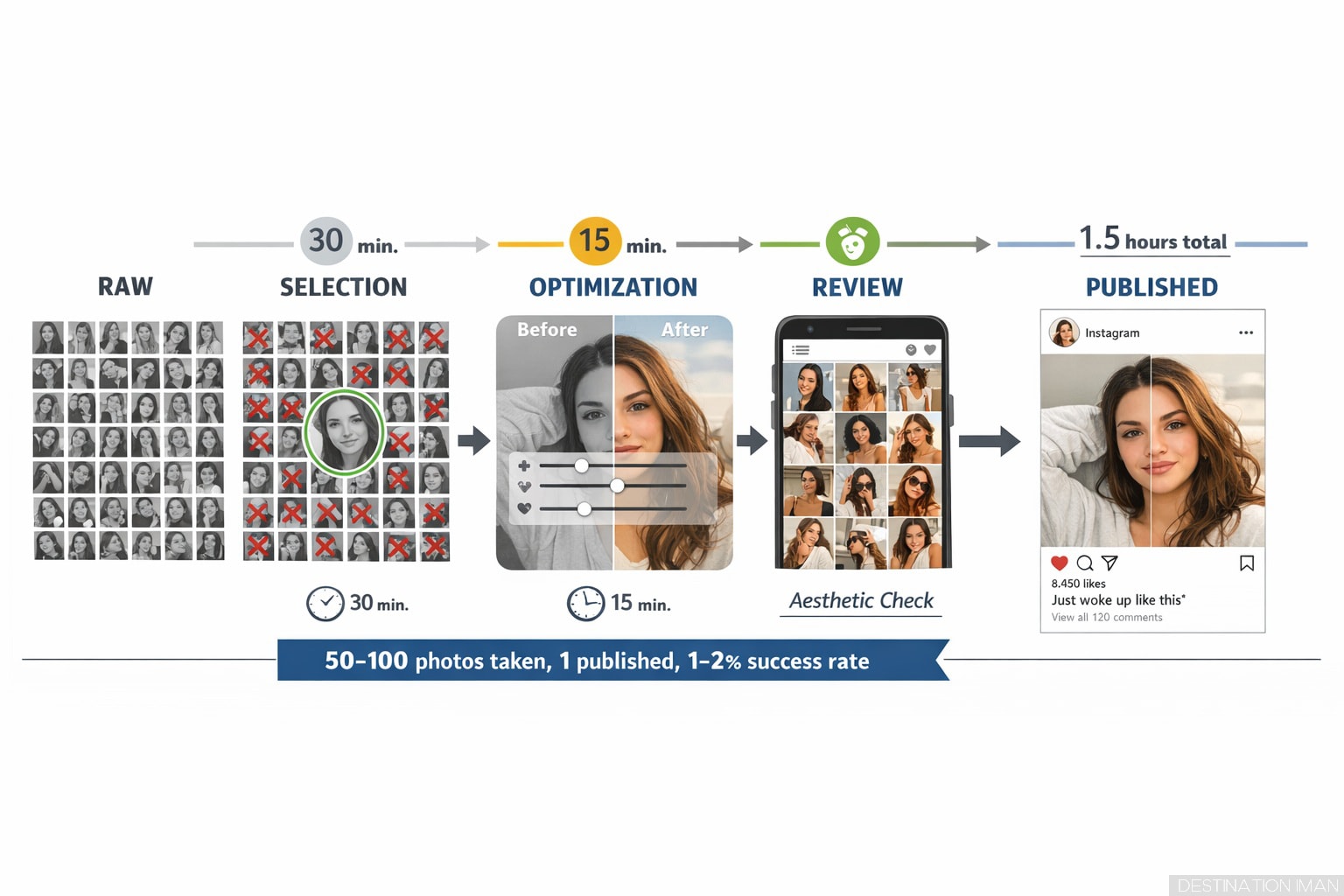
Curated faces are the result of repeated optimization.
The Labor of Face Curation
Creating a curated face involves systematic work:
Stage 1: Capture
- Taking 20-100 photos to find one acceptable angle
- Controlling lighting, background, expression
- Using timer or assistance to achieve desired composition
Stage 2: Selection
- Evaluating dozens of similar images
- Identifying which expression, angle, lighting "works"
- Comparing against previous successful posts
Stage 3: Optimization
- Applying filters (often multiple layers)
- Adjusting lighting, contrast, saturation
- Retouching specific features or blemishes
- Ensuring consistency with existing aesthetic
Stage 4: Evaluation
- Previewing how image appears in feed context
- Seeking feedback from trusted friends
- Sometimes abandoning entire session if results feel "off"
Lighting, angles, filters, and editing tools allow users to present a controlled version of their appearance. Over time, this optimized face becomes familiar—and expected.
Invisible Labor
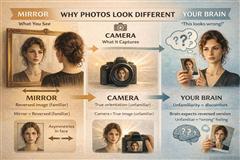
Importantly, curated faces are not always overtly artificial. Their power lies in subtle correction rather than transformation.
The final image appears effortless—erasing the 30 minutes, 50 attempts, and multiple editing apps that produced it.
Curated Lives: Editing Reality
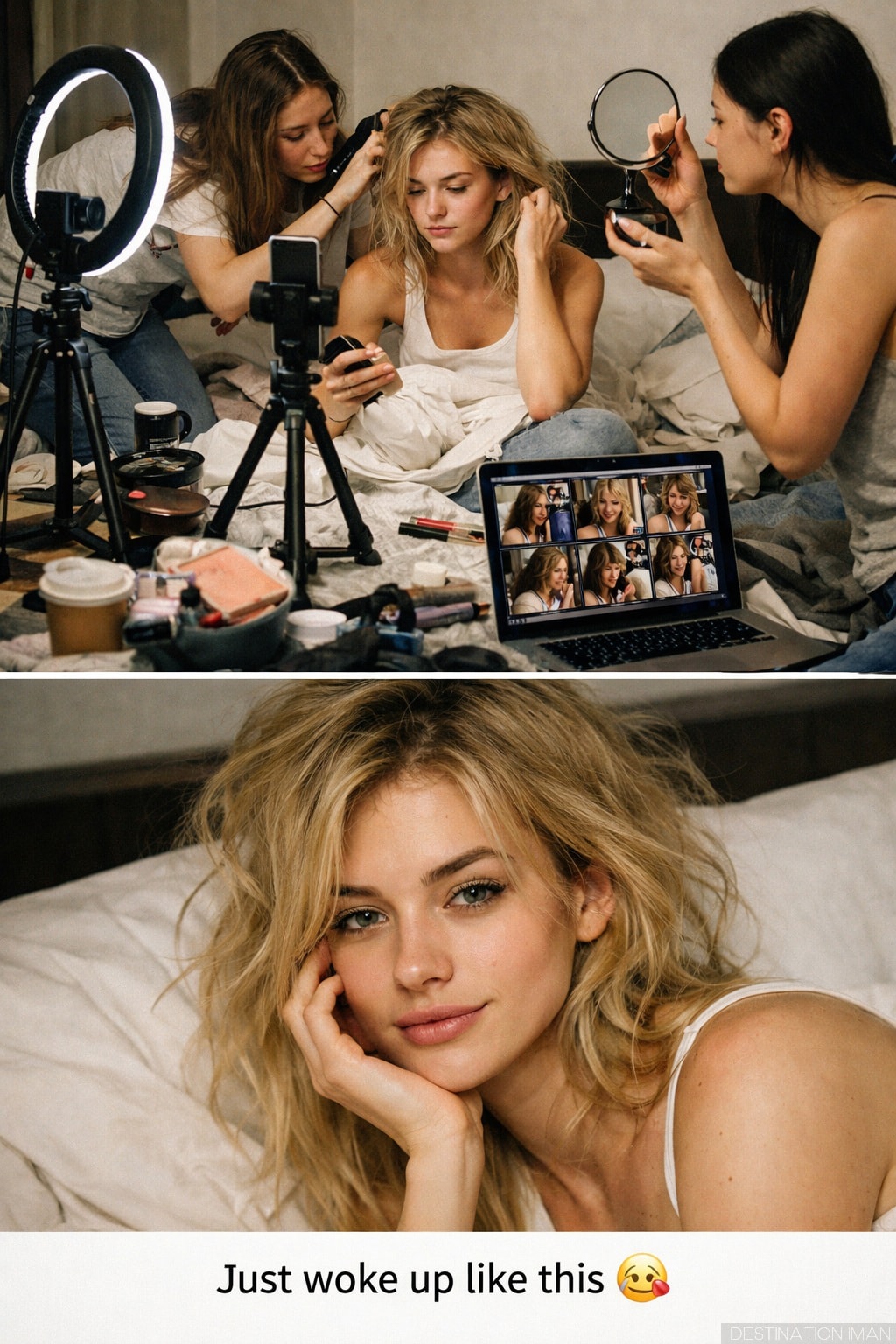
Just as faces are curated, lives are shaped into shareable sequences.
What Gets Shared vs. What Gets Lived
Travel highlights
Career achievements
Social events
Peak moments
Aspirational purchases
Daily routines
Setbacks and failures
Solitude and boredom
Mundane maintenance
Financial stress
Moments of success, beauty, travel, and joy are emphasized. Mundane or difficult experiences are minimized or excluded.
This creates a visual narrative of continuity and control—a life that appears smoother and more intentional than lived reality.
The Highlight Reel Effect
Strategic Vulnerability
Even when users share "struggles" or "imperfections," these are often carefully timed and framed:
- Posting about anxiety after achieving success
- Sharing "unfiltered" photos that still look flattering
- Revealing vulnerability in ways that generate sympathy/engagement
- Timing difficult content for maximum visibility
From Living to Performing
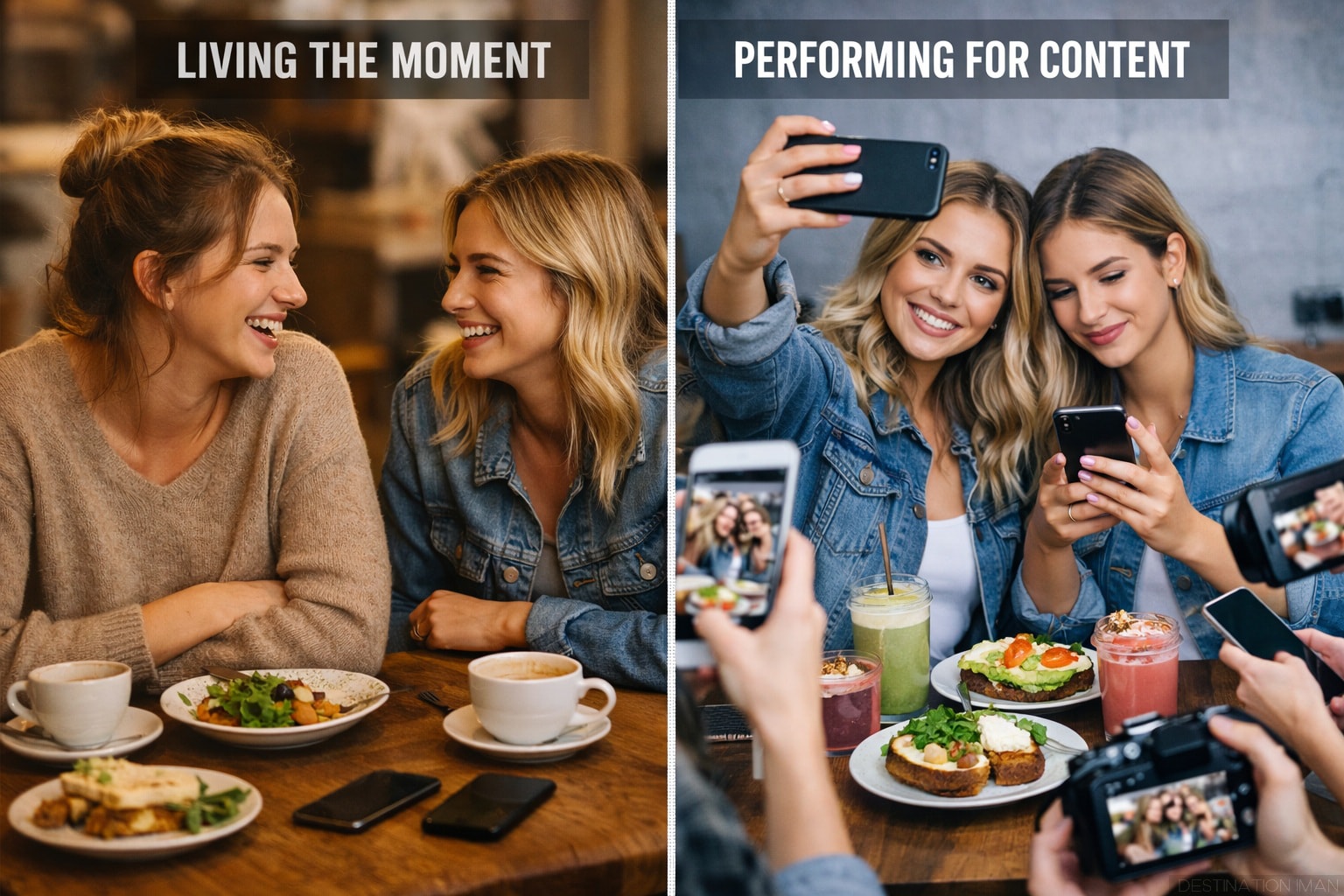
As curation becomes habitual, everyday experience shifts.
The Evaluative Gaze
Instead of asking "What am I experiencing?", users increasingly ask "How will this look?" or "Is this worth sharing?"
Signs Experience Has Become Performative
- Choosing restaurants/locations based on "Instagrammability" rather than preference
- Interrupting authentic moments to capture content
- Feeling events "didn't happen" if not documented
- Experiencing disappointment when reality doesn't match expected aesthetic
- Planning experiences around content opportunities rather than enjoyment
Life becomes partially performative, oriented toward an imagined audience rather than internal meaning.
The Commodification of Experience
Experiences increasingly function as content raw material:
- Travel valued for photo opportunities
- Relationships documented for social proof
- Achievements validated through shares rather than private satisfaction
- Possessions purchased for display value
Psychological Effects of Curation
Constant curation carries psychological consequences.
Cognitive and Emotional Costs
Documented Psychological Effects
- Heightened self-monitoring: Constant awareness of how you appear, disrupting spontaneous experience
- Anxiety around inconsistency: Fear that unoptimized moments will disrupt curated narrative
- Dependence on external validation: Self-worth increasingly tied to engagement metrics
- Decision fatigue: Endless micro-decisions about what and how to share
- Imposter syndrome: Awareness that public image doesn't match private reality
The Validation Trap
When identity is repeatedly filtered through public response, self-worth can become conditional.
The Exhaustion of Perpetual Curation
Maintaining curated presence requires constant labor:
- Time spent capturing, editing, posting
- Mental energy evaluating and optimizing
- Emotional management of public response
- Strategic planning of content calendar
The Illusion of Authenticity
Paradoxically, curated content is often described as "authentic."
Authenticity as Performance
Carefully selected vulnerability or imperfection can still be performative when it is timed, framed, and optimized.
Markers of Performed Authenticity
- "Raw" photos that still follow aesthetic standards
- Vulnerability shared only after resolution
- "No filter" labels on subtly edited images
- Strategic transparency that generates engagement
- "Keeping it real" as brand differentiation
Authenticity becomes an aesthetic rather than a state—something to be achieved through careful presentation rather than spontaneous expression.
The Authenticity Paradox
This doesn't mean curated vulnerability is dishonest—but it reveals how even resistance to curation can become curated.
The Growing Identity Gap
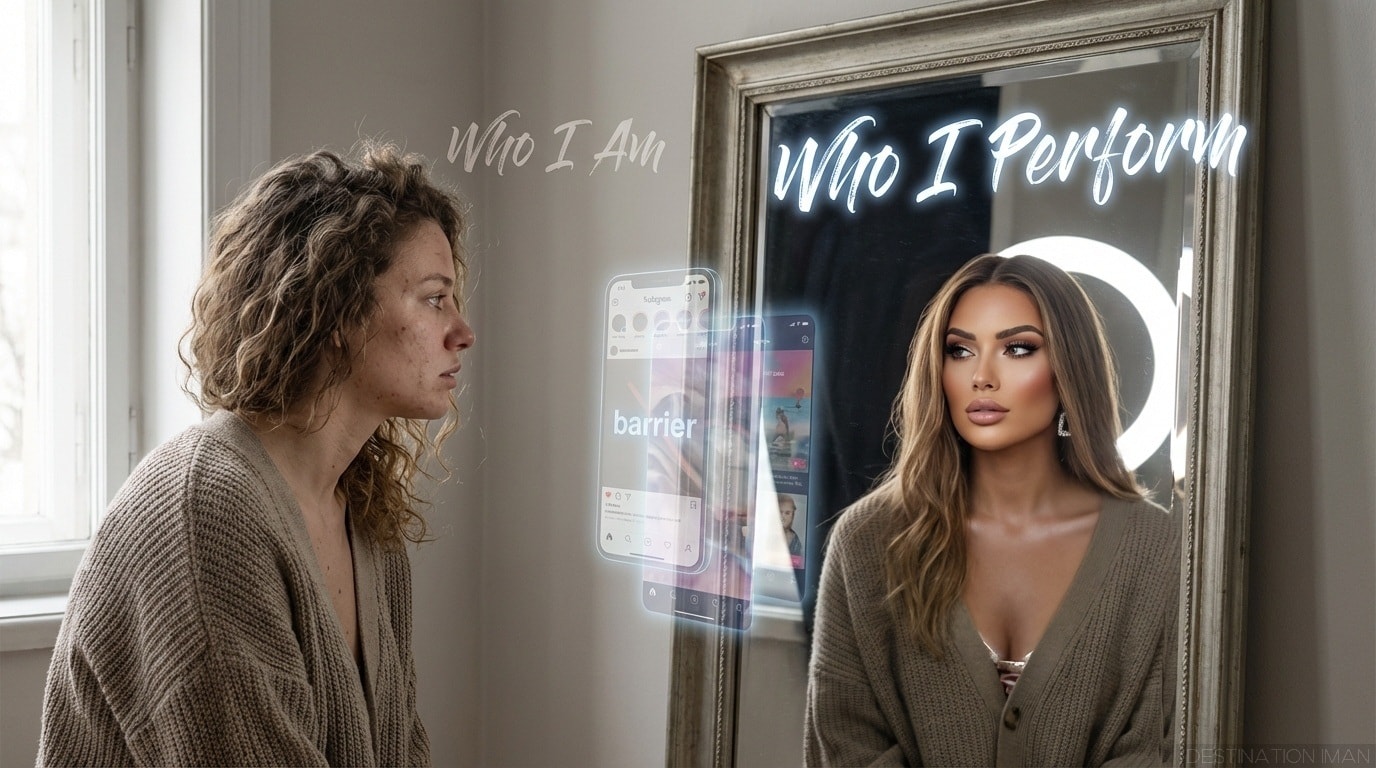
Over time, a gap may emerge between the curated self and the lived self.
The Dual Self
Confident
Consistent
Controlled
Socially validated
Carefully optimized
Uncertain
Contradictory
Evolving
Privately experienced
Naturally variable
The curated self appears confident, consistent, and controlled. The lived self remains complex, uncertain, and evolving.
This gap can create dissonance—a sense of living alongside one's own image rather than inhabiting it.
When the Gap Becomes Problematic

The Imposter Effect
Many users report feeling like imposters—aware that their public image doesn't fully represent their private reality, yet unable to bridge the gap without risking social/professional consequences.
Reclaiming Uncurated Experience
Reclaiming presence does not require abandoning digital platforms.
It requires reintroducing friction—moments not captured, expressions not optimized, experiences not evaluated for visibility.
Strategies for Reducing Curation Pressure
Individual Practices
- Delay documentation: Experience first, consider sharing later (if at all)
- Create private spaces: Maintain relationships and experiences with no digital record
- Practice "unshareable" activities: Engage in experiences specifically chosen for internal value
- Disable metrics: Hide like counts and follower numbers to reduce validation dependency
- Post without pre-evaluation: Share spontaneously rather than strategically (if sharing at all)
- Embrace inconsistency: Allow your public presentation to reflect actual variation
The Value of Choosing Invisibility
Choosing what remains unseen can be an act of autonomy.

Collective Solutions
Individual action is important, but systemic change requires platform-level intervention:
- Algorithm redesign: Reducing reward for highly curated content
- Metric transparency: Showing users how much time goes into curation
- Friction features: Tools that introduce delay between capture and publication
- Anti-curation modes: Platform features specifically designed to prevent optimization
Conclusion
Curated faces and curated lives reflect a broader cultural shift toward optimization.
While curation offers control and clarity, it can also distance individuals from lived experience. The question is not whether curation is "good" or "bad"—but what balance allows for both public presentation and private presence.
Core Understanding
- Curation is systematic work of selection, optimization, and exclusion
- Both faces and lives are increasingly managed for public consumption
- Performance orientation can disrupt spontaneous experience
- Psychological costs include self-monitoring, validation dependency, and exhaustion
- "Authentic" can itself become performed and curated
- Identity gap emerges between curated and lived selves
- Reclaiming uncurated experience requires intentional practice
The self is not a brand. Experience is not content. Life is not a performance—unless you choose to make it one.
And sometimes, the most radical act is simply to live without recording, to exist without optimizing, to be present without performing.
Sources & Further Reading
- Body Image Journal – Media, Appearance, and Identity
- New Media & Society – Digital Self-Presentation
- Pew Research Center – Social Media & Identity
- The Guardian – Technology and the Self
- American Psychological Association – Social Media and Self-Concept
- Human Communication Research – Identity and Digital Media