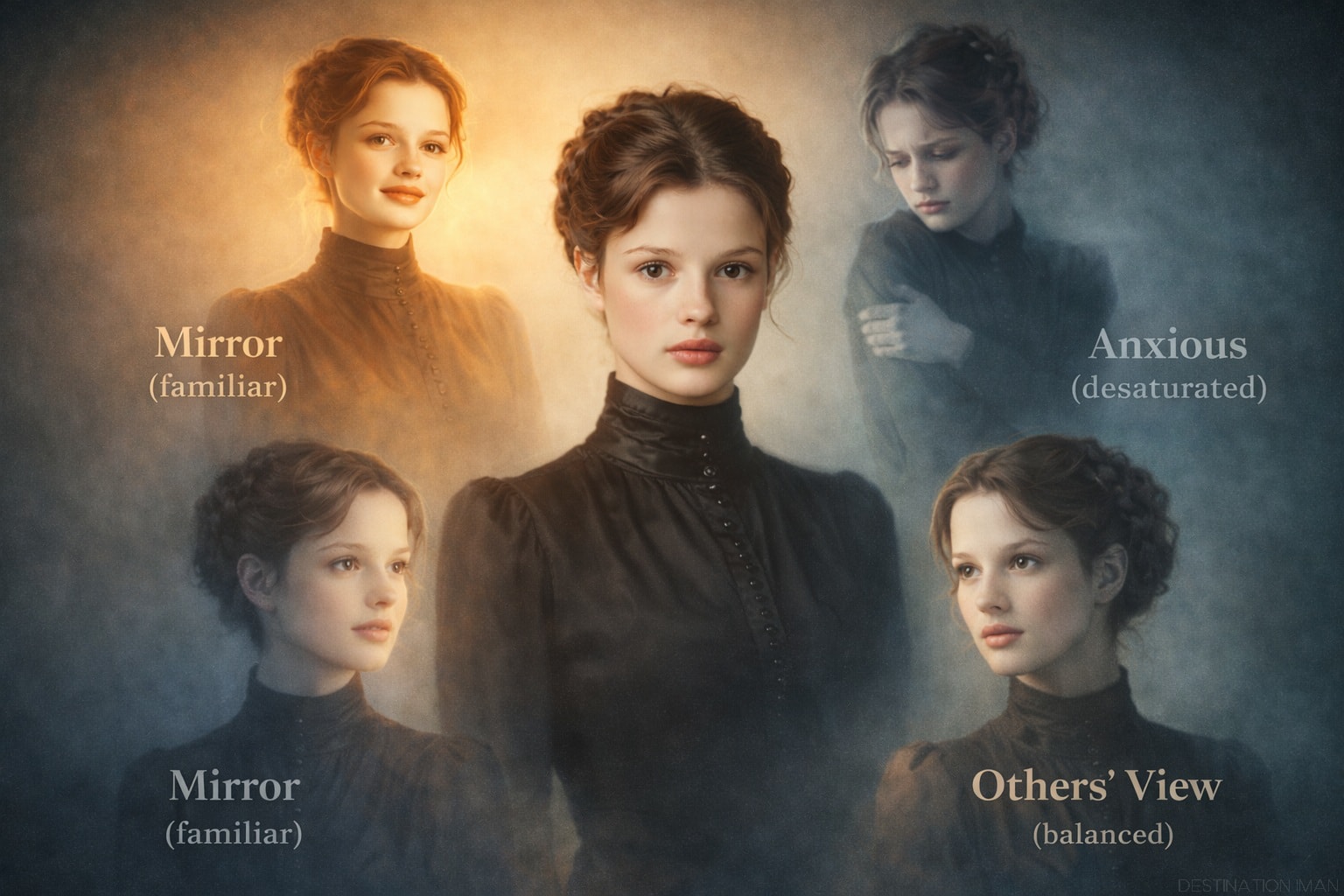
Why do you sometimes feel that you look completely different in the mirror, in photos, or in real life? This confusion is not vanity—it is psychology. Our appearance is shaped not only by physical features but also by perception, familiarity, emotion, and context.
This article explores the psychology of appearance and self-image, explaining why your reflection, your photos, and how others see you rarely match—and why this difference is completely normal.
What Is Self-Image?
Self-image is the mental picture you have of your own appearance. It is not a photograph and not a mirror reflection—it is a psychological construct shaped over time.
According to psychologists, self-image forms through repeated exposure to our reflection, emotional experiences, feedback from others, and cultural standards of beauty. This means that how you see yourself is deeply subjective.
Core Components of Self-Image
- Visual Memory: Mental reconstruction based on mirror exposure, not objective recording
- Emotional Association: How you feel about yourself shapes what you "see"
- Social Feedback: Comments, reactions, and treatment from others over time
- Cultural Context: Beauty standards and media influence what feels "normal"
Research in visual perception shows that the brain does not record faces objectively—it reconstructs them based on memory, expectations, and emotional associations.
Mirror vs Camera: Why the Difference Exists
One of the most common questions people ask is: "Why do I look good in the mirror but strange in photos?" The answer lies in symmetry, familiarity, and perspective.
The Mirrored vs True Image
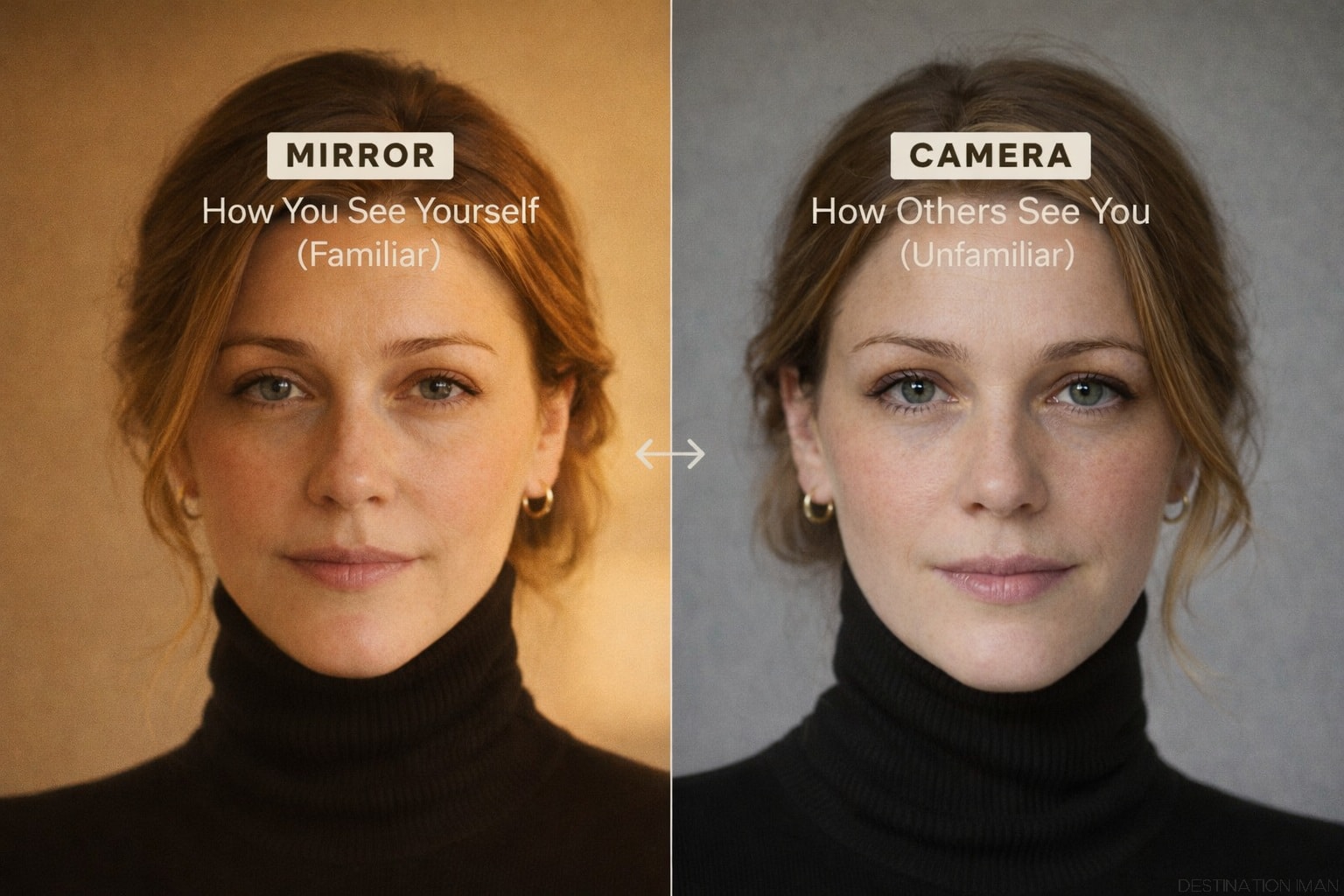
A mirror shows you a horizontally flipped version of your face—the version you are most familiar with. A camera, however, captures your face as others see it, without reversal. Even slight asymmetries become noticeable when the image is unfamiliar.
Mirror Image vs Camera Image
- Mirror: Horizontally flipped, familiar, seen thousands of times throughout life
- Camera: True orientation, unfamiliar, how others actually see you
- Result: Brain flags camera image as "wrong" even though it's objectively accurate
Studies in face perception confirm that people tend to prefer mirrored images of themselves, while strangers often prefer the non-mirrored versions.
The Familiarity Effect
This phenomenon is explained by the mere-exposure effect—a psychological principle stating that people develop a preference for things simply because they are familiar with them.
Why Familiarity Shapes Preference
You see your mirrored face thousands of times throughout your life—every morning, every time you check your appearance, every glance in a reflective surface. When you encounter a different version of yourself—in photos or videos—your brain flags it as "wrong," even though it is objectively accurate.
This does not mean the photo is bad. It means it is unfamiliar.
How Emotions and Confidence Change Appearance
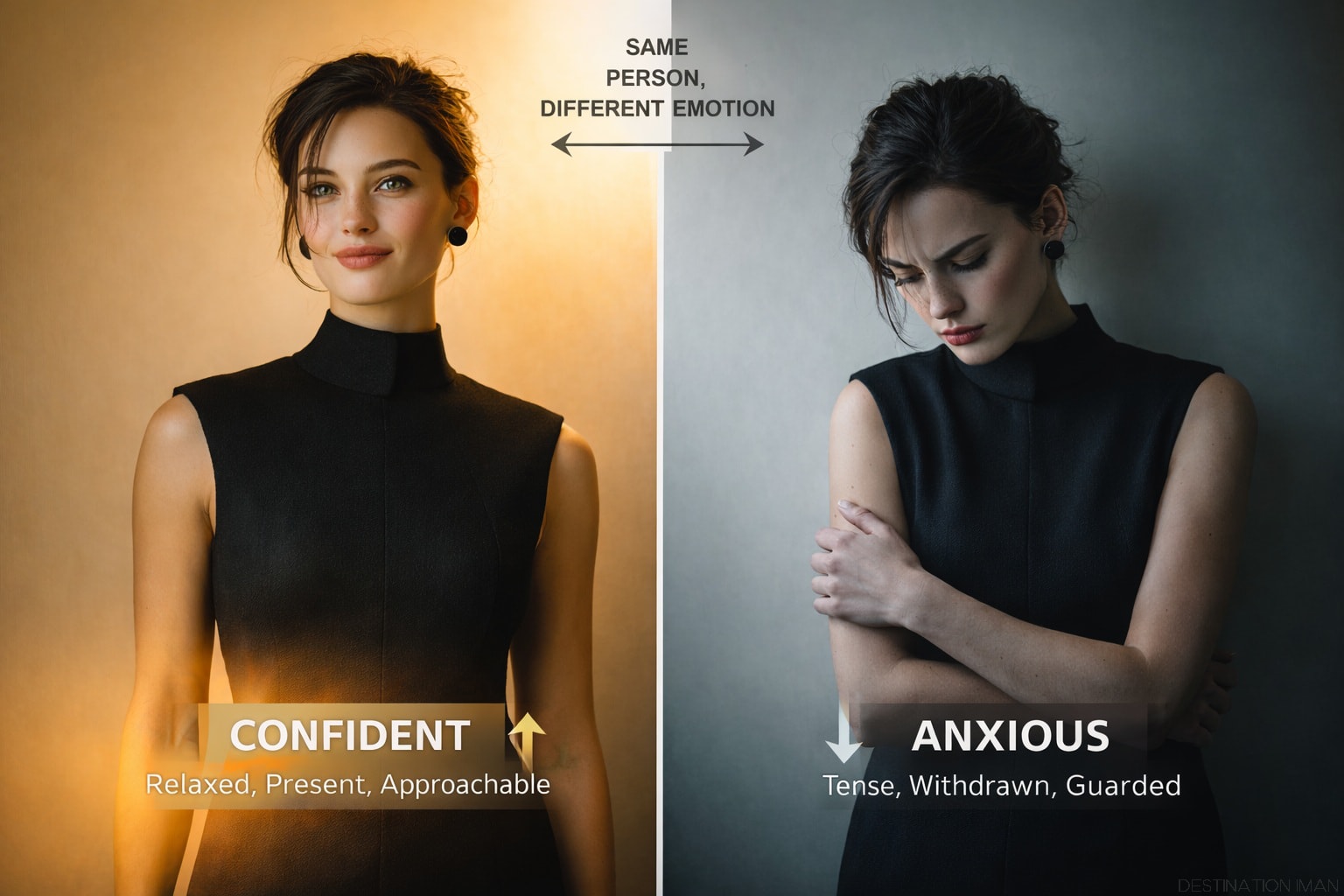
Appearance is not static. Emotions directly influence posture, facial tension, eye openness, and micro-expressions. Confidence, calmness, and comfort can dramatically change how a person looks in the same physical body.
The Emotional-Visual Connection
Psychologists note that people often judge attractiveness based on emotional signals rather than facial features alone. A relaxed face appears more symmetrical, open, and appealing.
How Emotions Alter Appearance
- Posture: Confidence straightens the spine; anxiety collapses the chest
- Facial Tension: Stress tightens the jaw and furrows the brow; calm softens features
- Eye Expression: Confidence opens the eyes; insecurity narrows the gaze
- Micro-expressions: Genuine ease shows in tiny facial movements photos can't capture
This explains why people often say: "You look better in real life than in photos." Real-life perception includes movement, emotion, and presence—elements frozen photos cannot convey.

How Other People Actually See You
Contrary to popular belief, people do not analyze your face the way you do. They do not freeze frames, zoom in on asymmetry, or compare you to an internal ideal.
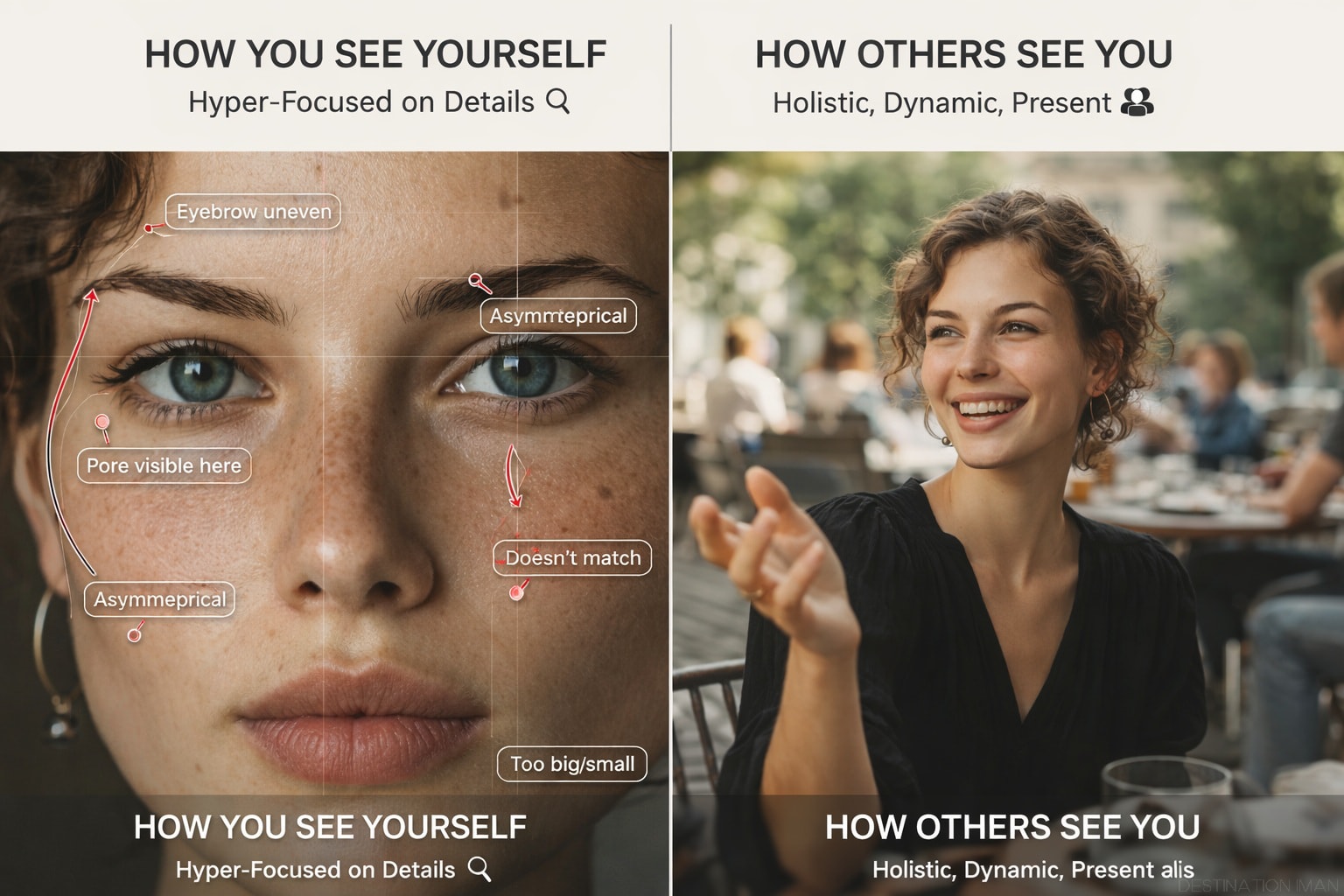
Holistic vs Hyper-Focused Perception
Social perception research shows that others perceive you holistically—including movement, voice, posture, energy, and emotional presence.
How You See Yourself vs How Others See You
- Your View: Static analysis, frozen moments, hyper-focus on flaws, comparison to idealized self-image
- Their View: Dynamic impression, movement and voice included, holistic assessment, no internal comparison baseline
In most cases, people see you as more attractive than you see yourself.
The Role of Culture and Media
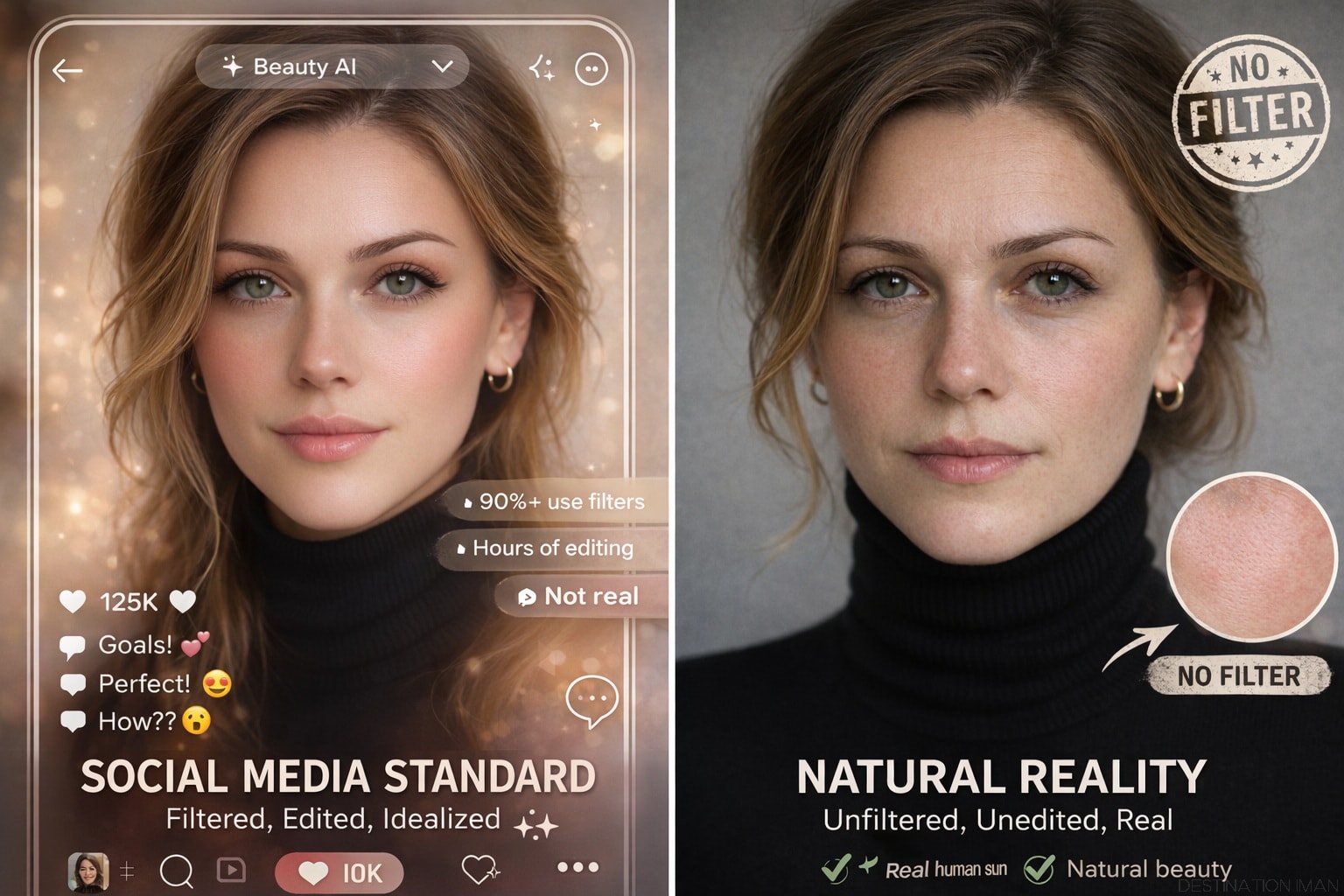
Modern self-image is heavily influenced by social media, filters, curated images, and unrealistic standards. Repeated exposure to idealized faces reshapes our perception of what is "normal."
The Distortion of "Normal"
When filtered, edited, and optimized images dominate visual culture, unfiltered reality begins to feel inadequate. This creates a psychological gap between real appearance and perceived normalcy.
Understanding this mechanism helps reduce unnecessary self-criticism. Your appearance is not "wrong"—the comparison standard is distorted.
Learning to Accept Visual Differences
The key to healthier self-perception is understanding that no single image defines your appearance. You exist in motion, emotion, and interaction—not in still frames.
Strategies for Healthier Self-Perception
Building Acceptance of Visual Variation
- Recognize familiarity bias: Your mirror image feels "right" only because it's familiar, not because it's better
- Understand camera limitations: Photos freeze moments; real you includes movement and presence
- Practice holistic self-view: See yourself as others do—as a whole person, not isolated features
- Limit comparison to edited images: Most "perfect" images are heavily manipulated
- Value dynamic presence: How you move, speak, and interact matters more than frozen features
- Separate emotion from appearance: How you feel affects what you see in the mirror
Accepting that you look different in different contexts is not resignation; it is psychological maturity. The goal is not perfect consistency, but self-recognition across variations.
Sources & References
Academic & Research Sources
- Hood, B. (2012). The Self Illusion: How the Social Brain Creates Identity
- American Psychological Association — Visual Perception and Self-Image
- Psychology Today — Face Recognition and Self-Perception
- Frontiers in Psychology — Mere-Exposure Effect and Facial Preference