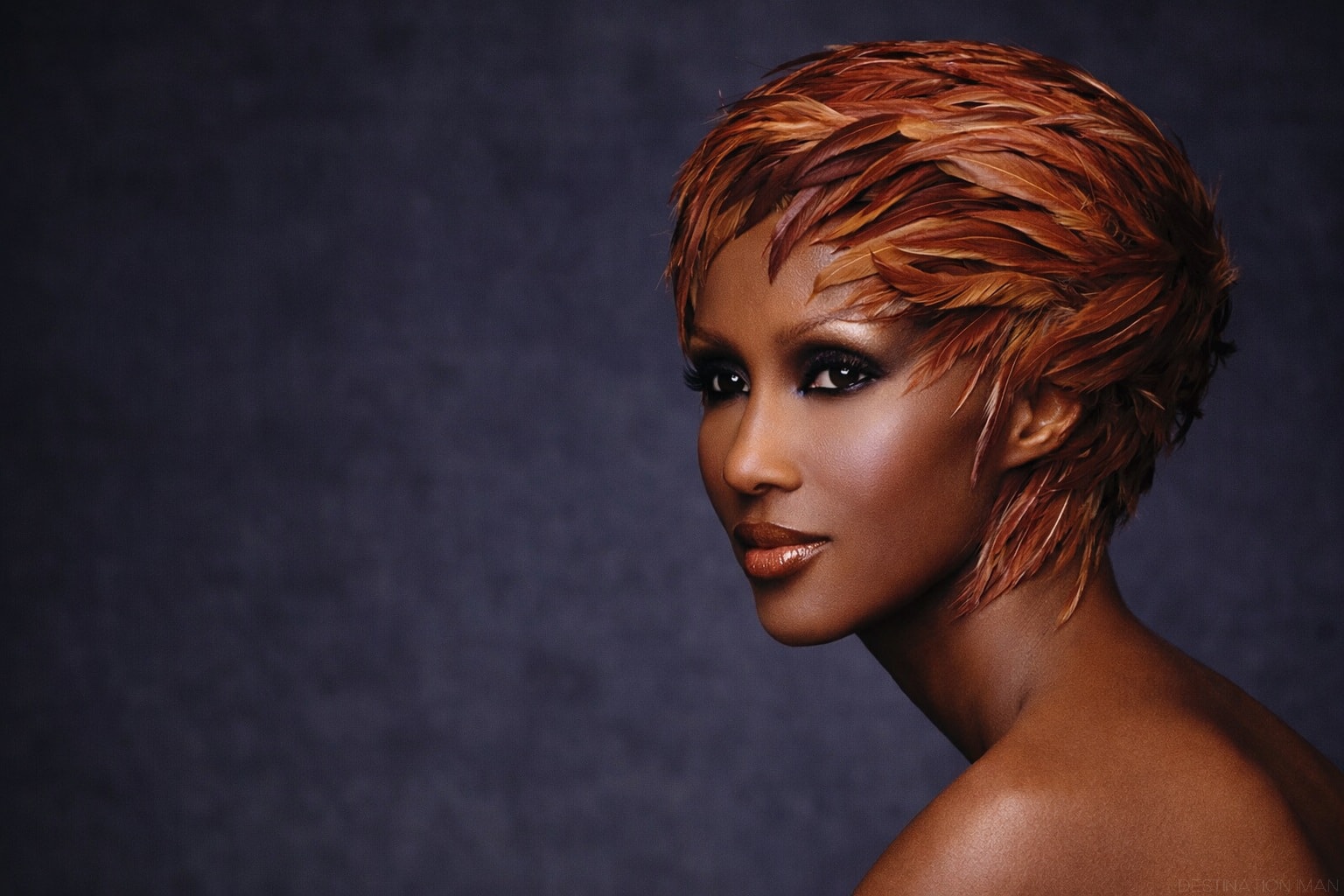
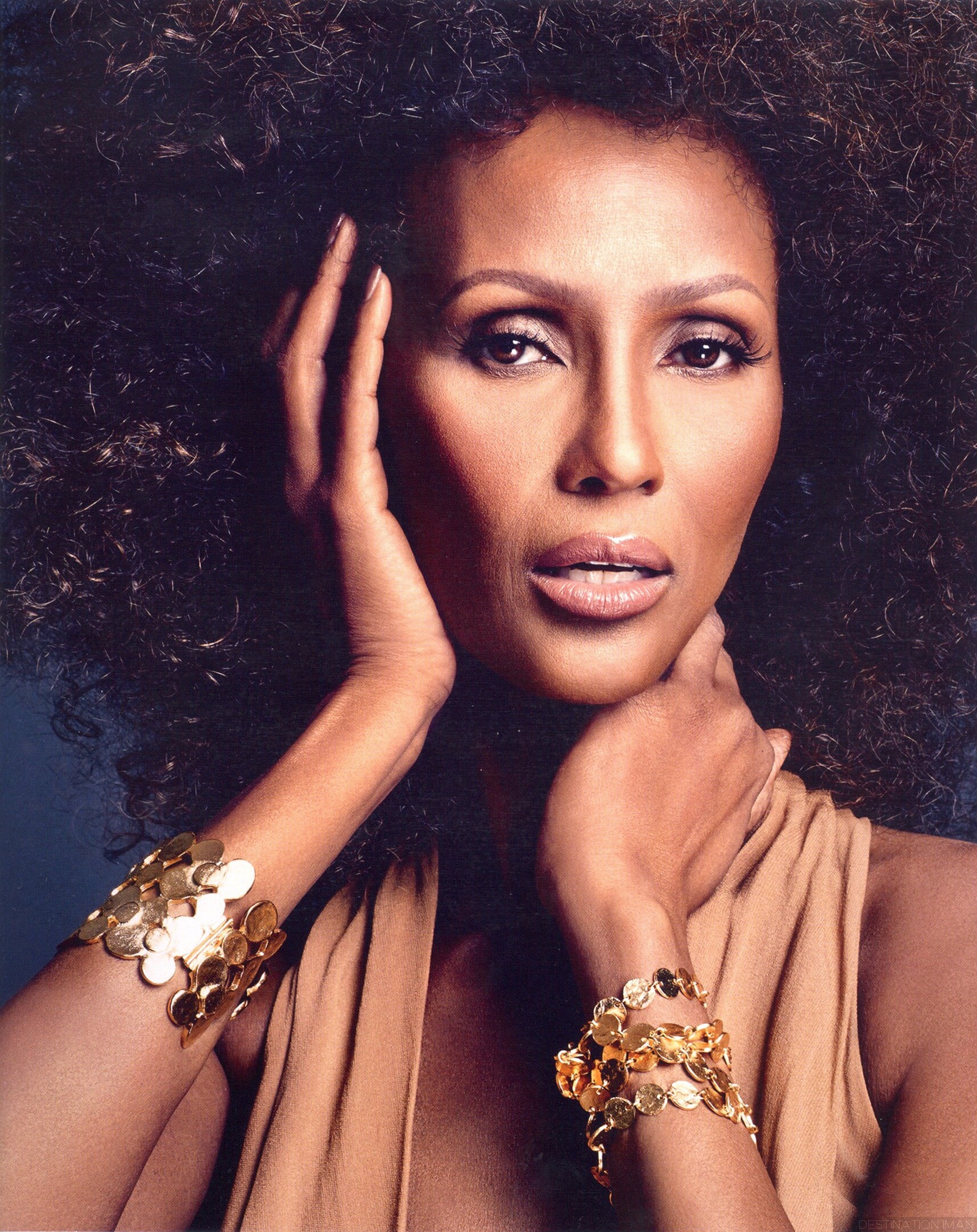
At 70 years old, after more than five decades in the fashion and beauty industry, Iman maintains a complexion that defies conventional expectations about aging skin. Her luminous, even-toned skin isn't the result of expensive miracle products or extreme treatments—it's the outcome of consistent, thoughtful skincare practices she's refined throughout her legendary career. From her modeling days in the 1970s to launching IMAN Cosmetics and IMAN Skincare, she's developed a philosophy that prioritizes skin health over quick fixes.
What makes Iman's approach particularly valuable is its authenticity. Unlike celebrity beauty advice that often feels disconnected from reality, Iman has spent decades genuinely invested in skincare—both as a model who needed camera-ready skin and as an entrepreneur who formulated products for diverse skin tones. Her insights come from lived experience, professional expertise, and a deep understanding of how skin changes over time.
Iman's Core Skincare Principles
- SPF daily without exception — "Even on cloudy days, even indoors" (Vogue, 2019)
- Oil cleansing method — Removes makeup thoroughly without stripping skin
- Hydration obsession — Multiple layers of moisture, inside and out
- Professional treatments quarterly — Facials, peels, LED therapy every 3 months
- Minimalist approach — "Less is more—let your skin breathe" (Harper's Bazaar, 2020)
- Consistency over intensity — Daily routine matters more than occasional splurges
The Foundation: Skincare Before Makeup
Iman's beauty philosophy centers on a principle she's articulated consistently throughout her career: great makeup requires great skin. In a 2019 Vogue interview, she explained: "No amount of foundation can compensate for neglected skin. If you want your makeup to look beautiful, you have to start with a beautiful canvas."
This wasn't always conventional wisdom. During Iman's early modeling career in the 1970s and 1980s, the industry focused heavily on makeup application rather than underlying skin health. Backstage at fashion shows, makeup artists prioritized coverage and drama, often applying heavy products directly to unprepared skin. Iman observed how this approach created texture problems, emphasized fine lines, and required increasingly heavy applications to achieve desired effects.
Her solution was to shift priorities entirely. Rather than relying on makeup to create the appearance of great skin, she invested in actually developing great skin that required minimal coverage. "I learned early that if I took care of my skin, I could wear less makeup and still look polished," she told Harper's Bazaar in 2020. "That realization changed everything about how I approached beauty."
"No amount of foundation can compensate for neglected skin. If you want your makeup to look beautiful, you have to start with a beautiful canvas."
— Iman, Vogue, 2019

This philosophy directly influenced how she formulated IMAN Skincare products when the line launched. Rather than creating products that promised dramatic overnight transformations, she focused on gentle, effective formulations that supported long-term skin health. The approach reflected her personal routine—consistent, thoughtful care that produced gradual but lasting results.
The Non-Negotiable: Daily SPF
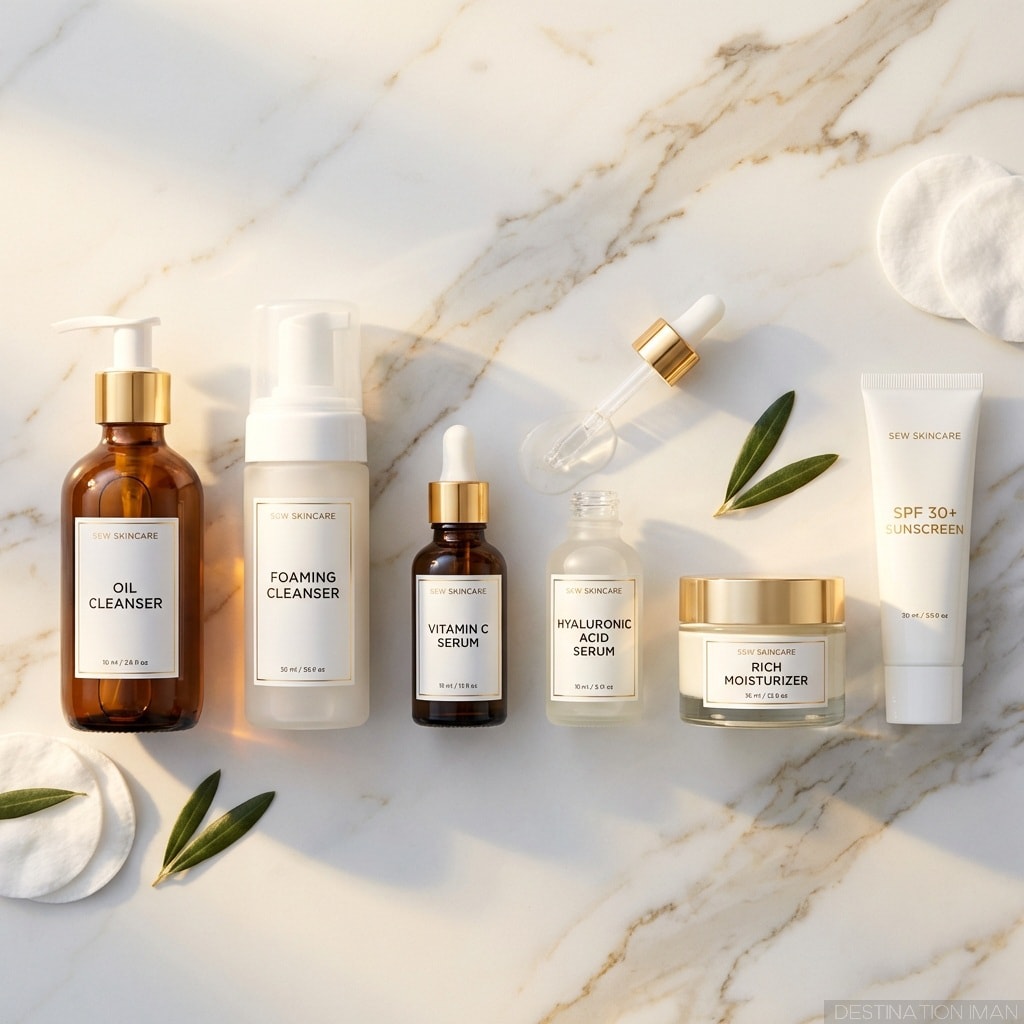
If Iman has one absolute, unwavering skincare rule, it's sun protection. In countless interviews spanning decades, she's identified daily SPF as the single most important anti-aging measure. "SPF every single day, even when it's cloudy, even when I'm mostly indoors," she told Allure in 2018. "This is non-negotiable. Sun damage is cumulative, and melanin-rich skin isn't immune."
This message carries particular weight given persistent misconceptions about sun protection and deeper skin tones. While melanin does provide some natural UV protection, it doesn't eliminate sun damage risk. Iman has been vocal about correcting this dangerous assumption, especially given that skin cancer in people of color is often diagnosed at later, more dangerous stages precisely because of false security about melanin protection.
- Minimum SPF 30 — Higher for extended outdoor exposure
- Broad spectrum — Protection against both UVA and UVB rays
- Applied daily — Regardless of weather or indoor/outdoor plans
- Reapplied every 2 hours — When spending time outdoors
- Generous application — Most people use too little; full face requires ¼ teaspoon
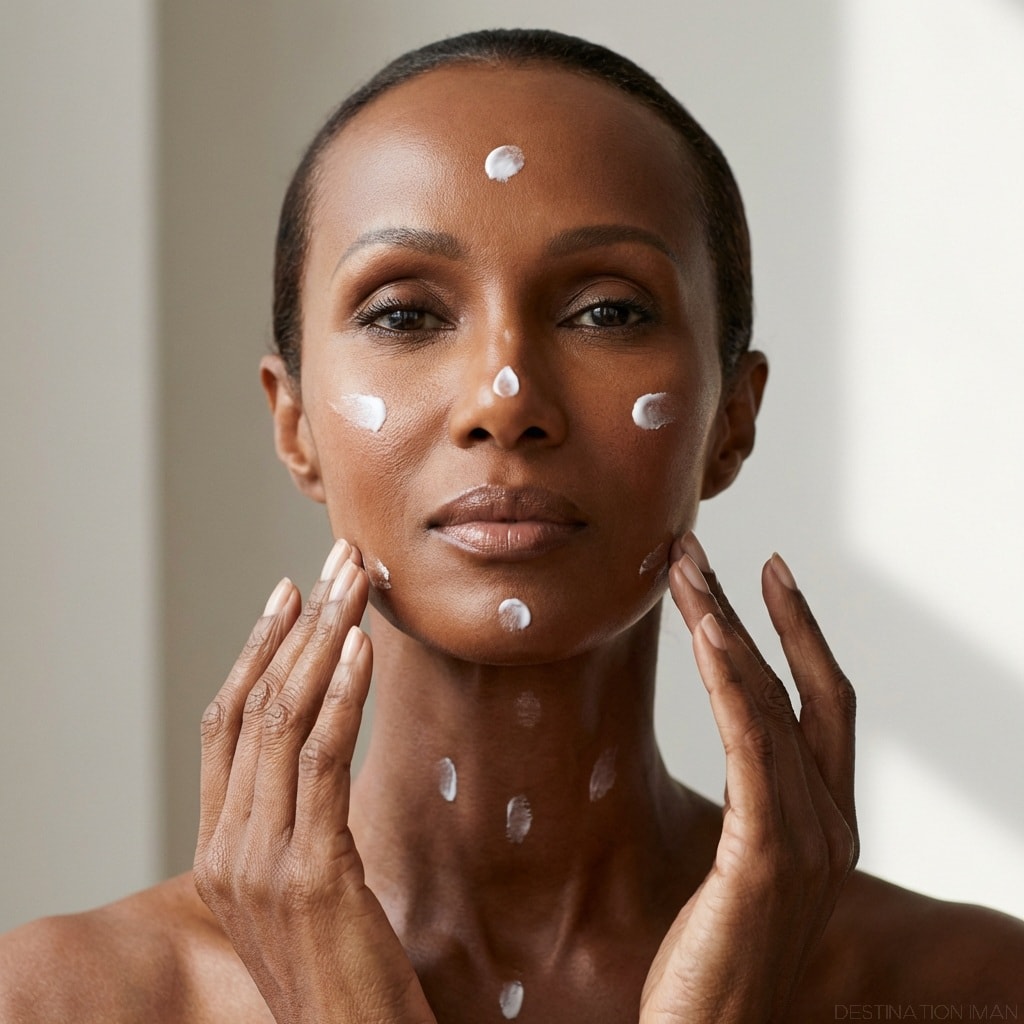
Her commitment to sun protection developed early in her career. "When I started modeling, some photographers wanted that sun-kissed look," she recalled in a 2017 interview with The Cut. "But I watched other models develop sun spots, uneven pigmentation, premature aging. I decided beautiful skin in my 60s was more important than a temporary tan in my 20s." That long-term thinking has clearly paid dividends—at 70, Iman's skin shows remarkably even tone and minimal sun damage.
Beyond daily facial SPF, Iman extends protection to often-neglected areas. "Neck, chest, hands—these areas age faster because people forget to protect them," she told InStyle in 2021. "I apply SPF to these areas every single day, just like my face." This comprehensive approach addresses the common problem of facial skin that looks younger than neck and hands, creating disconnected aging patterns.
The Cleansing Method: Oil-Based and Thorough
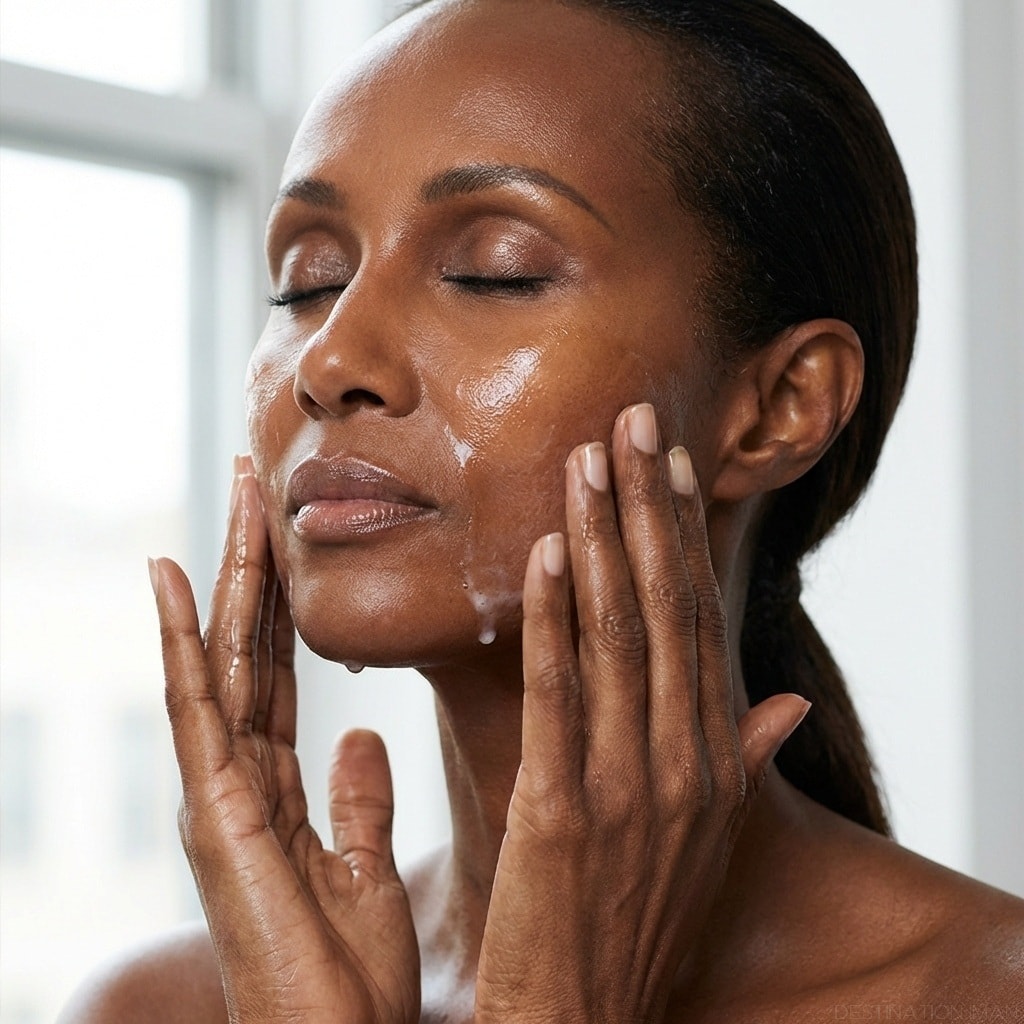
Iman's cleansing philosophy centers on thoroughly removing makeup and impurities without stripping skin's natural moisture barrier. Her preferred method: oil-based cleansing, often using a double-cleanse technique for heavy makeup days.
"I never, ever go to bed with makeup on. That's a beauty crime. Your skin needs to breathe and regenerate overnight."
— Iman, Elle, 2016
The oil cleansing method works through a simple chemical principle: oil dissolves oil. Makeup, sebum, and oil-based impurities bond with cleansing oils, allowing thorough removal without the harsh surfactants found in many foaming cleansers. For mature or dry skin—categories that increasingly apply as skin ages—this gentler approach prevents the tight, stripped feeling that can compromise skin barrier function.
Iman's typical evening cleansing routine, as she described to Byrdie in 2019:
- Oil cleanser first pass: Massage oil cleanser onto dry skin, focusing on eye makeup and long-wear products. This breaks down makeup and allows gentle removal.
- Warm water rinse: Add warm water to emulsify the oil, turning it milky. This lifts impurities away from skin.
- Second cleanse (if needed): For heavy makeup days, follow with a gentle cream or gel cleanser to ensure complete removal.
- Pat dry gently: No rubbing or harsh towel friction—pat skin dry with a soft cloth.
Morning cleansing is simpler: "In the morning, I just use lukewarm water or a very gentle cleanser," she explained. "Your skin hasn't accumulated the day's makeup and pollution overnight, so you don't need aggressive cleansing. Over-cleansing in the morning can actually strip protective oils your skin produced during sleep."
As skin ages, sebum production decreases, making skin drier and more prone to sensitivity. Harsh foaming cleansers can strip remaining natural oils, compromising the skin barrier and accelerating moisture loss. Oil cleansing removes impurities while preserving essential lipids, maintaining barrier integrity that's crucial for aging skin.
Hydration: Multiple Layers, Multiple Methods
Hydration represents a cornerstone of Iman's skincare approach, but she distinguishes between drinking water (internal hydration) and topical hydration (products that deliver and seal moisture into skin).
"People think drinking eight glasses of water will give them dewy skin," she told Marie Claire in 2020. "Hydration helps overall health, absolutely. But for visible skin hydration, you need topical products that actually deliver moisture to skin cells and prevent water loss."
Iman's Hydration Strategy
Step 1: Hydrating toner or essence
Applied immediately after cleansing while skin is still slightly damp. "This step preps skin to absorb subsequent products better," she explained to Coveteur in 2018. Hydrating toners containing hyaluronic acid, glycerin, or rose water provide an initial moisture layer that subsequent products build upon.
Step 2: Hyaluronic acid serum
Hyaluronic acid can hold up to 1,000 times its weight in water, making it exceptionally effective for plumping and hydrating skin. "I apply hyaluronic acid serum on damp skin," Iman noted. "It binds to that surface moisture and pulls it into deeper skin layers."
Step 3: Targeted treatment serums
Vitamin C in the morning for brightening and antioxidant protection; retinol alternatives or peptides in the evening for anti-aging benefits. These treatment serums address specific concerns while contributing to overall skin health.
Step 4: Rich moisturizer
"As skin matures, it needs richer moisturizers," Iman told Vogue in 2019. "I'm not afraid of oils and emollients. My skin drinks them up." She favors moisturizers with ceramides, fatty acids, and emollients that reinforce the skin barrier.
Step 5: Facial oil (optional evening step)
On particularly dry days or in harsh weather, Iman adds a facial oil as a final step. "A few drops of facial oil seal in all the previous layers," she explained. "It's like putting a protective blanket over your skincare."
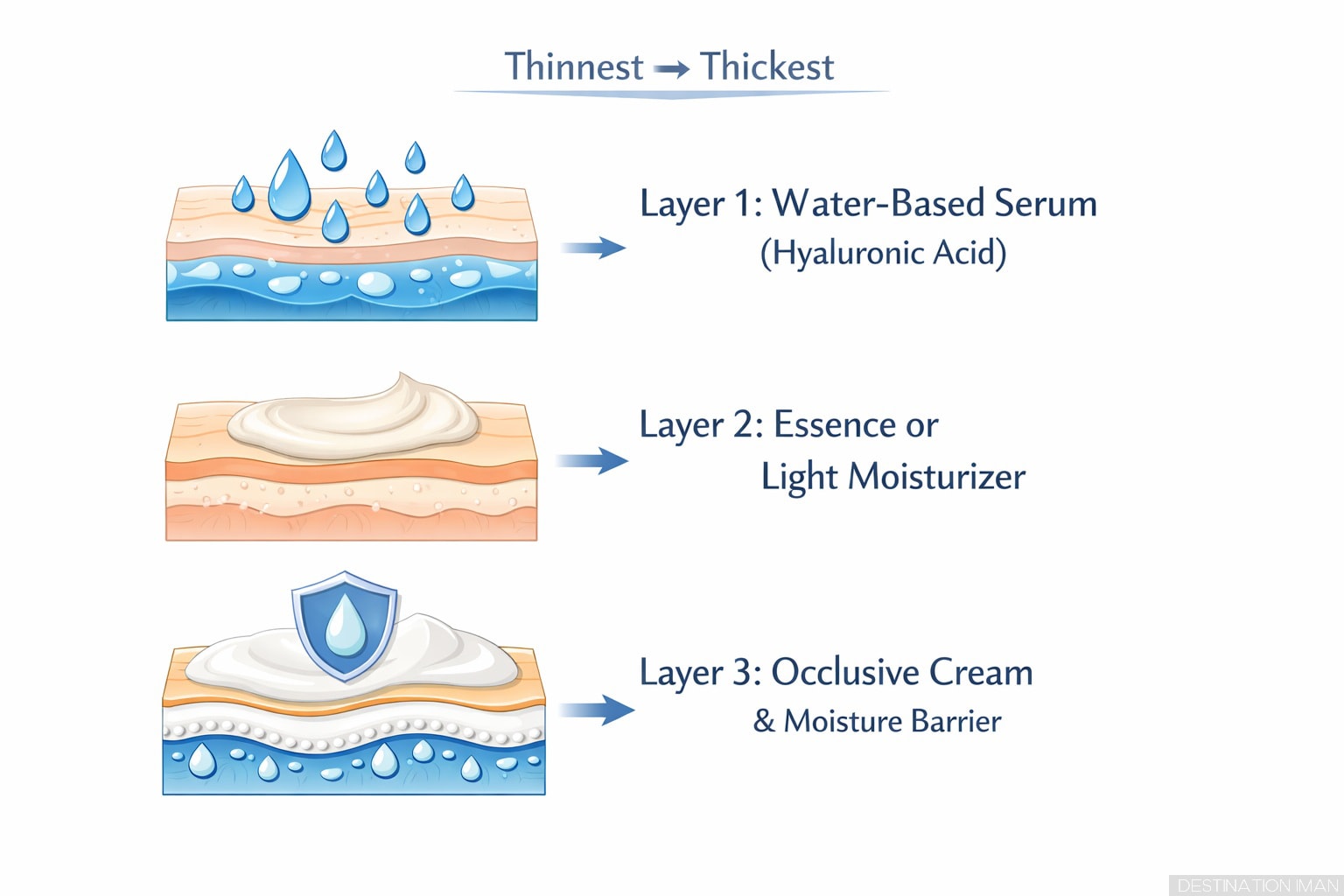
Dermatological research supports Iman's layering approach. Applying products from thinnest to thickest consistency allows each layer to penetrate effectively. Water-based serums absorb first, delivering active ingredients. Emollient moisturizers create an occlusive layer that prevents trans-epidermal water loss (TEWL), keeping previous layers' hydration sealed in.
Professional Treatments: Strategic Quarterly Investment
While Iman's at-home routine forms her skincare foundation, she supplements it with professional treatments approximately every three months. "I see professional treatments as maintenance, not miracles," she told Refinery29 in 2021. "They give my skin a boost that I can't achieve at home, but they work because I'm consistent with my daily routine."
Treatments Iman Incorporates
Professional facials:
Customized facials focusing on deep cleansing, exfoliation, and hydration. "A skilled esthetician can extract impurities and deliver active ingredients more effectively than I can at home," she noted. These treatments typically include professional-grade exfoliation, extractions if needed, and masking tailored to current skin concerns.
Chemical peels (mild to moderate):
Gentle chemical peels using AHAs or BHAs help maintain cell turnover and address hyperpigmentation—a particular concern for mature melanin-rich skin. "I avoid aggressive peels," Iman explained in a 2019 Harper's Bazaar interview. "My focus is on gentle, progressive treatments that improve skin gradually without downtime or irritation risk."
LED light therapy:
Red light therapy stimulates collagen production, while blue light addresses occasional breakouts. "LED therapy is non-invasive and has cumulative benefits," she told Allure. "It's become a regular part of my professional treatment rotation."
Professional-grade hydrating treatments:
Treatments like HydraFacial or oxygen facials deliver intense hydration and improve product penetration. These provide immediate radiance boosts before important events while supporting long-term skin health.
Iman's three-month treatment schedule aligns with skin's natural renewal cycle. Skin cells turnover approximately every 28 days in young adults, extending to 40-60 days in mature skin. Quarterly professional treatments (every 12-14 weeks) provide strategic intervention points that support natural renewal processes without over-treating skin.
Skincare for Melanin-Rich Skin: Specific Considerations
Throughout her career, Iman has emphasized that skincare advice must account for melanin-rich skin's specific characteristics and concerns. "For too long, skincare information assumed all skin functioned identically," she told Essence in 2017. "But melanin-rich skin has particular needs and vulnerabilities that require informed attention."
Key Considerations for Deeper Skin Tones
Hyperpigmentation and post-inflammatory response:
Melanin-rich skin is more prone to hyperpigmentation and post-inflammatory hyperpigmentation (PIH). Any irritation, breakout, or injury can trigger excess melanin production, leaving dark spots that persist for months or years. "This is why gentle skincare is crucial," Iman emphasized. "Aggressive treatments or harsh products can cause more problems than they solve by triggering PIH."
Her approach to addressing hyperpigmentation combines prevention and treatment. Vitamin C serums provide antioxidant protection and gentle brightening. Niacinamide helps regulate melanin production. AHAs or BHAs support cell turnover. But all these actives are introduced carefully, at moderate concentrations, with close attention to skin's response.
The ashy appearance problem:
"One specific challenge for darker skin is the ashy, gray appearance that signals dehydration," Iman explained to Byrdie in 2020. "This happens when dead skin cells accumulate on the surface, reflecting light differently. The solution isn't just exfoliation—it's hydration and moisturization that keeps skin supple."
Her strategy involves:
- Gentle chemical exfoliation (not harsh physical scrubs that can cause irritation and PIH)
- Rich, emollient moisturizers that maintain skin's lipid barrier
- Immediate application of moisturizer after bathing while skin is damp
- Body oils as final step to seal moisture and prevent ashy appearance
Sun protection despite melanin:
As mentioned earlier, Iman has been outspoken about the dangerous myth that melanin-rich skin doesn't need sun protection. "Yes, melanin provides some UV protection," she told The Cut. "But 'some' protection isn't enough. Melanin-rich skin still experiences sun damage, premature aging, and skin cancer risk. SPF daily is essential for everyone, regardless of skin tone."

Anti-Aging at 70: What Actually Works
At 70, Iman offers particularly credible perspective on what anti-aging strategies deliver real results versus empty promises. Her approach combines evidence-based actives with realistic expectations about aging.
"I'm not trying to look 25. I'm trying to look like the best, healthiest version of 70. That's achievable and beautiful."
— Iman, Harper's Bazaar, 2022
Effective Anti-Aging Strategies
Retinoids (used judiciously):
Retinoids remain the gold-standard anti-aging ingredient, but Iman approaches them carefully. "I use a gentle retinol formulation a few times per week, not every night," she told Vogue. "Melanin-rich skin can be sensitive to retinoids, and irritation defeats the purpose. Slow and steady wins here."
She builds tolerance gradually, starting with low concentrations and infrequent application. If any irritation occurs, she backs off immediately and focuses on barrier repair. This cautious approach prevents the redness, peeling, and potential PIH that can result from aggressive retinoid use.
Antioxidants for protection:
Vitamin C, vitamin E, ferulic acid, and niacinamide form Iman's antioxidant defense. "Antioxidants neutralize free radicals before they damage skin," she explained to Marie Claire. "This is preventive anti-aging—stopping damage before it happens rather than trying to reverse it later."
Her morning routine always includes antioxidant serums before SPF, creating a protective barrier against environmental stressors throughout the day.
Peptides for collagen support:
As skin ages, collagen production decreases. Peptides—short chains of amino acids—signal skin to produce more collagen. "Peptides don't work overnight," Iman noted. "But with consistent use over months, they genuinely improve skin firmness and texture."
Professional treatments for collagen stimulation:
While Iman avoids aggressive treatments, she does invest in proven collagen-stimulating procedures. Microneedling with growth factors and radiofrequency treatments provide results without the downtime or complication risks of more invasive procedures.
Lifestyle Factors: The Unsexy Foundation
Iman is frank about the role lifestyle plays in skin health—factors that are less exciting than products but arguably more impactful.
Sleep as skin recovery time:
"Seven to eight hours, non-negotiable," she told InStyle. "Sleep is when your skin repairs damage from the day. Chronic sleep deprivation shows on your face before anywhere else." During sleep, skin cell regeneration increases, collagen production peaks, and blood flow to skin improves—all processes essential for healthy, youthful-looking skin.
Stress management:
"Stress shows on your skin instantly," Iman observed in a 2020 interview. "When I'm stressed, I break out, my skin gets dull, dark circles deepen. Managing stress isn't optional for skin health." She practices meditation, prioritizes time with loved ones, and maintains work-life boundaries as concrete skin health strategies.
Diet and hydration:
While topical hydration matters most for visible skin moisture, Iman emphasizes that overall health impacts skin quality. "I eat plenty of fruits and vegetables, healthy fats, lean proteins," she told Well+Good. "I stay hydrated. These aren't miracle solutions, but they support the foundation that topical skincare builds on."
Exercise for circulation:
Regular physical activity increases blood flow, delivering oxygen and nutrients to skin cells. "Exercise gives me that natural glow that no highlighter can replicate," she said. The temporary flush during exercise represents increased circulation that supports long-term skin health.
Products Iman Actually Uses
While Iman tends to focus more on techniques and principles than specific product recommendations, she has shared some favorites in various interviews:
Cleansing:
- Oil-based cleansers (various brands, focuses on gentle formulations)
- Micellar water for quick cleansing or morning refresh
Treatment Serums:
- Vitamin C serum (morning, under SPF)
- Hyaluronic acid serum (layered morning and evening)
- Gentle retinol formulation (evening, 2-3 times per week)
- Niacinamide serum for brightening and barrier support
Moisturizers:
- Rich, emollient face creams with ceramides and fatty acids
- Facial oils (various, including argan, rosehip, or marula oil)
- Thick body butters for body hydration
Sun Protection:
- SPF 30-50 daily (various formulations, prioritizes broad-spectrum protection)
- Reapplying spray for touch-ups throughout the day
Eye Care:
- Hydrating eye cream with peptides and caffeine
- Eye masks for occasional intensive treatment
Notably, Iman emphasizes technique and consistency over specific brands. "The best product is the one you'll actually use consistently," she told Coveteur. "Expensive products sitting unused in your bathroom deliver zero results."
Common Mistakes to Avoid
Throughout interviews, Iman has identified skincare mistakes she sees frequently—errors that undermine even well-intentioned routines.
Over-exfoliation:
"One of the biggest mistakes I see is people exfoliating too aggressively or too frequently," she told Byrdie. "Your skin needs its protective barrier. When you over-exfoliate, you compromise that barrier, causing sensitivity, irritation, and often triggering the very problems you're trying to solve."
Skipping SPF:
"I cannot stress this enough: if you're doing everything else right but skipping SPF, you're undermining all your other efforts," she emphasized to Allure. "Sun damage undoes your serums, your moisturizers, your treatments. SPF is non-negotiable."
Expecting overnight miracles:
"Skincare requires patience," Iman noted. "You won't see dramatic changes in days or even weeks. Real improvement happens over months of consistent care. Anyone promising instant transformation is selling false hope."
Using products not suited for your skin:
"Just because a product works for someone else doesn't mean it'll work for you," she explained. "Pay attention to how your skin responds. If a product causes irritation, breakouts, or any negative reaction, stop using it. Your skin is telling you something."
Neglecting neck and hands:
"People focus all their attention on their face and forget their neck, chest, and hands," Iman observed. "These areas show aging just as much as your face. Apply skincare to all these areas consistently."
"The difference between skincare that works and skincare that doesn't usually comes down to one thing: consistency. A simple routine you follow daily outperforms an elaborate routine you do occasionally."
— Iman, Harper's Bazaar, 2020
The Minimalist Philosophy
Despite having access to unlimited beauty products through her own brand and industry connections, Iman advocates for skincare minimalism. "More products don't equal better skin," she told Refinery29. "In fact, layering too many products, especially with overlapping or conflicting actives, can cause more problems than it solves."
Her minimalist approach has several components:
Quality over quantity: "I'd rather have five excellent products that I use consistently than twenty mediocre products that confuse my skin," she said.
Understanding product purpose: Each product in her routine serves a specific function. She avoids redundancy and ensures products complement rather than compete with each other.
Letting skin breathe: "Your skin needs downtime," she explained to Elle. "I have days where I use minimal products—just cleanser, moisturizer, and SPF. Sometimes less is exactly what your skin needs."
Patience with results: Rather than constantly introducing new products chasing quick fixes, Iman uses products for several months before evaluating effectiveness. "Give products time to work before switching to something new," she advises.
Embracing Aging Beautifully
Perhaps Iman's most valuable beauty wisdom concerns her philosophy about aging itself. At 70, she openly challenges beauty industry pressure to erase all signs of age.
"I've earned every year of my age. I'm not interested in looking 30 again. I'm interested in looking healthy, vibrant, and confident at 70. Those are different goals entirely."
— Iman, Vogue, 2021
This perspective reframes anti-aging skincare from erasing time to maintaining health. "Anti-aging isn't about stopping age," she told Harper's Bazaar. "It's about aging in the healthiest way possible—maintaining skin function, preventing damage, supporting natural regeneration. That's achievable. Stopping time isn't."
Her advice for women approaching or in their later decades: "Take care of your skin, absolutely. Protect it, hydrate it, treat it well. But also accept that your skin will change. Fine lines aren't failures—they're evidence of a life lived. The goal is healthy, glowing skin at any age, not frozen, ageless perfection."
Conclusion: Timeless Beauty Through Consistent Care
Iman's skincare secrets ultimately aren't secrets at all—they're proven principles consistently applied over decades. Daily SPF without exception. Gentle, thorough cleansing. Multiple layers of hydration. Strategic use of evidence-based actives. Professional treatments as maintenance. Patience with results. This approach lacks the drama of miracle products or extreme treatments, but it delivers what actually matters: healthy, radiant skin that ages gracefully.
At 70, Iman embodies her own philosophy. Her glowing complexion, even skin tone, and minimal visible sun damage reflect five decades of thoughtful skincare. More importantly, she demonstrates that beauty at any age comes from self-care, consistency, and realistic expectations—not from fighting natural processes or chasing impossible standards.
The real beauty secret isn't a product or treatment. It's commitment to caring for your skin every single day, protecting it from damage, supporting its natural functions, and approaching aging as a journey to navigate healthfully rather than a problem to solve. That's the wisdom Iman offers after 50+ years in beauty—wisdom that transcends trends and remains relevant regardless of age.