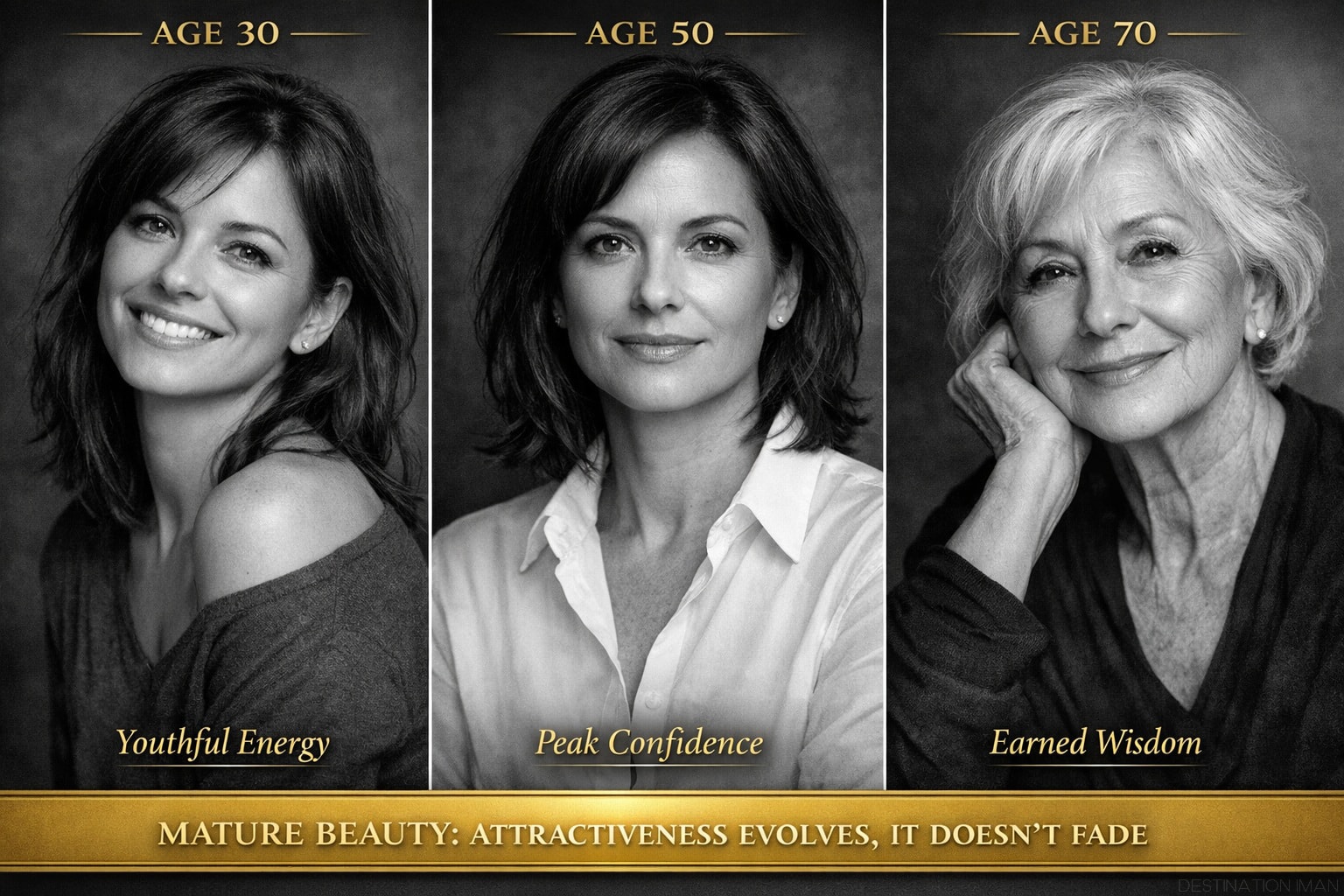
At what age does confidence peak? Research answers: 60. When does self-esteem reach its zenith? Studies confirm: 50-60. If these psychological foundations of attractiveness increase with age, why does culture insist beauty fades? The answer: cultural narratives contradict scientific reality. Mature beauty—characterized by confidence, emotional depth, authenticity, and presence—is often more attractive than youth, not despite age but because of it.
This article examines research from 2024-2026 revealing why mature beauty signals desirable psychological traits, how the anti-aging industry profits from denying this reality, and why observers consistently rate mature individuals as more attractive when superficial age cues are controlled.
Does Attractiveness Really Change With Age?
Attractiveness is often framed as a biological currency that depreciates with time—a narrative so pervasive it's rarely questioned. However, this framing confuses biological youth markers (smooth skin, reproductive signals) with holistic attractiveness (confidence, emotional intelligence, presence).
Psychological research reveals that while certain physical features change with age, perceived attractiveness often increases due to psychological and behavioral factors that emerge through maturity.
What Actually Drives Attractiveness?
- Youth markers (20-30%): Clear skin, facial symmetry, reproductive fitness signals
- Confidence & presence (40-50%): Body language, posture, eye contact, emotional regulation
- Authenticity & depth (20-30%): Emotional maturity, self-knowledge, relational safety
- Contextual factors (10-20%): Status, competence, shared values, cultural fit
Mature beauty sacrifices youth markers but gains advantages in every other category—often resulting in net increase in holistic attractiveness.

The Confidence Peak: Why Age 60 Surpasses Youth
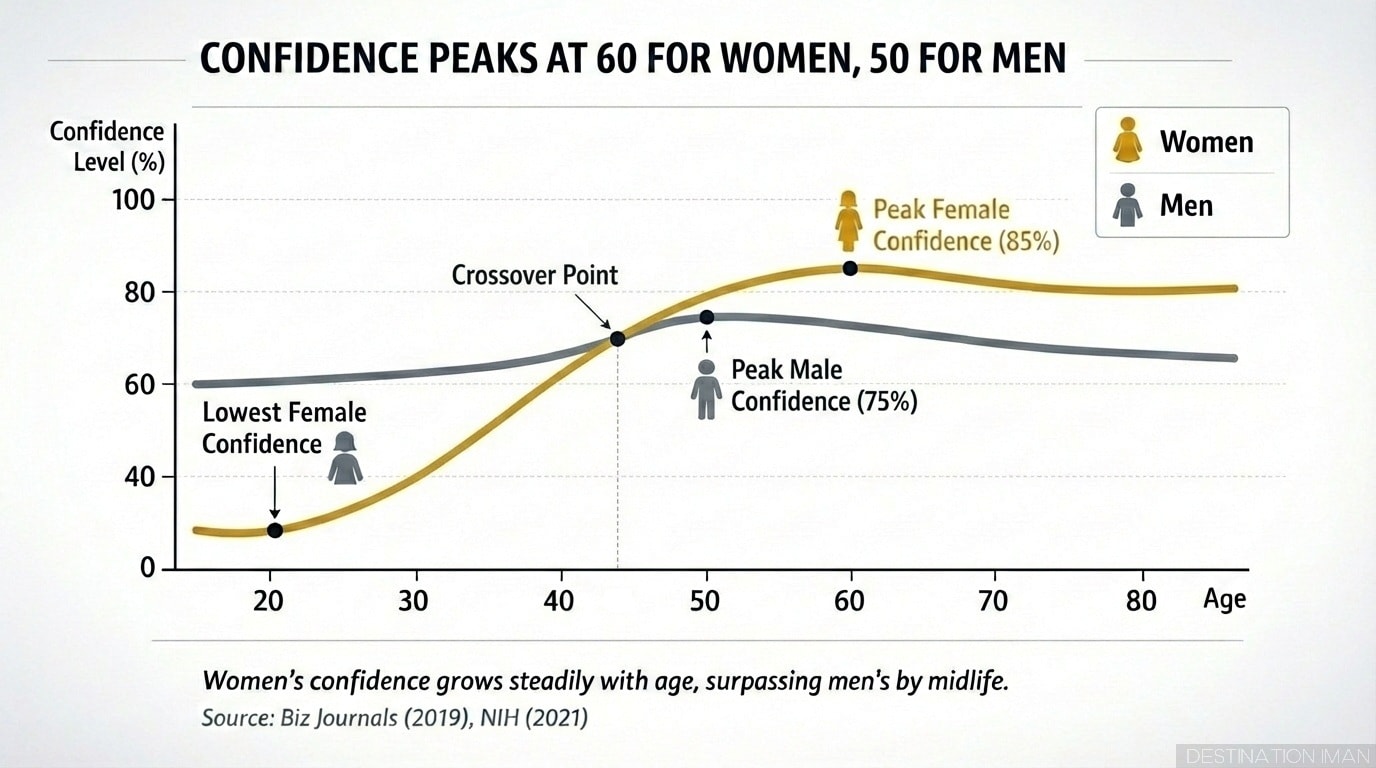
One of the most robust findings in developmental psychology: confidence follows a U-shaped curve, dipping in middle age but surging dramatically after 50, peaking around 60.
The Confidence Timeline
Ages 20-30: External Validation
Confidence is fragile, dependent on external approval, social comparison, and performance anxiety. High energy but unstable self-assurance.
Ages 30-40: Stabilization
Confidence begins grounding in experience. Clearer boundaries, reduced comparison, but still vulnerable to societal expectations.
Ages 40-50: The Dip (for women)
Societal ageism, career plateaus, and physical changes create temporary confidence decline—particularly for women facing gendered ageism.
Ages 50-60: The Surge
Confidence spikes dramatically. External validation loses power. Self-knowledge solidifies. Many describe this as "finally not caring what others think."
Age 60+: Peak Confidence
Research shows women surpass men in confidence at age 60. This confidence is calm, grounded, and effortless—the foundation of mature attractiveness.
Why This Confidence Increases Attractiveness
Confidence manifests physically through:
- Posture: Upright, open, relaxed—signaling self-assurance
- Eye contact: Steady, present, without anxious darting
- Facial tension: Reduced—no performance anxiety tightening features
- Movement: Deliberate, grounded, unhurried
- Voice: Lower pitch, slower pace (correlated with authority/competence)

These nonverbal cues overwhelm minor physical age markers in attractiveness perception—explaining why confident 60-year-olds often outshine anxious 25-year-olds in perceived appeal.
Self-Esteem's Developmental Arc
Self-esteem—distinct from confidence but closely related—follows a similar developmental trajectory, peaking in one's 50s-60s.
Why Self-Esteem Increases
Factors Driving Age-Related Self-Esteem Growth
- Reduced social comparison: Less time on social media; less exposure to curated perfection
- Accomplishment accumulation: Decades of achievements provide stable self-worth foundation
- Perspective shift: Mortality awareness reframes priorities—appearance matters less than relationships/legacy
- External validation irrelevance: Approval-seeking diminishes dramatically after 50
- Identity consolidation: Clear sense of self reduces identity confusion
High self-esteem produces the same attractiveness-enhancing effects as confidence: calm presence, reduced anxiety, authentic self-expression.
Emotional Depth and Presence
Maturity brings emotional depth—the capacity for nuanced emotional experience, empathy, and regulation. This depth is invisible in photographs but overwhelming in person.
What Emotional Depth Looks Like
- Empathic accuracy: Ability to read and respond to others' emotions
- Emotional regulation: Fewer reactive outbursts; calm under stress
- Perspective-taking: Understanding multiple viewpoints without losing center
- Relational safety: Creating space for others to be vulnerable
- Authenticity: Expressing genuine emotion without performance
These traits signal psychological safety—one of the strongest attractiveness drivers in long-term relationships and social contexts.
Presence: The Underrated Attractiveness Factor
Presence—the ability to be fully engaged in the current moment—increases with age as distractibility decreases and priorities clarify.
Mature individuals are more likely to:
- Listen without interrupting
- Maintain eye contact without anxiety
- Respond thoughtfully rather than reactively
- Hold conversational space without filling it compulsively
This presence creates magnetic effect—people feel seen in ways rare in youth-obsessed, distraction-saturated culture.
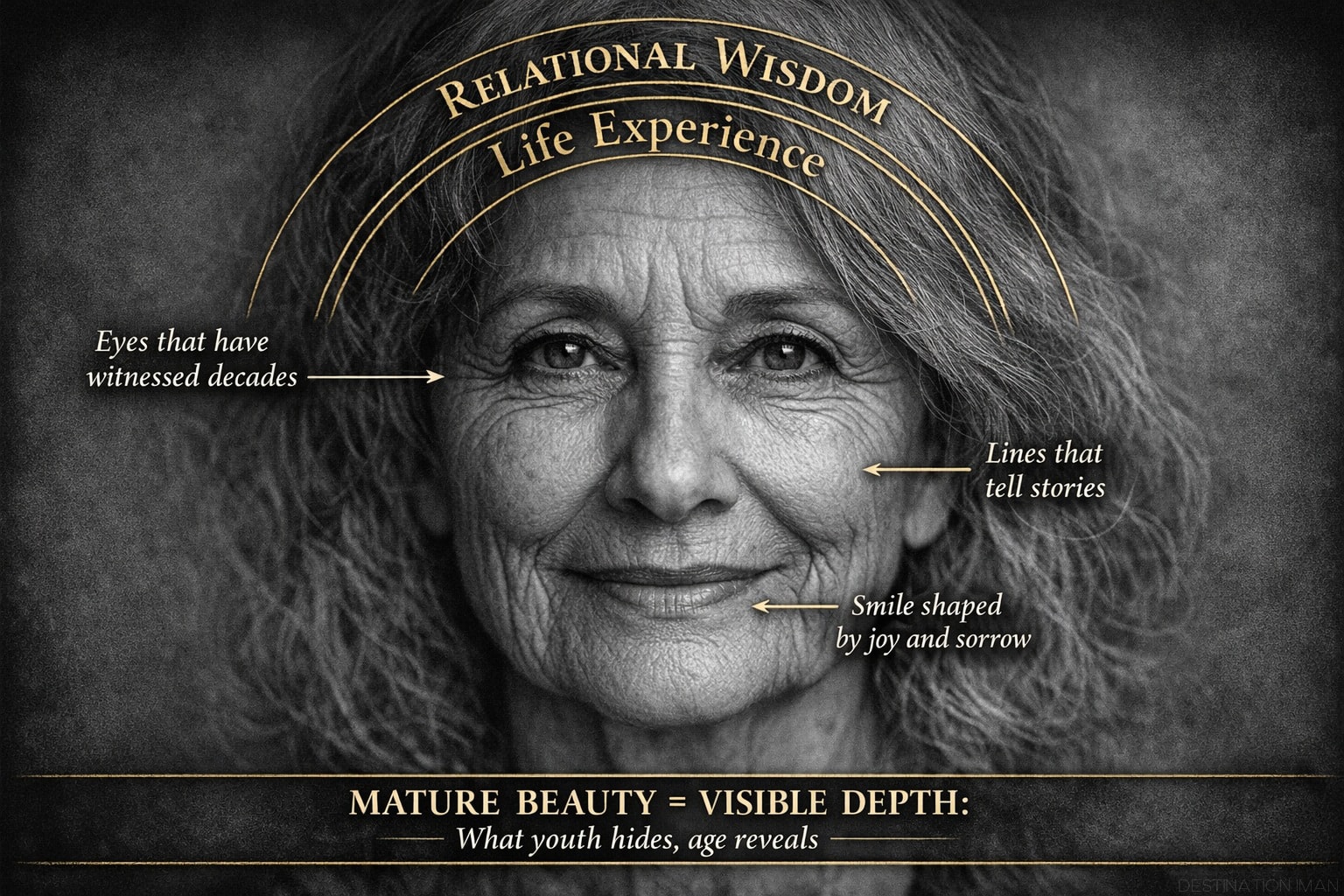
Authenticity Over Performance
Youthful beauty often involves performance—meeting external expectations, following trends, seeking validation. Mature beauty roots in authenticity—internal-external alignment.
The Authenticity Advantage
Youthful Beauty vs Mature Beauty
- Youth: "Am I attractive to others?" → External locus of control
- Maturity: "Am I authentic to myself?" → Internal locus of control
- Youth: Trend-chasing creates visual inconsistency
- Maturity: Style refinement creates recognizable identity
- Youth: Performative confidence (easily shaken)
- Maturity: Quiet confidence (unshakeable)
Authenticity reduces cognitive dissonance between self-perception and presentation. This reduces facial tension, creating more relaxed, open expressions—perceived as more attractive.

Why Visual Calm Feels More Attractive
Mature beauty is characterized by visual calm—absence of performance anxiety, reduced self-consciousness, relaxed body language. In overstimulated visual culture, calm stands out.
Components of Visual Calm
What Creates Visual Calm?
- Reduced facial tension: No anxious furrowing, jaw clenching, or forced smiling
- Open posture: Relaxed shoulders, uncrossed arms, grounded stance
- Steady gaze: Eye contact without darting or avoidance
- Slower movement: Deliberate gestures vs nervous fidgeting
- Authentic expression: Emotions match facial display (no emotional labor)
- Style coherence: Consistent aesthetic vs trend-hopping chaos
Visual calm signals:
- Emotional stability: Safe to be around
- Self-acceptance: No desperate approval-seeking
- Competence: Comfortable in own skin
- Wisdom: Experienced enough to relax
In fast-paced, anxiety-driven culture, these signals feel like refuge—making mature beauty not just attractive but necessary.
The Anti-Aging Industry's Manufactured Crisis
If mature beauty is genuinely attractive, why does $600 billion anti-aging industry insist otherwise? Answer: profit motive requires manufacturing insecurity.
The Industry's Tactic
The Hidden Harm of "Anti-Aging" Language
Industry By the Numbers
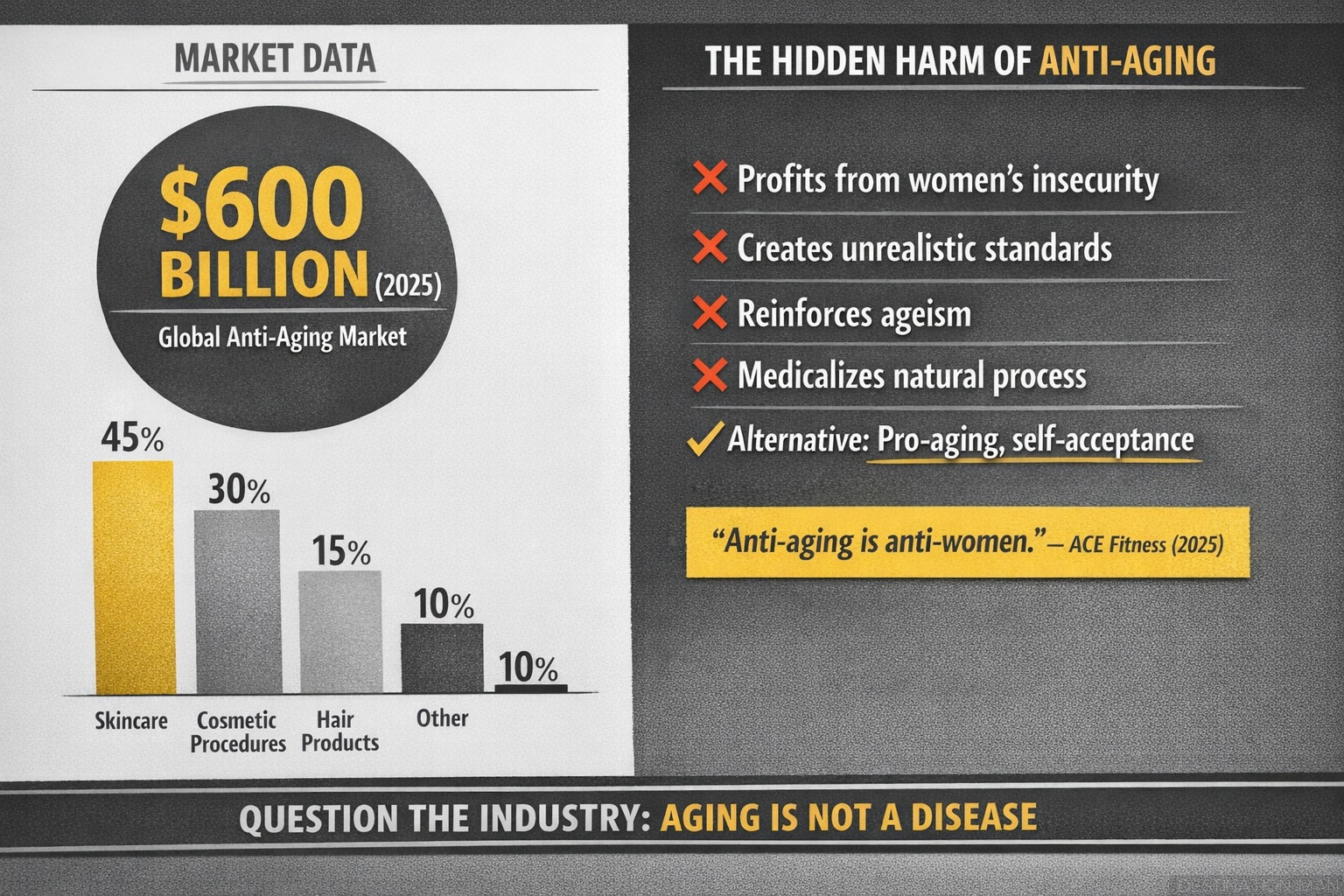
The industry's message: aging = decay. The science's message: aging = maturation. The industry profits from contradicting science.
Ageism in Media & Fashion
Media and fashion industries systematically erase mature beauty, creating illusion that attractiveness ends at 40. This erasure is ageism—and it's profitable.
The Visibility Gap
Fashion Industry Ageism
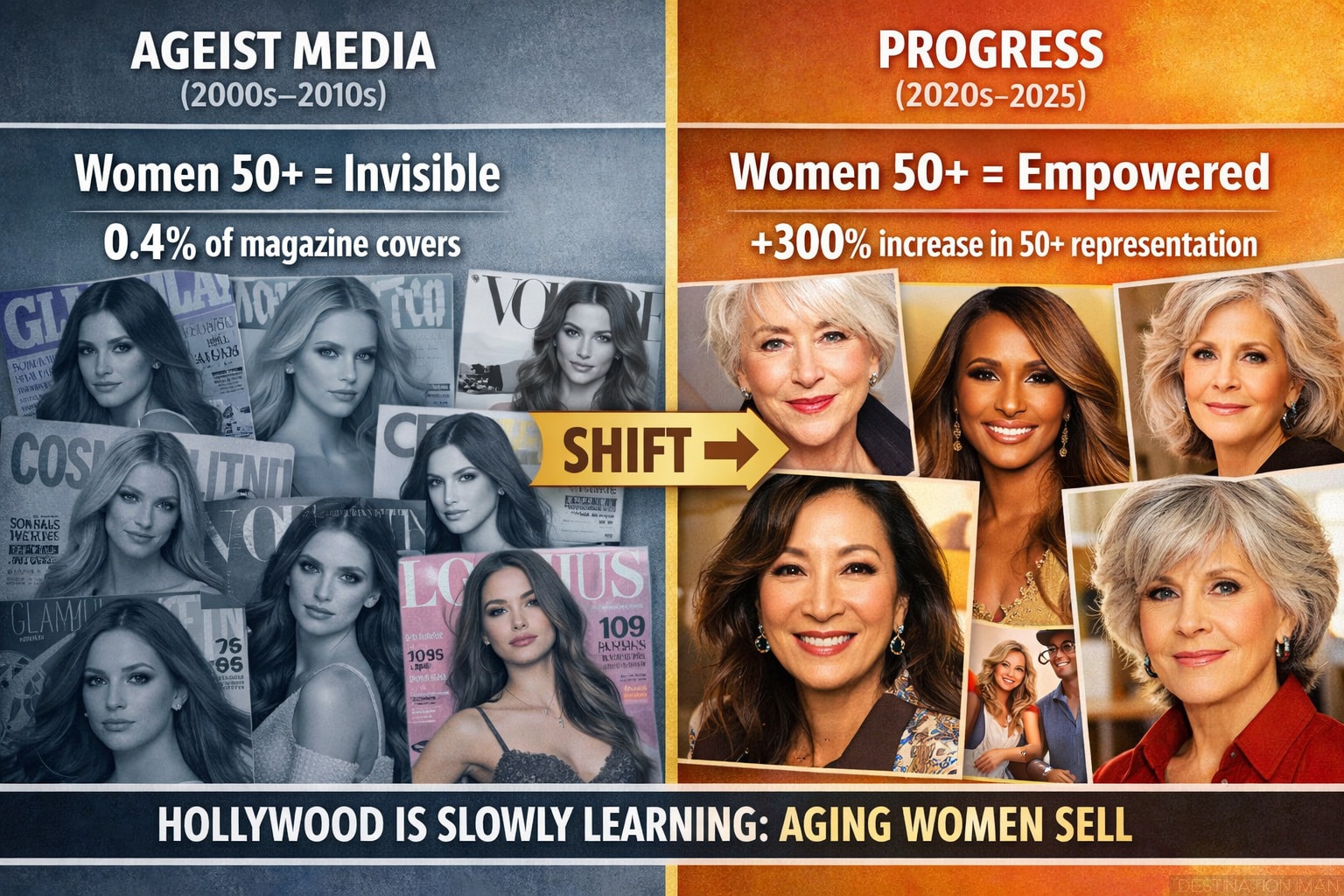
The Counter-Movement
Some brands are fighting ageism:
However, these campaigns remain exceptional rather than standard—proving the depth of industry ageism.
Neuroscience of Mature Attractiveness
What happens in the brain when observing mature vs youthful beauty? Recent neuroscience provides answers.
Processing Fluency and Emotional Calm
The brain processes emotional signals (confidence, calm, authenticity) faster and more automatically than visual details (wrinkles, gray hair). Mature beauty's emotional clarity creates processing fluency—ease of perception the brain interprets as positive.
Mirror Neuron Activation
Observing calm, confident individuals activates mirror neurons—creating vicarious experience of that calm. Result: mature beauty doesn't just look good; it feels good to observe.
Safety Detection
The amygdala rapidly assesses threat vs safety. Mature beauty's reduced anxiety signals safety, deactivating threat response. Youth's performance anxiety can trigger low-level vigilance, reducing comfort.
How Body Language Changes With Age
Body language—posture, gesture, movement—accounts for 55% of communication effectiveness and significantly influences attractiveness. Aging changes body language in specific ways.
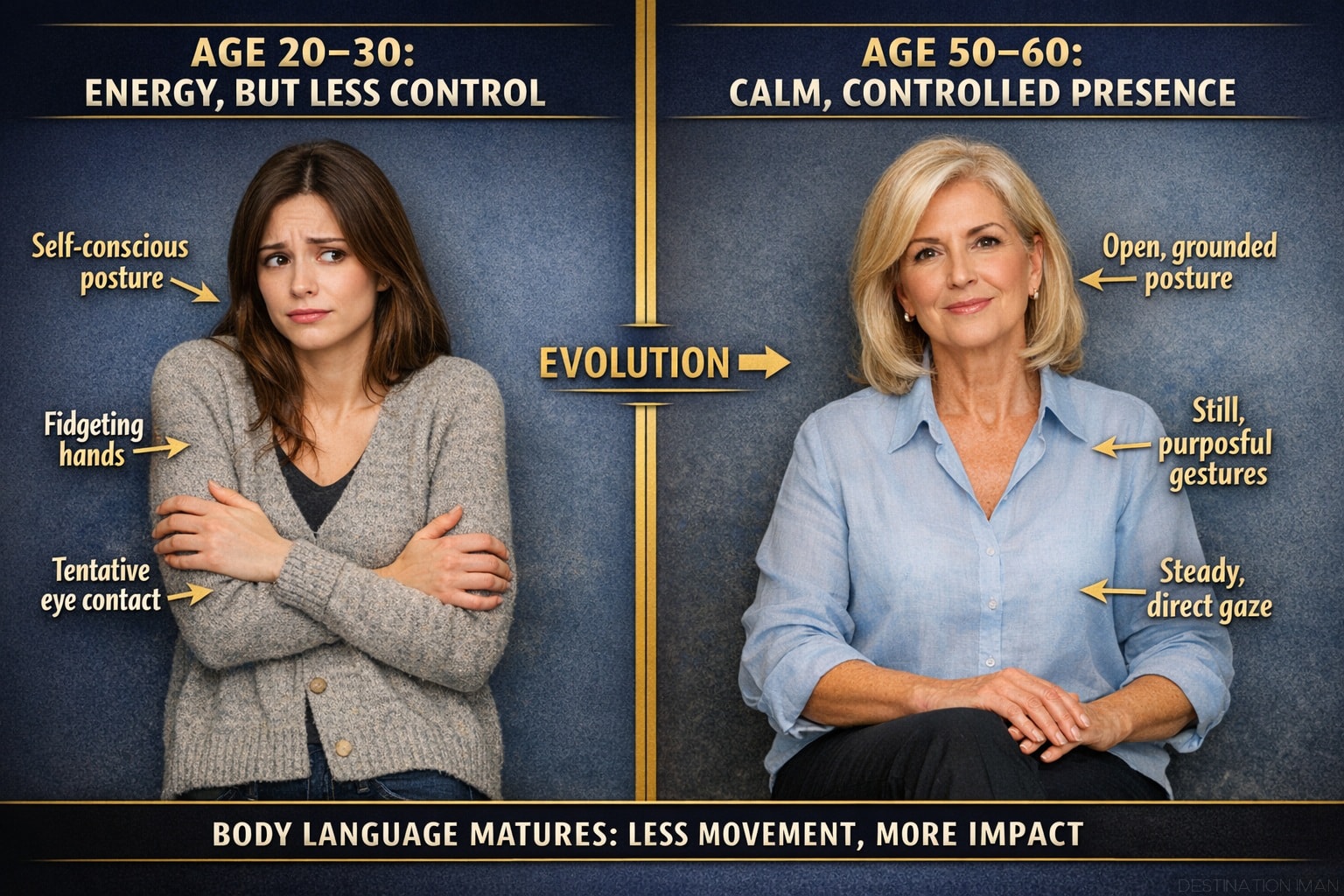
Youthful vs Mature Body Language
Body Language Evolution
- Youth: High energy, rapid gestures, fidgeting, anxious shifts
- Maturity: Deliberate movement, grounded stance, minimal fidgeting, calm presence
- Youth: Performance-oriented (How do I look?)
- Maturity: Function-oriented (What do I need to do?)
- Youth: Closed posture when insecure (protective)
- Maturity: Open posture even when challenged (confident)
Mature body language signals:
- Competence: "I know what I'm doing"
- Self-assurance: "I don't need your approval"
- Emotional regulation: "I'm not easily rattled"
- Presence: "I'm fully here"
These nonverbal signals dominate attractiveness perception in face-to-face contexts, explaining why mature individuals often surprise themselves with positive reception.
Why Mature Beauty Stands Out Today
In 2026's visual landscape—dominated by filters, youth obsession, performative beauty—mature beauty feels radical.
The Contrast Effect
Mature beauty stands out because it contrasts with dominant aesthetic:
Why Mature Beauty Feels Fresh
- Authenticity vs artificiality: Real skin vs filtered perfection
- Calm vs chaos: Grounded presence vs anxious performance
- Depth vs surface: Emotional complexity vs shallow aesthetics
- Stability vs trend-chasing: Consistent identity vs chaotic shifts
- Confidence vs insecurity: Self-assured vs validation-seeking
In era of homogenized Instagram Face and youth-worship, mature beauty is differentiated product—rarer, therefore more valuable.
The Loneliness Epidemic Factor
Mature beauty's emphasis on relational skills—empathy, presence, emotional safety—addresses modern loneliness epidemic in ways youthful beauty cannot. As isolation increases, relational attractiveness matters more.


Key Takeaways
Essential Insights: Mature Beauty & Attractiveness
- Confidence peaks at age 60, surpassing all earlier life stages—especially for women
- Self-esteem reaches lifetime high between ages 50-70, not in youth
- 80% of women prioritize health over beauty by age 50, paradoxically increasing attractiveness
- Attractiveness is 20-30% youth markers, 70-80% confidence, presence, and authenticity
- Emotional depth and relational safety—traits of maturity—are major attractiveness drivers
- Visual calm (reduced performance anxiety) makes mature beauty stand out in overstimulated culture
- Body language changes with age: more grounded, deliberate, confident—enhancing perceived attractiveness
- Authenticity increases with age as external validation becomes less important
- The $600B anti-aging industry profits from denying mature beauty's attractiveness
- Ageism in media creates illusion mature beauty is rare, when it's systematically hidden
- Neuroscience shows brain processes emotional signals (confidence) faster than visual details (wrinkles)
- Mature beauty creates processing fluency and mirror neuron activation—feeling good to observe
- In loneliness epidemic, relational skills (empathy, presence) matter more than ever—favoring mature beauty
- Mature beauty contrasts sharply with filtered, performative youth aesthetics—making it feel fresh/rare
- Observers consistently rate mature individuals as more trustworthy, competent, warm—the halo effect
Sources & References
Academic & Research Sources (2024-2026)
- Royal Society Open Science (2024) — What is Beautiful is Still Good: The Attractiveness Halo Effect
- Biz Journals (2019, cited 2025) — When Confidence at Work Peaks for Women (Age 60)
- NIH (2021, updated 2025) — The Association of Self-Esteem with Independent Living
- Premium Beauty News (2021) — Self-Esteem: Older Women Feel More Confident About Their Bodies
- Talker Research (2024) — Majority of Women Care More About Being Healthy Than Beautiful
- Liverpool University (2025) — Why Thinking About Ageing Is So Complex for Women in Their 20s
- Kenn Orphan (2025) — Late Capitalism, Beauty Standards and the War Against Aging
- ACE Fitness (2025) — The Hidden Harm of "Anti-Aging"
- Salon (2025) — For Hollywood Women, There's No Aging Gracefully
- SAGE Journals (2025) — Digital Ageism? Analyzing Women's Depictions on TikTok
- XOXO Fashion (2024) — Highlighting Brands & Designers Championing Age Diversity
- MMM Online (2024) — Dove Makes Aging an Aspiration in Beauty Never Gets Old Campaign
- AARP (2025) — 5 Ways AARP Is Fighting Age Discrimination
- Wiley (2025) — The Double Bind of Beauty Work
- Etcoff, N. (1999). Survival of the Prettiest: The Science of Beauty. Doubleday.
- Kahneman, D. (2011). Thinking, Fast and Slow. Farrar, Straus and Giroux.