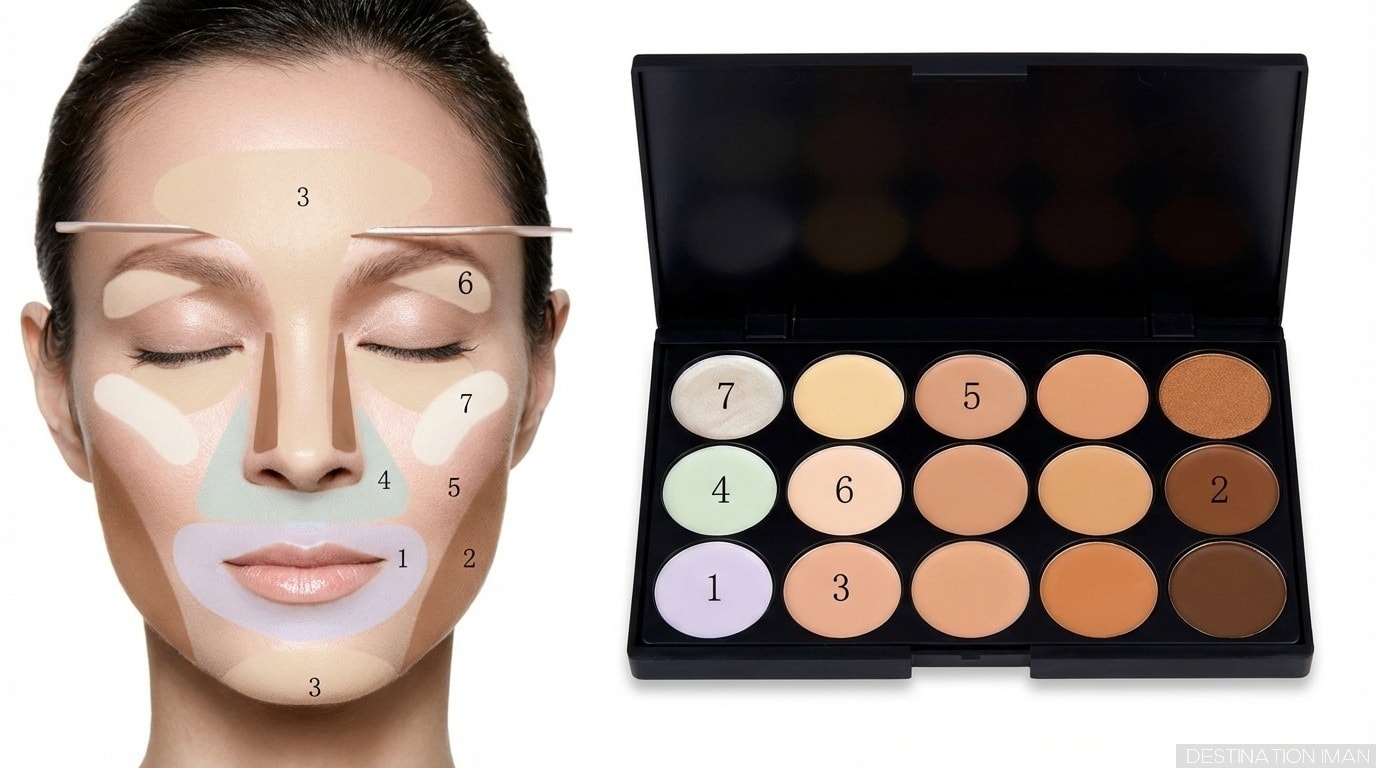
Professional makeup is not only about brushes, textures, and techniques. One of the most powerful secrets behind a flawless look is understanding the color wheel and how different shades interact with each other. By mastering basic color theory, you can enhance natural beauty, correct imperfections strategically, and create harmonious makeup shade combinations for any skin tone, eye color, or occasion.
In this comprehensive guide, we explain how to use the makeup color wheel correctly, how to choose the most flattering shades for skin, eyes, blush, and lips, and how professional makeup artists apply color theory principles in everyday and editorial looks.
Key Takeaways
- The color wheel shows complementary colors (opposites) that neutralize and enhance each other
- Green corrects redness, peach/orange neutralizes blue/purple dark circles
- Complementary eyeshadow colors make eye color appear more vibrant and intense
- Blush should match your natural flush and complement your undertone
- Lipstick selection depends on skin tone, undertone, hair color, and eye makeup
In This Article
Why the Color Wheel Is Essential in Makeup
The color wheel is a visual representation of colors arranged according to their chromatic relationship. Originally developed for artists and designers, this tool has become indispensable in professional makeup artistry because it reveals how colors interact, complement, and neutralize each other.
Understanding makeup color combinations through the color wheel allows you to:
- Neutralize unwanted tones: Correct redness, dark circles, sallowness, and discoloration using opposing colors
- Choose flattering shades: Select blush, lipstick, and eyeshadow that enhance your natural coloring
- Enhance eye color: Use contrast to make your eye color appear more vibrant and striking
- Create balanced looks: Build natural or bold looks with confidence, knowing your color choices work harmoniously
- Understand undertones: Match foundation, concealer, and correctors to your skin's underlying hue
Makeup artists rely on complementary colors—those sitting opposite each other on the color wheel—to create maximum impact. When used correctly, complementary colors balance and enhance facial features, making this principle the foundation of color correction and eye makeup enhancement techniques.
Color Theory Basics for Makeup
Before diving into specific techniques, let's understand the fundamental color relationships that govern makeup application:
Primary Colors
The primary colors in traditional color theory are red, blue, and yellow. These colors cannot be created by mixing other colors and form the basis of the entire color wheel.
Secondary Colors
Secondary colors result from mixing two primary colors:
- Red + Blue = Purple
- Blue + Yellow = Green
- Red + Yellow = Orange
Complementary Colors
Complementary colors sit directly opposite each other on the color wheel. When placed side by side, they create maximum contrast and vibrancy. In makeup, complementary colors are used to neutralize unwanted tones:
- Red ↔ Green: Green correctors neutralize redness from acne, rosacea, or broken capillaries
- Orange ↔ Blue: Orange/peach correctors neutralize blue-toned dark circles
- Yellow ↔ Purple: Yellow correctors neutralize purple bruising or dark circles; purple correctors brighten yellow-toned dullness
In makeup, complementary colors work in two ways: they neutralize each other when blended (color correction), or they enhance each other when placed side by side (eye makeup enhancement).
Warm vs. Cool Colors
Colors are also categorized as warm or cool, which helps determine flattering shades based on undertone:
Warm colors contain yellow, orange, or red undertones: coral, peach, gold, warm brown, tomato red, rust, amber
Cool colors contain blue, purple, or pink undertones: berry, mauve, silver, cool pink, blue-red, lavender, plum
Understanding whether you have warm, cool, or neutral undertones helps you choose makeup shades that harmonize with your natural coloring rather than clashing with it.
How to Hide Skin Imperfections Using Color Theory
Before applying decorative cosmetics, creating an even skin tone is essential. Color-correcting products work by neutralizing unwanted hues using opposing shades from the color wheel. This technique allows you to use less foundation while achieving better coverage and a more natural finish.
Neutralizing Redness and Acne
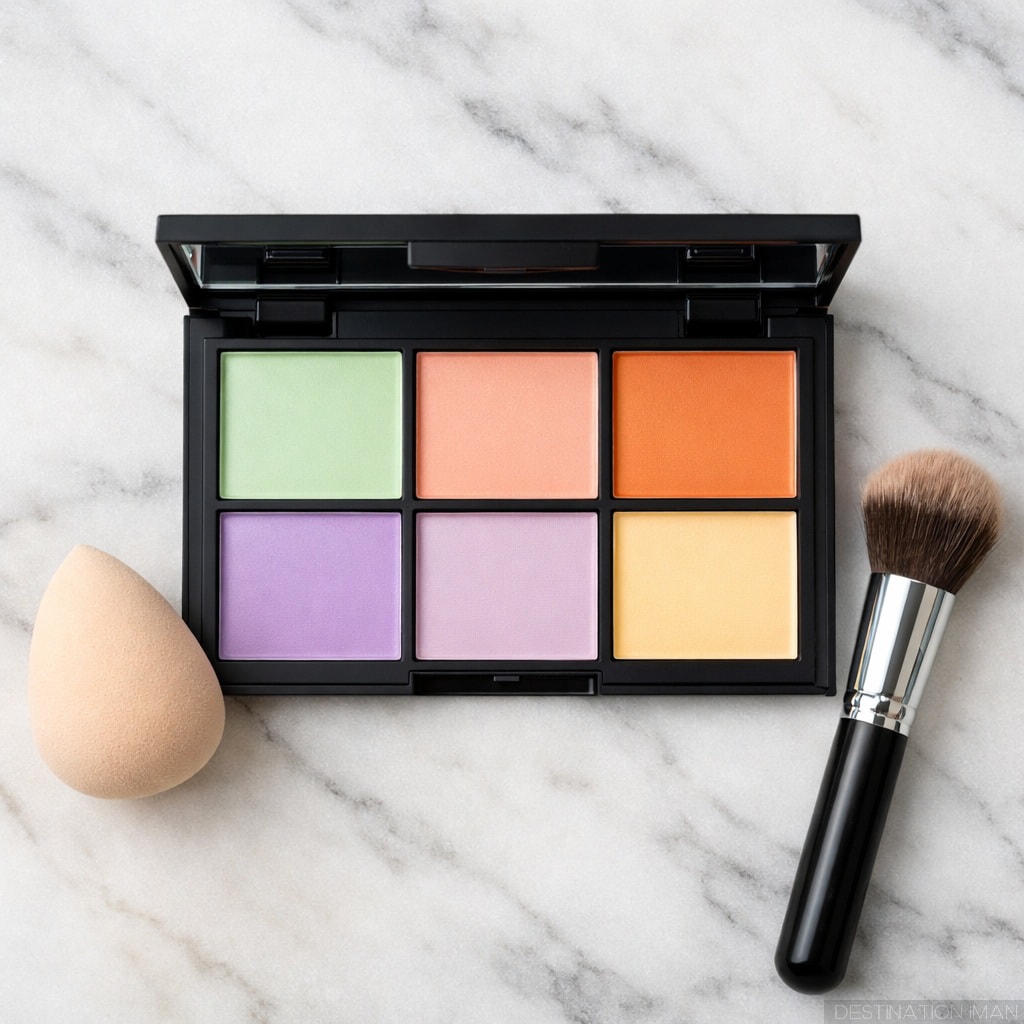
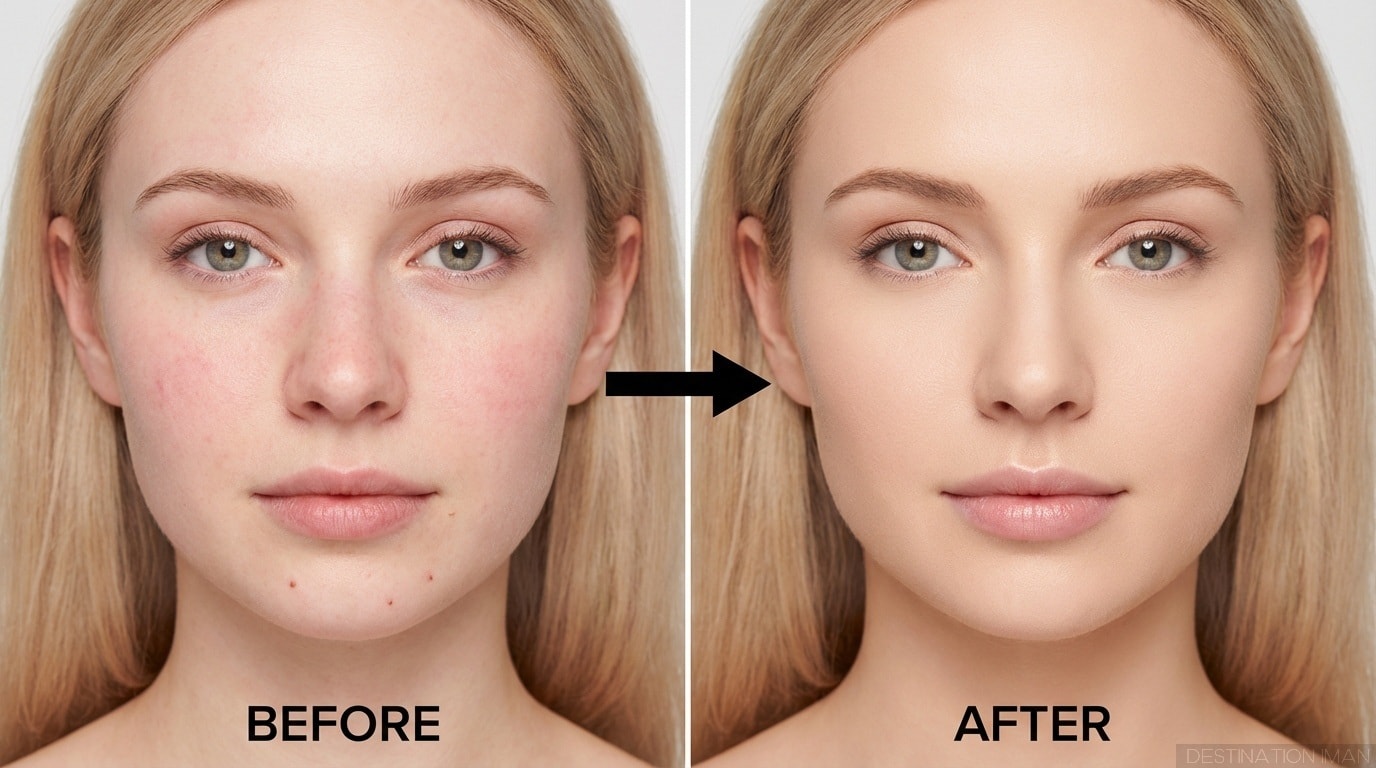
Redness, active pimples, broken capillaries, rosacea, and post-inflammatory erythema can be effectively masked using a green concealer or corrector. Green sits directly opposite red on the color wheel, which allows it to cancel out redness when applied before foundation.
How to Apply Green Corrector:
- Apply green corrector only to red areas, not the entire face
- Use a small concealer brush or fingertip to dab product precisely on red spots
- Blend the edges gently so the green doesn't extend beyond the red area
- Apply foundation over the corrected areas to neutralize the green tone
- The result should be skin-toned, with no visible redness or green
Never apply green corrector all over your face or blend it too far beyond red areas. This creates a greenish cast that's difficult to cover. Green corrector should be used sparingly and precisely only where redness exists.
Brightening Dull or Yellow Skin
To add freshness and luminosity to dull, sallow, or yellow-toned skin, makeup artists recommend using a lilac, lavender, or violet base. These purple-toned products sit opposite yellow on the color wheel and work to neutralize yellow undertones, creating a brighter, more radiant complexion.
Best Uses for Purple Correctors:
- Counteracting yellow or olive undertones that make skin look dull
- Brightening sallow complexions
- Creating a more luminous base before foundation
- Evening out skin tone on mature skin with yellowing
Apply purple corrector as a primer on areas that appear especially yellow or dull, typically the center of the face. Follow with foundation, then highlight the high points of cheekbones to enhance the brightening effect.
Correcting Dark Circles Under the Eyes
Dark circles vary significantly in color depending on their cause, which means they require different correctors for effective neutralization. Identifying the undertone of your dark circles is key to choosing the right color corrector.
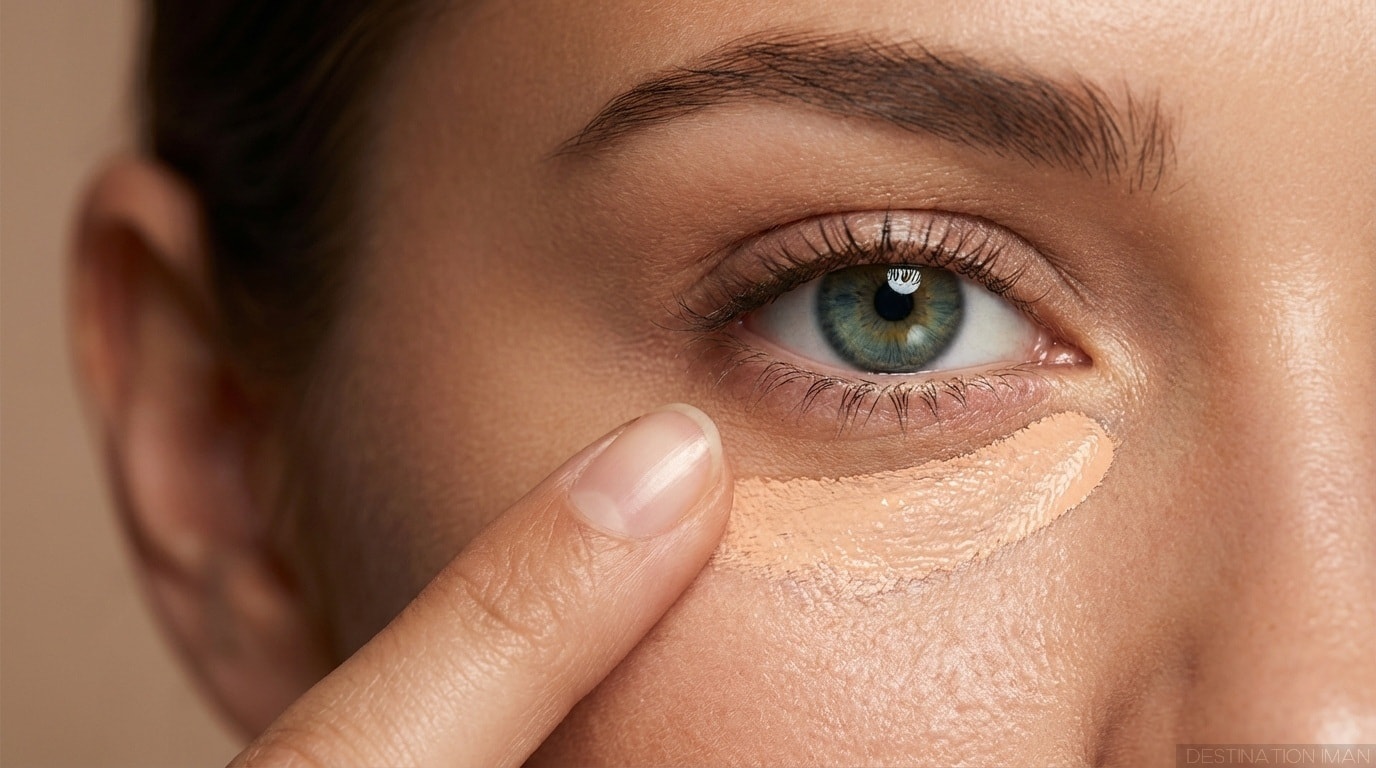
For Blue or Gray Dark Circles:
Blue and gray dark circles are most common on fair to medium skin tones and result from visible blood vessels or thin under-eye skin. To neutralize these cool-toned shadows, use peach or orange correctors.
- Fair skin: Light peach or peachy-pink corrector
- Medium skin: Deeper peach or coral corrector
- Deep skin: Orange or red-orange corrector
For Purple or Brown Dark Circles:
Purple and brown dark circles appear on various skin tones and often result from hyperpigmentation or aging. These require yellow or golden correctors to neutralize the purple and brown tones.
- Apply yellow corrector to purple-toned darkness
- Use golden or peachy-yellow for brown-toned hyperpigmentation
- Layer concealer over the corrector for additional coverage if needed
Peach correctors are especially effective for reducing the appearance of puffiness and signs of fatigue around both the upper and lower eyelids. Apply sparingly and blend gently, as the under-eye area is delicate.
Color Corrector Quick Reference Guide
| Skin Concern | Corrector Color |
|---|---|
| Redness, acne, rosacea | Green |
| Blue/gray dark circles | Peach/Orange |
| Purple dark circles | Yellow |
| Brown hyperpigmentation | Peach/Yellow |
| Dull/yellow skin | Purple/Lavender |
| Pale/ashy skin | Pink/Peach |

How to Choose the Right Blush Using the Color Wheel
Blush plays a crucial role in creating a healthy, radiant, three-dimensional appearance. Foundation alone can make the complexion look flat and one-dimensional, while blush adds natural warmth, dimension, and the appearance of healthy circulation to the face.
The Purpose of Blush
Beyond adding color, blush serves several important functions:
- Restores natural warmth that foundation may diminish
- Creates dimension and contours the face subtly
- Mimics the natural flush of healthy skin
- Lifts and brightens the complexion
- Balances the intensity of eye and lip makeup
Blush Formulas and Finishes
Blush is available in several formulas, each suited to different skin types and desired effects:
Powder blush: Best for oily to normal skin, provides buildable coverage, lasts longest
Cream blush: Ideal for dry or mature skin, creates a dewy, natural finish, blends seamlessly into skin
Liquid blush: Gives the most natural, skin-like finish, works well on all skin types when set with powder
Gel or jelly blush: Provides sheer, buildable color with a fresh, glossy finish
Choosing Blush According to Skin Tone and Undertone
When selecting blush, follow this fundamental rule: never choose a shade darker than your natural flush. To determine your natural blush color, gently pinch your cheek or press firmly on your fingernail bed and observe the color that appears. This is your guide for selecting flattering blush shades.
For Fair Skin:
Fair skin with cool undertones, light hair, and blue or green eyes looks beautiful in soft pink, rose, and light berry shades. If you have warm undertones, opt for peach, apricot, or warm coral.
For Medium Skin:
Medium skin tones can wear a wider range of blush colors. Cool undertones pair well with mauve, dusty rose, and cool pink. Warm undertones are complemented by peach, warm pink, and terracotta.
For Deep Skin:
Darker skin tones and brown eyes are beautifully complemented by rich, saturated shades: deep plum, berry, brick red, and intense orange or coral. Cool plum and cherry shades with subtle blue undertones are particularly stunning.
Keep in mind that skin tone changes seasonally. Summer blush shades should be slightly deeper and more saturated than winter ones to complement tanned skin. Having two blush shades—one for lighter months and one for when you have more color—ensures your blush always looks natural.
Blush Application Techniques
Proper blush application is just as important as shade selection:
- Apply blush after foundation but before setting powder for the most natural blend
- Focus on the cheekbones, blending upward and outward toward temples for a lifted effect
- Add a touch to the tip of the nose and chin for a natural, sun-kissed look
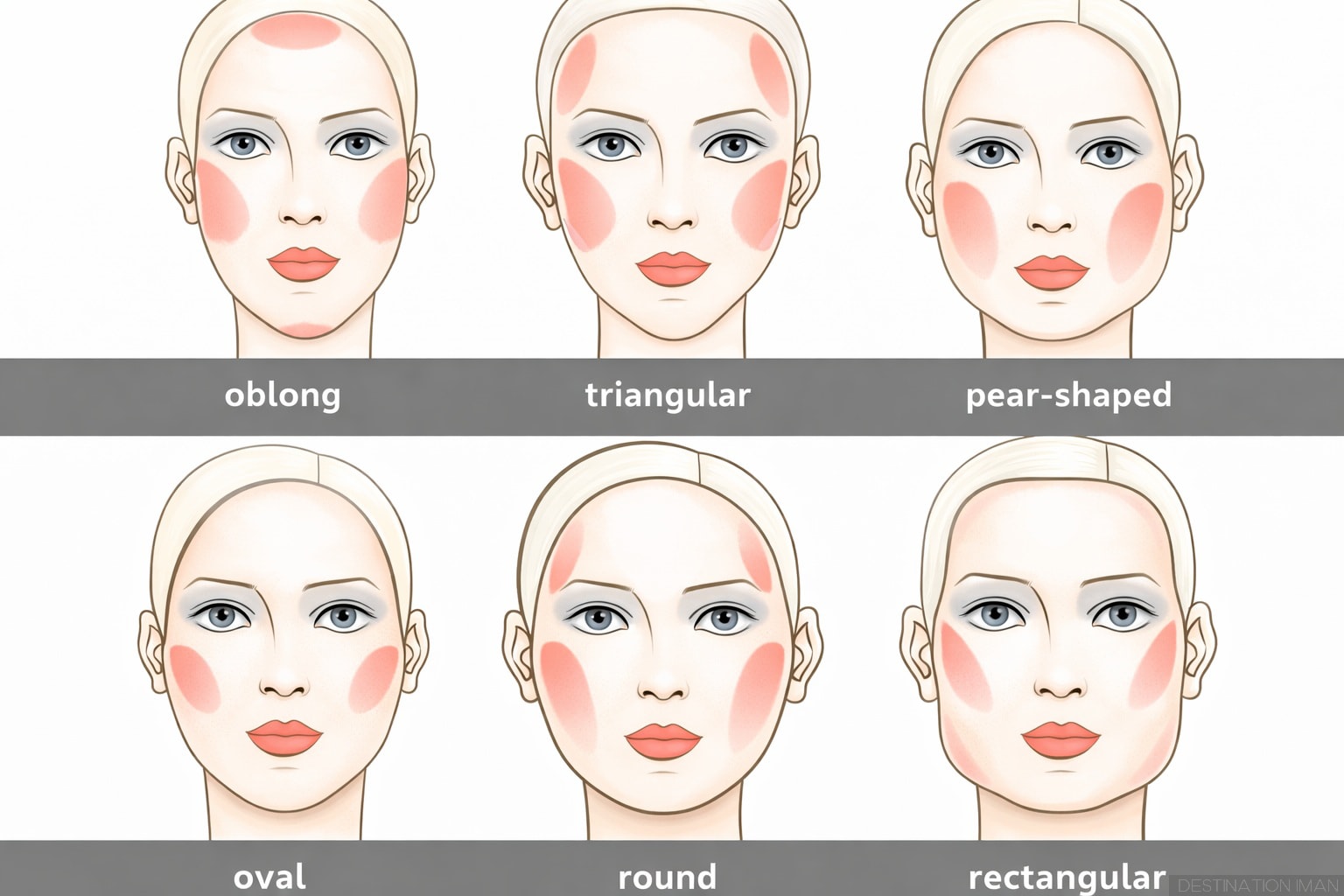
- Adjust placement based on your face shape to enhance or balance proportions
- Build color gradually—it's easier to add more than to remove excess
Common Blush Colors and Their Effects
- Pink: Creates a youthful, natural flush, works on most skin tones, universally flattering
- Peach: Adds warmth and brightness, perfect for warm undertones, creates a sun-kissed glow
- Coral: Vibrant and energizing, ideal for medium to deep skin tones, trendy and modern
- Plum: Sophisticated and elegant, flattering on deeper skin tones, creates depth
- Berry: Romantic and soft, works well for cool undertones, suitable for evening looks
- Beige/Nude: Subtle and natural, good for sculpting, works as a contour-blush hybrid
Eye Makeup and the Color Wheel
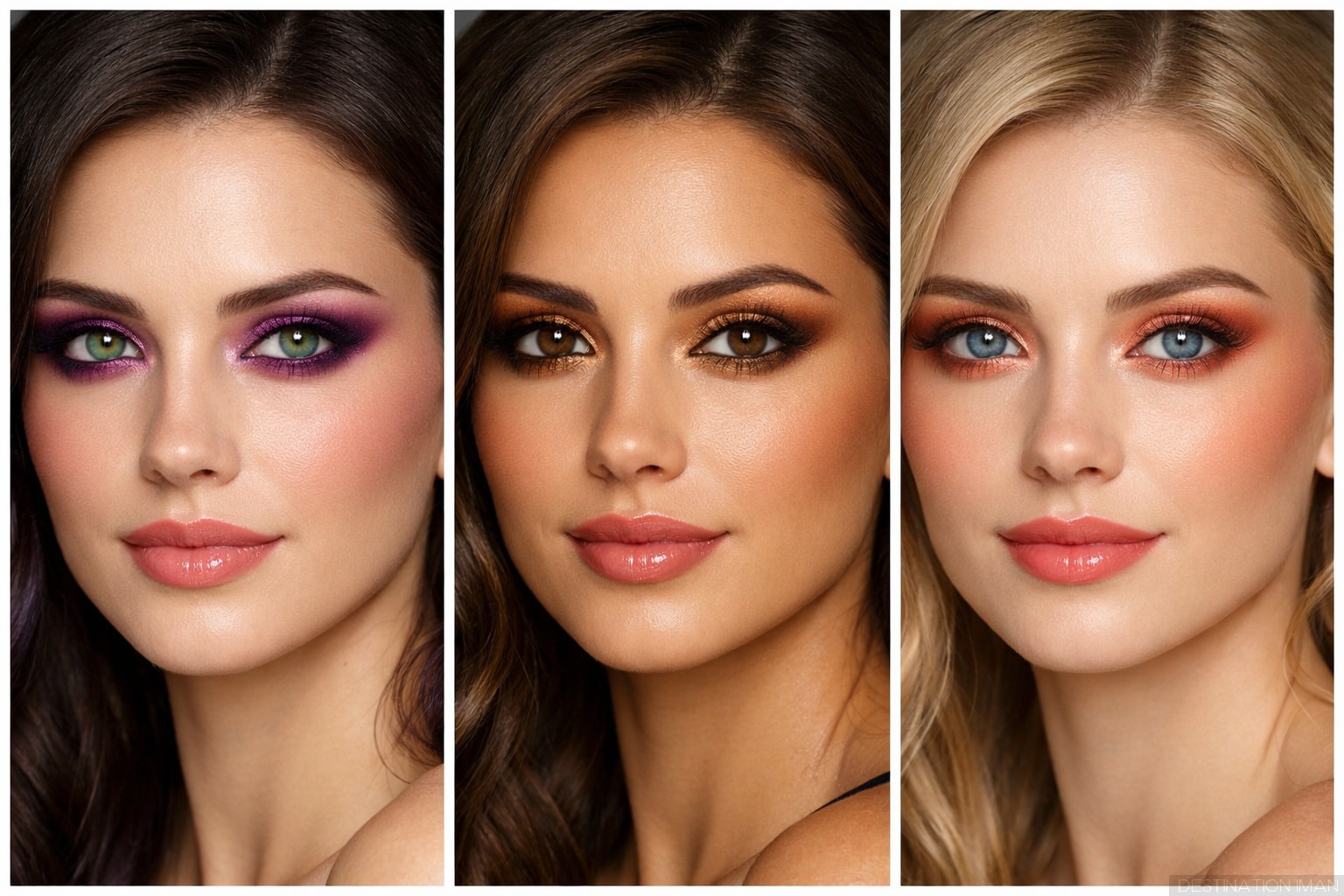
One of the most transformative applications of color theory in makeup is using complementary colors to enhance eye color. Professional makeup artists have long understood that matching eyeshadow exactly to eye color actually makes eyes blend into the face and appear less striking. Instead, contrasting shades from opposite sides of the color wheel make eye color appear more vibrant, intense, and captivating.
The Science Behind Complementary Eye Colors
When you place complementary colors next to each other, they create maximum contrast, making both colors appear more saturated and vivid. This optical phenomenon works beautifully for eye makeup: using eyeshadow colors opposite your eye color on the color wheel makes your natural eye color "pop" and appear more intense.
According to professional makeup artists and color theory experts, complementary color schemes are the most effective approach for enhancing eye color. This technique creates striking contrast that draws attention to the eyes and makes the iris color appear more vibrant and dimensional.
Best Eyeshadow Colors for Green Eyes
Green eyes become dramatically more expressive and intense when paired with shades containing red pigment. These warm-toned colors sit opposite green on the color wheel, creating beautiful contrast.
Recommended Shades for Green Eyes:
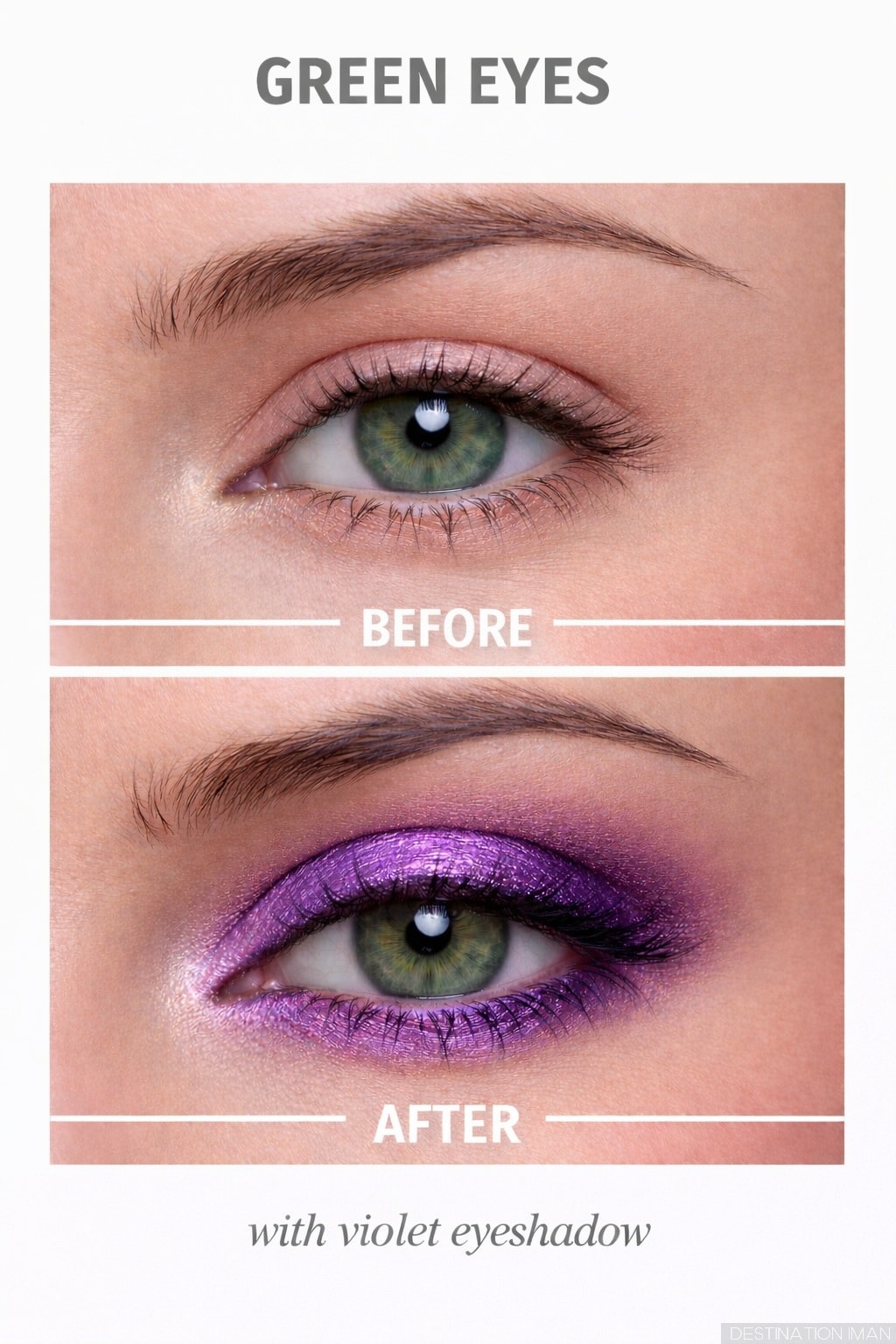
- Deep purple and violet: Creates the most striking enhancement, makes green eyes appear almost emerald
- Burgundy and wine: Rich, sophisticated option that intensifies green beautifully
- Mauve and plum: Softer alternative that still provides enhancement
- Copper and rust: Warm metallics that complement and contrast simultaneously
- Bronze and gold: Adds warmth while still enhancing green tones
Avoid pink eyeliner and overly bright pink eyeshadow on green eyes, as these can make eyes appear irritated, red, or puffy. Deeper berry and plum shades work better than bright pinks.
Makeup for Brown and Black Eyes
Dark eyes are the most versatile when it comes to eyeshadow selection because they work beautifully with light, reflective shades that create contrast through value (lightness vs. darkness) rather than strictly complementary hues.
Flattering Shades for Brown Eyes:
- Beige and champagne: Creates soft, elegant contrast, perfect for everyday looks
- Gold and bronze: Warms up brown eyes and creates a rich, luxurious effect
- Pearl and ivory: Brightens and opens the eye area
- Olive and khaki: Earthy tones that enhance depth in brown eyes
- Azure and teal: Blue-green shades create striking, unexpected contrast
- Purple and plum: Adds sophistication and brings out golden flecks in brown eyes
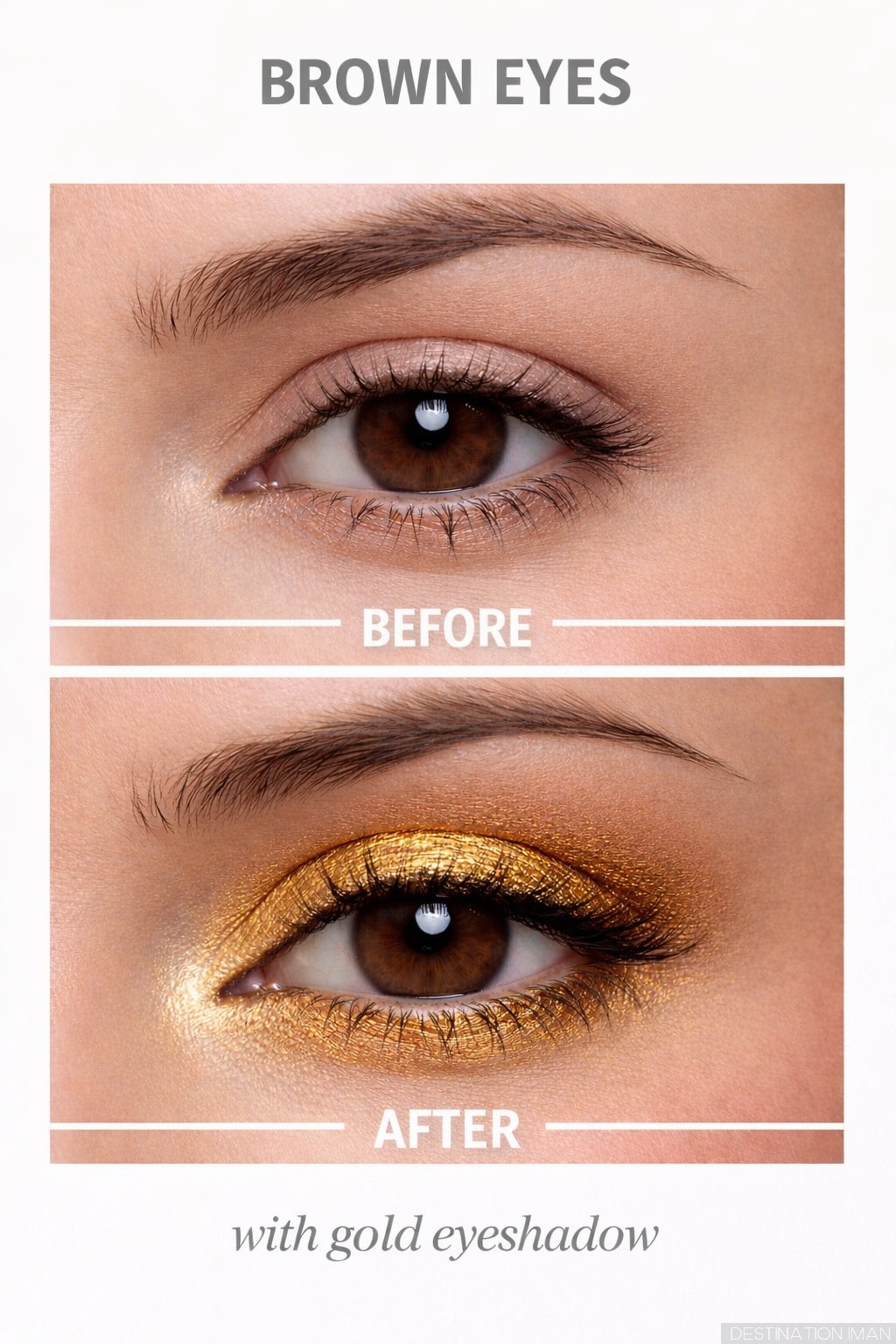
Blue or green eyeliner can look particularly striking on brown eyes but should be used strategically. These colors create dramatic contrast, but if overused, they may emphasize any redness in the eye itself. Apply colored liner to the outer two-thirds of the lash line rather than all around the eye for the most flattering effect.
Eyeshadow for Blue and Gray Eyes
Blue and gray eyes benefit from warm-toned, orange-based shades that sit opposite blue on the color wheel. These warmer colors make blue eyes appear brighter, more intense, and more vivid.
Best Shades for Blue Eyes:
- Coral and peach: The most effective complementary shades for making blue eyes pop
- Copper and bronze: Metallic warmth that creates stunning contrast
- Terracotta and rust: Earthy orange-browns that intensify blue dramatically
- Warm brown and taupe: Subtle enhancement for everyday looks
- Gold and amber: Adds warmth and dimension
Gray Eyes: The Color Chameleons
Gray eyes are fascinating because they appear to change color depending on the eyeshadow used. This versatility allows you to create different effects:
- Red-based shadows (burgundy, rust): Make gray eyes appear slightly green or hazel
- Purple and lilac shades: Add an emerald or teal tint to gray eyes
- Dark blue tones: Deepen gray eyes and make them appear more steel-blue
- Charcoal and silver: Enhance the natural gray without adding other color tints
Trending Technique for Blue and Gray Eyes:
Copper, red, and bronze eyeshadows are currently trending for creating a vibrant turquoise or teal effect in blue and gray eyes without colored contact lenses. This dramatic look uses the warmest possible shades opposite blue on the color wheel to maximize contrast and color intensity.
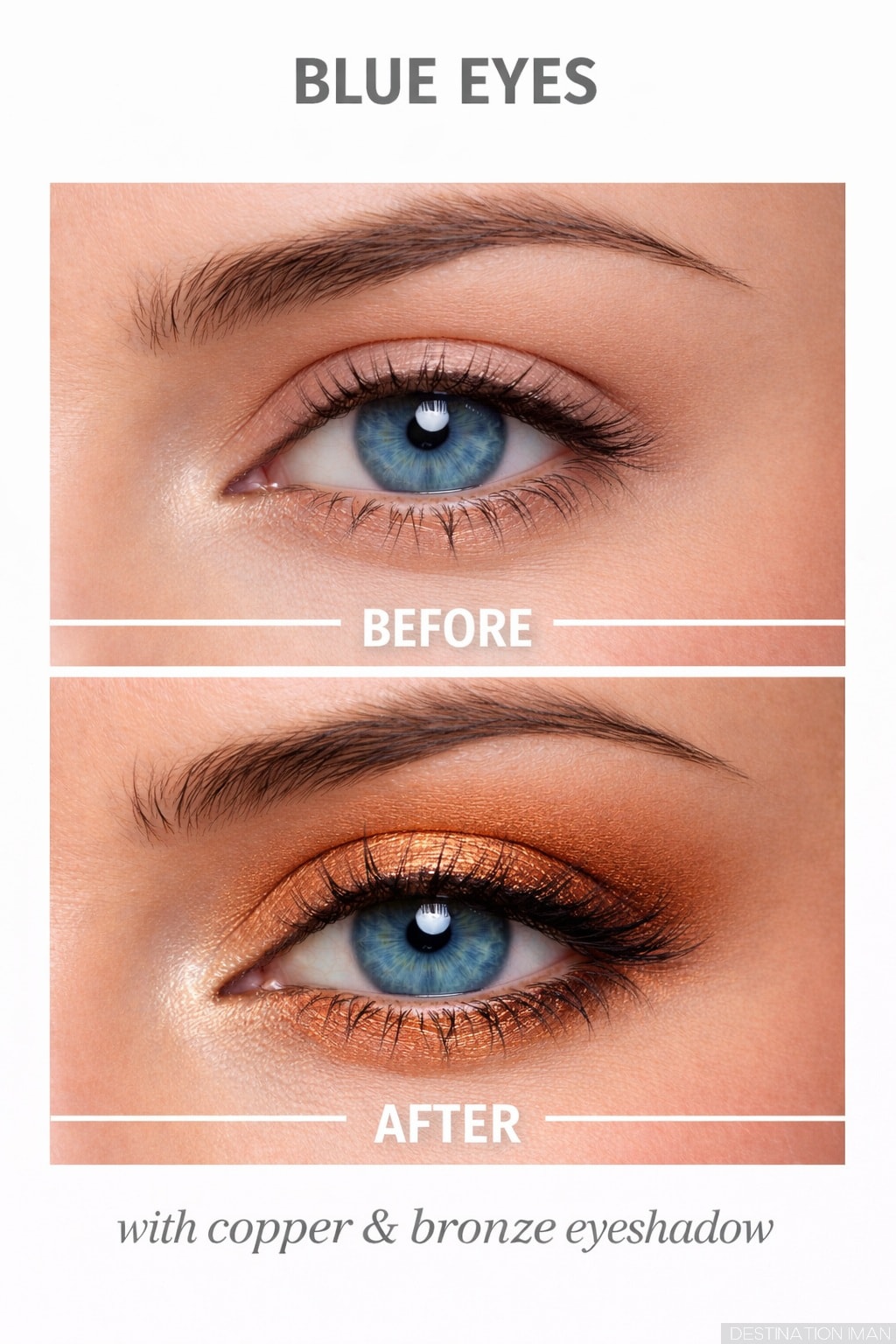
To prevent eye makeup from looking too warm, harsh, or artificial when using orange-based shades on blue eyes, apply a touch of gold or champagne shadow to the inner corners of the eyes. This creates balance and adds a brightening effect.
Hazel Eyes: Bringing Out Specific Tones
Hazel eyes contain multiple colors—typically brown, green, and gold—which means you can emphasize different tones depending on your eyeshadow choice:
- To emphasize green: Use purple, burgundy, or plum shades
- To bring out brown: Use blue or navy shades
- To enhance gold flecks: Use rich purple or deep blue
- For balanced enhancement: Use bronze, copper, or warm brown
How to Choose the Right Lipstick Color
Choosing the perfect lipstick is more complex than selecting eyeshadow because it must harmonize with multiple factors simultaneously: lip shape, skin tone, undertone, hair color, and your eye makeup choices.
Factors Affecting Lipstick Selection
Lip Shape and Volume:
The color and finish of lipstick can visually alter lip proportions:
- Dark matte shades: Make lips appear smaller and thinner, create a sophisticated, modern look
- Light satin finishes: Make lips appear fuller and more prominent, reflect light for enhanced volume
- Glossy finishes: Add dimension and fullness, create a youthful, fresh appearance
- Medium tones: Most neutral option, doesn't dramatically change lip size perception
Skin Tone Considerations:
Your skin's depth affects which lipstick intensities look most natural:
- Fair skin: Looks best in lighter to medium shades; very dark lipstick can overwhelm delicate coloring
- Medium skin: Can wear a wide range from light to deep; has the most flexibility
- Deep skin: Carries bold, saturated colors beautifully; very pale shades may look chalky
Undertone Harmony:
Matching lipstick to your undertone creates the most harmonious, flattering effect:
Cool undertones: Look for lipsticks with blue or purple bases—berry, mauve, cool pink, blue-red, wine, plum
Warm undertones: Choose lipsticks with yellow or orange bases—coral, peach, warm pink, orange-red, brick, terracotta
Neutral undertones: Can wear both warm and cool lipsticks; nude-pink, dusty rose, and balanced reds are most universally flattering
Hair Color Relationship:
A general guideline suggests lipstick should be approximately one shade lighter than your hair color for the most balanced look, though this rule has many exceptions:
- Blonde hair: Nude, peach, coral, soft pink, rose, light berry
- Brown hair: Berry, wine, mauve, brick red, rose, medium pink
- Red hair: Nude, beige, coral, terracotta, warm pink, soft red
- Black hair: Deep berry, wine, burgundy, classic red, plum
Coordinating with Eye Makeup:
Eye and lip makeup should exist in the same temperature family (both warm or both cool) for a cohesive look:
- Warm eye makeup (gold, bronze, copper, peach): Pair with warm lip shades (coral, peach, warm pink, orange-red)
- Cool eye makeup (silver, purple, blue, gray): Pair with cool lip shades (berry, mauve, cool pink, blue-red)
- Neutral eye makeup (beige, taupe, brown): Works with any lip color
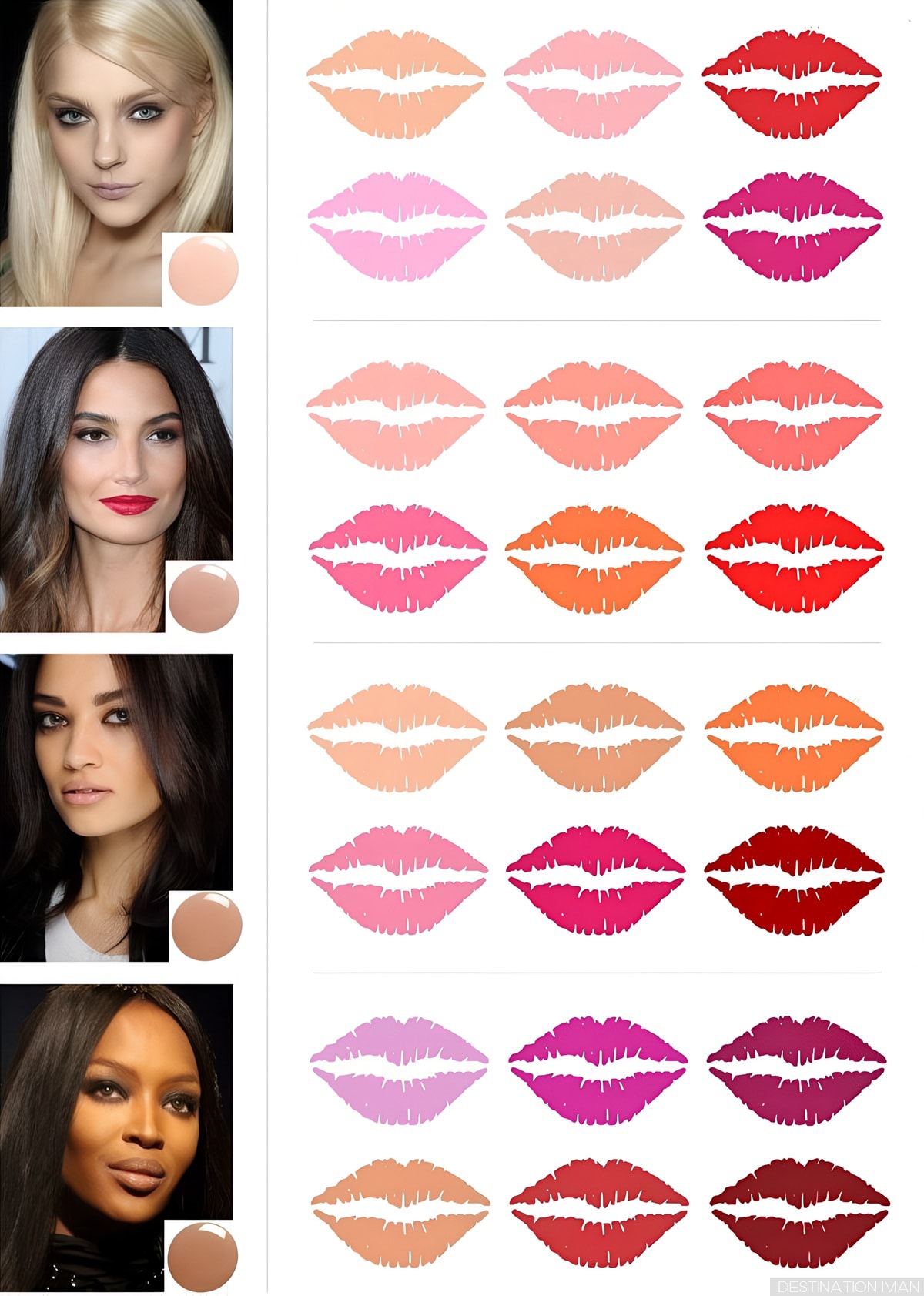
Lipstick Recommendations by Appearance Type
Fair Skin + Blonde Hair + Green Eyes:
This delicate coloring looks beautiful in soft, warm shades: coral, salmon, peach, nude-pink, beige, soft rose. Avoid extremely dark or cool-toned shades that can look harsh.
Fair Skin + Brown/Black Hair + Any Eye Color:
The contrast between fair skin and dark hair can carry bolder colors: carrot, coral, burgundy, classic red, deep rose, berry. Both warm and cool reds work well.
Fair Skin + Red Hair + Any Eye Color:
Red hair pairs best with neutral to warm tones that don't compete: beige, caramel, nude, soft pink, peachy-coral, terracotta, soft red-brown.
Medium Skin + Brown Hair + Brown Eyes:
This combination should avoid cool pinks which can look unflattering. Instead choose: wine, brown-red, brick, terracotta, deep coral, warm berry, classic red.
Deep Skin + Dark Hair + Dark Eyes:
Rich, saturated colors look stunning: deep plum, burgundy, wine, chocolate brown, brick red, orange-red, deep berry, rich nude.
Current Lipstick Trends
While glossy and pearlescent lipsticks were once dominant, current trends favor:
- Matte finishes: Modern, long-lasting, sophisticated, but can be aging if too dry
- Satin finishes: Most universally flattering, comfortable, slightly luminous
- Velvet finishes: Soft matte with some slip, comfortable and elegant
- Natural finishes: Your-lips-but-better effect, stains and tinted balms
Very frosty or heavily pearlescent lipsticks are less popular as they can emphasize lip lines and look dated.
Practical Application Tips
Building a Color-Coordinated Makeup Look
Creating a harmonious makeup look using color theory involves considering how all elements work together:
Your Color Theory Makeup Checklist
- Start with color correction if needed, using opposites on the color wheel
- Choose foundation that matches both your surface tone and undertone
- Select blush that complements your undertone and natural flush
- Use complementary eyeshadow colors to enhance your eye color
- Coordinate lipstick temperature (warm/cool) with your eye makeup
- Ensure all products harmonize with your undertone for a cohesive look
- Balance the intensity of eyes and lips (bold eyes + nude lips, or vice versa)
Common Color Theory Mistakes
Mistake #1: Matching eyeshadow to eye color
This makes eyes blend into the face rather than stand out. Always use complementary colors instead.
Mistake #2: Using wrong corrector shades
Using orange corrector on redness or green on dark circles won't work. Always use opposite colors on the wheel.
Mistake #3: Mixing warm and cool tones chaotically
Warm eye makeup with cool lipstick, or vice versa, creates discord. Keep makeup temperature consistent.
Mistake #4: Ignoring undertones
Choosing makeup based only on skin depth (light, medium, dark) without considering undertone results in unflattering shades.
Mistake #5: Over-correcting
Using too much color corrector creates new problems. Apply sparingly and build coverage if needed.
Professional Techniques to Try
The Monochromatic Look: Use shades from the same color family on eyes, cheeks, and lips for a cohesive, editorial effect.
The Contrast Technique: Pair complementary colors on eyes and lips (purple eyes with coral lips, or copper eyes with berry lips) for maximum impact.
The Neutral Base: Use neutral eyes and cheeks, then add a pop of color on lips to make them the focal point.
The Tonal Approach: Match all makeup to your undertone (all warm or all cool) for the most harmonious, natural look.
Essential Color Theory Principles
- Complementary colors (opposites on the wheel) neutralize each other when blended
- Complementary colors enhance each other when placed side by side
- Matching undertones creates harmony; contrasting undertones creates discord
- Eye makeup looks most striking when using complementary colors to eye color
- All makeup in a look should coordinate in temperature (warm or cool)
Final Thoughts on Makeup Color Combinations
Mastering the color wheel in makeup transforms your approach from trial-and-error to strategic artistry. Understanding color relationships allows you to experiment confidently, correct imperfections effectively, and create balanced looks that highlight your natural beauty at its best.
Whether you prefer minimal everyday makeup that enhances your features subtly or bold editorial styles that make a statement, color theory provides the framework for making informed, flattering choices. This knowledge empowers you to understand why certain shades work beautifully on you while others fall flat, eliminating guesswork and building confidence in your makeup selections.
The beauty of color theory in makeup is that once you understand the fundamental principles, you can apply them creatively and adapt them to your unique coloring, personal style, and the specific effect you want to achieve. These aren't rigid rules but guidelines that help you make choices aligned with your goals.
Start by identifying your undertone and eye color, then experiment with complementary shades for correction and enhancement. Pay attention to how different colors interact with your natural coloring, and trust the color wheel to guide your selections. Over time, choosing flattering makeup colors will become intuitive rather than intimidating.
With the right approach grounded in color theory, makeup becomes not just decoration, but a powerful, creative tool of self-expression that celebrates and enhances your unique beauty.