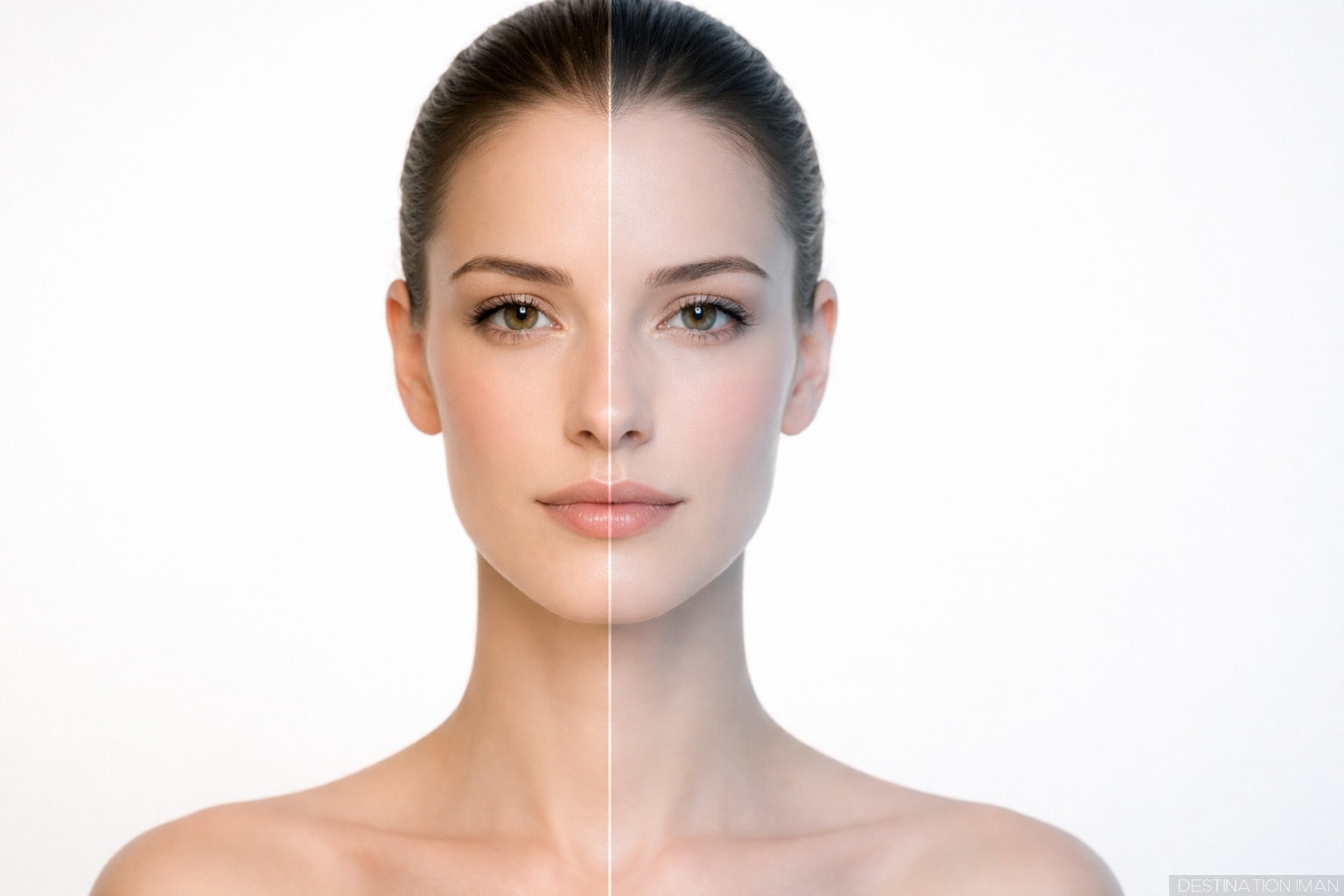
Why do humans find symmetrical faces attractive—yet when faces become too symmetrical, they suddenly feel artificial and unsettling? This paradox reveals that symmetry preference is not about mathematical perfection but about biological signaling. Understanding why symmetry attracts us requires exploring evolutionary psychology, developmental biology, neuroscience, and the surprising phenomenon of the "uncanny valley" where perfection backfires.
This article examines the science behind symmetry and attractiveness, why imperfect symmetry trumps perfect symmetry, how culture modulates biological preferences, and what modern research reveals about this ancient aesthetic principle.
What Is Symmetry?
Symmetry refers to balanced proportions where one side of an object mirrors the other. In biological contexts, bilateral symmetry—where left and right sides are mirror images—is the most relevant form for understanding human attractiveness.
Types of Biological Symmetry
Symmetry in Human Faces and Bodies
- Perfect bilateral symmetry: Exact mirror reflection across vertical midline (extremely rare in nature)
- Fluctuating asymmetry: Small random deviations from perfect symmetry (universal in humans)
- Directional asymmetry: Consistent asymmetry in specific direction (e.g., heart on left side)
- Functional asymmetry: Brain hemispheres, handedness—not relevant to attractiveness
Measuring Facial Symmetry
Researchers measure symmetry by comparing corresponding points on left and right sides of the face. The smaller the deviations, the more symmetrical the face. However, no human face is perfectly symmetrical—all show some degree of fluctuating asymmetry.
Evolutionary Reasons Behind Symmetry Preference
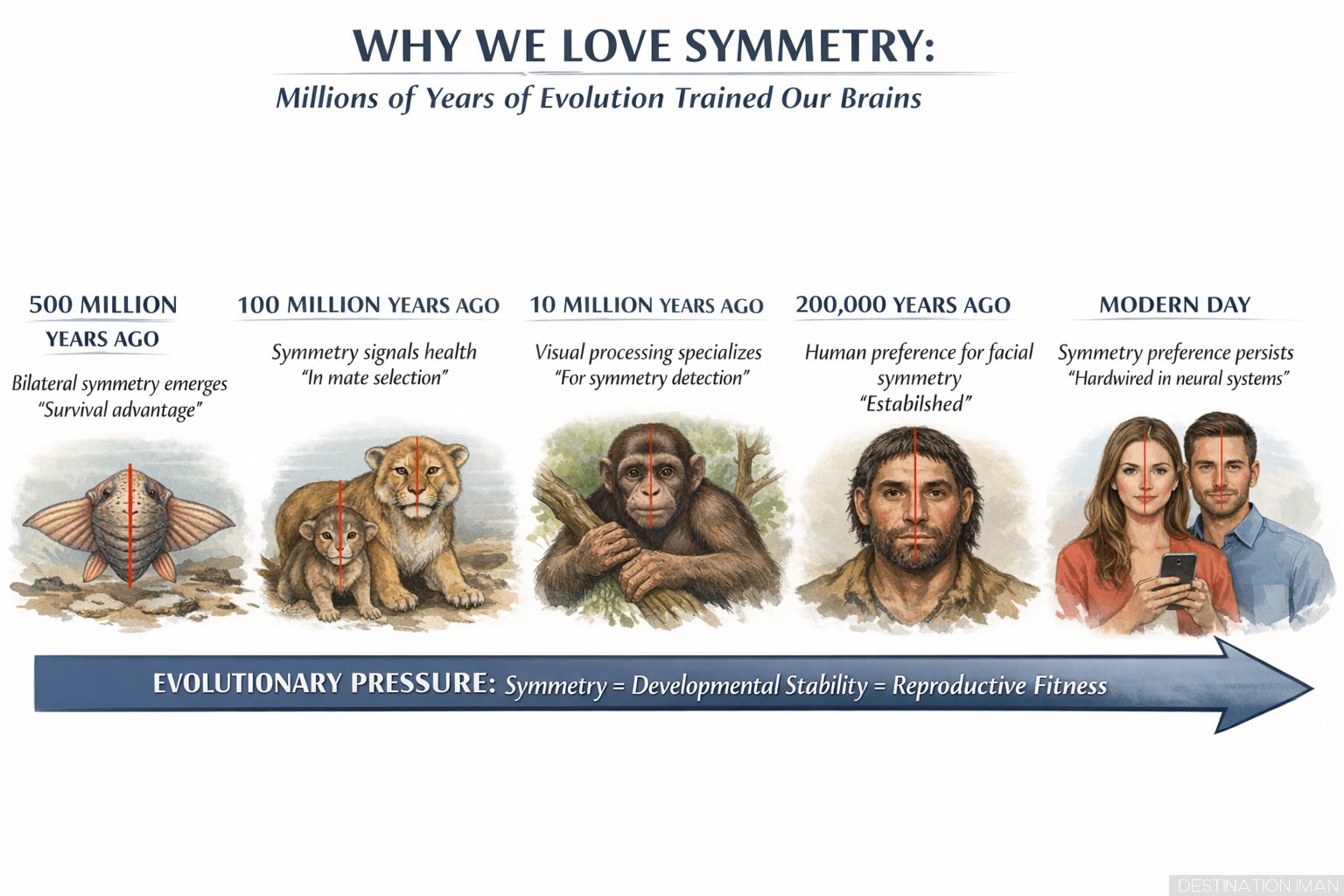
The human preference for symmetry has deep evolutionary roots. Throughout human history, symmetry served as a visible indicator of genetic quality and health—making it a valuable cue in mate selection.
Symmetry as Fitness Indicator
Evolutionary psychologists propose that symmetry preference evolved because symmetrical individuals tended to possess genetic and developmental advantages:
Why Evolution Favored Symmetry Detection
- Genetic quality: Symmetrical development suggests strong genetic foundation resistant to mutations
- Immune function: Ability to maintain symmetry despite parasites and pathogens indicates robust immune system
- Developmental stability: Symmetry signals organism successfully navigated developmental challenges
- Resource access: Good nutrition and low stress during growth enable symmetrical development
- Reproductive fitness: Symmetrical individuals historically showed better reproductive success
Cross-Cultural Evidence
Symmetry preference appears across cultures, suggesting biological rather than purely cultural origins. However, the degree of preference and how it's weighted against other factors (skin quality, expression, cultural markers) varies significantly by culture.
Developmental Stability and Health Signaling
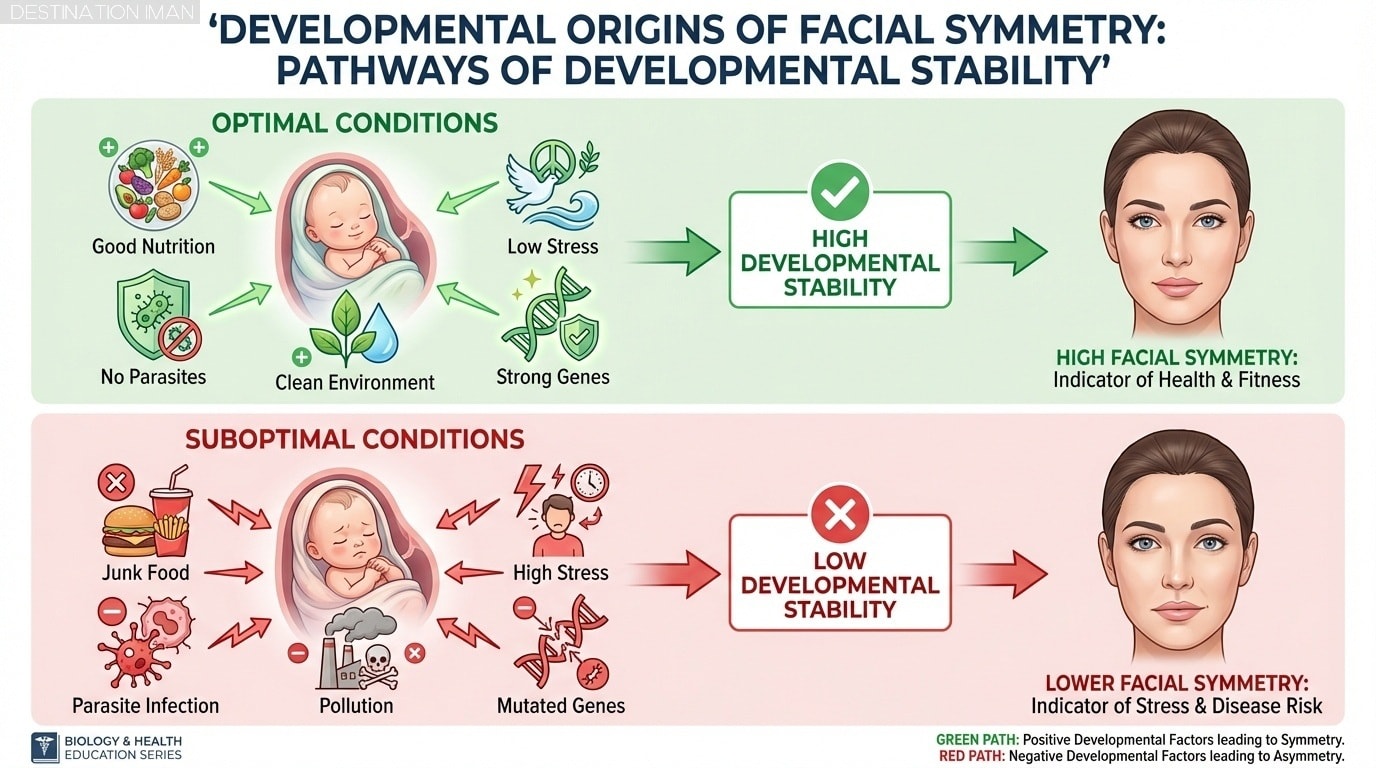
The link between symmetry and attractiveness operates through developmental stability—an organism's ability to produce a consistent phenotype despite genetic and environmental stresses.
What Is Developmental Stability?
Developmental stability refers to the capacity to maintain optimal development under stress. High developmental stability produces more symmetrical features; low stability produces greater asymmetry.
Stressors That Increase Asymmetry
Factors that disrupt developmental stability and increase facial asymmetry include:
- Genetic mutations: Genetic load disrupts coordinated development
- Nutritional deficiency: Inadequate resources prevent optimal tissue growth
- Parasites and disease: Immune system activation diverts resources from development
- Environmental toxins: Pollutants interfere with cellular processes
- Prenatal stress: Maternal stress hormones affect fetal development
- Developmental accidents: Random cellular errors during growth

Symmetry as Honest Signal
Importantly, symmetry is difficult to fake. Unlike behaviors or adornments, developmental symmetry reflects actual genetic and environmental history. This makes it an "honest signal" in evolutionary terms—a reliable indicator that cannot be easily mimicked without the underlying quality it signals.
How the Brain Processes Symmetry
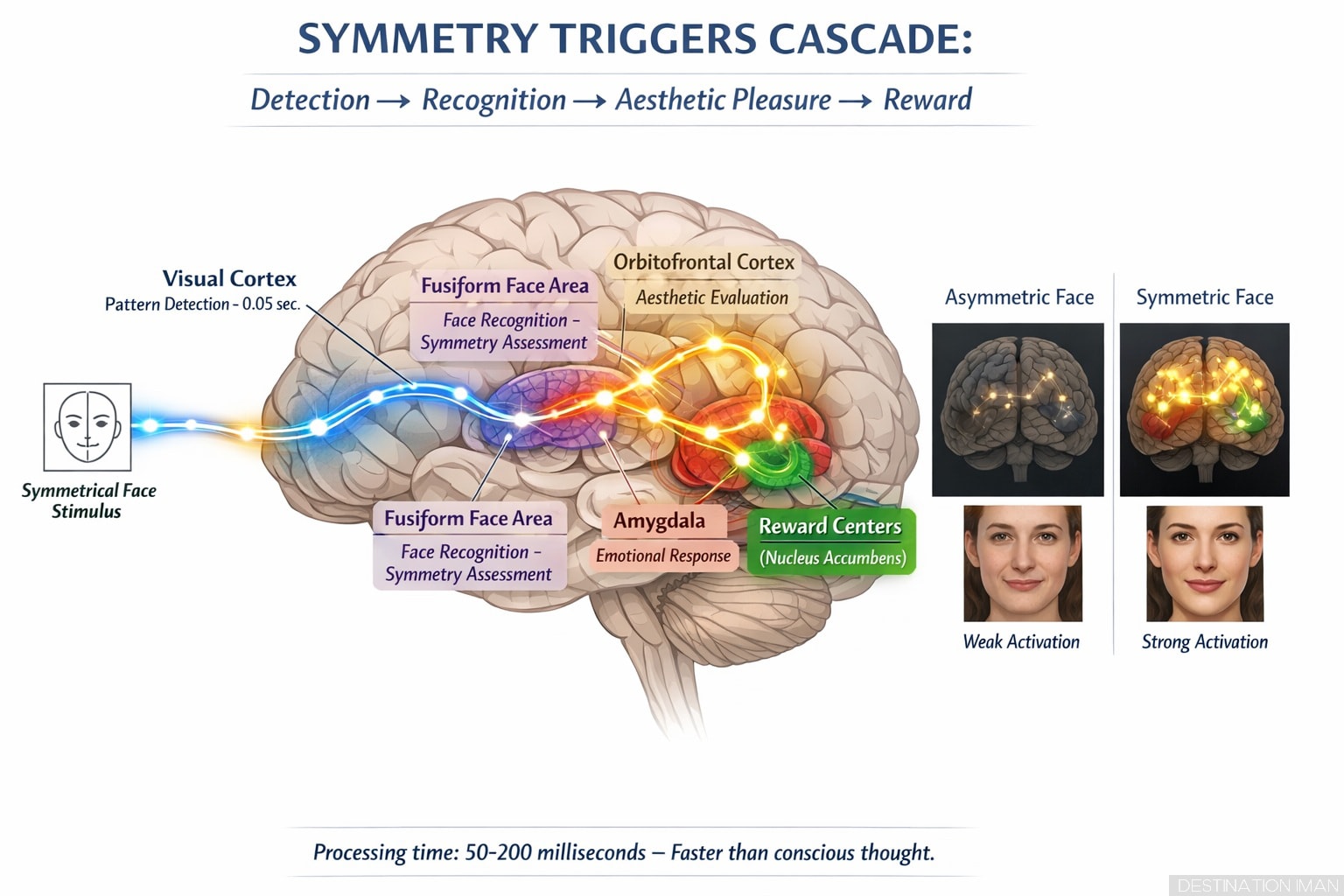
The human brain is specifically adapted to detect symmetry rapidly and unconsciously. This processing occurs so quickly that symmetry judgments happen before conscious awareness.
Neural Mechanisms of Symmetry Detection
Brain Regions Involved in Symmetry Processing
- Visual cortex: Primary symmetry detection through pattern matching
- Fusiform face area (FFA): Specialized face processing includes symmetry assessment
- Orbitofrontal cortex: Evaluates aesthetic value and attractiveness
- Amygdala: Emotional response to faces, including symmetry-based attraction
- Reward centers: Symmetrical faces activate pleasure and reward pathways
Processing Fluency Theory
One explanation for symmetry preference is processing fluency—the brain interprets easily processed information as more positive. Symmetrical patterns require less cognitive effort to process than asymmetrical patterns, creating a subtle positive feeling the brain interprets as attractiveness.
Facial Symmetry and Attractiveness
Numerous studies confirm that facial symmetry correlates with perceived attractiveness. However, the relationship is more nuanced than "more symmetry = more beauty."
The Symmetry-Attractiveness Correlation
Meta-analyses of symmetry research show consistent but moderate correlation between facial symmetry and attractiveness ratings:
This means symmetry matters—but it's far from the only factor determining facial attractiveness. Skin quality, expression, facial proportions, distinctiveness, and cultural markers all contribute significantly.
Symmetry in Different Facial Features
Not all facial asymmetries affect attractiveness equally:
- Eyes: Eye asymmetry (size, position, shape) has strong impact on attractiveness
- Lips: Symmetrical smile and lip shape correlate with beauty ratings
- Nose: Nose asymmetry is noticeable but less critical than eyes
- Jaw/chin: Lower face symmetry affects perceived masculinity/femininity
- Cheekbones: Symmetrical cheekbone position enhances attractiveness
Body Symmetry and Physical Appeal
Symmetry preferences extend beyond faces to bodies, though the mechanisms differ slightly.
Body Symmetry Indicators
Physical symmetry signals in bodies include:
Body Symmetry and Attractiveness
- Shoulder width: Bilateral symmetry in shoulder position and breadth
- Hip symmetry: Equal hip height and width on both sides
- Leg length: Equal length and alignment of legs
- Breast/chest symmetry: Bilateral symmetry in secondary sexual characteristics
- Movement symmetry: Coordinated bilateral movement patterns (gait, gestures)
- Posture balance: Even weight distribution and spinal alignment
Movement and Dynamic Symmetry
Unlike static facial symmetry, body attractiveness heavily depends on movement. Symmetrical, coordinated movement signals motor control, neurological health, and physical fitness—all attractive qualities that go beyond static proportions.

Why Perfect Symmetry Feels Unnatural
Here's the paradox: while moderate symmetry increases attractiveness, perfect symmetry often decreases it. This phenomenon, related to the "uncanny valley," reveals that symmetry preference has optimal limits.
The Uncanny Valley of Perfect Faces
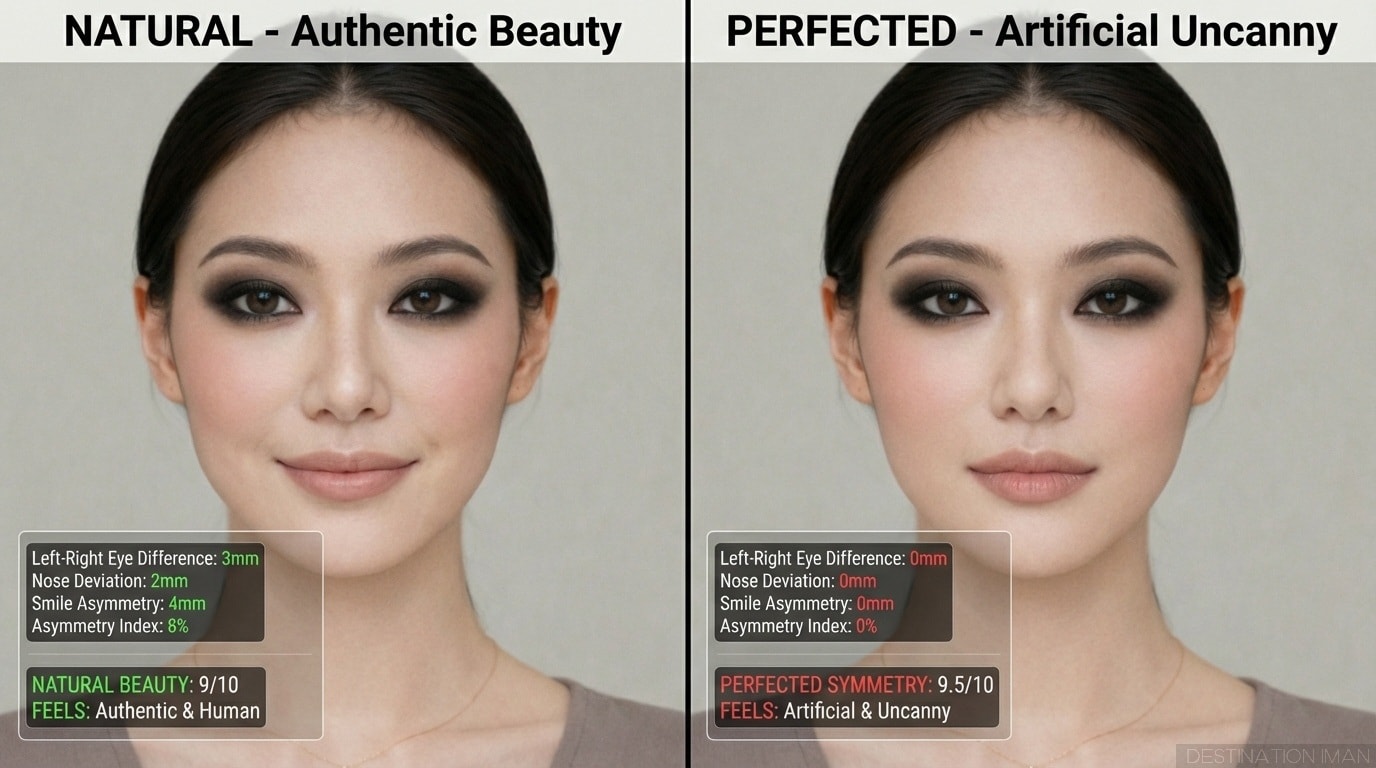
When researchers digitally alter faces to create perfect bilateral symmetry, something strange happens: people often rate the original asymmetric face as more attractive than the perfectly symmetrical version.
Why Perfect Symmetry Fails
Problems with Perfect Symmetry
- Unnatural appearance: Zero asymmetry doesn't exist in nature—brain flags as artificial
- Loss of character: Subtle asymmetries add personality and distinctiveness
- Emotional flatness: Perfect symmetry can appear emotionless or robotic
- Uncanny valley effect: Too human-like yet subtly wrong triggers discomfort
- Reduced memorability: Perfect symmetry decreases distinctiveness needed for memory
- Loss of authenticity: Feels manufactured rather than genuine
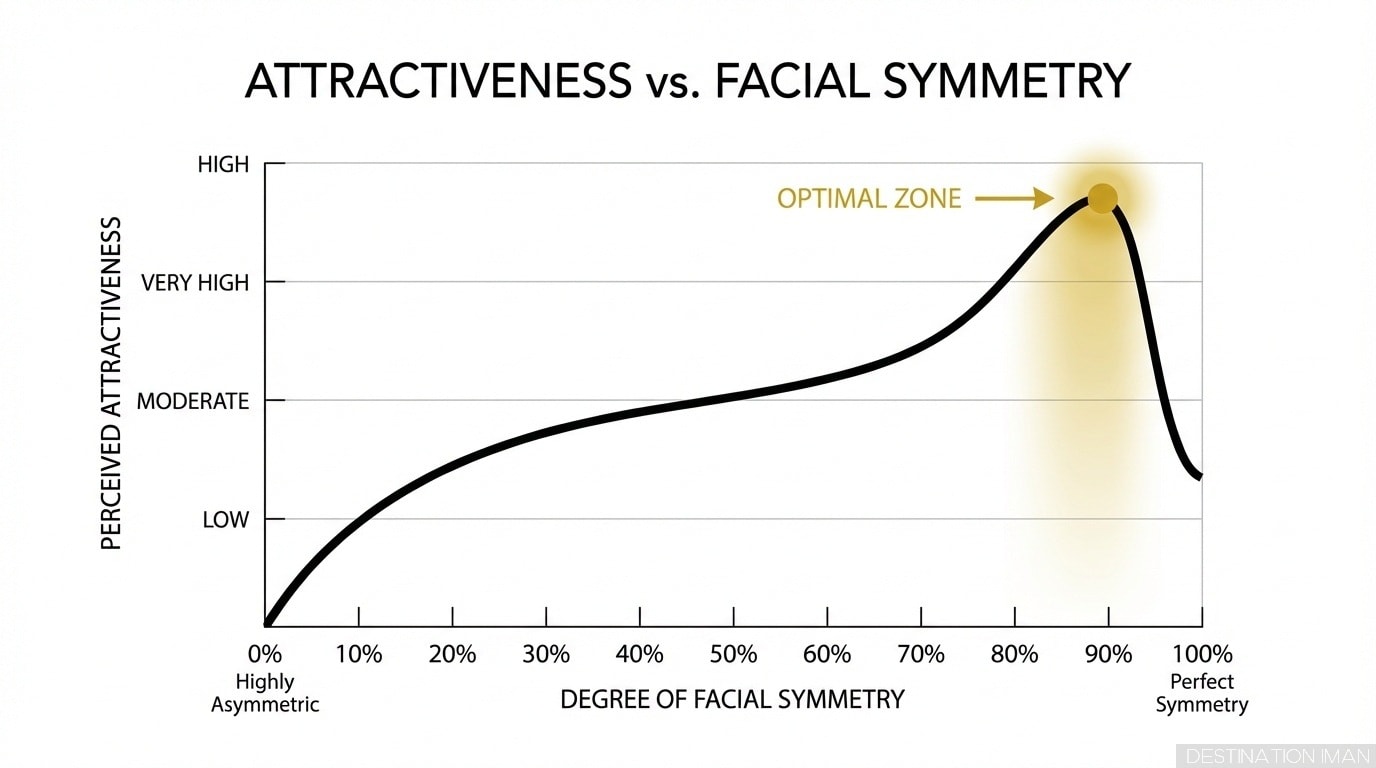
The Optimal Symmetry Zone
If too little symmetry signals developmental problems and too much triggers the uncanny valley, where does optimal attractiveness lie?
The Goldilocks Zone of Symmetry
Research suggests that moderate-to-high symmetry with subtle natural asymmetries creates maximum attractiveness:
Optimal Symmetry Characteristics
- Overall balance: General bilateral harmony without mathematical perfection
- Subtle asymmetries: Minor natural variations that add character
- Feature-specific variation: Some features more symmetric than others creates interest
- Dynamic asymmetry: Asymmetry changes with expression, preventing robotic appearance
- Contextual asymmetry: Slight differences that wouldn't be noticed without measurement
Real-World Examples
Many individuals considered highly attractive show measurable facial asymmetry:
- One eye slightly larger or higher than the other
- Smile that lifts more on one side
- Eyebrow positioning subtly different
- Nose slightly off-center
- Cheekbone prominence asymmetric
These asymmetries, invisible to casual observation, add authenticity and prevent the uncanny valley effect while maintaining sufficient symmetry to signal developmental stability.
Symmetry vs Cultural Beauty Standards
While symmetry preference shows cross-cultural consistency suggesting biological basis, culture dramatically affects how much symmetry is valued relative to other features.
Cultural Variation in Symmetry Valuation
Different cultures weight symmetry differently in overall attractiveness assessment:
Cultural Symmetry Preferences
- Western cultures: Moderate emphasis on symmetry, balanced with distinctiveness and expression
- East Asian cultures: Symmetry valued but facial harmony and proportion often prioritized higher
- African cultures: Symmetry recognized but expressiveness and vitality often weighted more heavily
- Middle Eastern cultures: Strong eyes and facial expressiveness may trump perfect symmetry
Cultural Markers Override Symmetry
In many cultures, features signaling ethnic identity, status, or cultural belonging outweigh symmetry in importance. This explains why beauty standards vary globally despite universal symmetry detection mechanisms.

Symmetry in Photography and Media
Photography and media both utilize and manipulate symmetry to enhance attractiveness—sometimes with unnatural results.
Photographic Symmetry Enhancement
Photographers maximize apparent symmetry through:
- Frontal positioning: Shooting straight-on emphasizes bilateral balance
- Even lighting: Symmetrical lighting reduces shadow asymmetry
- Expression timing: Capturing symmetrical smile moments
- Digital correction: Subtle warping to enhance symmetry
- Posing techniques: Body positioning that creates visual balance
The Digital Symmetry Problem
Modern beauty filters often create artificial perfect symmetry—contributing to unrealistic beauty standards and the uncanny valley effect in social media imagery.
Key Takeaways
Core Insights: Symmetry and Attractiveness
- Symmetry attracts because it historically signaled genetic quality and developmental stability
- No human face is perfectly symmetrical—all show fluctuating asymmetry
- Developmental stressors (poor nutrition, disease, toxins) increase facial asymmetry
- Brain processes symmetry rapidly through specialized neural pathways
- Symmetry correlates moderately with attractiveness but explains only 25-35% of appeal
- Perfect symmetry paradoxically decreases attractiveness by triggering uncanny valley
- Optimal attractiveness occurs at 85-95% symmetry with subtle natural asymmetries
- Slight asymmetries add character, authenticity, and memorability
- Culture modulates how much symmetry is valued relative to other features
- Digital filters creating perfect symmetry contribute to unrealistic beauty standards
- Movement symmetry in bodies signals neurological health and coordination
- Symmetry is "honest signal" that cannot be easily faked without underlying quality
- Beauty lives in balance, not perfection—near-symmetry beats perfect symmetry
Sources & References
Academic & Research Sources
- Brain Research (2025) — The Evolutionary Principles of the Attractiveness of Symmetry
- NIH — Facial Attractiveness: Evolutionary Based Research
- NIH — Too Real for Comfort? Uncanny Responses to Computer Generated Faces
- NIH (2024) — Associations Between Developmental Stability, Canalization, and Phenotypic Plasticity
- Evolution and Human Behavior — Symmetry and Human Facial Attractiveness
- Rhodes, G. (2006). The Evolutionary Psychology of Facial Beauty. Annual Review of Psychology
- Langlois, J. H. et al. (2000). Maxims or Myths of Beauty? A Meta-Analytic and Theoretical Review. Psychological Bulletin
- Psychology Today — Why Are Symmetrical Faces So Attractive?
- Medium (2026) — Why We Secretly Love "Almost" Symmetry