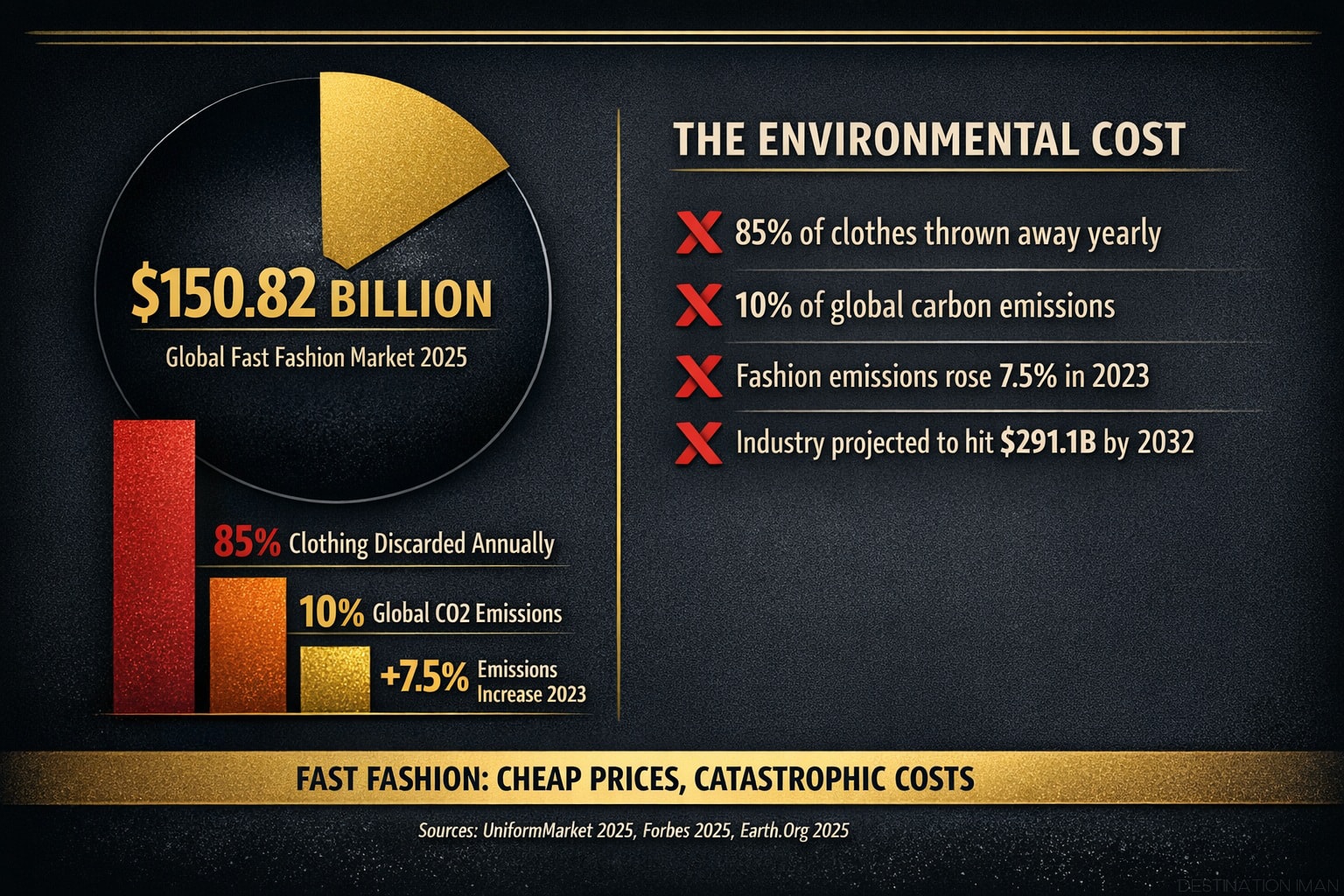
The fast fashion industry generates $150.82 billion annually, yet 85% of clothing is discarded each year—unworn, unloved, contributing to 10% of global carbon emissions. Meanwhile, timeless style—built on quality, consistency, and self-knowledge—creates wardrobes that last decades, not seasons. This isn't nostalgia. It's strategy. Elegance outlasts trends because it aligns with psychological stability, reduces decision fatigue, and signals confidence that youth-chasing can never replicate.
This article examines why timeless beauty—expressed through coherent personal style, quality over quantity, and visual calm—creates more compelling attractiveness than trend-driven consumption. Research from 2024-2026 reveals the psychological, environmental, and social costs of fast fashion, and why elegance remains the only sustainable approach to beauty.
Elegance vs Youth Obsession: Defining the Divide
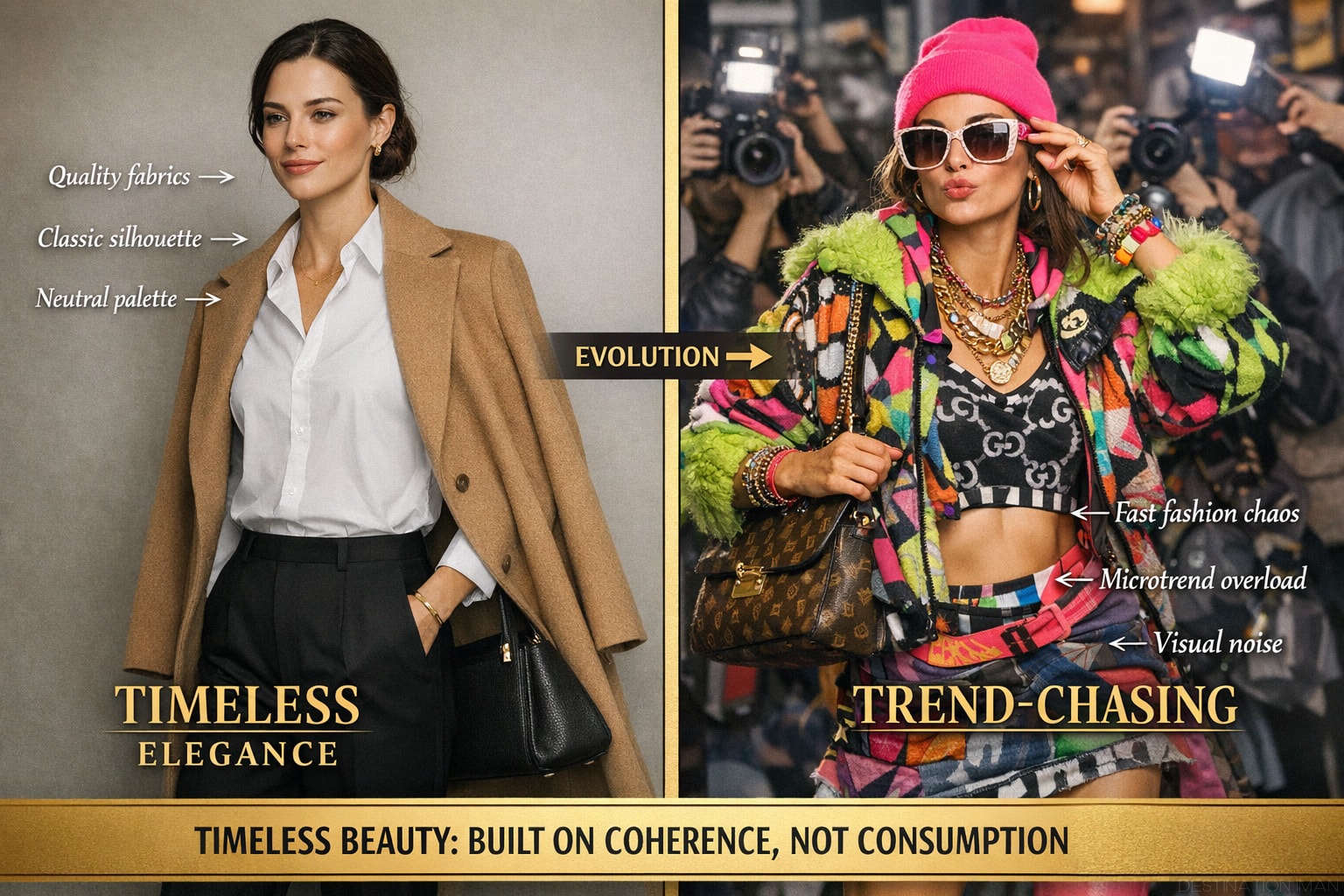
Elegance and youth obsession represent fundamentally opposed philosophies. Youth obsession fixates on external markers of vitality—smooth skin, trendy clothing, youthful energy. It operates from fear of loss and external validation. Elegance roots in internal coherence—self-knowledge, intentional choices, visual calm. It operates from self-acceptance and autonomy.
Youth Obsession vs Timeless Elegance
- Youth Obsession: Follows trends → constantly changing appearance → visual chaos
- Timeless Elegance: Refines personal style → consistent aesthetic → visual coherence
- Youth Obsession: Seeks external validation → "Does this make me look young?"
- Timeless Elegance: Internal locus of control → "Does this reflect who I am?"
- Youth Obsession: Quantity over quality → fast fashion, microtrends
- Timeless Elegance: Quality over quantity → investment pieces, longevity
- Youth Obsession: Performance anxiety → constant monitoring of appearance
- Timeless Elegance: Visual calm → relaxed confidence in self-presentation
The fundamental difference: youth obsession is reactive (responding to external pressures), while elegance is proactive (creating from internal values).
The Fast Fashion Crisis: Numbers Behind the Chaos
Fast fashion thrives on psychological manipulation: create insecurity, offer cheap "solution," repeat weekly. The environmental and psychological costs are catastrophic.
Fast Fashion By the Numbers (2024-2026)
The Human Cost: Decision Fatigue and Identity Fragmentation
Beyond environmental damage, fast fashion creates psychological instability:
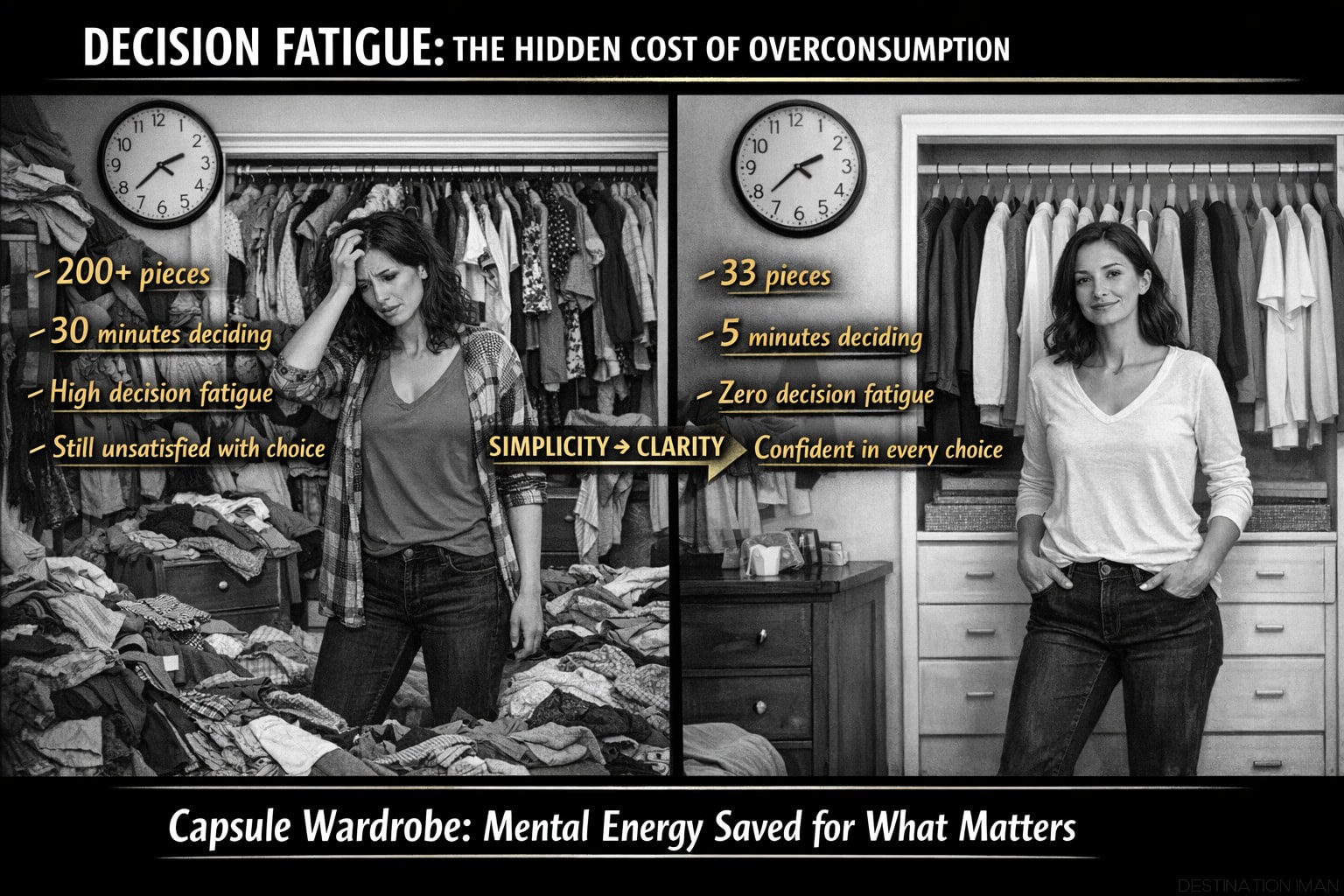
- Decision fatigue: Constant trend cycles force daily wardrobe recalibration
- Identity fragmentation: No consistent aesthetic = no recognizable self-presentation
- Financial drain: Cheap clothes bought frequently cost more than quality pieces bought rarely
- Confidence erosion: External validation dependency increases with trend-chasing
Timeless style solves all four problems simultaneously.

The Psychology of Trend-Chasing
Why do people chase trends despite costs? Psychology offers answers.
The FOMO (Fear of Missing Out) Mechanism
Social media amplifies comparison anxiety. Algorithms show curated perfection, triggering feelings of inadequacy. Fast fashion brands exploit this by offering "solutions" (new trends) to manufactured problems (feeling outdated).
Identity Instability and Trend Adoption
Research shows individuals with unstable self-concept adopt trends more frequently. Why? External validation substitutes for internal self-knowledge. Result: constant wardrobe churn, never feeling "right" in clothing.
Timeless style requires self-knowledge—understanding your body, values, lifestyle—making it psychologically mature approach that improves with age.
Six Principles of Timeless Style
Timeless elegance isn't accidental. It follows consistent principles that transcend era and culture.
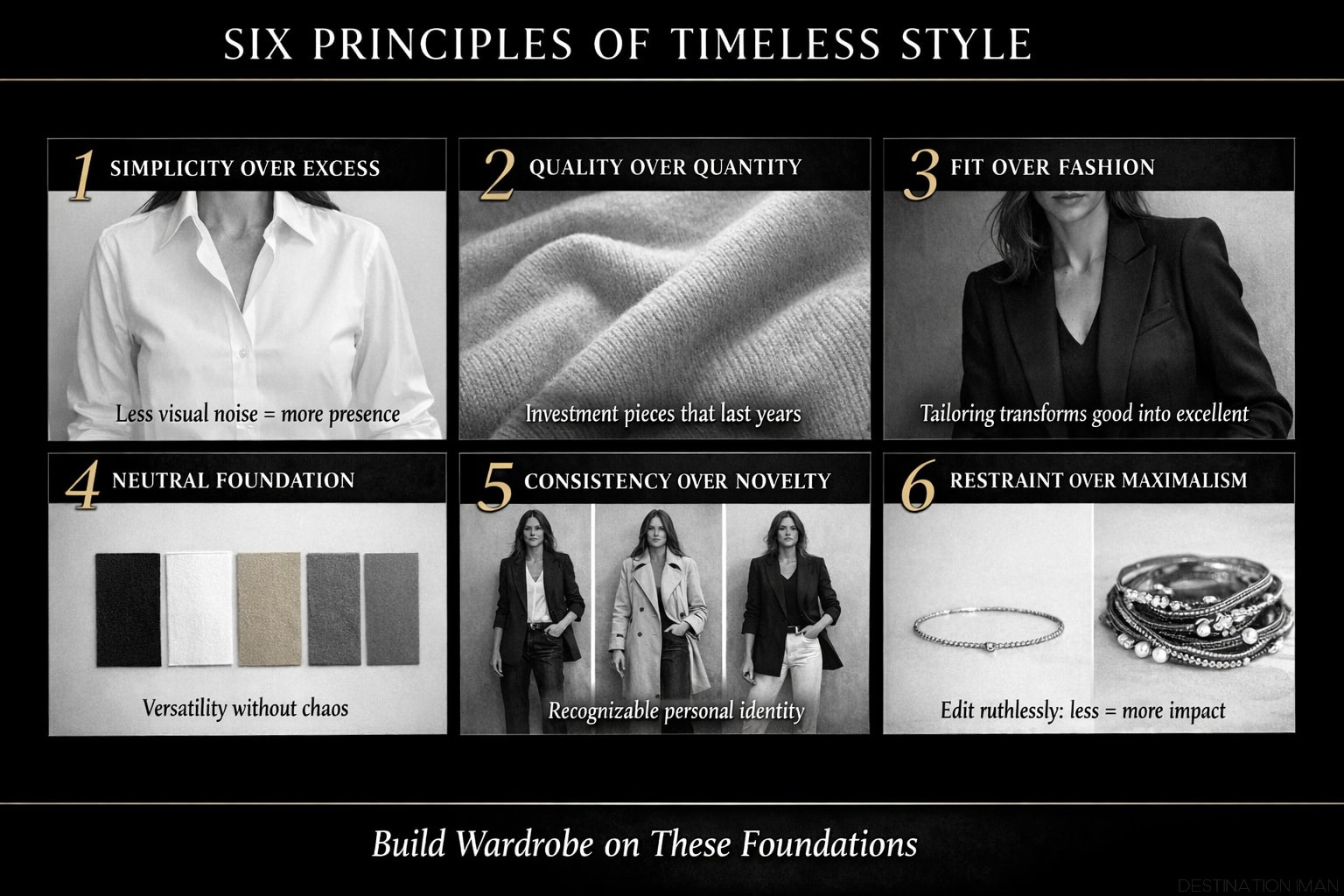
The Six Principles of Timeless Style
- 1. Simplicity Over Excess: Clean lines, minimal embellishment, intentional details. Less visual noise = more presence.
- 2. Quality Over Quantity: Investment in well-made pieces that last years, not seasons. Natural fabrics, expert construction, timeless cuts.
- 3. Fit Over Fashion: Perfectly fitted basics outlast trendy ill-fitting pieces. Tailoring transforms good into excellent.
- 4. Neutral Foundation: Base wardrobe in neutrals (black, white, navy, beige, gray) allows flexibility without chaos.
- 5. Consistency Over Novelty: Recognizable personal aesthetic creates visual identity. People remember you, not your outfit.
- 6. Restraint Over Maximalism: Edit ruthlessly. Remove one accessory before leaving house. Less = more impact.
These principles create visual coherence—the foundation of elegance.
The Capsule Wardrobe Revolution
The capsule wardrobe concept—originated in 1970s, popularized in 2010s, dominant in 2025—offers antidote to fast fashion chaos.
What Is a Capsule Wardrobe?
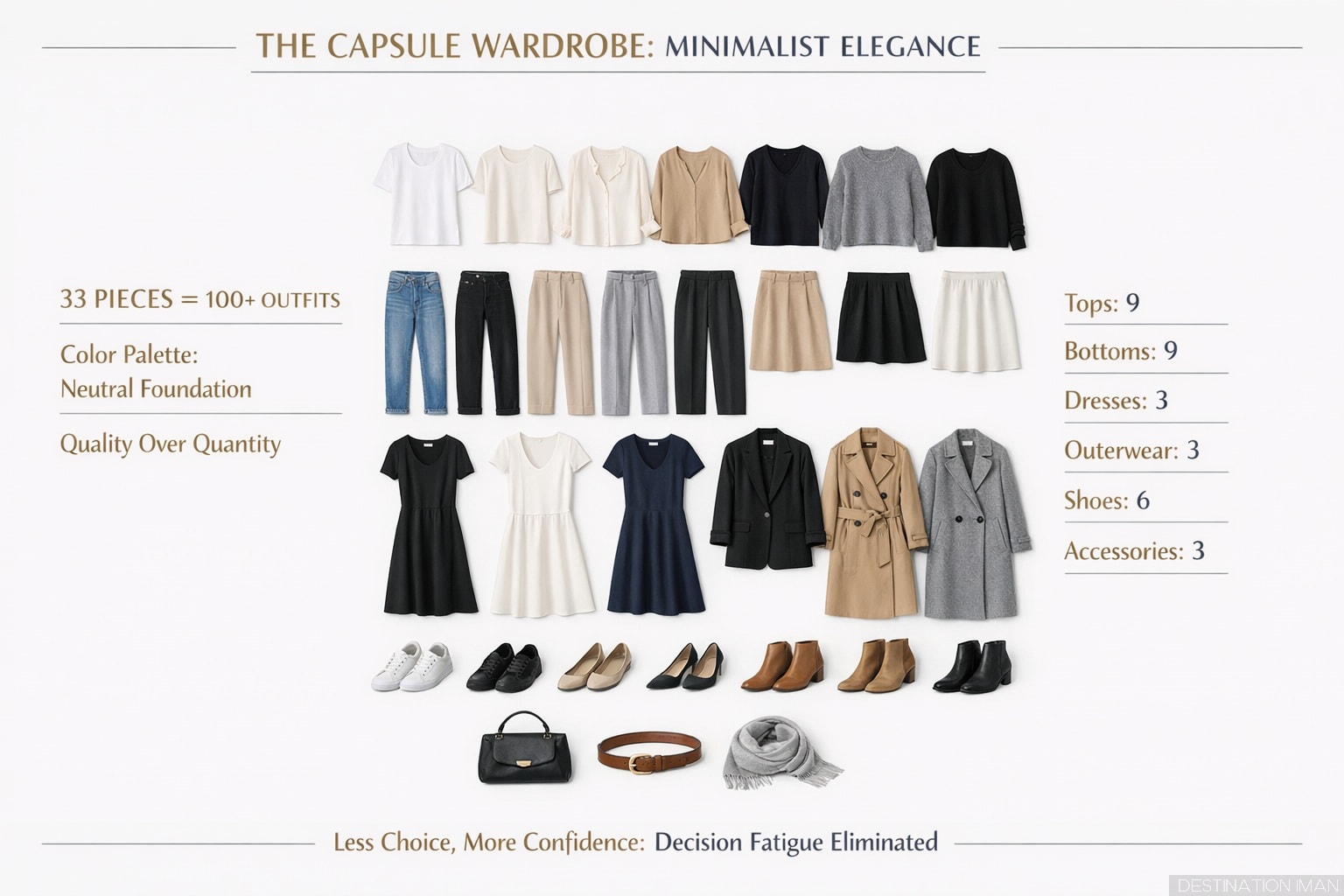
A capsule wardrobe is a curated collection of ~33 versatile pieces that can be mixed and matched to create multiple outfits. Focus: quality, versatility, longevity.
The Psychological Benefits
- Reduced decision fatigue: Fewer choices = clearer decisions = more mental energy for important matters
- Increased confidence: Knowing every piece works reduces morning anxiety
- Financial clarity: Intentional purchasing eliminates impulse buying
- Identity coherence: Consistent aesthetic reinforces self-concept
- Environmental impact: Fewer purchases = less waste
Typical Capsule Breakdown
33-Piece Capsule Wardrobe Structure
- Tops (9): 3 tees, 3 blouses, 3 sweaters/cardigans
- Bottoms (9): 3 jeans/trousers, 3 skirts, 3 shorts (seasonal)
- Dresses (3): 1 casual, 1 work, 1 formal
- Outerwear (3): 1 coat, 1 jacket, 1 blazer
- Shoes (6): 2 everyday, 2 dressy, 2 seasonal
- Accessories (3): 1 bag, 1 belt, 1 scarf/jewelry
All pieces in neutral or coordinating colors, allowing exponential outfit combinations from minimal items.
Quiet Luxury: The 2025 Aesthetic Shift
"Quiet luxury"—also called "stealth wealth" or "old money aesthetic"—dominates 2025 fashion discourse. It represents rejection of logo-driven, trend-obsessed consumption in favor of understated quality.
Characteristics of Quiet Luxury
- No visible logos: Quality speaks for itself
- Neutral color palettes: Camel, navy, cream, charcoal, white
- Impeccable tailoring: Fit over fashion, always
- Natural fabrics: Cashmere, silk, wool, linen, cotton—no synthetics
- Timeless silhouettes: Classic shapes that transcend decades
- Understated elegance: Confidence without performance
Quiet luxury appeals because it signals secure identity—no need to prove status through logos or trends.
Quality Over Quantity: Investment Dressing
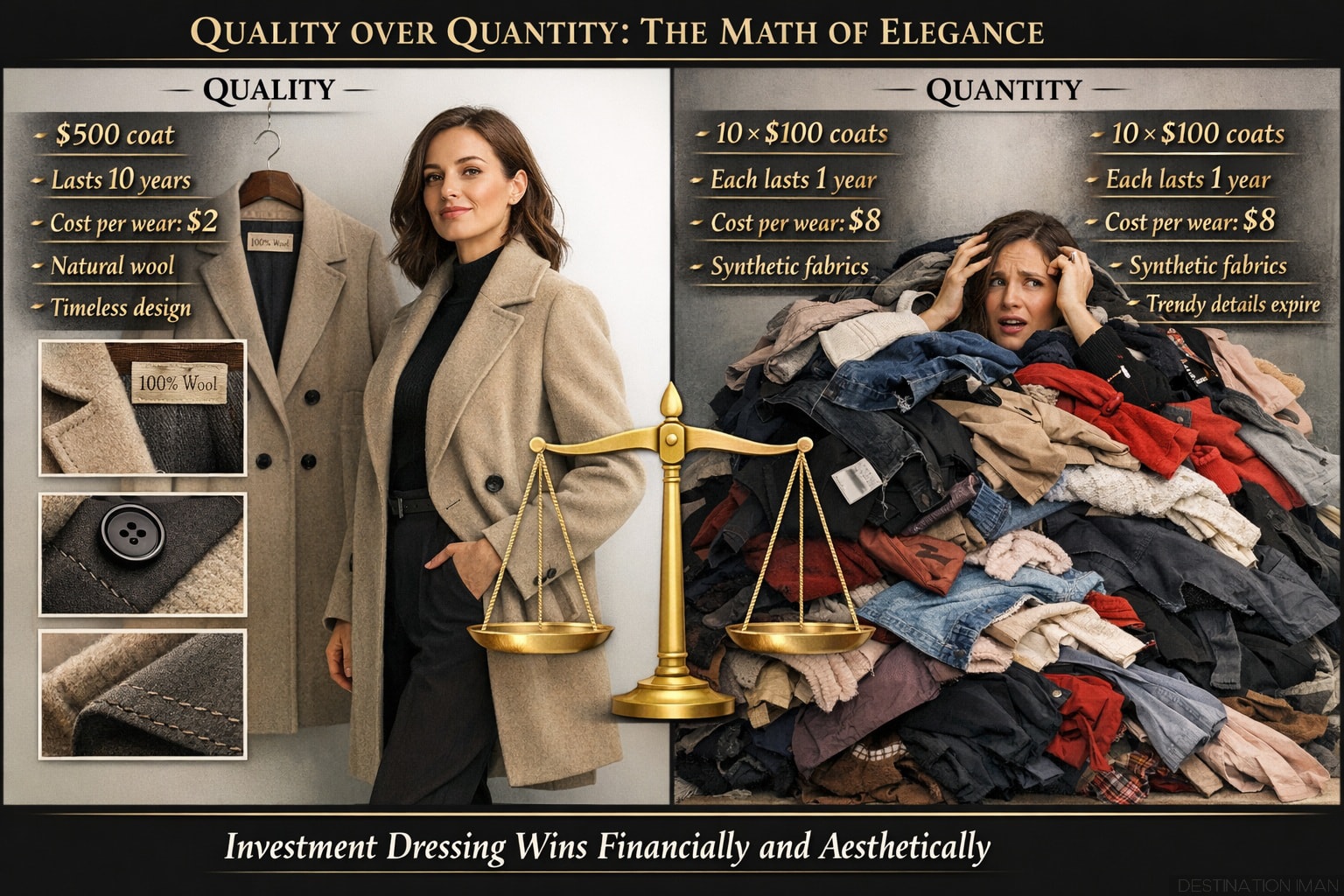
The mathematics of investment dressing: buying one $500 coat that lasts 10 years costs less than buying ten $100 coats that last 1 year each. Beyond economics, quality pieces feel better, fit better, age better.
What Defines Quality?
Quality Markers in Clothing
- Natural fibers: Wool, silk, cotton, linen, cashmere (avoid polyester, acrylic)
- Construction: Hand-stitching, reinforced seams, quality buttons/zippers
- Weight: Substantial fabric weight (drapes better, lasts longer)
- Lining: Quality pieces are fully lined (comfort + longevity)
- Tailoring potential: Enough seam allowance for alterations
- Timeless design: Classic silhouette without trendy details
The Investment Piece Strategy
Investment dressing prioritizes cost-per-wear over initial price. A $400 coat worn 200 times = $2/wear. A $40 coat worn 5 times = $8/wear. Quality wins financially and aesthetically.
Key investment categories:
- Outerwear: Classic wool coat, leather jacket, tailored blazer
- Shoes: Quality leather boots, classic heels, versatile flats
- Bags: One excellent leather bag outlasts 20 trend pieces
- Basics: Perfectly fitted white shirt, cashmere sweater, tailored trousers
Why Style Consistency Increases Attractiveness
Psychological research reveals consistency is attractive. Recognizable personal style signals:
- Self-knowledge: Clear sense of identity
- Confidence: No external validation dependency
- Emotional stability: Not reactive to trends = emotionally grounded
- Authenticity: Internal-external alignment
The Recognition Factor
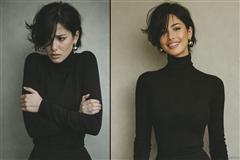
People with consistent style become visually memorable. Think: Steve Jobs (black turtleneck), Anna Wintour (bob + sunglasses), Audrey Hepburn (little black dress). Recognition = presence = attractiveness.
Trend-chasers lack visual consistency, making them forgettable despite constant wardrobe updates.
Timeless Style Icons: Then and Now
Certain individuals transcend trends, becoming style icons whose aesthetic remains relevant decades later. What do they share?
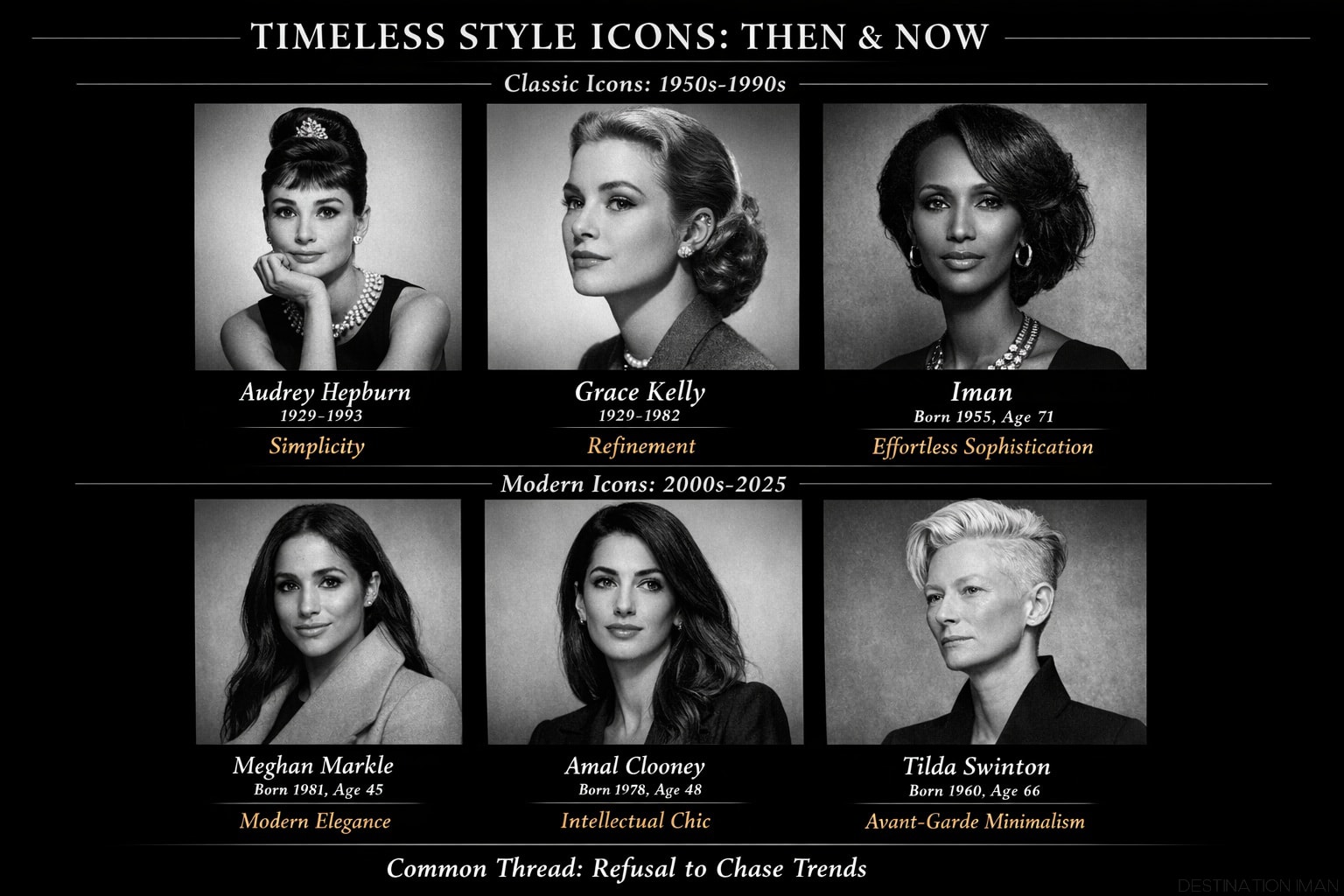
Classic Icons (1950s-1990s)
Timeless Style Icons
- Audrey Hepburn: Little black dress, ballet flats, minimal jewelry. Simplicity as elegance.
- Grace Kelly: Tailored silhouettes, neutral colors, refined accessories. Understated luxury.
- Jackie Kennedy: A-line dresses, pillbox hats, oversized sunglasses. American elegance.
- Coco Chanel: Tweed suits, pearls, comfortable luxury. Function + beauty.
- Iman: Minimalist silhouettes, bold jewelry, natural hair. Effortless sophistication.
Modern Icons (2000s-2025)
- Meghan Markle: Neutral tones, classic silhouettes, minimal accessories
- Amal Clooney: Tailored power dressing, timeless elegance
- Tilda Swinton: Androgynous minimalism, architectural silhouettes
- Phoebe Philo: Oversized minimalism, neutral palettes, comfort + elegance
Common thread: refusal to chase trends. Their style evolves gradually, never reactively.
How Elegance Improves With Age
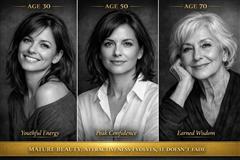
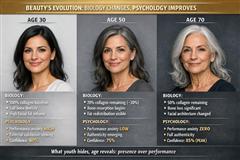
Youth obsession assumes beauty peaks young and declines with age. Elegance operates on opposite trajectory: it deepens with maturity.
Why Elegance Ages Well
- Self-knowledge increases: Decades of experience clarify what works for your body, lifestyle, values
- Trend immunity develops: External validation matters less; internal coherence matters more
- Quality appreciation grows: Financial stability allows investment in better pieces
- Confidence stabilizes: Reduced performance anxiety creates visual calm
- Identity consolidates: Clear sense of self produces consistent aesthetic
Result: mature individuals with refined personal style often appear more elegant than younger trend-followers, despite (or because of) visible aging.
Building Your Timeless Wardrobe: Practical Steps
Transitioning from trend-chasing to timeless style requires intentional strategy.
Step 1: Conduct Wardrobe Audit
Remove everything from closet. Sort into three piles:
- Keep: Well-fitting, quality pieces you wear regularly
- Tailor: Quality pieces needing alterations
- Donate/Sell: Trendy items, poor fit, rarely worn pieces
Goal: Identify gaps and patterns in what you actually wear vs what you own.
Step 2: Define Your Color Palette
Choose 3-5 neutral base colors + 2-3 accent colors. Example:
- Neutrals: Black, white, navy, camel, gray
- Accents: Burgundy, forest green, rust
Everything purchased must fit this palette—instant cohesion.
Step 3: Identify Essential Pieces
Timeless Wardrobe Essentials
- White button-down shirt (perfectly fitted)
- Black trousers (tailored)
- Dark denim jeans (classic cut)
- Little black dress (timeless silhouette)
- Neutral sweater (cashmere if possible)
- Tailored blazer (navy or black)
- Classic trench coat
- Quality leather boots
- Simple leather bag
- Minimal gold/silver jewelry
Step 4: Buy Slowly, Intentionally
Impose 24-hour rule: no impulse purchases. Research quality brands. Prioritize natural fibers. Ensure perfect fit (or budget for tailoring).
Step 5: Develop Personal "Uniform"
Identify 2-3 outfit formulas that work reliably. Example:
- White shirt + black trousers + blazer + boots
- Sweater + jeans + trench + flats
- Simple dress + leather jacket + heels
Repeat with slight variations. Consistency = recognition = elegance.

The Microtrend Trap: Why TikTok Fashion Fails
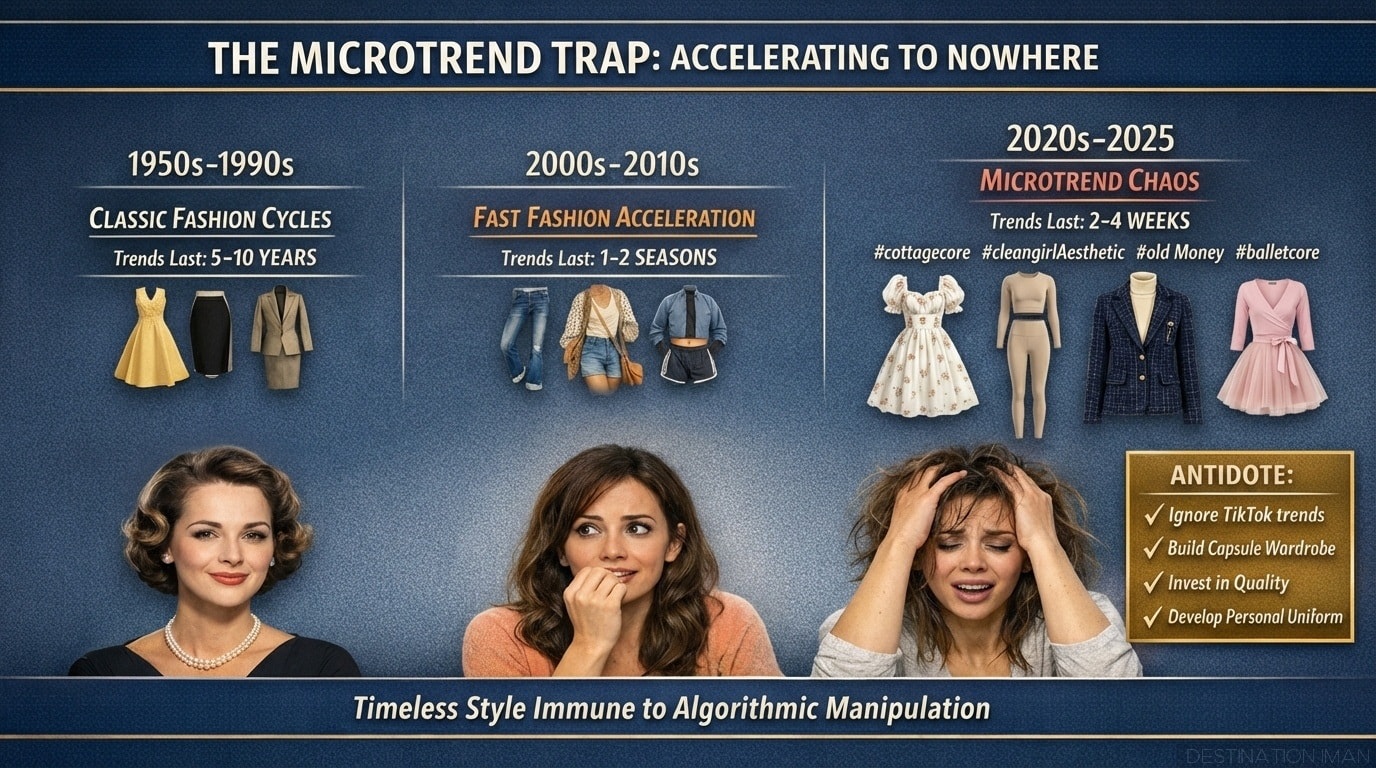
TikTok and Instagram accelerate trend cycles to microtrends—aesthetics lasting weeks, not seasons. Examples: cottagecore, dark academia, coastal grandmother, clean girl aesthetic. Each promises identity; none deliver.
Why Microtrends Are Psychologically Harmful
- Identity instability: Shifting aesthetics every month prevents self-knowledge
- Financial drain: Constant purchasing to "keep up" with algorithmic trends
- Environmental catastrophe: Waste compounds exponentially
- Confidence erosion: External validation dependency increases
- Visual chaos: No consistent aesthetic = no recognizable presence
Antidote: ignore microtrends entirely. Build timeless wardrobe immune to algorithmic manipulation.
Key Takeaways
Essential Insights: Timeless Beauty vs Trends
- Fast fashion generates $150.82B annually but creates 85% clothing waste—environmental and psychological catastrophe
- Timeless elegance roots in self-knowledge, quality, and consistency—not external validation or trend-following
- Capsule wardrobes (~33 versatile pieces) reduce decision fatigue, increase confidence, and create visual coherence
- Quiet luxury (2025 aesthetic shift) prioritizes timeless design, quality materials, and understated confidence over logos/trends
- Quality over quantity: investment pieces have lower cost-per-wear and create more elegant presence than fast fashion
- Style consistency signals self-knowledge, confidence, and emotional stability—increasing perceived attractiveness
- Timeless style icons (Audrey Hepburn, Grace Kelly, Iman) share trait: refusal to chase trends, commitment to personal aesthetic
- Elegance improves with age as self-knowledge deepens, trend immunity develops, and confidence stabilizes
- Six principles of timeless style: simplicity, quality, fit, neutral foundation, consistency, restraint
- Microtrends (TikTok fashion) create identity instability, financial drain, and confidence erosion—ignore entirely
- Building timeless wardrobe requires: wardrobe audit, defined color palette, essential pieces, intentional purchasing, personal "uniform"
- Fashion psychology reveals: consistent style = recognizable presence = memorable attractiveness
- Sustainable fashion movement (2025) promotes longevity over fast fashion, quality over quantity, ethical consumption
- Youth obsession is reactive (fear-driven); elegance is proactive (values-driven)
- Timeless beauty outlasts trends because it aligns with psychological stability, reduces cognitive load, and signals authentic confidence
Sources & References
Academic & Industry Sources (2024-2026)
- UniformMarket (2025) — Fast Fashion Statistics 2025
- Environment Energy Leader (2025) — 85% of Clothes Discarded Annually: Fashion's Waste Crisis
- Forbes (2025) — Ultra-Fast Fashion Causes Industry Emissions to Rise 7.5%
- Earth.Org (2025) — Fast Fashion's Environmental Impact: 10% of Global CO2 Emissions
- Leslie Coelho (2025) — Less Is More: The Elegant Science Behind a Capsule Wardrobe
- Camille Styles (2025) — My 2025 Capsule Wardrobe: How to Build an Intentional Closet
- Fashion Is Psychology (2025) — The Minimalist Psychology of Wanting Less
- Fashion Is Psychology (2024) — 9 Predictions for 2025: Microtrends and Consumer Psychology
- SCAD Fashion Research (2025) — The Future of Quiet Luxury [PDF]
- ResearchGate (2025) — Young Females and "Old Money": Marketing Innovation Inside the Luxury Industry
- Letters of Elegance (2025) — How Elegant Personal Style Can Improve Your Confidence
- Diverge Sneakers (2025) — Embracing Quality Over Quantity: The Slow Fashion Movement
- McKinsey (2025) — The State of Fashion 2026: When the Rules Change
- Fashion Revolution (2025) — What Fuels Fashion? Transparency & Sustainability Report
- ScienceDirect (2025) — Philosophy of Clothing: Fashion as a Social Vector