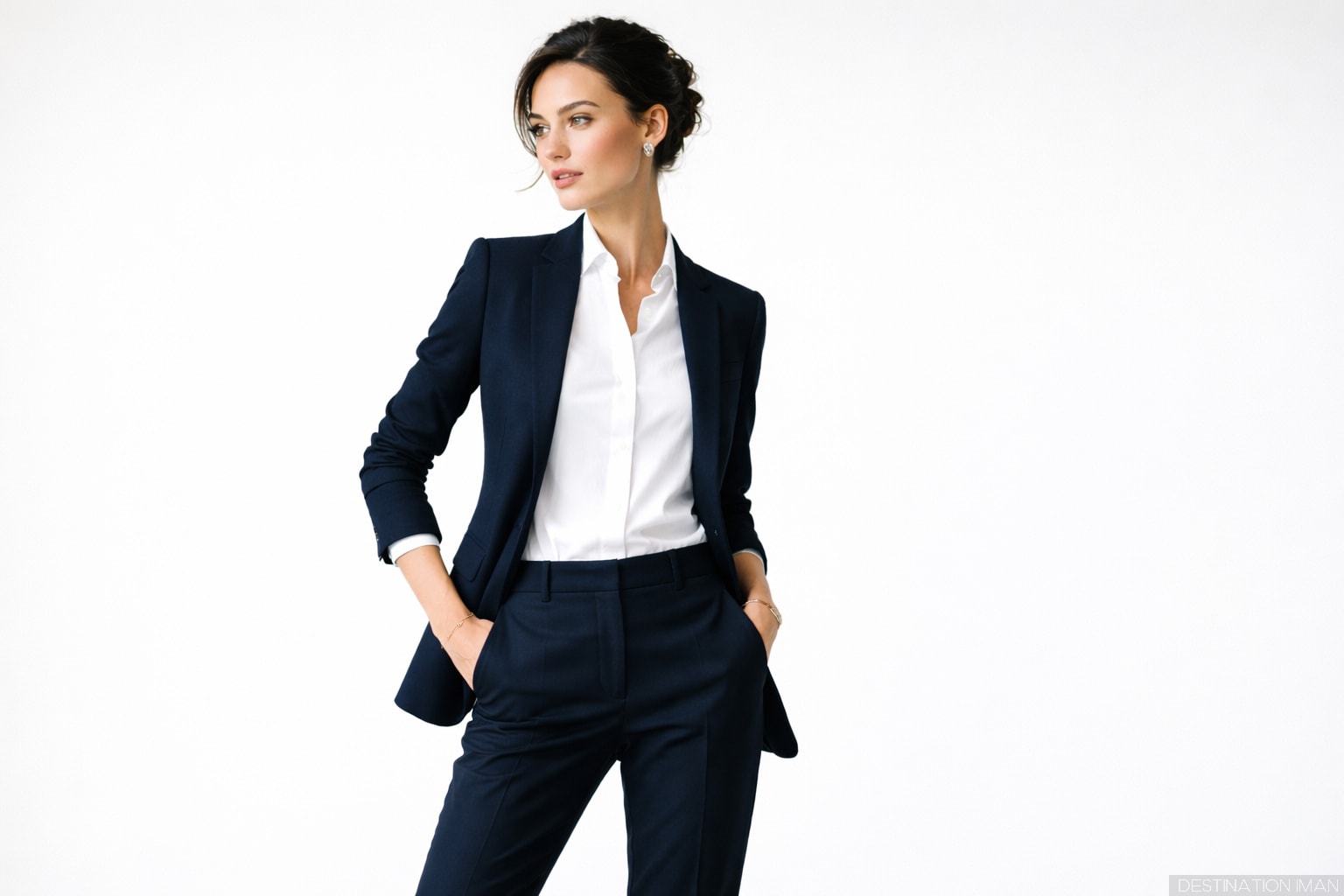
Building a wardrobe around timeless fashion pieces offers freedom from trend cycles, reduces shopping frequency, and ensures you always have appropriate, polished options available. Unlike trendy items that date quickly and require constant replacement, timeless pieces remain relevant for decades, offering superior cost-per-wear value and consistent style.
This comprehensive guide identifies the essential timeless fashion pieces every woman needs, explains what makes items truly timeless, provides specific quality indicators to look for when shopping, and outlines strategic investment priorities. By focusing on these foundational pieces, you create a versatile wardrobe that works across occasions, seasons, and style evolutions while maintaining a cohesive, sophisticated aesthetic.
Key Takeaways
- Timeless pieces combine classic design, quality construction, and versatile styling potential
- The 12 essential timeless items create the foundation for hundreds of outfit combinations
- Quality indicators include fabric composition, construction details, and proper fit
- Investment priority should favor visible, frequently worn items like outerwear and shoes
- Each timeless piece should be wearable in at least 5 different outfit contexts
- Cost-per-wear calculation reveals true value better than purchase price alone
In This Article
- What Makes a Fashion Piece Timeless?
- The Investment Mindset: Quality Over Quantity
- Essential 1: The Perfect White Shirt
- Essential 2: The Tailored Blazer
- Essential 3: Quality Dark-Wash Jeans
- Essential 4: The Classic Trench Coat
- Essential 5: The Little Black Dress
- Essential 6: Black Leather Pumps
- Essential 7: Cashmere Sweater
- Essential 8: Tailored Trousers
- Essential 9: Structured Leather Handbag
- Essential 10: White Sneakers
- Essential 11: Camel Coat
- Essential 12: Simple Ankle Boots
- How to Assess Quality in Timeless Pieces
- Caring for Investment Pieces
- Building Your Timeless Wardrobe Over Time
- When to Splurge vs. Save
What Makes a Fashion Piece Timeless?
Truly timeless fashion pieces share specific characteristics that distinguish them from trendy items. Understanding these qualities helps you identify worthwhile investments versus passing fads.
Classic Design That Transcends Trends
Timeless pieces feature clean lines, simple silhouettes, and minimal embellishment. They lack trendy details that date items—no extreme proportions, novelty fabrics, or season-specific elements. A classic white shirt looks equally appropriate in photographs from the 1950s and today, while a shirt with exaggerated sleeves or trendy cutouts immediately dates to a specific fashion moment.
Quality Construction and Materials
Timeless pieces justify their longevity through superior construction. Quality fabrics maintain appearance through repeated wear and washing, reinforced seams prevent premature failure, and proper finishing details ensure items look polished rather than cheap. An investment piece should look better after two years of wear than a fast-fashion item looks new.
Versatility Across Contexts
Each timeless piece should work in multiple outfit combinations and across different occasions. A tailored blazer worn for work, with jeans on weekends, and over dresses for evening demonstrates true versatility. If an item only works with one specific outfit or for one narrow occasion, it's not truly timeless regardless of its classic design.
Flattering on Multiple Body Types
Timeless silhouettes tend to be universally flattering or easily adapted to different bodies. Extreme trends often only flatter specific body types, limiting their staying power. Classic straight-leg trousers work on virtually everyone, while ultra-low-rise jeans or extreme wide-leg cuts serve narrower audiences.
Studies by fashion economists show that classic wardrobe staples maintain 85-95% of their style relevance over 10-year periods, while trend-driven pieces lose approximately 70% of their relevance within 2-3 years. This longevity translates directly to superior cost-per-wear economics for timeless investments.
The Investment Mindset: Quality Over Quantity
Building a wardrobe around timeless pieces requires shifting from volume-based consumption to strategic investment in quality items that serve you for years.
Cost-Per-Wear Calculation
Rather than focusing solely on purchase price, calculate the true cost of clothing through cost-per-wear:
Cost Per Wear = Purchase Price ÷ Number of Times Worn
A $400 blazer worn twice weekly for three years (approximately 300 wears) costs $1.33 per wear. A $60 trendy blazer worn five times before feeling dated costs $12 per wear. The "expensive" item delivers dramatically better value.
Investment Priority Framework
Not all timeless pieces deserve equal investment. Prioritize spending on:
High investment priority (spend more):
- Outerwear (highly visible, worn frequently)
- Shoes (quality affects comfort and longevity significantly)
- Bags (visible, used daily, subject to heavy wear)
- Tailored pieces (construction quality is very noticeable)
Medium investment priority (balanced approach):
- Dresses (longevity matters, but less wear frequency than separates)
- Knitwear (quality cashmere worth investment, but pilling is inevitable)
- Professional basics (worth quality, but not necessarily luxury brands)
Lower investment priority (strategic savings):
- Basic tees and tanks (replaced more frequently regardless of quality)
- Trendy accent pieces (intentionally shorter lifespan)
- Experimental items (you're still determining if they work for you)
Before purchasing any significant investment piece, ask: "Will this look appropriate and feel relevant in 10 years?" If the answer isn't a confident yes, it's not truly timeless regardless of its classic appearance today.
Essential 1: The Perfect White Shirt
A crisp white button-up shirt is perhaps the single most versatile wardrobe piece. It works in professional settings, styles casually with jeans, layers under blazers, and transitions to evening when styled with tailored trousers or skirts.
What to Look For
Fabric:
- 100% cotton poplin or cotton-blend with stretch for comfort
- Substantial enough to avoid transparency (hold up to light when shopping)
- Crisp hand that maintains structure without excessive stiffness
Fit and Cut:
- Shoulders should hit at natural shoulder line, not beyond
- Bust darts or princess seams for feminine shaping (avoid boxy men's-style shirts)
- Slightly longer length for tucking, but not so long it bunches excessively
- Sleeves that can be rolled attractively or worn full-length
Details:
- Mother-of-pearl or quality plastic buttons (cheap buttons look cheap)
- Reinforced button placket
- Back yoke for structure
- Simple collar—neither too small nor exaggeratedly oversized
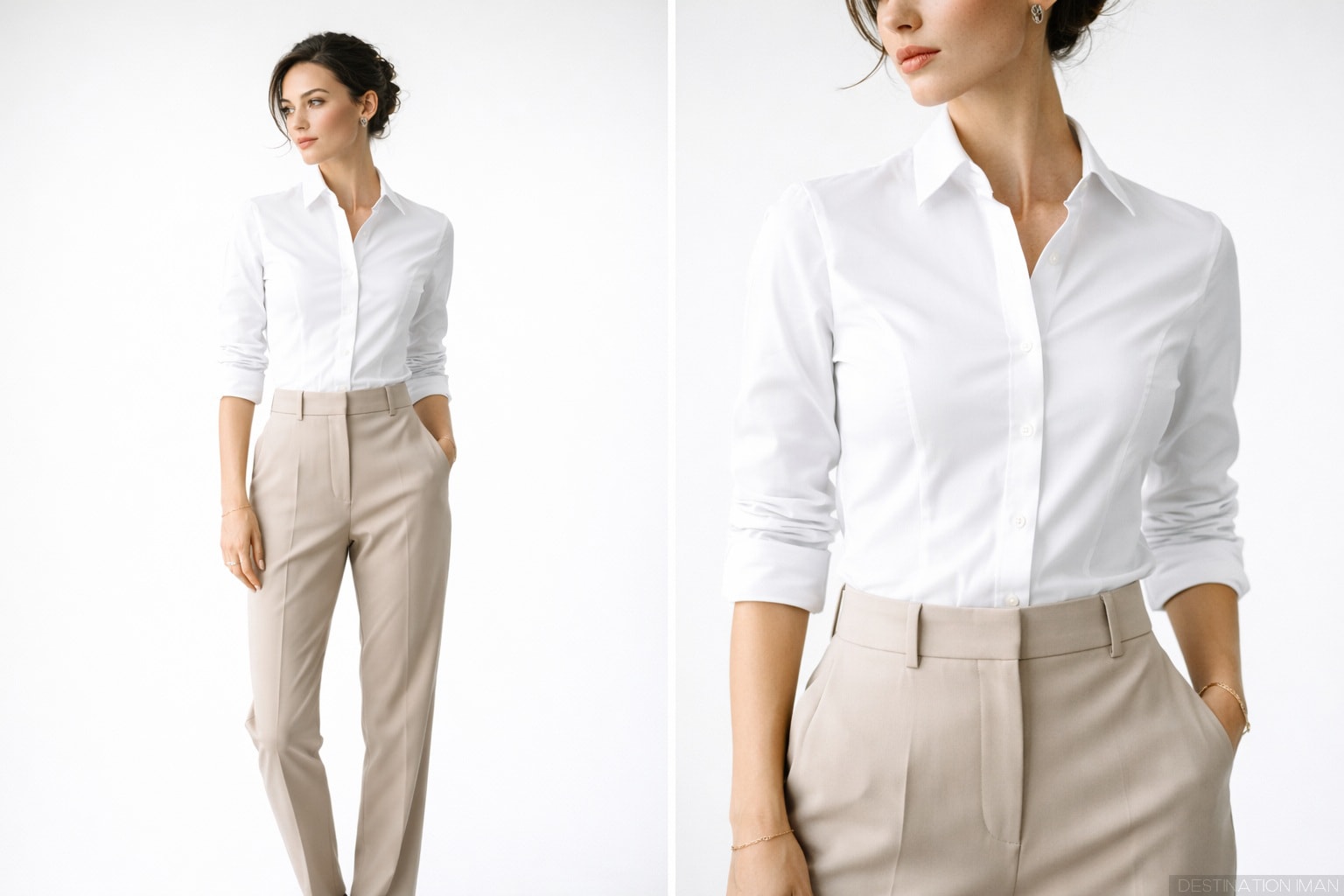
Styling the White Shirt
Professional: Tucked into tailored trousers + blazer + pumps
Smart casual: Half-tucked into jeans + blazer + loafers
Weekend casual: Untucked over white tee + jeans + sneakers
Evening: Tucked into midi skirt + heels + statement earrings
Layered: Under sweater with collar showing + trousers + boots
Investment Guidance
A quality white shirt warrants $80-200 investment. At this price point, expect cotton or quality blends, proper construction, and fits that flatter rather than just cover. Consider owning 2-3 white shirts in slightly different styles (classic collar, band collar, slightly oversized) to prevent wear-out and provide styling variety.
Essential 2: The Tailored Blazer
A well-fitted blazer instantly elevates any outfit. This single piece transforms casual looks to smart casual and adds polish to professional attire.
What to Look For
Fabric:
- Wool or wool-blend for structure and longevity
- Year-round weight (not too heavy, not too light)
- Slight stretch content (2-5% elastane) for comfort without sacrificing structure
Fit and Cut:
- Shoulders are critical—they should align with your natural shoulder, not extend beyond
- Sleeves should end at wrist bone (easily tailored if needed)
- Bust should close comfortably without pulling or gaping
- Length typically hits mid-hip to upper thigh (longer for taller frames)
- Single-breasted in neutral color (navy, charcoal, black, or camel) for maximum versatility
Construction Details:
- Fully lined or half-lined (better quality and comfort)
- Functioning buttons on sleeves (sign of quality construction)
- Notched lapels in moderate width (neither too narrow nor exaggeratedly wide)
- Quality buttons that look substantial, not cheap
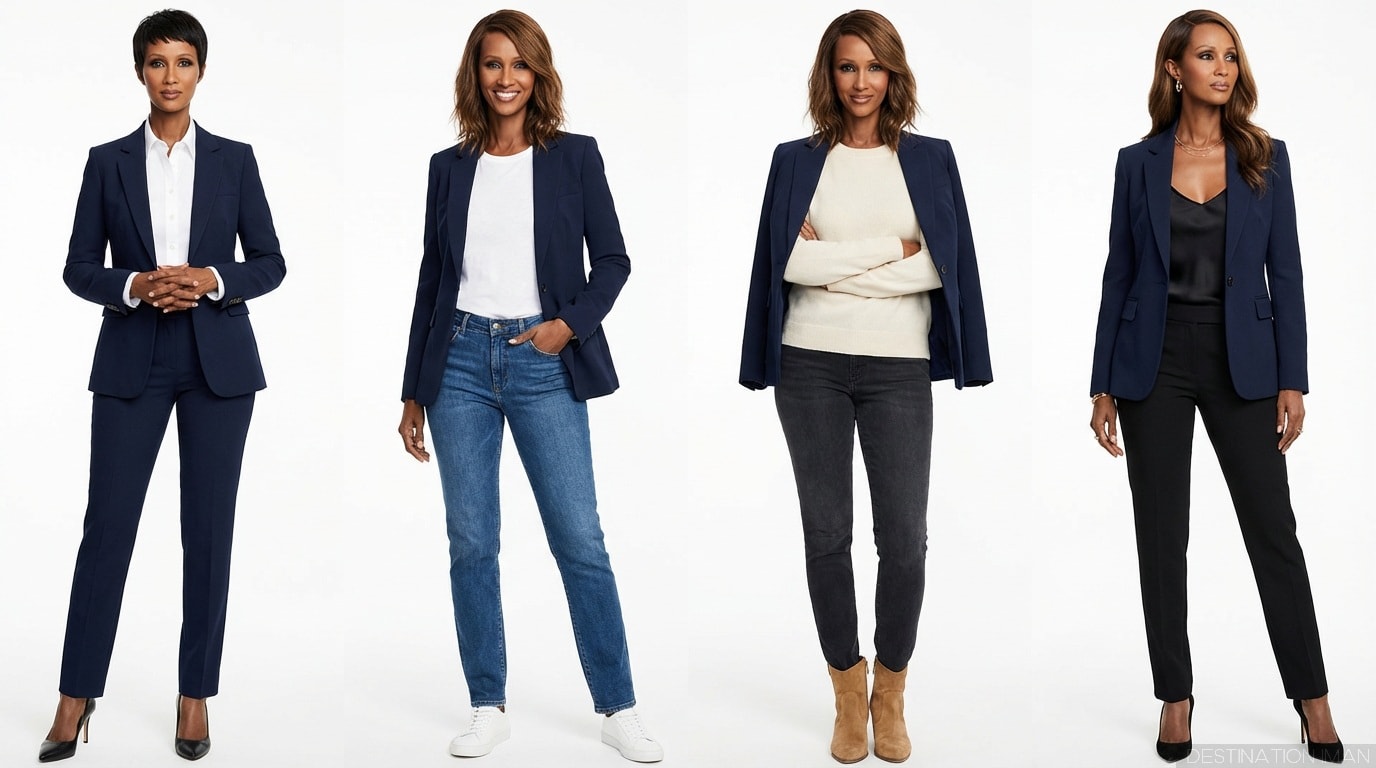
Styling the Blazer
Professional: With matching trousers + white shirt (suit effect)
Business casual: Over dress + pumps
Smart casual: With white tee + jeans + loafers
Weekend: Over sweater + dark jeans + sneakers
Evening: With silk cami + tailored trousers + heels
Investment Guidance
A quality blazer deserves $200-500+ investment. This is a piece where quality dramatically impacts appearance and longevity. Consider professional tailoring to perfect the fit—even an expensive blazer looks cheap if it doesn't fit properly. Navy or charcoal offers more versatility than black for your first investment blazer.
Essential 3: Quality Dark-Wash Jeans
Perfect jeans are perhaps the most challenging timeless piece to find, but once discovered, they become daily wardrobe workhorses. Dark-wash denim reads as more polished and refined than lighter washes.
What to Look For
Wash and Color:
- Dark indigo or black wash (more versatile and polished)
- Minimal or no distressing (ages better and works across more contexts)
- Consistent color without excessive fading or whiskering
Fit and Cut:
- Classic cut: straight-leg, slim straight, or subtle bootcut
- Mid to high rise (more flattering and currently timeless)
- Fitted through hip and thigh, not skintight
- Appropriate length—full length, not excessively pooling or cropped
Fabric and Construction:
- Substantial denim (not paper-thin fast-fashion quality)
- Small amount of stretch (1-3%) for comfort
- Quality stitching and rivets at stress points
- Proper hem (not raw-edge unless intentionally styled)
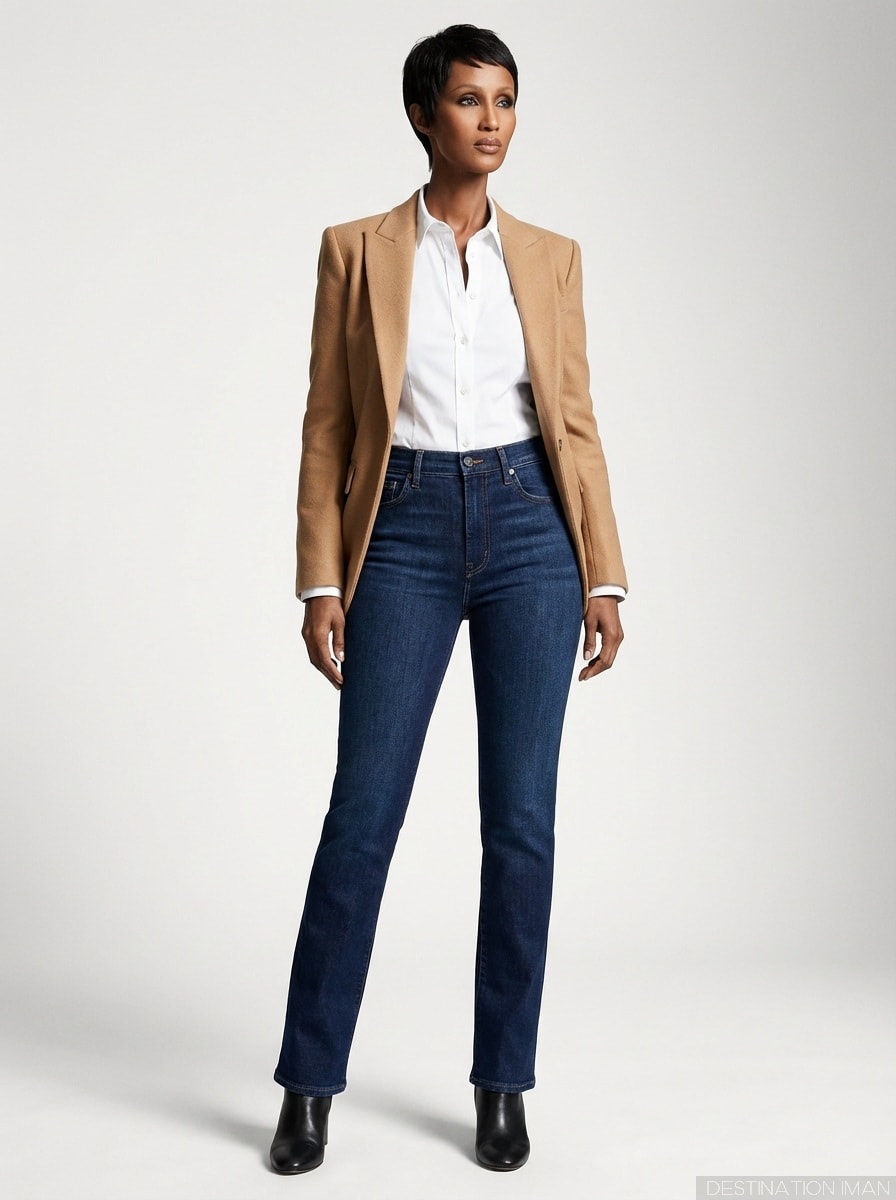
Styling Quality Jeans
Smart casual: With white shirt + blazer + loafers
Weekend: With sweater + sneakers
Casual evening: With silk blouse + heels + statement jewelry
Relaxed: With oversized sweater + ankle boots
Polished casual: With turtleneck + trench coat + boots
Investment Guidance
Quality jeans range $100-300. While this seems expensive for denim, superior construction, fabric, and fit justify the investment. Perfect-fitting jeans will be worn 2-3 times weekly for years, offering excellent cost-per-wear value. Consider professional hemming to achieve perfect length—this small investment dramatically improves appearance.
Essential 4: The Classic Trench Coat
A trench coat provides the perfect intersection of functionality and style. This iconic piece works across three seasons and elevates everything from jeans to dresses.
What to Look For
Color:
- Classic khaki/sand for traditional appeal
- Navy for versatility with all neutrals
- Black for modern, urban aesthetic
Length:
- Knee-length for classic proportions (works on most heights)
- Mid-thigh for petite frames
- Below-knee for taller frames or more dramatic effect
Details and Construction:
- Double-breasted front with button closure
- Belted waist for definition
- Storm flap and epaulettes (classic trench details)
- Quality cotton gabardine or water-resistant blend
- Proper lining for structure
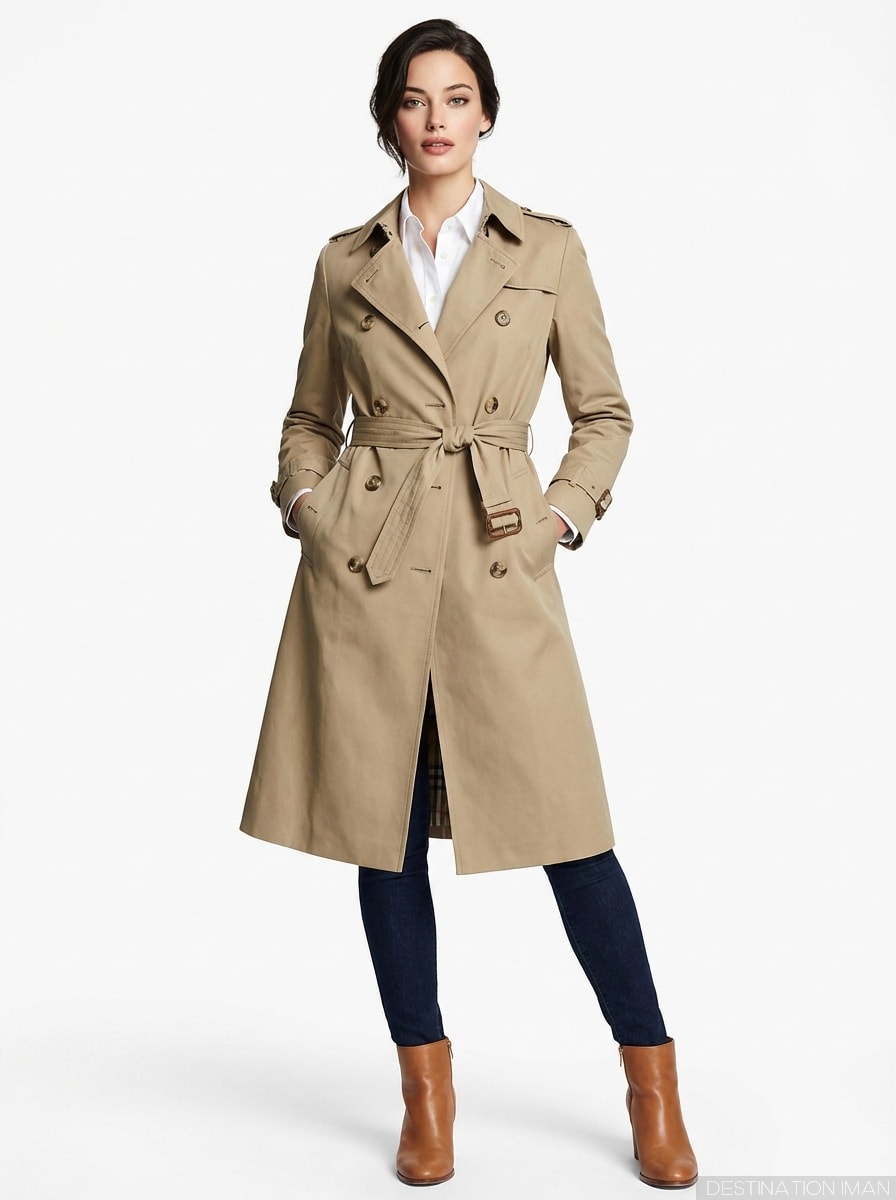
Styling the Trench
Professional: Over suit + pumps
Business casual: Over jeans + sweater + ankle boots
Weekend: Over white tee + jeans + sneakers
Evening: Over little black dress + heels
Transitional: Over layers + scarf + boots
Investment Guidance
A quality trench coat warrants $300-800+ investment. This is outerwear you'll wear for 10-20 years, making it one of the best long-term investments. Classic brands like Burberry set the standard, but excellent alternatives exist at various price points. Ensure proper fit through shoulders and length—tailoring a trench is possible but expensive.
Essential 5: The Little Black Dress
The iconic LBD solves countless dressing dilemmas. A well-chosen black dress works for professional settings, social events, and everything between with simple accessory changes.
What to Look For
Silhouette:
- Classic cuts: sheath, shift, A-line, or fit-and-flare
- Knee-length or midi for maximum versatility
- Sleeveless or short sleeves (layers well for seasons)
- Simple neckline—not too high, not too low
Fabric:
- Quality knit jersey, ponte, or structured cotton blend
- Substantial enough to maintain shape
- Not clingy or transparent
- All-season weight if possible
Details:
- Minimal embellishment (timeless rather than trendy)
- Clean lines and simple seaming
- Proper lining if needed
- Quality zipper and finishing
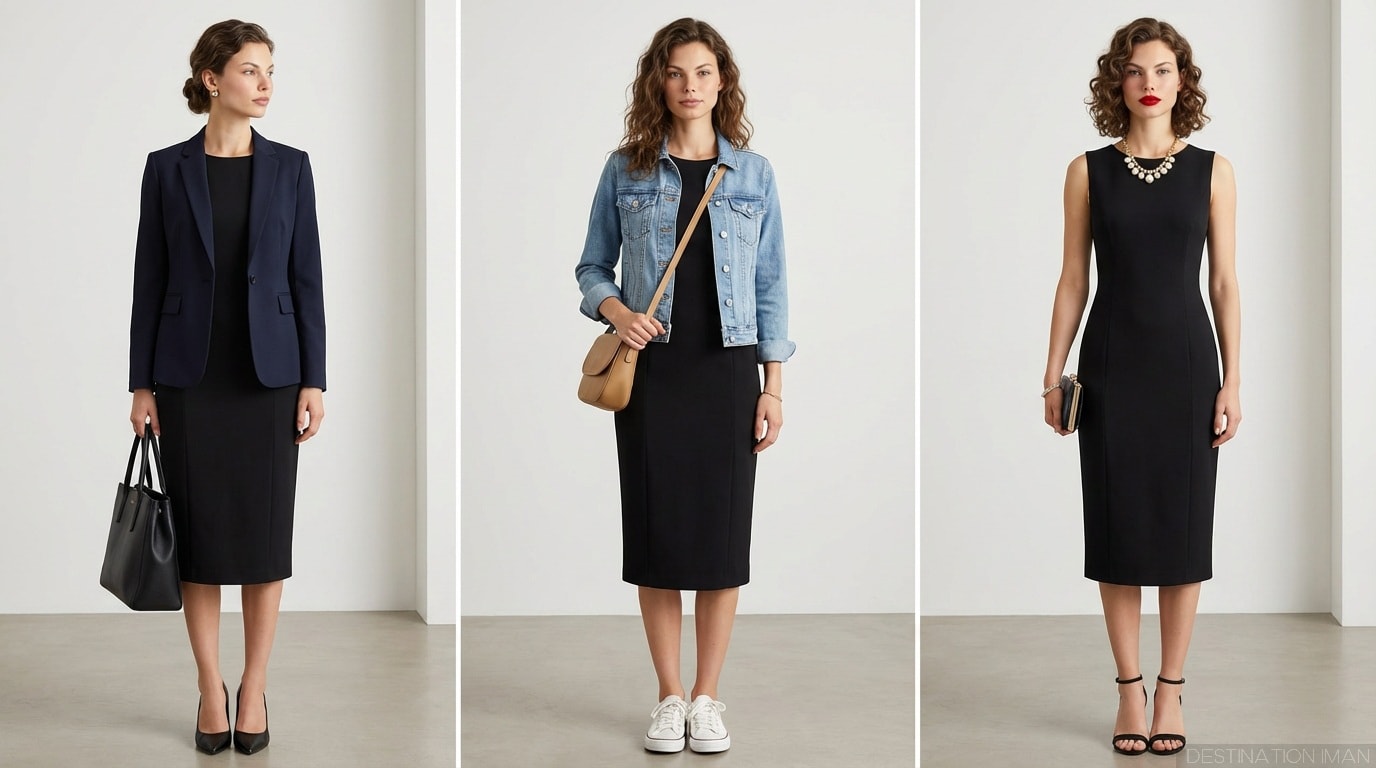
Styling the LBD
Professional: With blazer + pumps + structured bag
Casual: With denim jacket + sneakers
Evening: With heels + statement jewelry + clutch
Transitional: With tights + ankle boots + cardigan
Formal: With elegant coat + heels + pearls
Investment Guidance
A quality LBD ranges $150-400. This piece should fit impeccably—consider tailoring if needed. While you might eventually own multiple black dresses for different occasions, your first investment LBD should be the most versatile option possible. Classic sheath or shift silhouettes typically offer the broadest utility.
Essential 6: Black Leather Pumps
Quality pumps complete professional and evening outfits while providing comfort through proper construction. This is one area where investment truly matters—cheap pumps look cheap and hurt feet.
What to Look For
Heel Height and Shape:
- 2.5-3.5 inch heel for balance of comfort and elegance
- Moderate heel width (not stiletto, not chunky)
- Slight platform optional for added comfort
Material and Construction:
- Quality leather (breathes better, molds to foot, ages beautifully)
- Leather or cushioned insole
- Proper arch support
- Quality sole that can be replaced when worn
Style Details:
- Classic pointed or almond toe (most elongating and timeless)
- Closed toe and heel (maximum versatility)
- Simple design without excessive hardware or embellishment
Styling Black Pumps
Professional: With suit or tailored separates
Smart business: With sheath dress + blazer
Evening: With little black dress
Polished casual: With dark jeans + silk blouse
Formal: With cocktail dress or elegant trousers
Investment Guidance
Quality pumps warrant $200-500+ investment. Your feet will notice the difference immediately in comfort, and the quality difference is visually apparent. Consider this a health investment as much as fashion—poorly constructed cheap pumps cause foot problems over time. Quality pumps can be resoled multiple times, extending their life to 10+ years with proper care.
Essential 7: Cashmere Sweater
A quality cashmere sweater provides unmatched luxury and comfort. This investment piece elevates casual outfits while providing warmth without bulk.
What to Look For
Cashmere Quality:
- 100% cashmere or cashmere blend (avoid acrylic "cashmerlon" imitations)
- 2-ply minimum for durability (single-ply pills excessively)
- Soft hand without feeling thin or insubstantial
- Even, tight knit without loose or irregular stitches
Style and Fit:
- Classic crew neck or V-neck in neutral color
- Fitted but not tight (cashmere should skim, not cling)
- Long sleeves with proper length
- Hip-length or slightly longer
Construction:
- Reinforced seams
- Proper ribbing at cuffs, hem, and neckline
- Even, consistent color
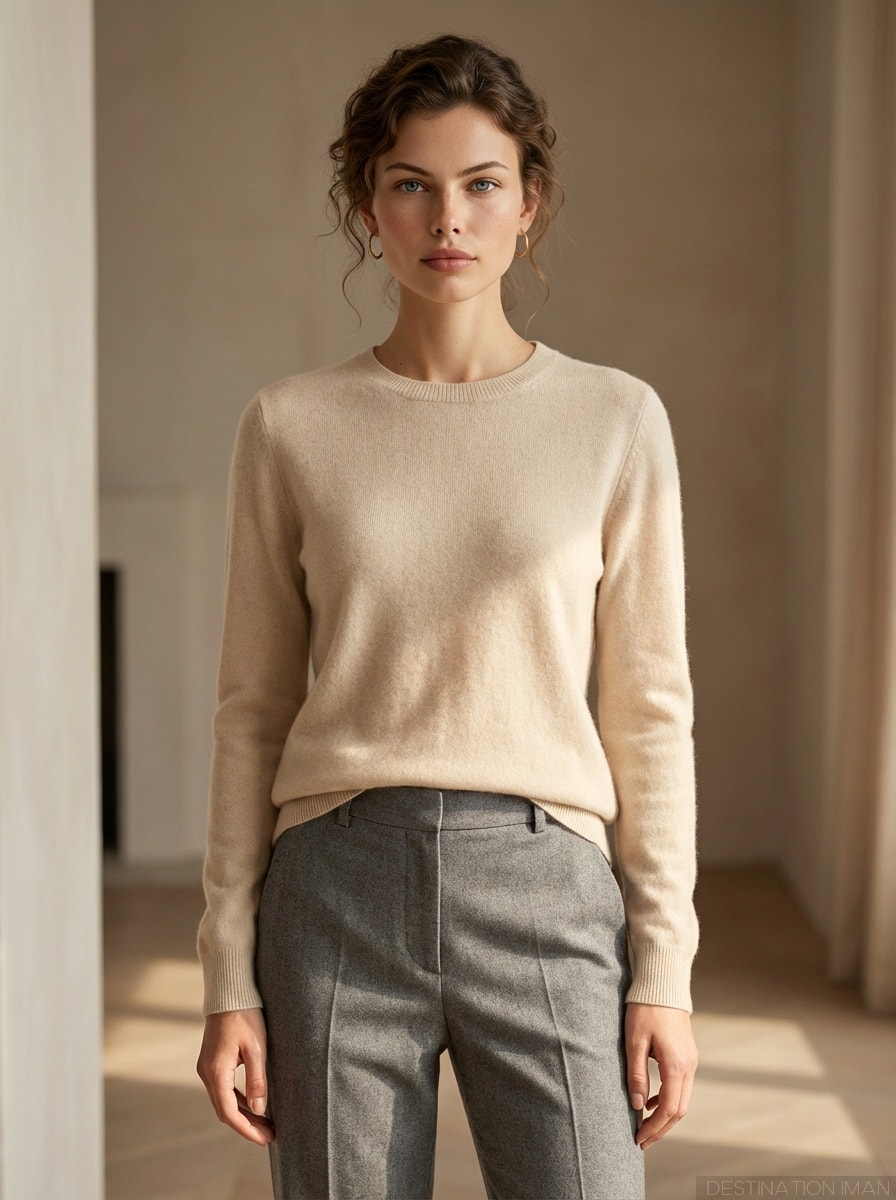
Styling Cashmere
Casual elegant: With tailored trousers + loafers
Layered professional: Over white shirt + under blazer
Weekend: With jeans + ankle boots
Smart casual: With midi skirt + flats
Cozy elegant: With wide-leg pants + belt
Investment Guidance
Quality cashmere ranges $150-500+. This is one area where you'll notice quality differences significantly. Better cashmere pills less, maintains shape better, and feels noticeably softer. However, even quality cashmere requires careful maintenance—hand wash or professional cleaning only. Consider owning 2-3 cashmere pieces in different styles and colors rather than a large collection.
Even the highest quality cashmere will pill with wear—this is normal and doesn't indicate poor quality. Use a cashmere comb or fabric shaver to remove pills gently. Never machine wash or dry cashmere; always hand wash in cold water with special cashmere soap and lay flat to dry.
Essential 8: Tailored Trousers
Well-fitted tailored trousers in a neutral color form the foundation of professional and smart-casual wardrobes. Unlike jeans, tailored trousers read as instantly polished.
What to Look For
Fabric:
- Wool or wool-blend for structure and longevity
- Year-round weight (not too heavy, not too thin)
- Slight stretch for comfort (2-5% elastane)
- Quality that doesn't wrinkle excessively or bag at knees
Fit and Cut:
- Classic straight or slightly tapered leg
- Mid to high rise for modern proportions
- Fitted through hip and thigh without pulling
- Full-length hem that grazes top of shoe
- Front crease for polished appearance
Details:
- Quality waistband with proper closure
- Pockets that lie flat (not gaping)
- Proper lining or quality interior finishing
- Hem allowance for professional tailoring
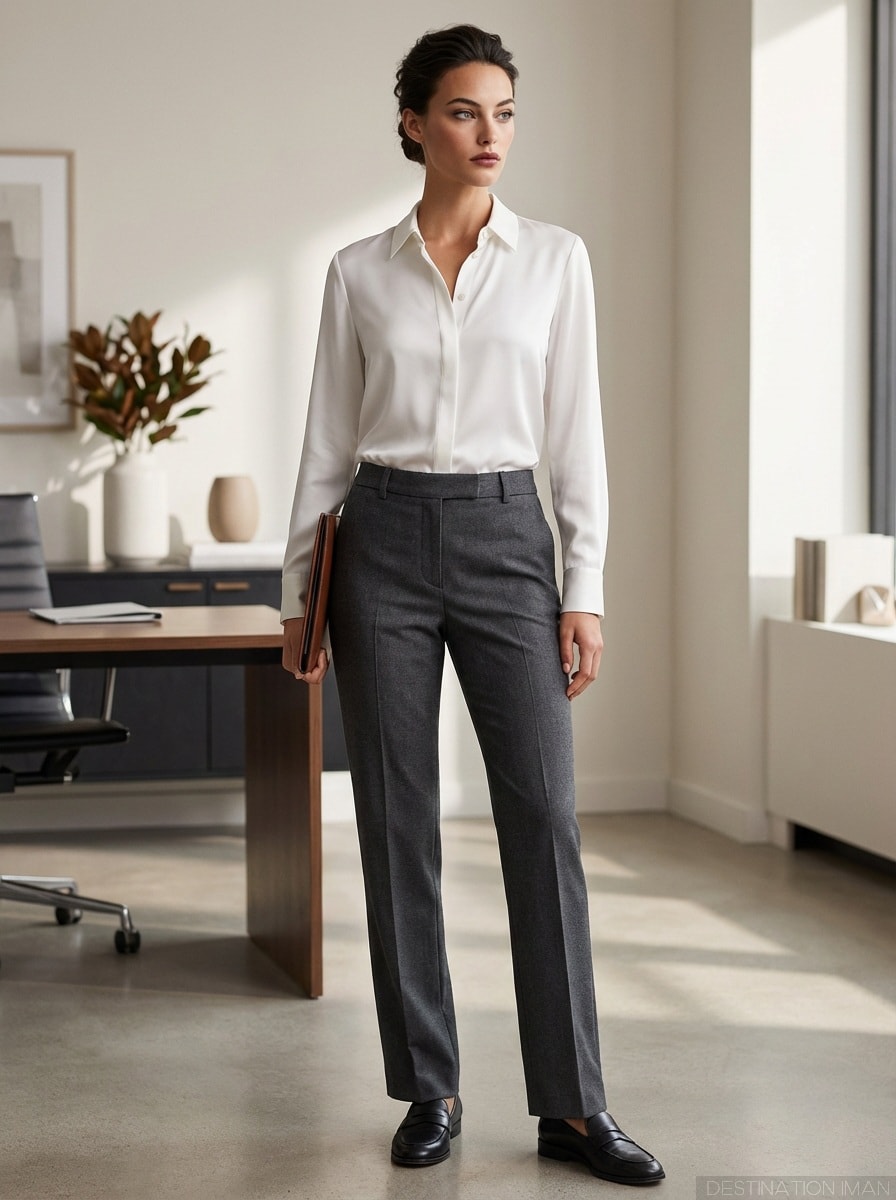
Styling Tailored Trousers
Professional: With white shirt + blazer + pumps
Business casual: With cashmere sweater + loafers
Smart casual: With silk blouse + ankle boots
Polished weekend: With t-shirt + blazer + sneakers
Evening: With silk cami + heels + statement jewelry
Investment Guidance
Quality tailored trousers range $150-400. Professional tailoring to perfect the length and fit is essential—factor this into your budget. Consider owning trousers in 2-3 neutral colors (black, navy, gray, or camel) to maximize outfit options. Quality construction ensures trousers maintain shape and appearance through repeated wear and dry cleaning.
Essential 9: Structured Leather Handbag
A quality structured handbag elevates every outfit while providing functional daily use. This visible accessory significantly impacts overall appearance and warrants substantial investment.
What to Look For
Size and Structure:
- Medium size that accommodates daily essentials without overwhelming
- Structured shape that maintains form when empty
- Professional proportions suitable for work and social contexts
Material and Construction:
- Quality leather (full-grain or top-grain)
- Even, consistent color
- Quality stitching with reinforced stress points
- Proper interior lining and organization
- Quality hardware (zippers, closures, feet)
Color:
- Black for maximum versatility and formality
- Tan/cognac for warm neutral wardrobe coordination
- Navy for subtle color with broad compatibility
Style:
- Classic tote, satchel, or structured crossbody
- Minimal hardware and embellishment
- Timeless shape avoiding extreme trends
Styling a Quality Handbag
A structured leather handbag works across all contexts:
- Professional settings with suits and dresses
- Smart casual with jeans and blazer
- Weekend errands with casual clothing
- Evening events when appropriately sized
Investment Guidance
A quality handbag warrants $300-1000+ investment. This is one of the most visible and frequently used wardrobe items, making it an excellent candidate for investment. Quality leather bags improve with age, developing character and patina over years of use. With proper care, an investment bag serves you for 10-20 years. Consider this an investment in your professional image as much as a fashion purchase.
Essential 10: White Sneakers
White sneakers have transcended athletic contexts to become acceptable and even preferred footwear in many casual and smart-casual settings. Quality white sneakers provide comfort while maintaining polished appearance.
What to Look For
Style:
- Minimal design with clean lines
- Low-profile silhouette (not chunky athletic sneakers)
- White or off-white leather or quality canvas
- Subtle branding or logoless design
Construction:
- Quality leather that cleans easily
- Comfortable insole and arch support
- Durable sole
- Quality stitching and finishing
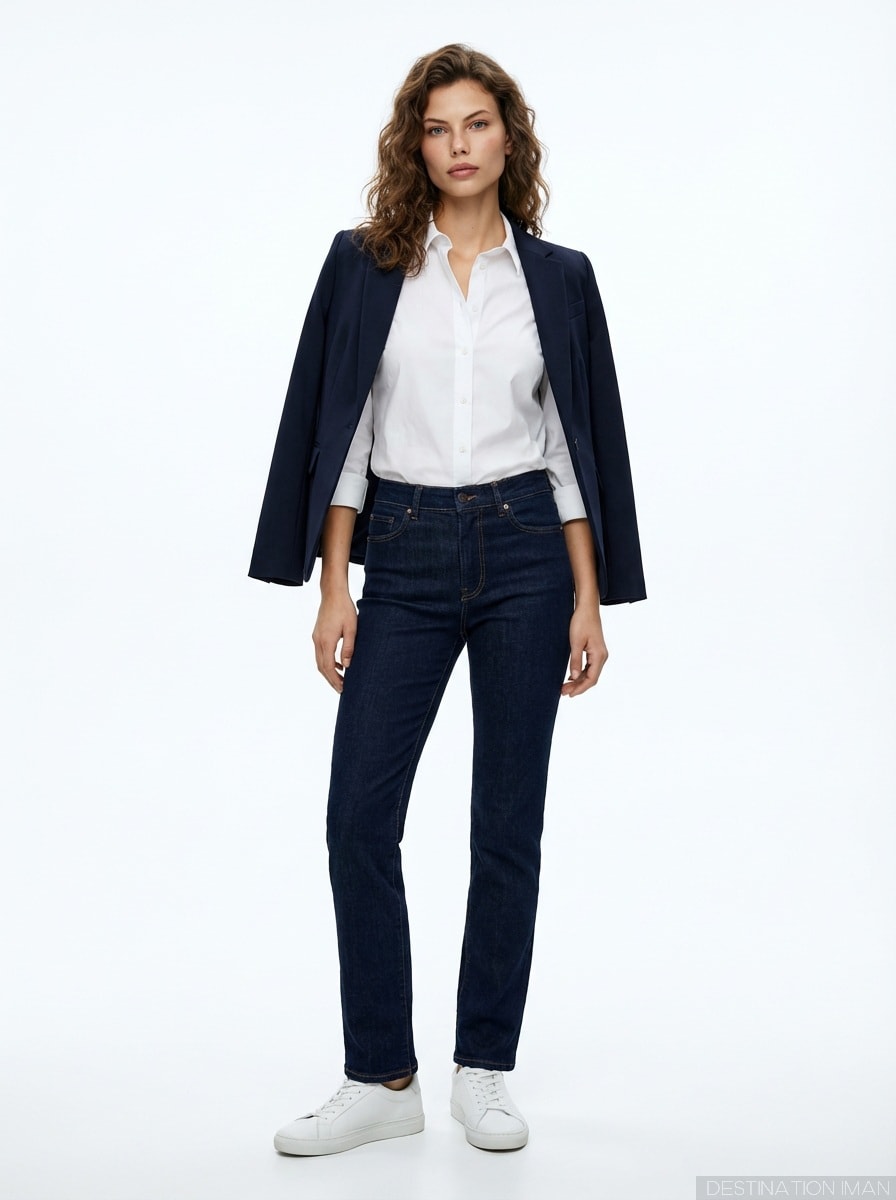
Styling White Sneakers
Smart casual: With jeans + white shirt + blazer
Weekend: With jeans + sweater
Casual chic: With midi dress + denim jacket
Athleisure: With tailored joggers + cashmere sweater
Polished casual: With tailored trousers + t-shirt + trench
Investment Guidance
Quality white sneakers range $100-300. While this seems expensive for casual footwear, quality sneakers maintain appearance longer, provide better comfort and support, and look significantly more polished than cheap alternatives. Leather sneakers clean more effectively than canvas, maintaining appearance through regular use. Consider owning one high-quality pair rather than multiple cheap pairs.
Essential 11: Camel Coat
A camel coat represents perhaps the most elegant outerwear investment. This iconic piece works as a lighter alternative to winter coats and adds instant sophistication to any outfit.
What to Look For
Color and Fabric:
- Classic camel/tan color in warm neutral tone
- Wool or wool-cashmere blend
- Substantial weight that drapes well
- Quality lining for structure and comfort
Style and Fit:
- Classic length: knee or slightly above
- Simple silhouette: straight or slightly A-line
- Single or double-breasted (both timeless)
- Belted or unbelted depending on personal preference
- Notched collar or simple shawl collar
Construction:
- Quality buttons and closures
- Proper shoulder construction
- Functional pockets
- Quality interior finishing
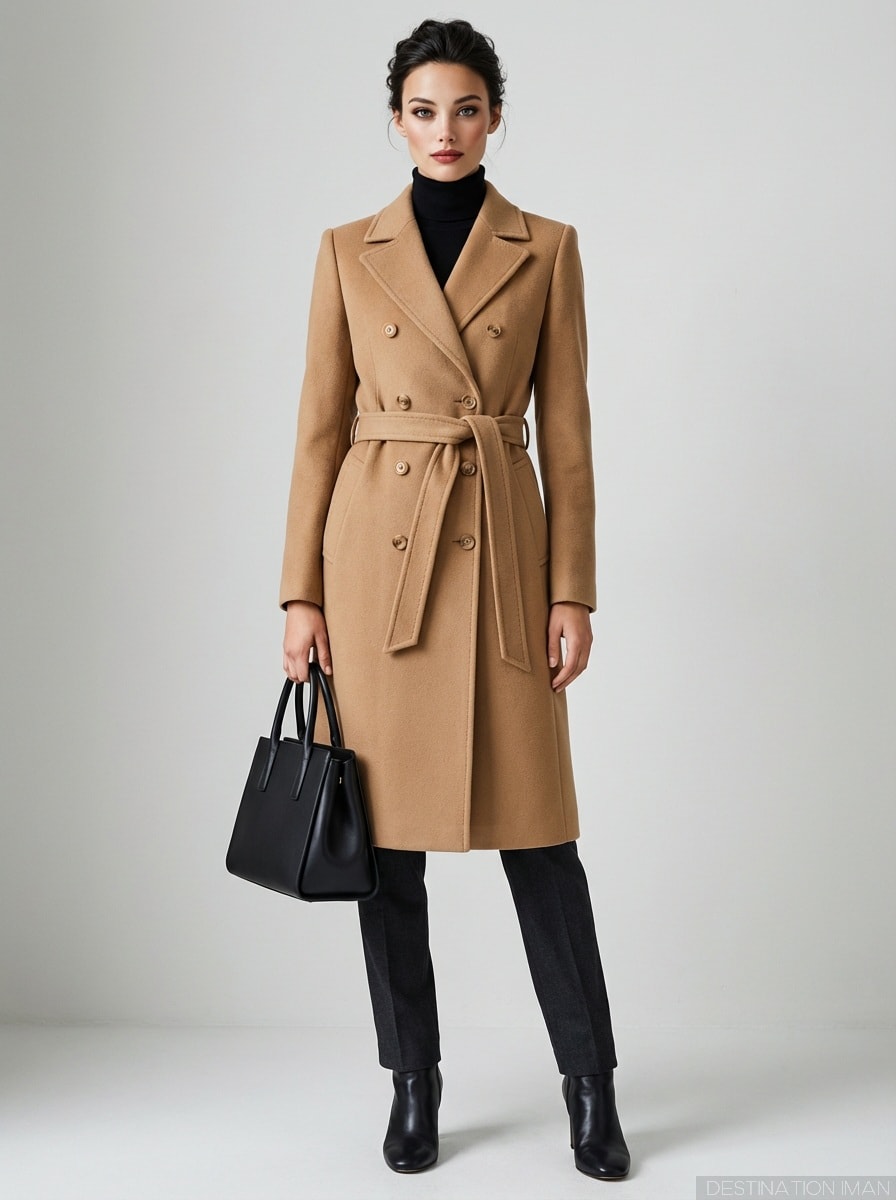
Styling a Camel Coat
Professional: Over suit + pumps
Smart casual: Over jeans + sweater + ankle boots
Evening: Over little black dress + heels
Weekend: Over casual layers + white sneakers
Elegant casual: Over monochromatic neutral outfit
Investment Guidance
A quality camel coat warrants $400-1200+ investment. This is a piece you'll wear for 15-20+ years, making it one of the best long-term wardrobe investments. Quality wool or wool-cashmere blends dramatically outperform cheaper alternatives in appearance, warmth, and longevity. Ensure proper fit through shoulders and overall length—this is worth professional tailoring if needed.
Essential 12: Simple Ankle Boots
Ankle boots bridge the gap between casual and polished footwear, working across three seasons and countless outfit contexts. Quality ankle boots in neutral tones become daily wardrobe staples.
What to Look For
Style and Heel:
- Simple silhouette without excessive hardware or detail
- 2-3 inch heel for walkability and elegance
- Ankle height that doesn't cut leg line awkwardly
- Pointed or almond toe for elongation
Material and Construction:
- Quality leather or suede
- Leather or cushioned insole
- Quality sole that can be replaced
- Proper arch support
- Quality zipper or closure
Color:
- Black leather for maximum versatility
- Tan/cognac for warm neutral coordination
- Gray or taupe for subtle neutral
Styling Ankle Boots
Professional: With tailored trousers + blazer
Smart casual: With jeans + sweater + coat
Weekend: With casual dress + denim jacket
Transitional: With midi skirt + tights + coat
Polished casual: With cropped pants + white shirt
Investment Guidance
Quality ankle boots range $200-500+. Like pumps, boots are an area where quality dramatically impacts both comfort and appearance. Quality boots can be resoled multiple times, extending their life to 10+ years. Consider owning ankle boots in two colors (black and tan) to maximize outfit coordination. Professional leather care extends boot life significantly.
How to Assess Quality in Timeless Pieces
Understanding quality indicators helps you distinguish worthwhile investments from overpriced items with similar appearance.
Fabric Quality Indicators
Natural fibers: Cotton, wool, silk, linen, and cashmere generally outlast and look better than synthetic alternatives
Fabric weight: Substantial fabrics maintain shape and appearance better than thin, flimsy materials
Hand and drape: Quality fabrics feel pleasant to touch and drape naturally rather than stiffly or limply
Color consistency: Even, consistent dyeing without streaks or fading indicates quality processing
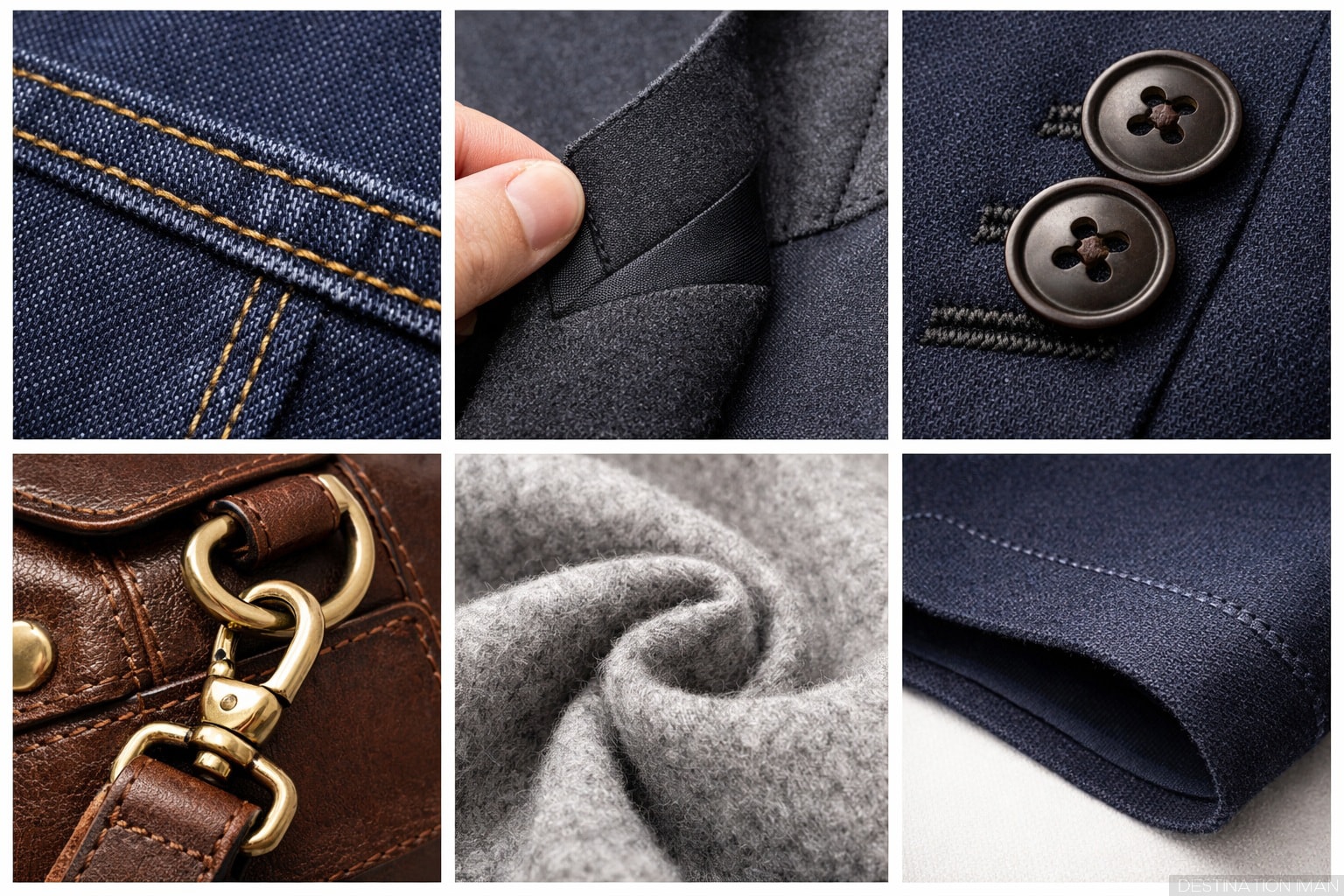
Construction Quality Indicators
Seam quality:
- Straight, even stitching without loose threads
- Reinforced stress points
- Proper seam allowance
- French seams or serged edges (not raw-cut)
Finishing details:
- Quality buttons securely attached
- Functional buttonholes with proper finishing
- Proper interfacing in structured areas
- Clean interior finishing
Hardware and closures:
- Quality zippers that function smoothly
- Substantial hardware that doesn't feel cheap
- Proper closures that secure effectively
Fit Quality Indicators
Proper proportions: Garments designed for female bodies, not adapted from menswear
Appropriate ease: Comfortable without excess fabric or pulling
Balanced drape: Fabric hangs evenly without twisting or pulling
Movement accommodation: Garments allow natural movement without restriction
Quality Assessment Checklist
- Natural fiber content or quality blends (check label)
- Substantial fabric weight appropriate for garment type
- Straight, even seams without loose threads
- Reinforced stress points (underarms, pockets, etc.)
- Quality buttons, zippers, and closures
- Proper lining or quality interior finishing
- Even, consistent color without fading or streaking
- Garment maintains shape on hanger
- Comfortable fit with appropriate ease
- Price reflects quality (very cheap likely indicates poor quality)
Caring for Investment Pieces
Proper care extends the life of timeless investment pieces significantly, protecting your investment and maintaining appearance.
General Care Principles
Follow care labels: Manufacturers provide specific care instructions based on fabric and construction
Address issues immediately: Fix loose buttons, small seams, and minor damage before they worsen
Proper storage: Use quality hangers, store seasonal items properly, and protect from moths
Professional cleaning when appropriate: Delicate items and structured pieces often require professional care
Specific Care Guidelines
Leather items (shoes, bags, outerwear):
- Regular conditioning prevents cracking
- Waterproofing protects from weather damage
- Professional cleaning for significant soiling
- Proper storage away from heat and sunlight
Wool and cashmere:
- Hand wash or dry clean only
- Lay flat to dry (never hang while wet)
- Store with cedar or lavender to prevent moths
- Use sweater comb for pilling
Tailored pieces:
- Dry clean sparingly (chemicals degrade fabric over time)
- Steam to refresh between cleanings
- Hang properly on quality hangers
- Allow 24 hours rest between wears
White shirts:
- Wash after each wear to prevent yellowing
- Use quality detergent
- Treat stains immediately
- Professional laundering maintains crisp appearance
Storage Best Practices
Hanging items: Quality wooden or padded hangers that maintain garment shape
Folded items: Cedar-lined drawers or storage boxes for knitwear
Shoes: Shoe trees for leather shoes, proper storage away from sunlight
Bags: Dust bags, stuffed to maintain shape, stored upright when possible
Building Your Timeless Wardrobe Over Time
Building a complete timeless wardrobe doesn't happen overnight. Strategic planning ensures you invest wisely while building a functional collection.
Prioritization Strategy
Year 1: Core Essentials
- Quality dark-wash jeans
- Perfect white shirt
- Tailored blazer
- Black leather pumps
- Structured leather handbag
Year 2: Professional and Layering Pieces
- Tailored trousers (2 colors)
- Cashmere sweater
- Classic trench coat
- Little black dress
- Simple ankle boots
Year 3: Statement Outerwear and Refinement
- Camel coat
- White sneakers
- Second blazer in different neutral
- Additional quality basics
Budget Allocation Guidelines
For an annual clothing budget of $2,000, strategic allocation might be:
- 40% on outerwear (coats, blazers): $800
- 25% on shoes: $500
- 20% on bags: $400
- 15% on clothing pieces: $300
This allocation reflects that outerwear, shoes, and bags have the highest visibility and impact, warranting proportionally larger investment.
Assessment Before Purchasing
Before any significant investment purchase, evaluate:
Pre-Purchase Investment Checklist
- Does this fill a genuine gap in my current wardrobe?
- Can I style this item in at least 5 different outfits?
- Does this coordinate with my existing wardrobe colors?
- Is the quality appropriate for the price?
- Does the fit flatter me without alterations, or is tailoring feasible?
- Will I still want to wear this in 5-10 years?
- What is the projected cost-per-wear based on expected use?
- Am I emotionally ready to invest this amount in a single item?
When to Splurge vs. Save
Not every wardrobe item warrants maximum investment. Strategic allocation ensures you spend on items where quality truly matters while saving appropriately elsewhere.
Always Splurge On
Outerwear: Coats and jackets are highly visible, worn frequently, and quality dramatically impacts appearance. A $800 coat worn 100 times annually for 10 years costs $0.80 per wear—excellent value.
Shoes: Quality affects both appearance and physical comfort. Cheap shoes look cheap, wear out quickly, and can cause foot problems. Quality shoes can be resoled, extending life significantly.
Bags: Bags are constantly visible and subject to heavy wear. Quality leather ages beautifully while cheap alternatives crack and peel. An investment bag lasting 15 years provides superior value to multiple cheap replacements.
Tailored blazers: Construction quality is visually obvious in blazers. Quality wool, proper shoulder construction, and good finishing separate investment blazers from budget alternatives.
Reasonable Middle Ground
Dresses: Quality matters, but unless you wear dresses daily, ultra-luxury isn't necessary. Mid-range investment ($150-400) offers excellent quality without excessive cost.
Knitwear: Quality cashmere is worth investment, but even good cashmere pills and requires replacement eventually. Mid-range investment makes sense.
Trousers: Quality construction matters, but unless you wear tailored trousers daily, mid-range options ($150-300) provide excellent value.
Strategic Savings
Basic tees and tanks: These get replaced relatively frequently regardless of quality due to wear patterns and washing. Mid-range quality suffices.
Trendy pieces: If you occasionally include trendy items, buy these at lower price points since they won't remain in your wardrobe long-term.
Experimental items: When trying new styles or silhouettes, start with lower investment until you confirm the item works for you.
Professional tailoring can transform a mid-range item into something that looks custom. Factor tailoring costs into your budget—a $200 blazer plus $50 tailoring often looks better than a $300 blazer with poor fit. This approach lets you access higher-quality fabrics and construction at mid-range prices while achieving perfect fit.
Building a Timeless Wardrobe Successfully
- Focus on the 12 essential timeless pieces before adding variety or trend-driven items
- Prioritize quality in highly visible, frequently worn items: outerwear, shoes, bags
- Calculate cost-per-wear rather than focusing only on purchase price
- Invest in proper fit through professional tailoring when needed
- Build your wardrobe gradually over 2-3 years rather than purchasing everything immediately
- Maintain investment pieces properly through appropriate care and storage
- Each timeless piece should work in at least 5 different outfit combinations
- Choose neutral colors for maximum versatility and longevity
Conclusion
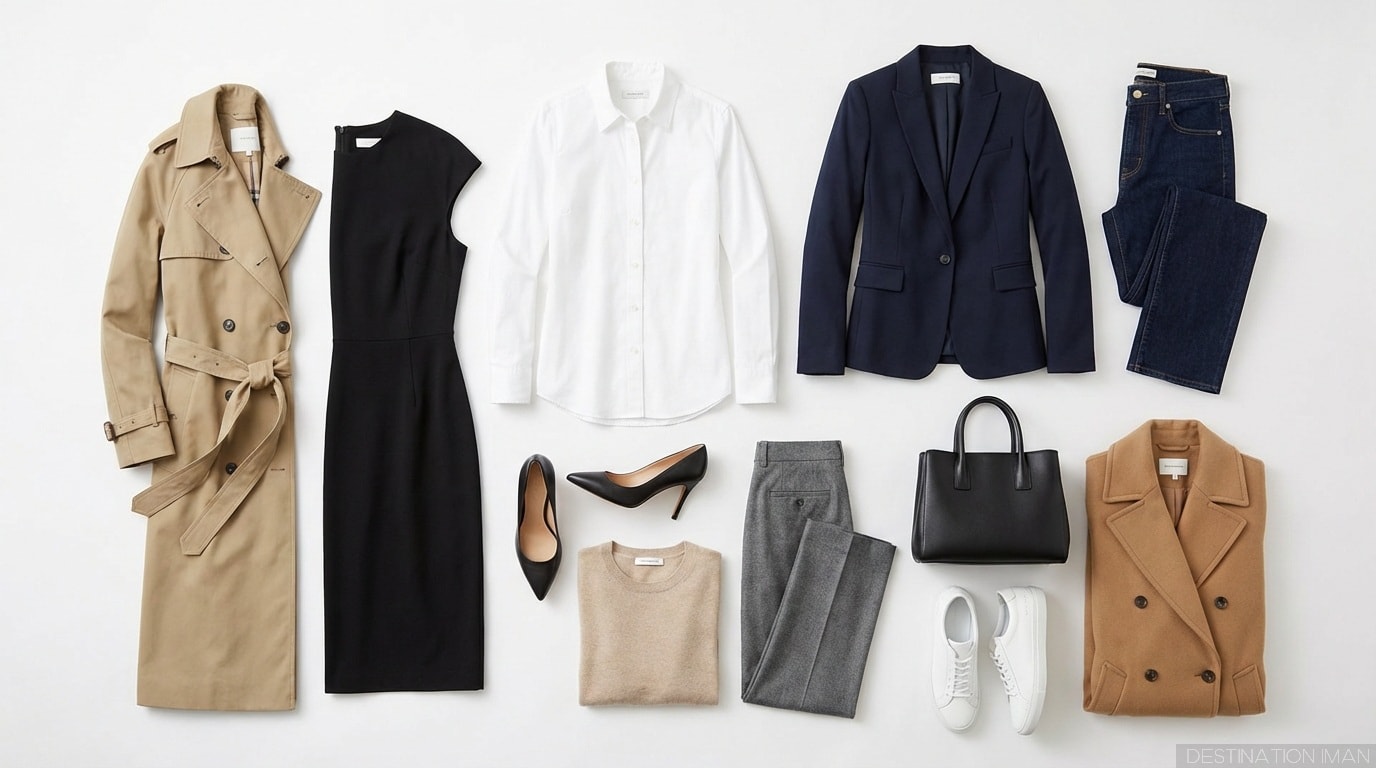
Building a wardrobe around timeless fashion pieces represents a fundamental shift from trend-driven consumption to intentional, strategic investment. The 12 essential pieces outlined in this guide—white shirt, tailored blazer, quality jeans, trench coat, little black dress, black pumps, cashmere sweater, tailored trousers, structured handbag, white sneakers, camel coat, and ankle boots—create the foundation for hundreds of outfit combinations that work across decades rather than seasons.
The true value of timeless pieces extends beyond their monetary cost-per-wear calculations, though those numbers alone justify investment. These pieces provide consistency in personal style, eliminate daily dressing stress, reduce shopping frequency, and ensure you always have appropriate, polished options available. When you know your white shirt will work with everything in your closet, getting dressed becomes effortless rather than overwhelming.
Quality matters profoundly in timeless pieces. Superior fabrics, proper construction, and excellent fit distinguish items that serve you for years from those that disappoint within months. The quality indicators provided in this guide—fabric composition, seam construction, finishing details, and proper fit—help you distinguish worthwhile investments from overpriced items with similar appearance. Remember that even expensive items require proper fit; factor professional tailoring into your investment budget when needed.
Building a timeless wardrobe doesn't happen overnight, nor should it. Strategic prioritization over 2-3 years allows you to invest thoughtfully without financial strain. Start with core essentials that address your immediate wardrobe gaps and most-worn occasions, then gradually add statement pieces and refinements. This measured approach prevents impulse purchases while ensuring each addition genuinely improves your wardrobe functionality.
The investment mindset shift—from "how much does this cost?" to "what's the cost-per-wear over this item's lifetime?"—fundamentally changes how you shop. A $400 blazer worn twice weekly for five years delivers dramatically better value than four $100 blazers that each see limited wear before falling apart or feeling dated. Quality timeless pieces actually cost less over time while looking better and serving you more effectively.
Ultimately, timeless fashion pieces free you from trend cycles and constant shopping while ensuring you always look polished and intentional. By focusing on these foundational investments, you create a versatile, sophisticated wardrobe that truly serves your life rather than simply filling closet space. The pieces outlined in this guide will remain relevant and appropriate for decades, making them some of the smartest fashion investments you'll ever make.