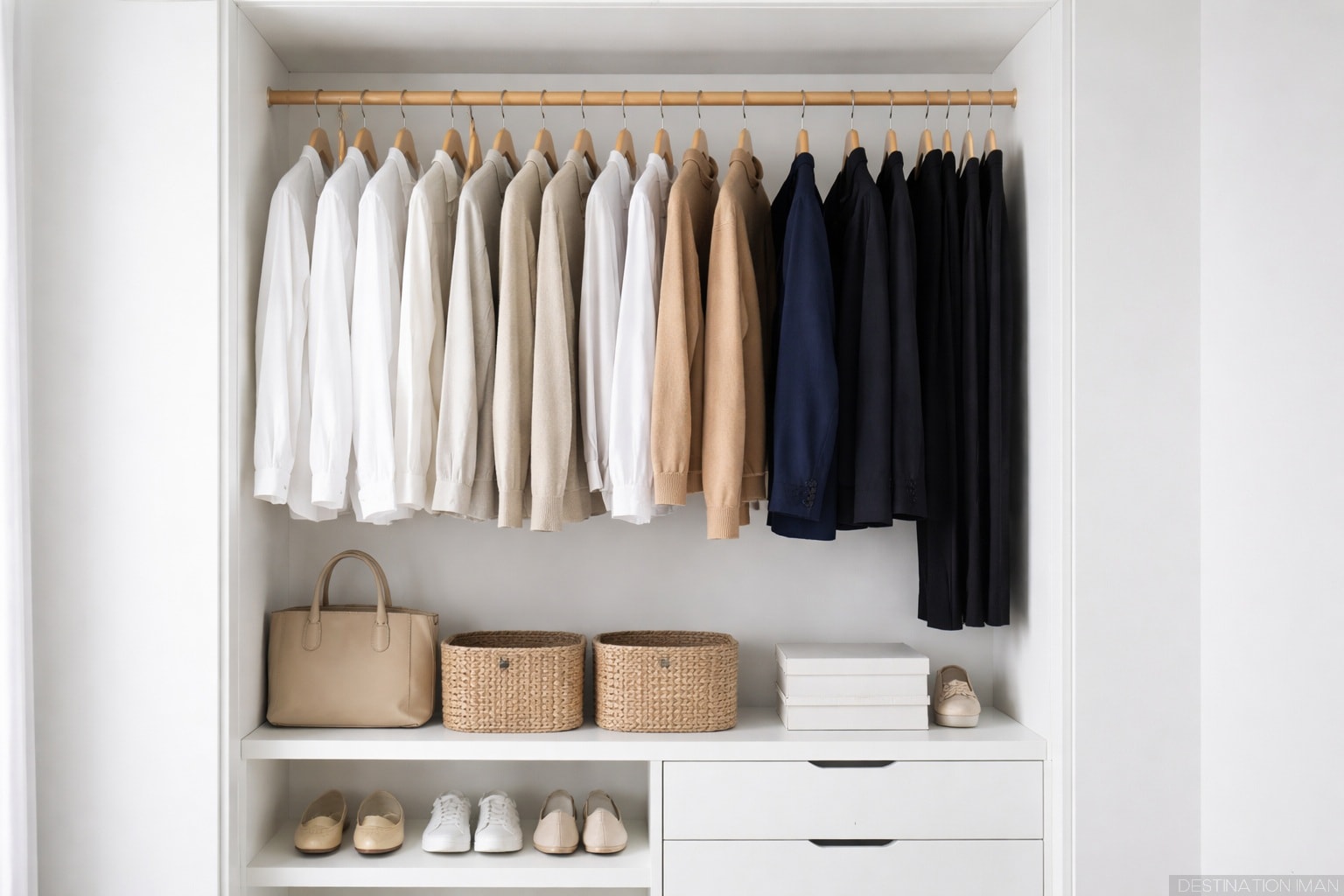
Building a capsule wardrobe transforms how you approach getting dressed. Rather than facing a closet packed with clothes yet feeling like you have nothing to wear, a capsule wardrobe provides a curated collection of versatile pieces that work together seamlessly. This intentional approach to clothing eliminates decision fatigue, saves money over time, and helps you develop consistent personal style.
This comprehensive guide walks you through building a capsule wardrobe from scratch, whether you're starting with an overstuffed closet or building your wardrobe intentionally for the first time. By focusing on quality, versatility, and personal style rather than trends and quantity, you'll create a wardrobe that genuinely serves your life.
Key Takeaways
- A capsule wardrobe typically contains 30-40 versatile pieces that create 100+ outfit combinations
- Start by defining your actual lifestyle needs, not aspirational ones
- Choose a cohesive color palette of 3-5 neutrals plus 2-3 accent colors
- Focus on quality and fit over quantity and trends
- Every piece should be wearable in at least three different outfit combinations
- Seasonal adjustments require rotating only 20-30% of your wardrobe
In This Article
- What Is a Capsule Wardrobe?
- Why a Capsule Wardrobe Works
- Step 1: Define Your Lifestyle
- Step 2: Choose a Color Palette
- Step 3: Identify Essential Pieces
- Step 4: Declutter Your Current Wardrobe
- Step 5: Build Outfits, Not Just a Closet
- Investing in Quality Over Quantity
- Seasonal Adjustments
- Common Capsule Wardrobe Mistakes
- Maintaining Your Capsule Wardrobe
What Is a Capsule Wardrobe?
A capsule wardrobe is a carefully curated collection of clothing pieces that work together harmoniously to create multiple outfit combinations. The concept was popularized in the 1970s by London boutique owner Susie Faux and later refined by designer Donna Karan with her "Seven Easy Pieces" collection.
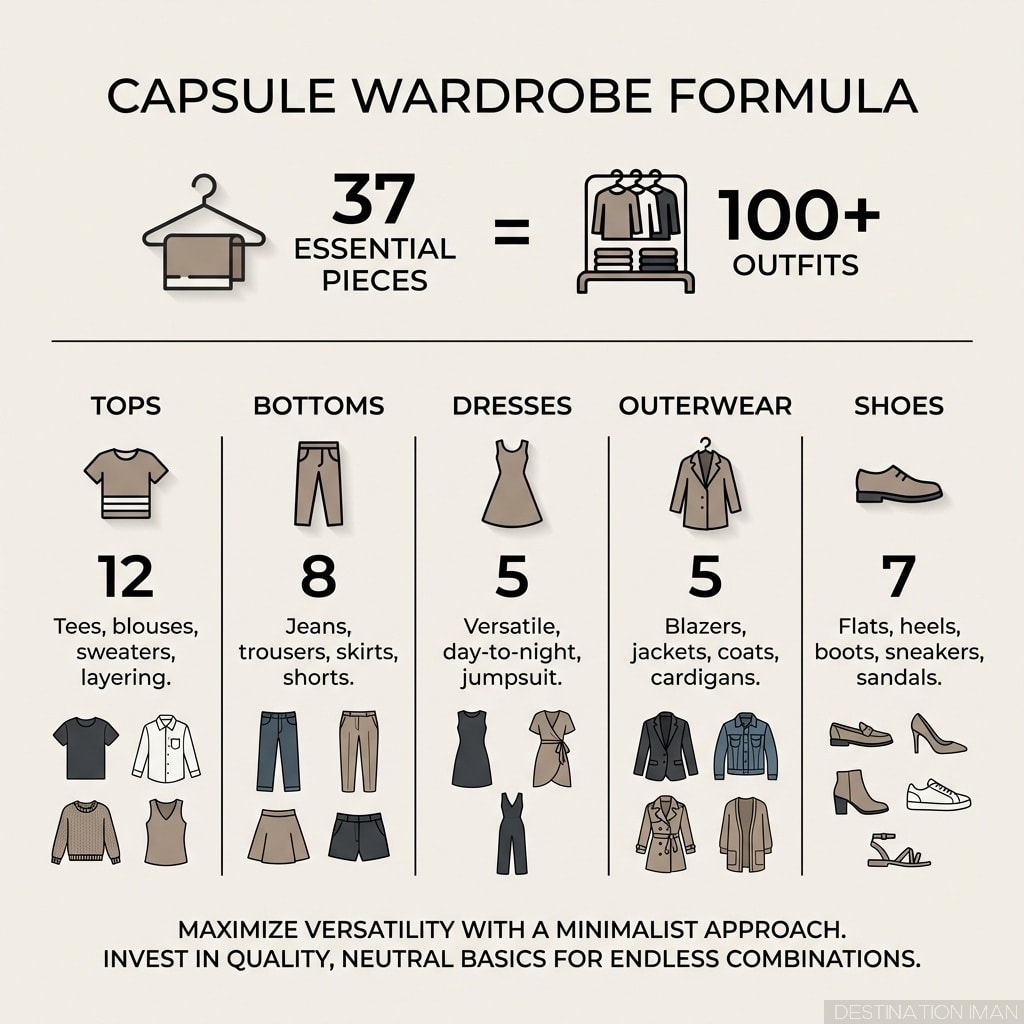
Rather than following fast-changing trends or accumulating clothing without purpose, a capsule wardrobe focuses on versatility, quality, and personal style. The typical capsule contains approximately 30-40 items (excluding accessories, underwear, and workout clothing) that can generate well over 100 different outfit combinations.
The Capsule Wardrobe Formula
While numbers vary based on personal needs and climate, a balanced capsule wardrobe typically includes:
- 9-12 tops: Mix of t-shirts, blouses, sweaters, and layering pieces
- 6-8 bottoms: Combination of pants, jeans, and skirts
- 2-4 dresses: Versatile styles for different occasions
- 4-6 outerwear pieces: Blazers, jackets, and coats appropriate for your climate
- 6-8 pairs of shoes: Covering casual, professional, and formal needs
What a Capsule Wardrobe Is Not
It's important to clarify common misconceptions:
- Not extreme minimalism: A capsule wardrobe isn't about owning as few items as possible, but about owning the right items
- Not a uniform: You'll have variety and personal expression, just with more intention
- Not deprivation: You can still enjoy fashion and shopping—just more thoughtfully
- Not one-size-fits-all: Your capsule should reflect your unique lifestyle, climate, and preferences
Your ideal capsule size depends on your lifestyle, climate, and personal preferences. Someone living in a four-season climate may need 40-50 pieces, while someone in a consistent climate might thrive with 30. The goal is intentionality, not a specific number.
Why a Capsule Wardrobe Works
The effectiveness of capsule wardrobes stems from addressing common wardrobe problems that plague people regardless of how many clothes they own.
Reduces Decision Fatigue
Research shows that the average person makes over 35,000 decisions daily, many of them trivial. When every item in your closet coordinates with most other items, getting dressed requires significantly fewer decisions. You're not wondering if pieces work together—they already do.
Creates Consistent Personal Style
A capsule wardrobe built around cohesive colors and silhouettes naturally creates a recognizable personal aesthetic. Rather than wearing disconnected outfits that vary wildly in style, your looks become consistently "you."
Improves Cost Efficiency
While capsule wardrobes often involve higher per-item costs due to quality focus, the total investment decreases over time. You buy less frequently, make fewer impulse purchases, and maximize cost-per-wear by actually using everything you own.
Maximizes Closet Real Estate
Physical and visual clutter disappear when you own only items you wear regularly. Getting dressed becomes faster and more pleasant when you can see everything clearly and access items easily.
Psychologist Barry Schwartz's research on "The Paradox of Choice" demonstrates that excessive options lead to decision paralysis and decreased satisfaction. Capsule wardrobes apply this research practically—fewer options create greater satisfaction and easier decision-making.
Step 1: Define Your Lifestyle
The most crucial step in building a functional capsule wardrobe is honest assessment of how you actually spend your time—not how you wish you spent it.
Conduct a Lifestyle Audit
For one typical week, track how you spend each day:
- Work environment: Office, remote, hybrid, creative field, corporate setting
- Social activities: Frequency of dinners out, events, casual gatherings
- Active pursuits: Regular exercise, outdoor activities, sports
- Home time: Hours spent at home in comfortable clothing
- Special occasions: How often you need formal or semi-formal attire
Calculate Your Wardrobe Proportions
Based on your lifestyle audit, determine what percentage of your wardrobe should serve each category. For example:
Full-time office worker example:
- 50% professional work clothing
- 30% casual weekend wear
- 15% athletic and loungewear
- 5% formal occasion wear
Remote worker example:
- 40% comfortable casual clothing
- 30% video-call appropriate tops with comfortable bottoms
- 20% athletic and active wear
- 10% going-out and social clothing
Don't build a wardrobe for the life you wish you had. If you haven't attended a formal event in two years, you don't need multiple cocktail dresses. Be honest about your actual lifestyle to avoid wasting wardrobe space and money on clothes you'll never wear.
Consider Your Climate
Your location significantly impacts wardrobe needs:
- Four-season climate: Requires distinct seasonal capsules with transitional pieces
- Mild year-round: Can maintain one core wardrobe with minor adjustments
- Extreme weather: Needs specialized outerwear and weather-appropriate fabrics
Step 2: Choose a Color Palette
A cohesive color palette is the foundation that makes a capsule wardrobe functional. When colors coordinate automatically, mixing pieces becomes effortless.
Building Your Color Palette
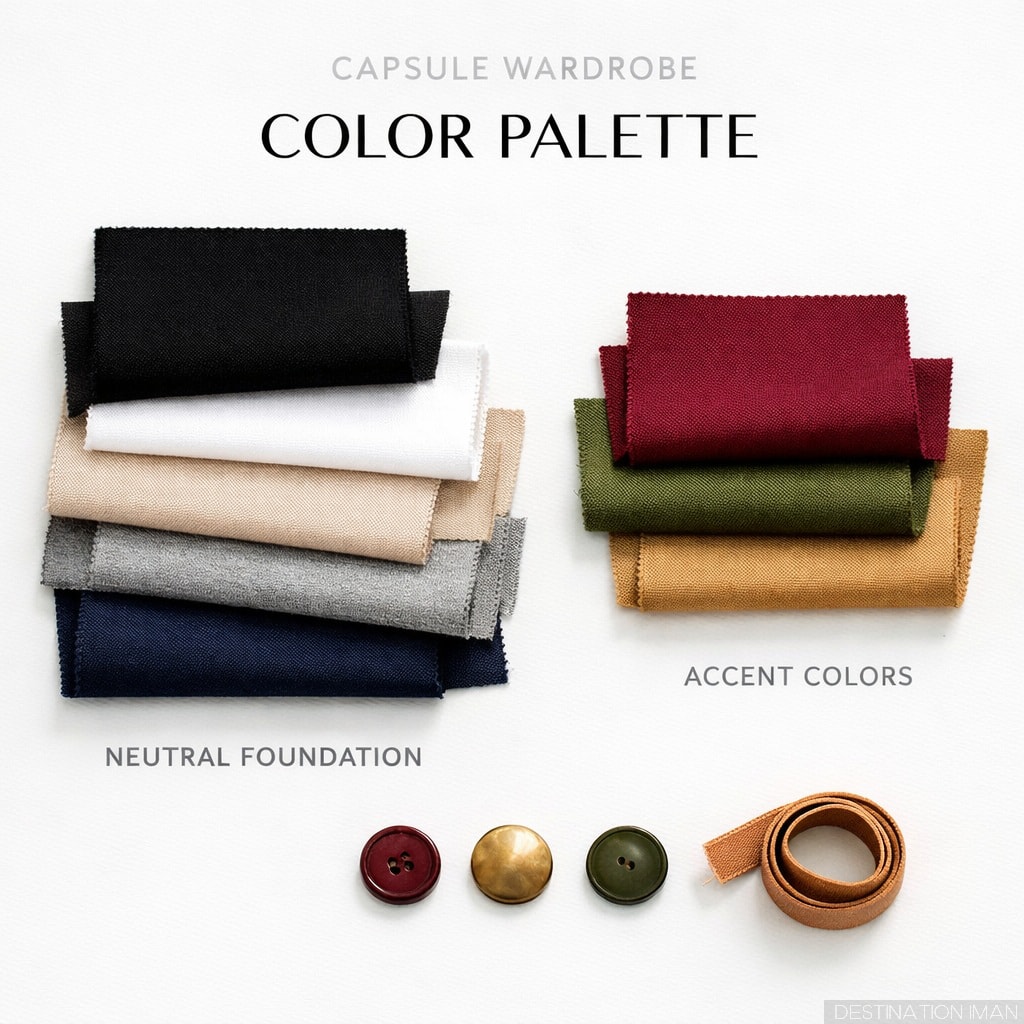
An effective capsule wardrobe color palette includes:
3-5 neutral foundations:
- Classic options: Black, white, gray, navy, beige, camel
- These form 60-70% of your wardrobe
- All neutrals should coordinate with each other
2-3 accent colors:
- Choose colors that complement your skin tone
- Should coordinate with all your neutrals
- Form 20-30% of your wardrobe
- Examples: burgundy, olive, dusty rose, rust, forest green
Optional: 1 bold statement color:
- Used sparingly in accessories or statement pieces
- 5-10% of wardrobe
Testing Color Coordination
Before committing to your palette, test that colors work together:
- Lay fabric swatches or existing clothing items together
- Ensure each accent color works with all neutrals
- Verify that accent colors complement each other
- Consider how colors look on your skin tone
Common Color Palette Examples
Warm Classic: Black, ivory, camel, navy + rust, olive, burgundy
Cool Minimal: Charcoal, white, gray, navy + dusty blue, mauve, forest green
Neutral Soft: Beige, cream, taupe, soft white + dusty rose, sage, terracotta
Your core neutrals remain constant, but accent colors can shift seasonally. Summer might feature lighter, brighter accents while winter includes deeper, richer tones—all still coordinating with your neutral foundation.
Step 3: Identify Essential Pieces
Essential pieces form the backbone of your capsule wardrobe. These are versatile items that work in multiple outfit combinations and suit your lifestyle needs.
Universal Capsule Wardrobe Essentials
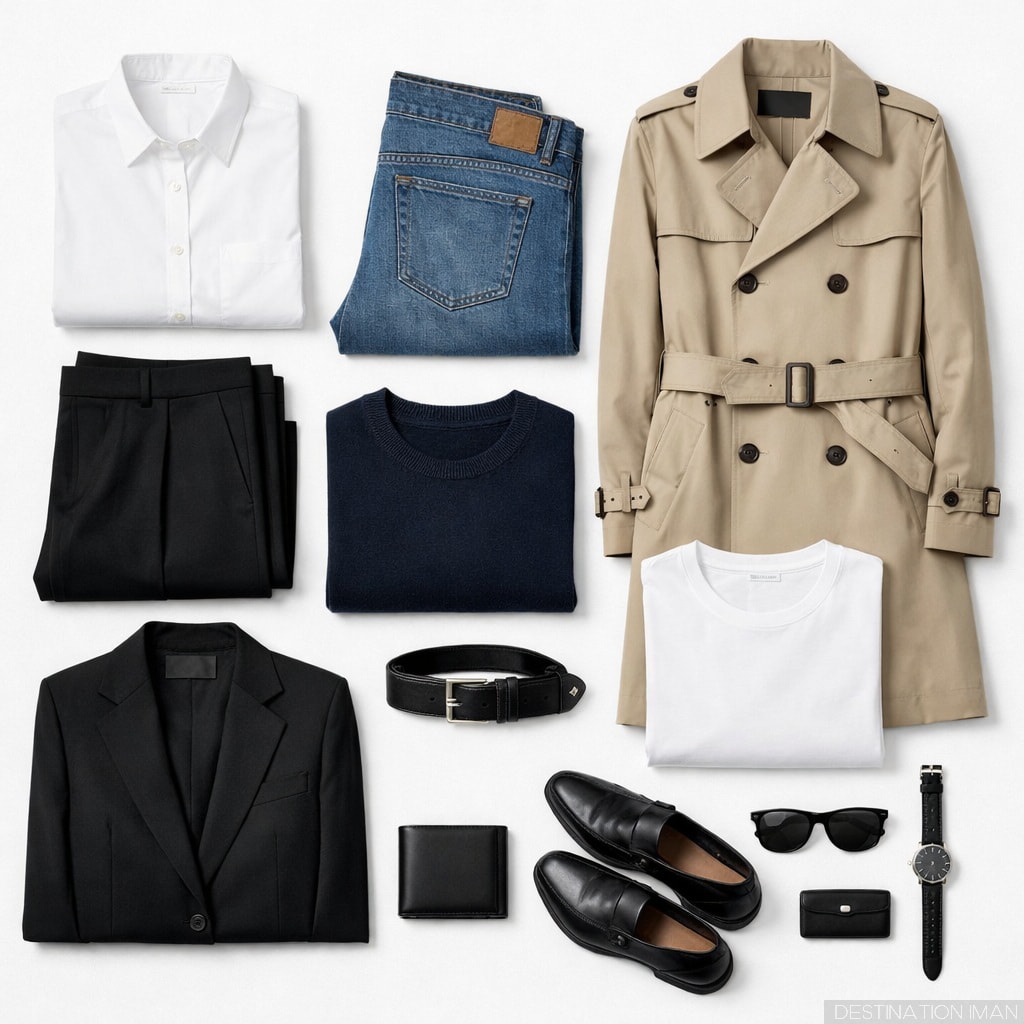
Tops and Layers:
- White button-up shirt (crisp, well-fitted)
- Classic t-shirts in neutral colors (2-3)
- Lightweight sweater or cardigan
- Structured blazer in neutral color
- Versatile blouse suitable for work and casual wear
Bottoms:
- Dark-wash jeans with excellent fit
- Tailored trousers in neutral color
- Versatile skirt (pencil, A-line, or midi depending on preference)
- Black pants (work-appropriate style)
Dresses:
- Simple sheath or shift dress for professional settings
- Casual day dress that layers well
Outerwear:
- Classic trench coat or tailored coat
- Denim or leather jacket for casual wear
- Weather-appropriate coat for your climate
Footwear:
- Comfortable black pumps or loafers
- Neutral ankle boots
- White or neutral sneakers
- Versatile sandals (for appropriate climates)

The Versatility Test
Before adding any item to your capsule wardrobe, apply this test:
Item Qualification Checklist
- Can I style this item in at least three different outfit combinations?
- Does this item coordinate with my existing color palette?
- Does the fit flatter my body and feel comfortable?
- Is the quality sufficient to withstand regular wear?
- Does this serve a genuine need in my lifestyle?
- Would I wear this at least once every two weeks?
If an item doesn't pass all criteria, it likely doesn't belong in your capsule wardrobe core pieces.
Step 4: Declutter Your Current Wardrobe
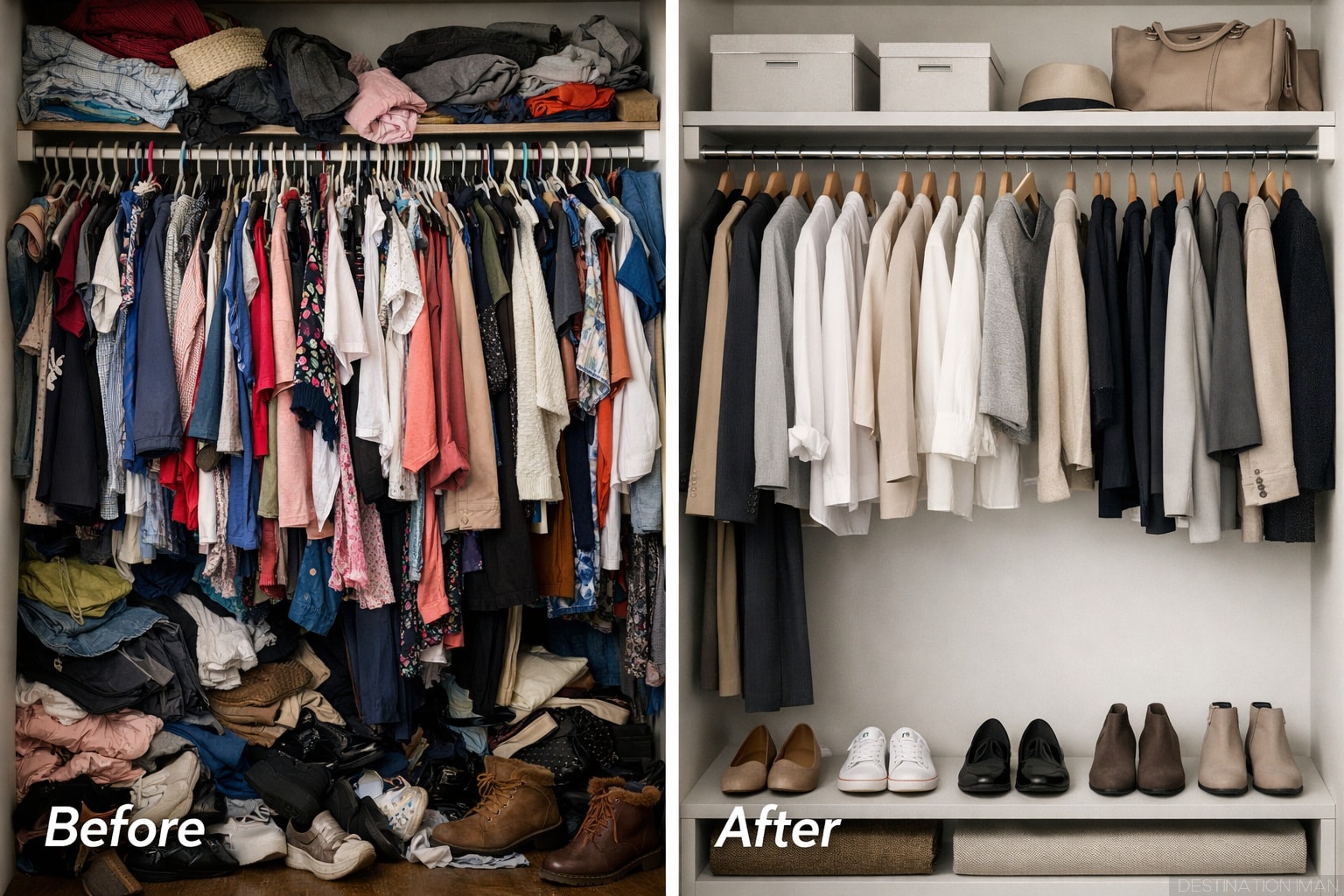
Building a capsule wardrobe often requires removing items that no longer serve you. This process can feel challenging but is essential for creating a functional wardrobe.
The Decluttering Process
1. Remove everything from your closet
See all your clothing at once to assess what you actually own.
2. Sort into categories
- Definite keep: Items you wear regularly that fit your capsule vision
- Definite remove: Doesn't fit, damaged, haven't worn in over a year
- Maybe pile: Unsure items requiring further consideration
3. Apply decision criteria to "maybe" items
- Have I worn this in the past 6 months?
- Does it fit properly right now?
- Does it align with my color palette?
- Do I have multiple similar items that serve the same purpose?
- Am I keeping this for sentimental reasons rather than practical use?
What to Do With Removed Items
- Sell: Quality items in good condition can be sold through consignment, Poshmark, or similar platforms
- Donate: Gently used clothing to local charities or shelters
- Repurpose: Damaged items can become cleaning rags or craft materials
- Store seasonally: Out-of-season items that fit your capsule can be stored separately
Don't keep clothing for a theoretical future body size, lifestyle change, or occasion that hasn't materialized in years. Your wardrobe should serve you now, not represent who you hope to become someday.
Step 5: Build Outfits, Not Just a Closet
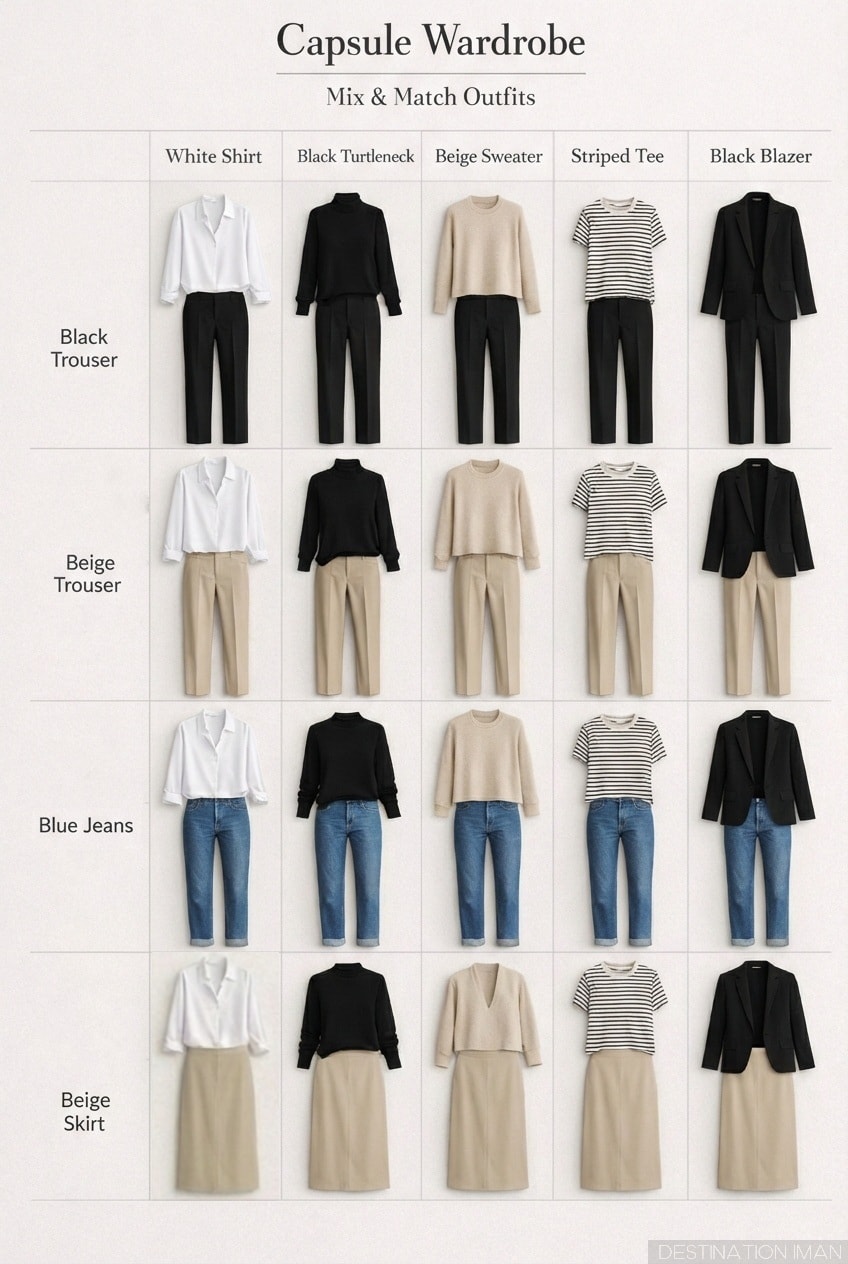
The true test of a capsule wardrobe isn't owning the right individual pieces—it's whether those pieces combine to create complete outfits you'll actually wear.
The Outfit Creation Exercise
With your chosen capsule pieces, create actual outfit combinations:
- Lay out or photograph 10-15 complete outfits using your capsule pieces
- Include shoes and outerwear appropriate for different scenarios
- Ensure you have outfits covering all lifestyle categories (work, casual, social, etc.)
- Identify any gaps where outfit creation feels difficult
If you struggle to create sufficient outfit variety, you may need to adjust your capsule pieces—perhaps adding a different silhouette or removing redundant items.
The Power of Versatile Pieces
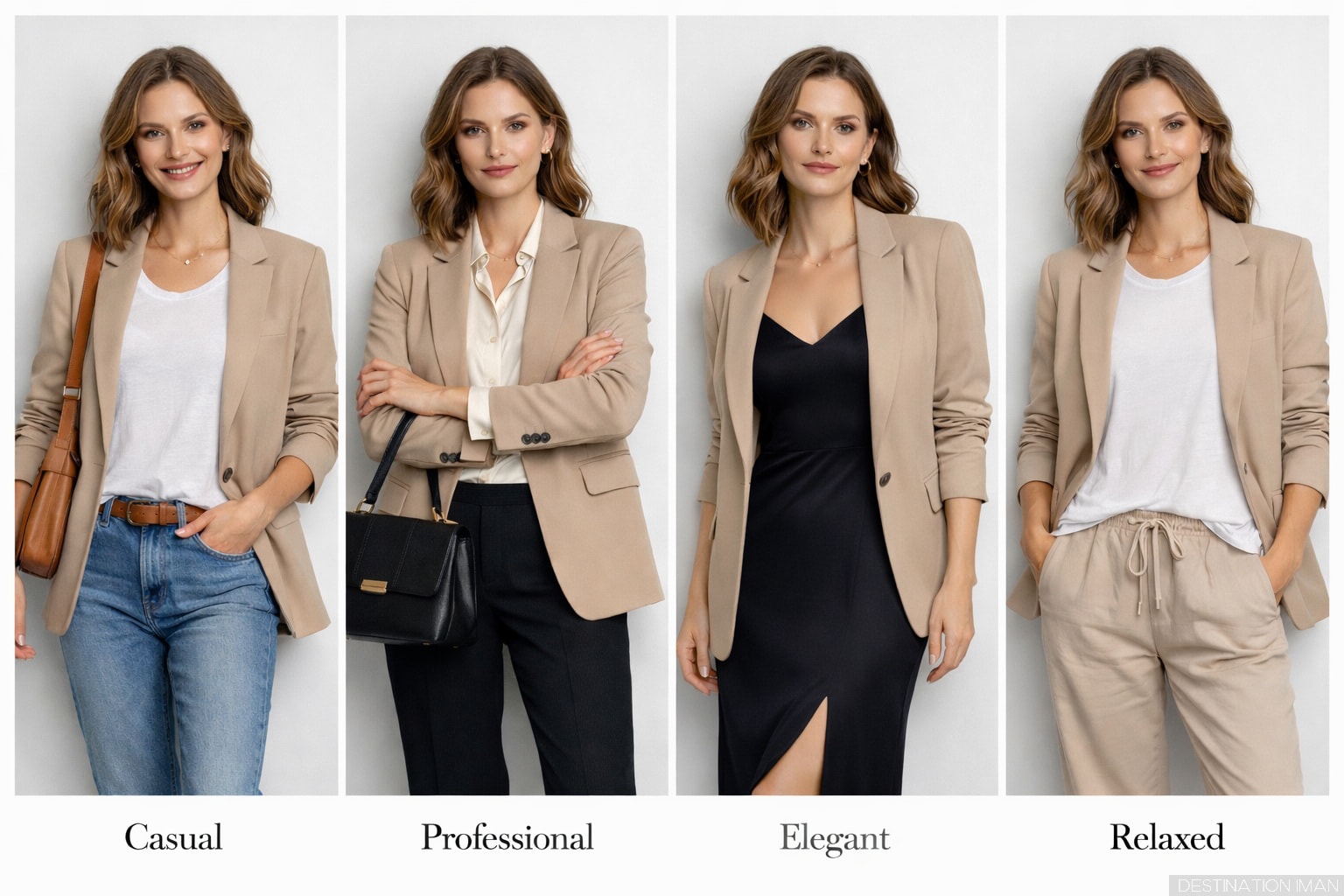
The most valuable capsule wardrobe items work across multiple outfit types. For example:
A black blazer might appear in:
- Professional outfit: Blazer + white shirt + tailored trousers
- Smart casual: Blazer + t-shirt + jeans
- Evening: Blazer + dress + heels
- Polished casual: Blazer + sweater + dark jeans
Creating Maximum Versatility
To maximize outfit combinations from your capsule:
- Vary silhouettes: Include both fitted and relaxed pieces
- Mix textures: Combine smooth, knit, and structured fabrics
- Layer thoughtfully: Ensure pieces work both alone and layered
- Accessorize strategically: Accessories can completely change an outfit's feel

Investing in Quality Over Quantity
Capsule wardrobes prioritize quality because each piece works harder and appears more frequently than in a traditional wardrobe. Better quality translates to better appearance, longer lifespan, and ultimately lower cost per wear.
Quality Indicators to Look For
Fabric:
- Natural fibers (cotton, wool, linen, silk) or quality blends
- Appropriate weight for the garment type
- Fabric that drapes well and doesn't appear cheap
- Minimal pilling, fading, or stretching after wear
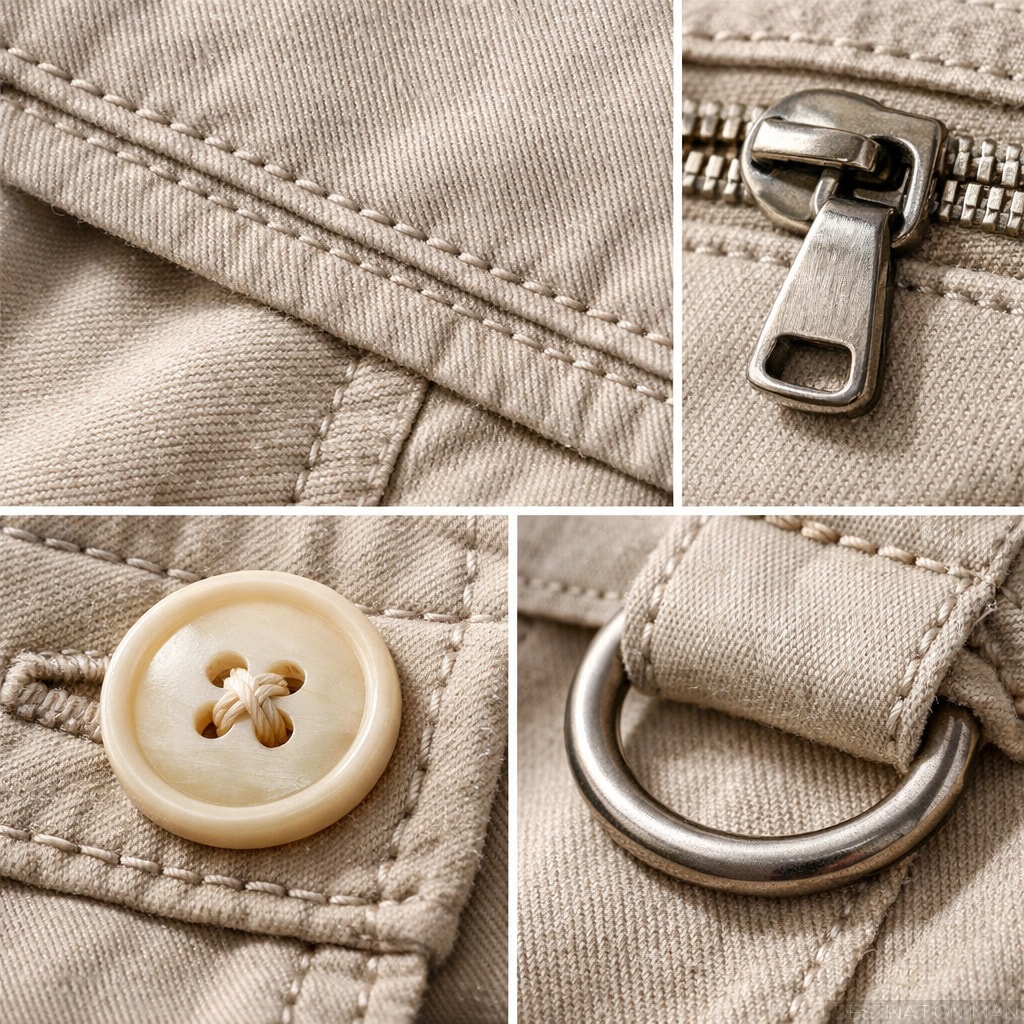
Construction:
- Reinforced seams with no loose threads
- Patterns that match at seams
- Quality zippers and closures
- Proper lining in structured pieces
- Buttons that are securely attached
Fit:
- Appropriate for your body without pulling or gaping
- Comfortable enough to wear for extended periods
- Cut and proportioned well for the intended style
Cost Per Wear Calculation
Rather than focusing solely on purchase price, calculate cost per wear:
Cost Per Wear = Purchase Price ÷ Number of Times Worn
A $200 blazer worn 100 times costs $2 per wear. A $40 trendy jacket worn 3 times costs over $13 per wear. Quality items that fit your capsule will almost always have lower cost per wear than cheaper impulse purchases.
Where to Invest vs. Save
Invest more in:
- Outerwear (coats, jackets—worn frequently and highly visible)
- Shoes (quality affects comfort, appearance, and longevity)
- Tailored pieces (blazers, trousers—construction quality is very noticeable)
- Classic basics you'll wear for years
Save on:
- Basic t-shirts and tanks (replaced more frequently)
- Trendy accent pieces (won't be in wardrobe long-term)
- Items you're still experimenting with style-wise
Seasonal Adjustments
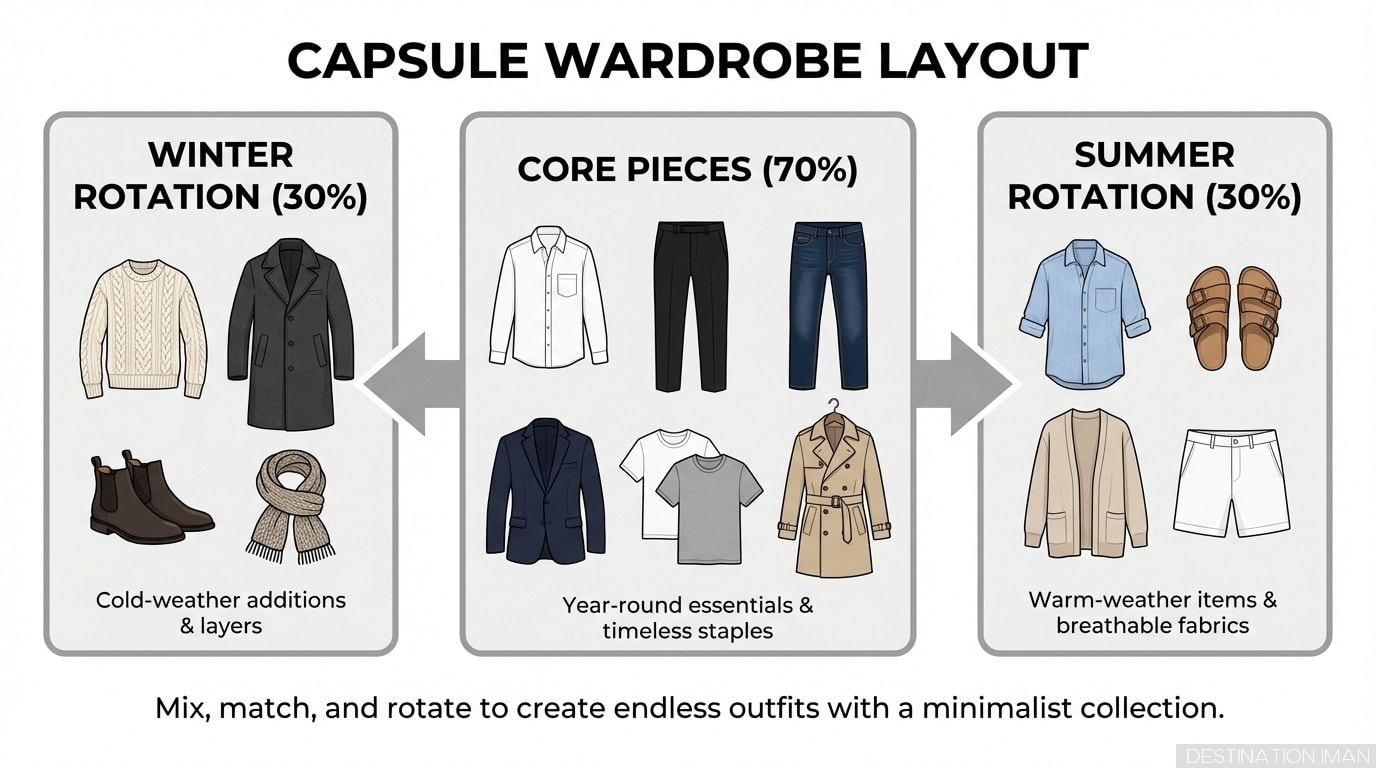
A capsule wardrobe can adapt seasonally without requiring complete replacement. The strategy is maintaining a consistent core while rotating seasonal-specific pieces.
Core Year-Round Pieces (60-70%)
These remain constant across seasons:
- Jeans and neutral trousers
- White shirts and basic tees
- Versatile blazers
- Simple dresses that layer
- Neutral shoes (loafers, boots, sneakers)
Seasonal Rotation Pieces (30-40%)
Winter additions:
- Chunky knit sweaters
- Warm coat
- Heavier fabrics (wool, cashmere)
- Boots appropriate for weather
- Layering pieces (turtlenecks, thermal underlayers)
Summer additions:
- Lightweight linen or cotton pieces
- Short-sleeve options
- Sandals
- Breathable fabrics
- Sun protection layers
Transitional Dressing
Spring and fall transitions require layering-friendly pieces:
- Cardigans and lightweight jackets
- Pieces that work with or without layers
- Medium-weight fabrics
- Versatile shoes suitable for varying temperatures
Common Capsule Wardrobe Mistakes
Even with good intentions, several pitfalls can undermine capsule wardrobe effectiveness.
Mistake 1: Starting With Shopping
Building a capsule wardrobe doesn't begin with buying new items. Start by assessing what you own, defining your needs, and identifying gaps. Only then should you shop intentionally for specific items that fill genuine needs.
Mistake 2: Ignoring Personal Style
A capsule wardrobe built around someone else's aesthetic won't work for you. While inspiration is helpful, your capsule must reflect your genuine style preferences, not what looks good on Pinterest or Instagram.
Mistake 3: Prioritizing Trends Over Timelessness
Capsule wardrobes work because pieces remain relevant for years. Trendy items date quickly and limit long-term versatility. Save trend experimentation for accessories or inexpensive accent pieces.
Mistake 4: Neglecting Fit
Even the perfect capsule piece in theory won't work if it doesn't fit properly. Ill-fitting clothing looks sloppy regardless of quality or price. Consider tailoring costs when evaluating purchases—a well-fitted $80 item outperforms a poorly fitted $200 one.
Mistake 5: Being Too Restrictive
A capsule wardrobe should make life easier, not become a source of stress or deprivation. If you love a piece that doesn't "fit" your color palette perfectly but brings you joy and gets regular wear, keep it. Perfect shouldn't be the enemy of functional.
Don't let the pursuit of the "perfect" capsule wardrobe prevent you from starting. Build your capsule, live with it for a season, then adjust based on real experience. Theory matters less than what actually works in your daily life.
Maintaining Your Capsule Wardrobe
A capsule wardrobe requires ongoing maintenance to remain functional and relevant.
Regular Reviews
Every 3-4 months, assess your capsule:
- Which pieces do you wear most frequently?
- What items haven't been worn at all?
- Are there outfit combinations you wish you could create but can't?
- Has anything worn out or no longer fits properly?
The One-In-One-Out Rule
When adding new items, remove something existing. This prevents gradual closet creep and forces you to evaluate whether new pieces genuinely improve your wardrobe.
Proper Care Extends Longevity
Since capsule pieces work harder, proper care is essential:
- Follow garment care instructions carefully
- Address minor repairs (loose buttons, small seams) immediately
- Store seasonal items properly to prevent damage
- Rotate shoes to extend their lifespan
- Use quality hangers that maintain garment shape
Mindful Shopping
When you do shop, apply strict criteria:
Pre-Purchase Checklist
- Does this fill a specific gap in my current capsule?
- Can I create at least 3 outfits with this and existing pieces?
- Does the color work with my established palette?
- Is the quality appropriate for the price and expected wear frequency?
- Does the fit flatter me right now without alterations?
- Will I still want to wear this in a year?
- What am I removing to make room for this?
Capsule Wardrobe Success Principles
- Start with honest assessment of your actual lifestyle, not aspirational habits
- Build around a cohesive color palette for effortless mixing
- Focus on quality and versatility over quantity and trends
- Test that pieces create complete outfits, not just individual items
- Allow seasonal adjustments while maintaining a consistent core
- Review and refine regularly based on what you actually wear
- Remember that your perfect capsule evolves—don't seek instant perfection
Conclusion
Building a capsule wardrobe is a transformative process that extends beyond simply reducing the number of clothes you own. It's about creating intentionality in how you dress, eliminating decision fatigue, and developing a consistent personal style that genuinely serves your life.
The journey begins with honest self-assessment—understanding your lifestyle, identifying your color palette, and recognizing which pieces truly earn their place in your closet. It continues with thoughtful curation, selecting quality over quantity and versatility over trends. Most importantly, it evolves over time as you learn what works in practice rather than just theory.
A successful capsule wardrobe doesn't happen overnight. Give yourself permission to experiment, make mistakes, and refine your approach. Start with the pieces you already own that fit your vision, identify genuine gaps, and fill them thoughtfully over time. The goal isn't achieving some theoretical perfect wardrobe, but creating a functional collection that makes getting dressed effortless and enjoyable.
By focusing on pieces that work together seamlessly, investing in quality that lasts, and maintaining a cohesive aesthetic, you'll discover that you need far less than you thought to feel well-dressed for any occasion. The freedom that comes from a well-built capsule wardrobe—less time deciding what to wear, more confidence in how you look, and reduced shopping stress—is the true reward of this intentional approach to dressing.
Remember: your capsule wardrobe should serve you, not restrict you. If it makes getting dressed harder rather than easier, adjust until it genuinely works for your life. The most successful capsule wardrobes are those built around real needs, personal preferences, and practical reality—not arbitrary rules or someone else's definition of essential pieces.