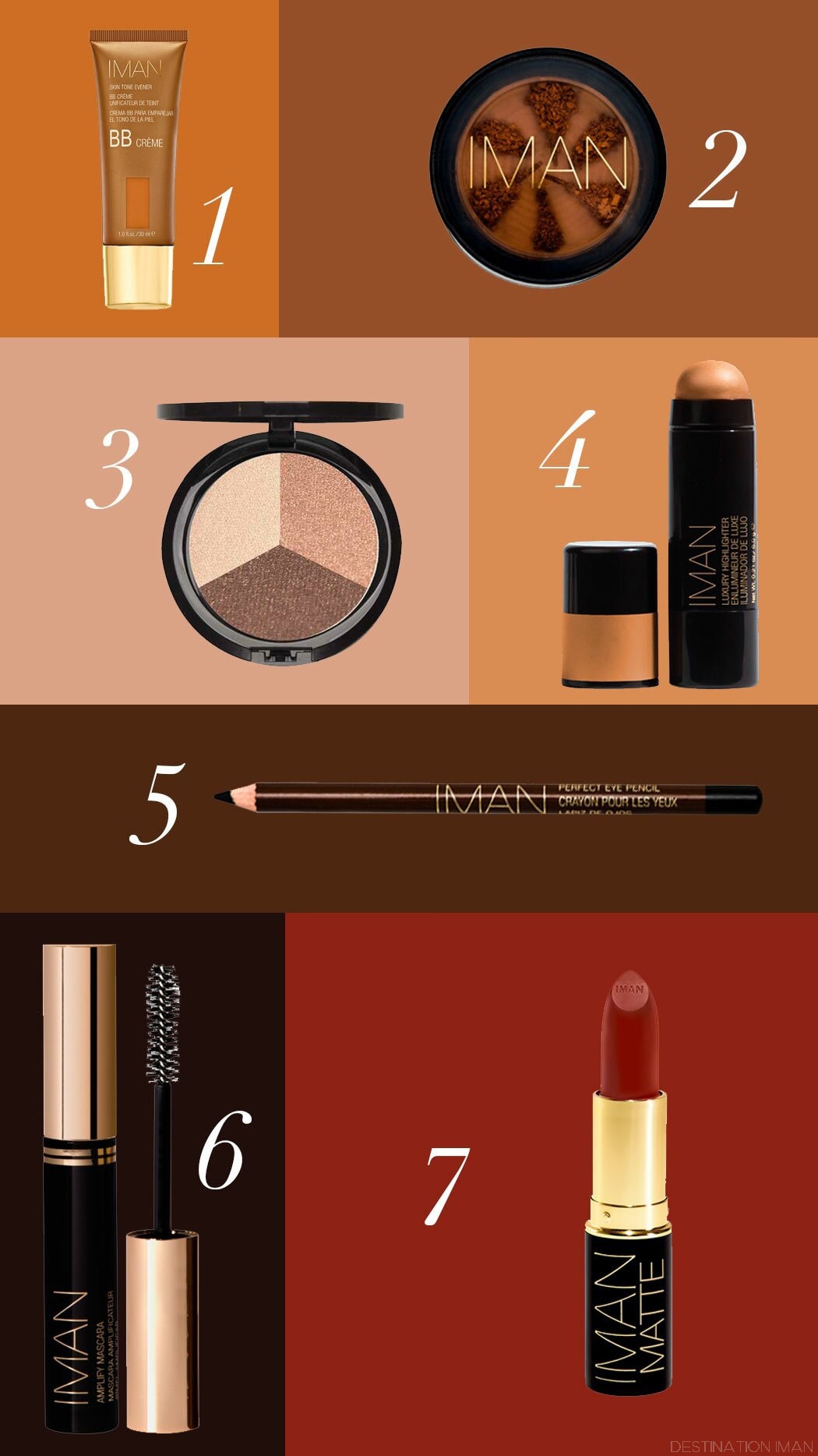
Iman Cosmetics holds a unique place in the history of the beauty industry. Long before inclusivity became a mainstream marketing term, makeup by Iman was created with a clear mission: to serve women with skin of color who had been overlooked by traditional beauty brands.
This article explores the timeline of Iman beauty, its cultural impact, and how it helped reshape the modern beauty landscape.
The Beauty Industry Before Iman Cosmetics
Prior to the 1990s, the global cosmetics industry largely centered around a narrow definition of beauty. Foundation shades were limited, undertones were poorly addressed, and women with deeper or diverse skin tones often had to mix products to achieve a workable match.
For many consumers, representation was minimal — both in product formulation and in advertising. This gap created the conditions for a brand like Iman Cosmetics to emerge.
1994: The Launch of Iman Cosmetics
Iman makeup was officially launched in 1994 by supermodel Iman, who had firsthand experience with the limitations of existing beauty products. Throughout her modeling career, she often had to rely on custom-mixed foundations backstage.
The brand debuted with a groundbreaking concept: cosmetics and skincare designed specifically for women of color across multiple ethnic backgrounds, including African American, Latina, Asian, Middle Eastern, and multicultural consumers.
Redefining Foundation Shades
One of the most significant contributions of Iman beauty products was the introduction of a thoughtfully structured foundation range. Instead of offering a token dark shade, the brand focused on undertones, depth, and real-world skin diversity.
This approach challenged industry norms and demonstrated that inclusive shade ranges were not only possible, but commercially viable.
Expansion into Skincare and Fragrance
As the brand matured, Iman Cosmetics expanded beyond makeup into skincare and fragrance. These additions reflected the brand’s holistic view of beauty, emphasizing healthy skin as the foundation of effective makeup.
Each category maintained the same guiding principle: addressing the specific needs of skin of color rather than adapting generic formulations.
Mainstream Retail and Wider Recognition
In the early 2000s, Iman makeup reached a broader audience through mass-market retail partnerships. This expansion marked a pivotal moment, proving that inclusive beauty products could succeed beyond niche markets.
For many consumers, this was the first time they could find complexion products designed for them in mainstream stores.
Cultural Impact of Iman Beauty
The influence of beauty by Iman extended beyond product sales. The brand played a role in shifting conversations around representation, normalizing the idea that beauty exists across a wide spectrum of skin tones.
It also helped pave the way for future inclusive brands by demonstrating long-term demand rather than short-lived trends.
The Rise of Inclusive Beauty After Iman
In the years following the success of Iman Cosmetics, the beauty industry saw an increase in brands promoting diversity and expanded shade ranges.
While many of these newer brands benefited from social media and influencer culture, their foundational ideas closely mirrored principles that Iman makeup had introduced decades earlier.
Later Years and Reduced Visibility
As the beauty market became increasingly saturated, Iman Cosmetics gradually shifted into a quieter phase. Distribution narrowed, official online presence became inconsistent, and some product lines became harder to find.
This evolution reflects broader changes in retail and consumer behavior rather than a definitive end to the brand.
Legacy of Iman Cosmetics
Today, the legacy of Iman beauty is evident throughout the industry. Inclusive shade ranges are now expected, and conversations around representation are central to brand identity.
Although newer brands often receive credit for diversity initiatives, Iman Cosmetics remains one of the earliest and most authentic pioneers of inclusive beauty.
Conclusion
The history of Iman Cosmetics is not just the story of a beauty brand — it is the story of a shift in industry standards.
From redefining foundation shades to challenging outdated beauty norms, makeup by Iman helped shape the modern understanding of inclusivity. Its influence continues to be felt, even as the brand itself operates in a more understated form today.